17 Meaningful Climate Change Activities for Kids

How to teach about our changing planet.

17 Meaningful Climate Change Activities for Kids
We Are Teachers

Climate change is one of those important topics that can be hard to tackle in the classroom. Some teachers face opposition from parents, communities, or even school curriculum requirements that deny the existence or importance of climate change. But it’s vital to give kids the facts by using global warming and climate change activities that help them understand what’s taking place—and why it matters. Try some of these ideas with your students, accompanied with discussion about what kids can do to help keep our planet healthy for years to come.
free printable Earth Day worksheets

FREE PRINTABLE

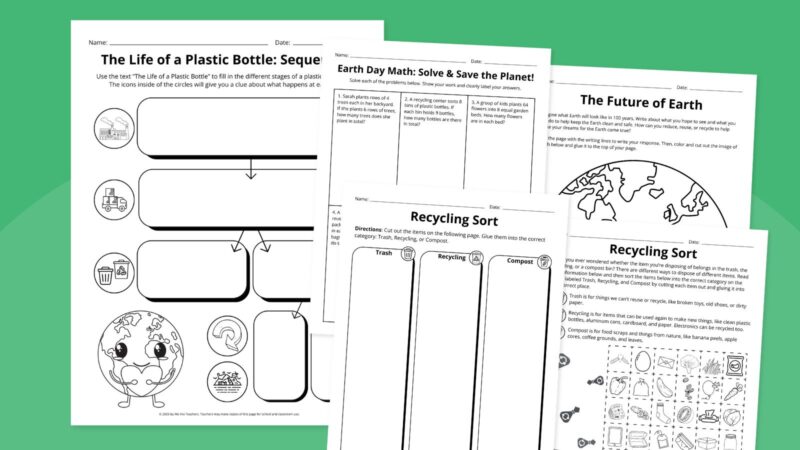
Earth Day Worksheet Bundle

Use the Earth Day–themed worksheets included in this bundle to get students talking about our planet. They’ll learn about single-use plastic bottles, solve math problems, learn how to sort recycling, and write about the future of Earth.
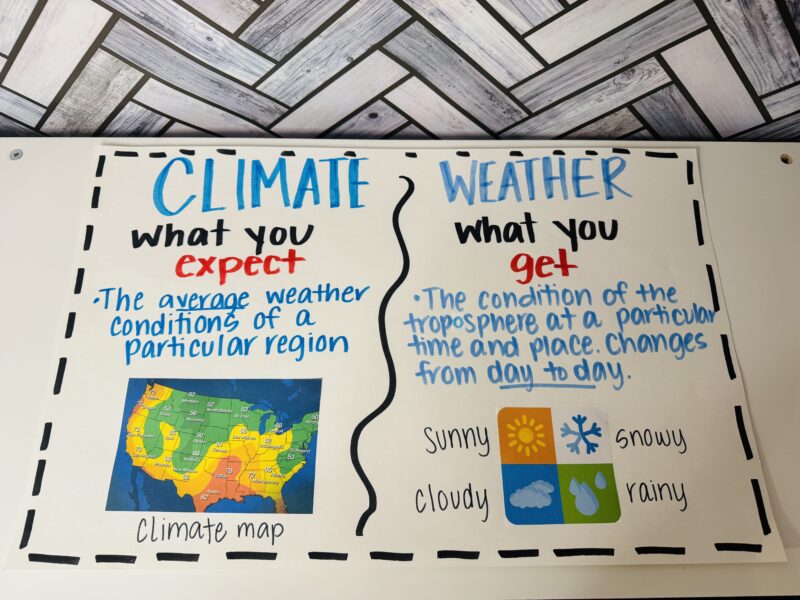
climate vs weather
Naomi Meredith for We Are Teachers

1. Understand the difference between climate and weather

One common refrain you might hear is, “It snowed 20 inches today, so explain how global warming is real.” That’s when it’s time to tackle the difference between weather (the current conditions) and climate (the average of those conditions over time in a particular region). Make an anchor chart like the one pictured. Then try a sorting activity to help kids understand the difference between the two.

17 Meaningful Climate Change Activities for Kids
We Are Teachers

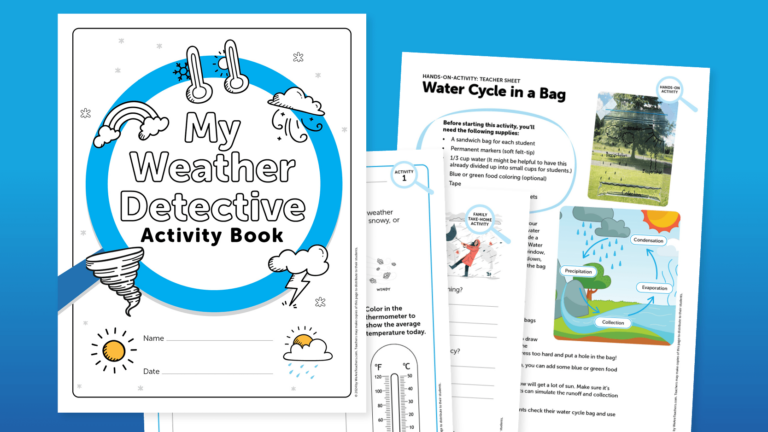
2. Be a weather detective

While weather and climate are two different things, they’re definitely strongly interconnected. One of the ways scientists understand climate change is to look at weather over time. Learn how to track and explore weather with our free printable kit that’s perfect for elementary kids.

Greenhouse effect classroom activity,
We Are Teachers

3. Learn about the greenhouse effect

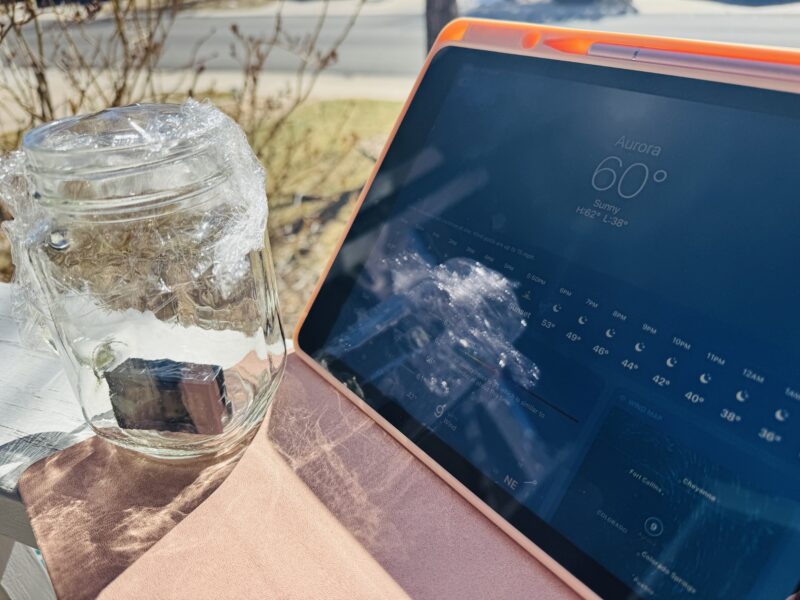
Global warming is a key component of climate change, and it’s caused in part by an enhanced greenhouse effect. Climate change activities like this one show kids just what that term means. Place two thermometers side by side in a sunny spot. Put one inside a covered glass jar, and leave the other one outside. Observe the temperatures after about 20 minutes to see which is higher.

a water vapor model made of toothpicks and gumdrops (Climate Change)
Naomi Meredith for We Are Teachers

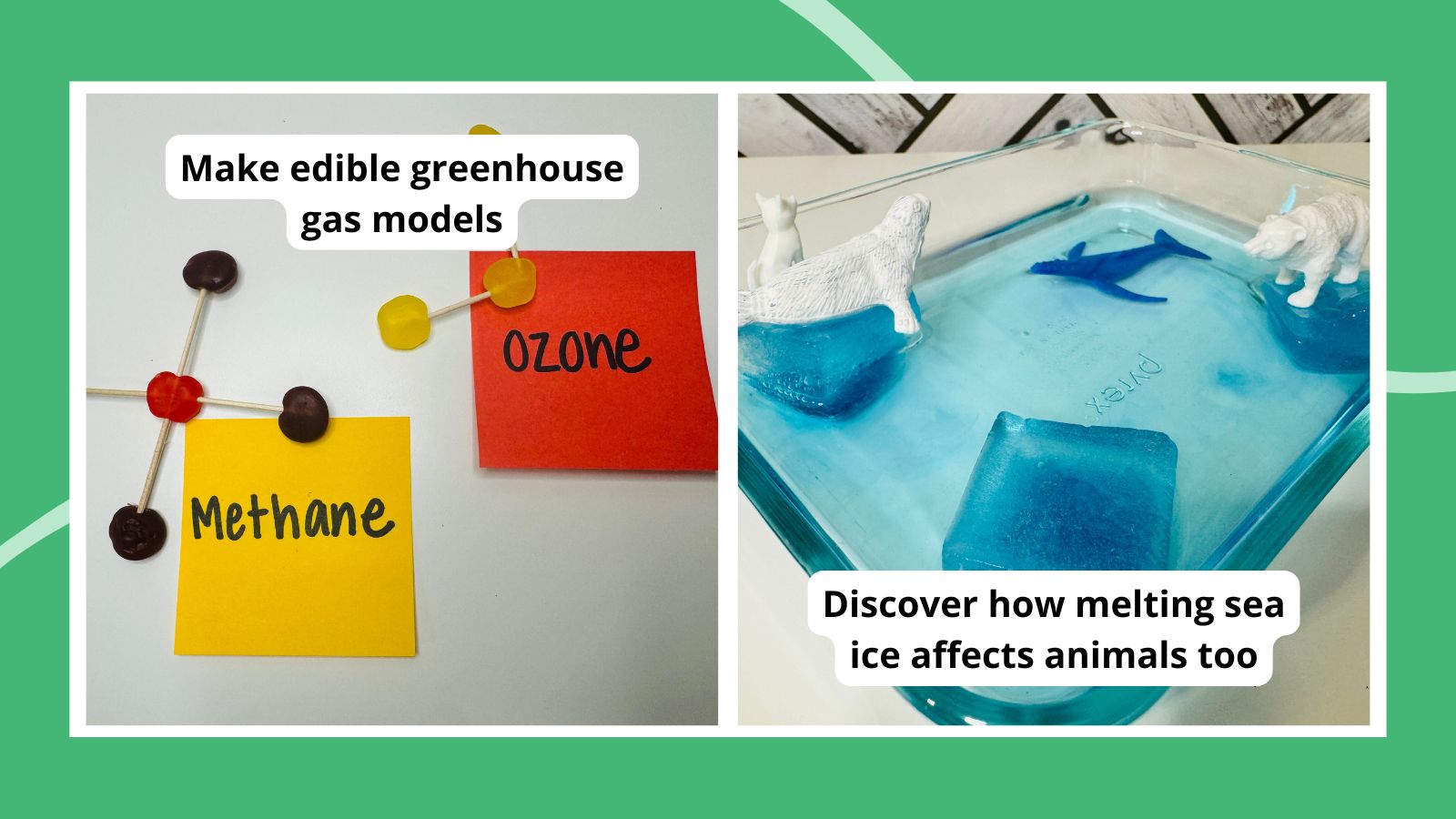
4. Make edible greenhouse gas models

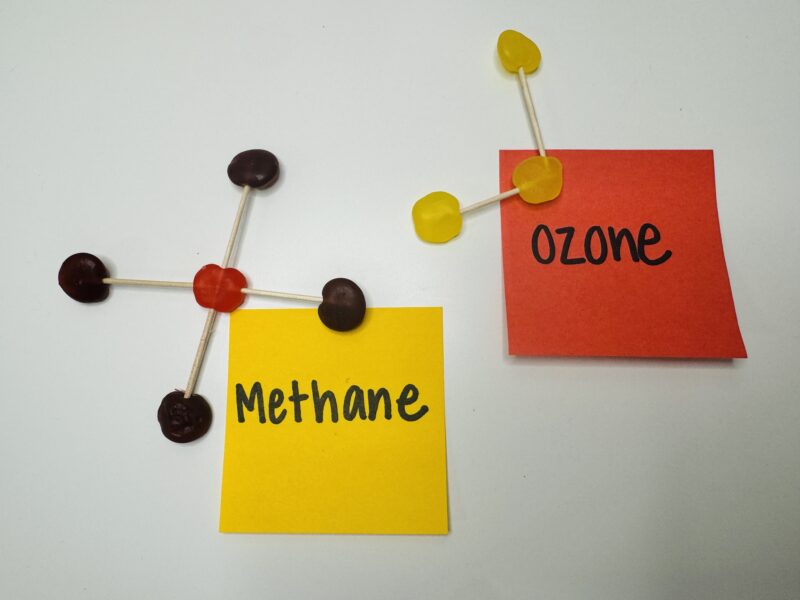
Use toothpicks and gumdrops to re-create models of gases that contribute to the greenhouse effect and global warming, like carbon dioxide, ozone, water vapor, and methane.

Blue ice cubes in a divided container, with the left side also containing water (Climate Change Activities)
Naomi Meredith for We Are Teachers

5. Learn about conditions affecting ice melt

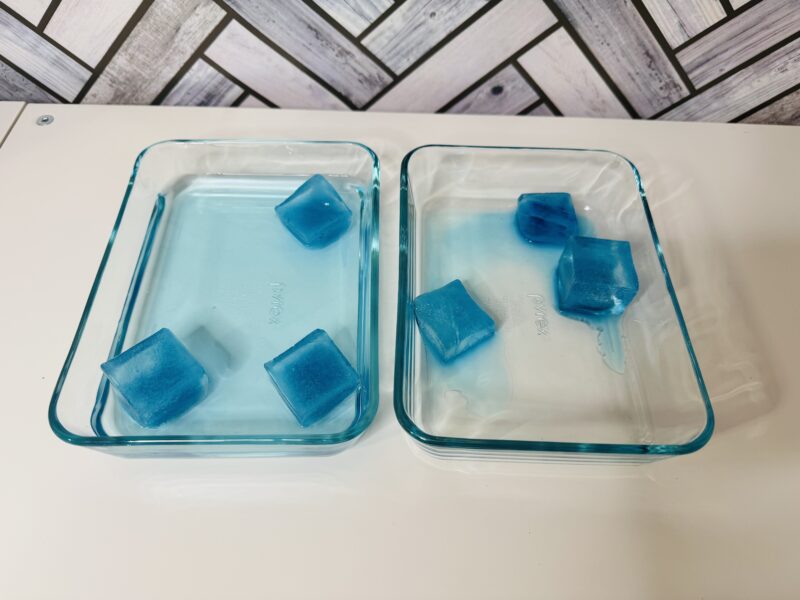
The accelerated melting of the polar ice caps and glaciers is of huge concern to climate change scientists. Do a simple experiment that shows how ice in water melts faster than ice on land. Place equal amounts of ice cubes in two containers. Add a small amount of water to one container, then observe the results over time.

6. Simulate melting polar ice caps and icebergs

Ice-melting experiments are very helpful climate change models for kids, helping them see sea level rise in action, so here’s another one to try. If you’re unable to perform this one in person, show National Geographic’s video instead.

Two model polar bears floating on a small piece of ice in a plastic container
Naomi Meredith for We Are Teachers

7. Discover how melting sea ice affects animals too

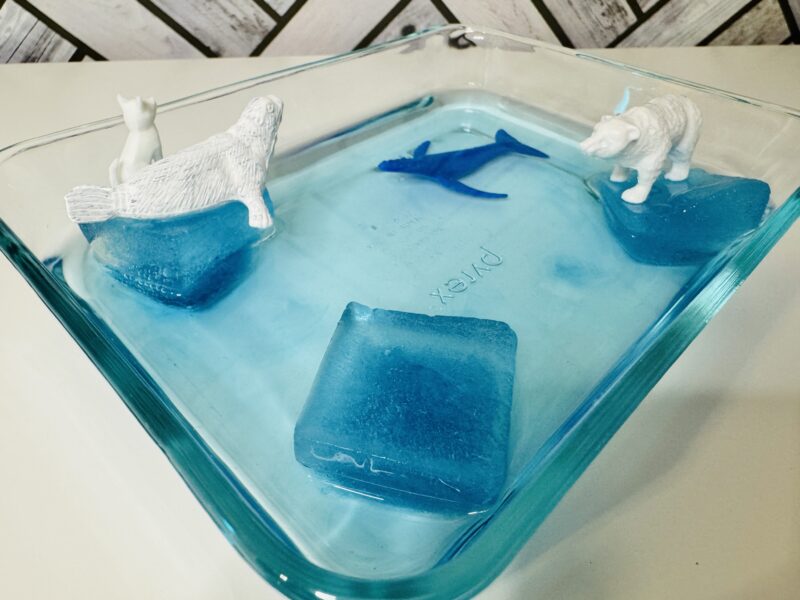
Humans aren’t the only ones affected by global warming and sea ice melt. Make your own sea ice sheet by freezing an inch or so of water in the bottom of a wide shallow bowl. Float the ice in a bigger dish of water, with a few toy animals like polar bears on top. What happens to the animals as the ice shrinks?

Two notecards labeled inside and outside, with some dirt on each
Naomi Meredith for We Are Teachers

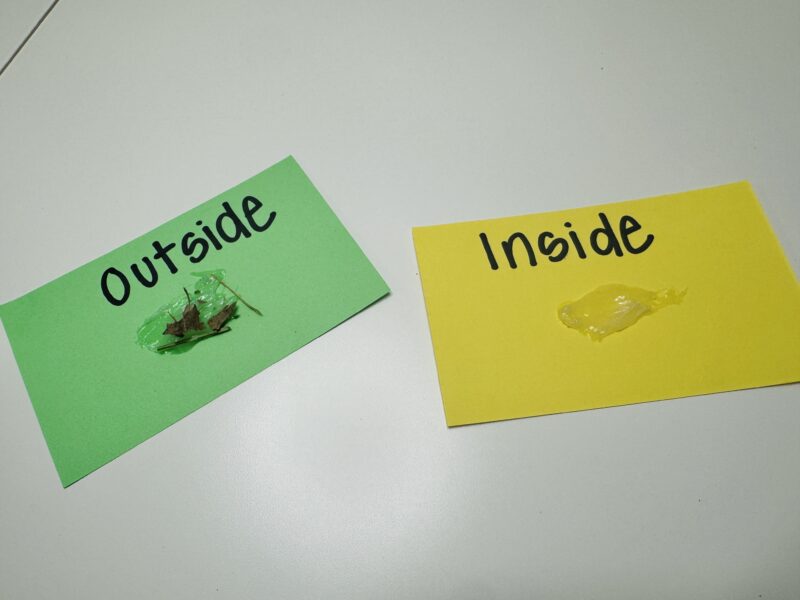
8. Trap particles to learn about air pollution

This experiment is so easy! Smear Vaseline on two index cards. Place one outdoors (make sure to choose days without precipitation) and one inside your classroom. After about a week, compare the two cards. Note the visible particles, and discuss what they might be.

Glass measuring cup, glass jars, and bottle of lemon juice (Climate Change Activities)
Naomi Meredith for We Are Teachers

9. Water plants with acid solutions

Acid rain isn’t in the news as much these days, thanks to the incredible effectiveness of the EPA’s Acid Rain Program. It’s still good for kids to learn about, though, since when unchecked, it can do real damage to plants and the environment. Try an experiment with two small potted plants. Water one with regular water as usual, and water the other with a 4:1 solution of water and lemon juice. How do the two plants fare over time?

Reduce your classroom's carbon footprint
Naomi Meredith for We Are Teachers

10. Reduce your classroom’s carbon footprint

From reusing and recycling paper to refilling dry-erase markers, we’ve rounded up 20+ ways to reduce your carbon footprint. How many can you and your students implement?

11. Act Locally

The right resources can make all the difference in helping young people see how they can take meaningful action in their own community. This climate action resource kit from World Wildlife Fund’s Wild Classroom contains an informative slideshow as well as several lesson plans that are a perfect place to start.

Get My Free Climate Action Kit

12. Participate in the World’s Largest Lesson

In partnership with UNICEF, World’s Largest Lesson promotes use of the Sustainable Development Goals in learning so that children can contribute to a better future for all. As part of your climate change activities, learn more about their videos, lessons, and resources here.

13. Explore how melting ice affects sea levels

The North Polar Ice Cap sits on water, while the South Polar Ice Cap is on land. Simulate the melting of the two by placing a chunk of ice in a cup of water and marking the total level on the side of the cup. In a separate cup, add water and mark the level. Then, float a chunk of ice resting on top of a piece of play dough in the second cup. Check on the results in an hour to see how the ice melting on “land” caused the “sea level” to rise.

14. Play the Carbon Cycle Game

Carbon is another big contributor to global warming and climate change. Learn how the natural carbon cycle works, and how too much carbon throws the cycle off, with this free printable game from COSEE.

15. Meet the greenhouse gases

Now that kids have seen the greenhouse effect in action, introduce them to the gases that make it happen. These fun trading cards of the six major atmospheric gases teach students what they are and where they come from. Each card has two sides, showing the positive and negative effects of that gas. Get the free printable cards from NASA here.

16. March for your beliefs

Check out an organization like Fridays for Future, which has helped to organize massive global student climate strikes. Students can make signs and even participate in marches or demonstrations (with parent/guardian permission, of course). Don’t want to march? Hang posters in your school hallways instead!

17. Recognize climate change anxiety

As students learn about global warming and climate change, they may begin to experience a lot of anxiety about their future. This is a real phenomenon, and one that’s become more common among today’s kids. Learn how to help them deal with those worries here.

Get my printable Earth Day bundle!
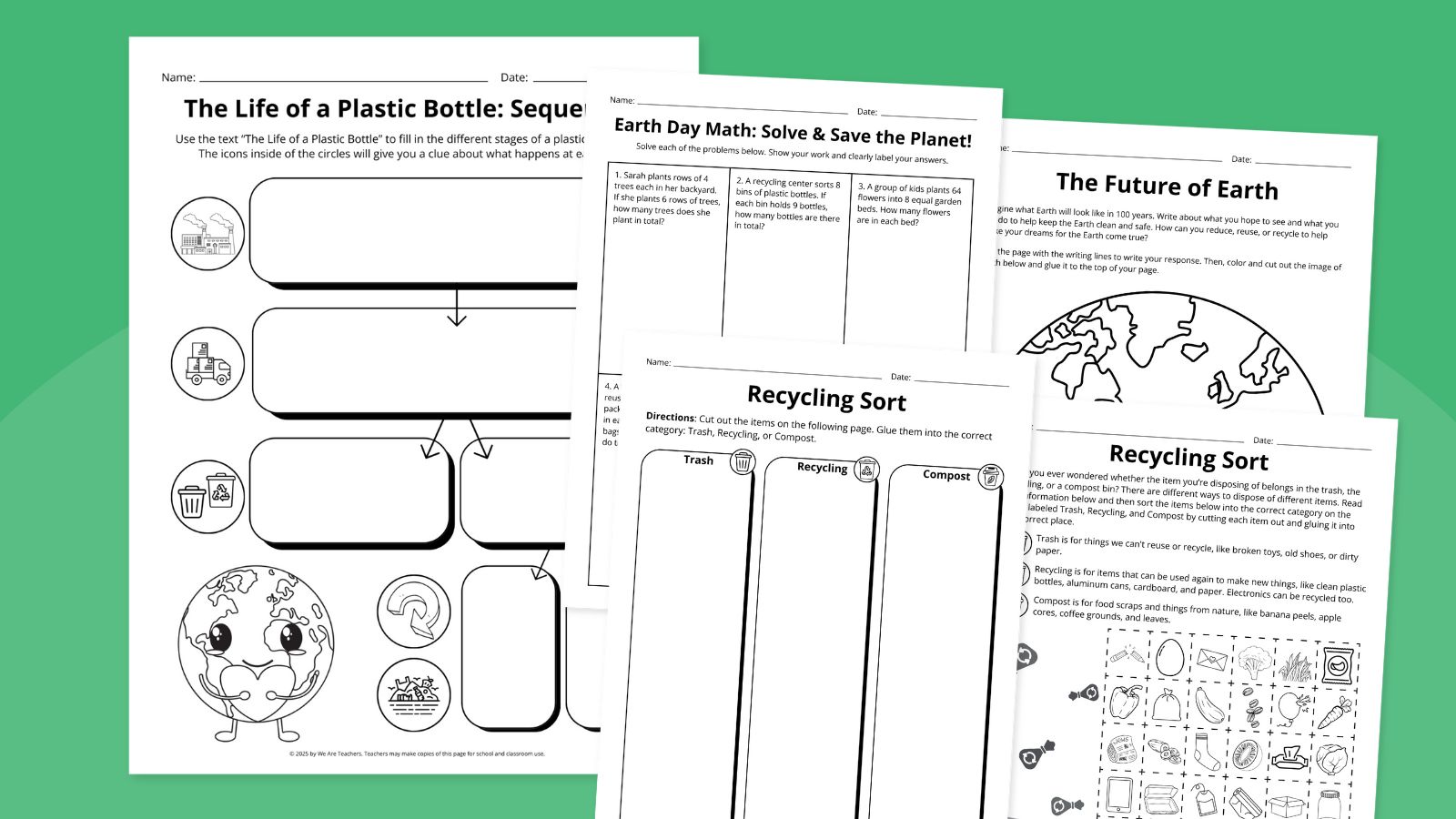
printable Earth Day worksheets for kids

Grab our Earth Day worksheet bundle with all the printables described above.

Looking for more climate change activities for kids? Here are Ways To Make Your School and Classroom More Green.

Plus, don’t forget to grab your free printable climate resource action kit!

Help kids understand important topics like global warming, sea level rise, air pollution, and more with these climate change activities.