
Is your class fidgety, chatty, unfocused, or low-energy? These kids need brain breaks! They’re the perfect way to help your students redirect their energy and focus when they start to fade.
Jump to:
- Why Brain Breaks Matter
- How To Choose the Right Brain Breaks
- Top 3 Brain Breaks for Kids
- Mindful Brain Breaks
- Brain Break Games
- Physical Movement Brain Breaks
- Educational Brain Breaks
- More Brain Breaks for Kids
Why Brain Breaks Matter
Claire English, founder of The Unteachables Academy, says brain breaks can make a noticeable difference in student focus and behavior.
“I think one of the biggest misconceptions is that brain breaks are simply a fun extra, a reward, or something you throw in when you’ve got five spare minutes at the end of a lesson,” Claire says. “In reality, they’re one of the most effective regulation and classroom management tools we have.”
She continues: “When we hear the word ‘regulation,’ we tend to think ‘calm students down.’ But regulation works less like an on/off switch and more like a pendulum.
“On one end, you’ve got students who are highly activated: loud, social, buzzing, distracted, and difficult to redirect. On the other end, you’ve got students who are flat, disengaged, checked out, and struggling to participate. In the middle sits the sweet spot: the zone where optimal learning can actually happen.”
And that’s the key takeaway, according to Claire: “Brain breaks are effective because they activate the prefrontal cortex, moving students back toward the learning zone.”
How To Choose the Right Brain Breaks for Kids
Brain breaks aren’t about filling time. They’re about bridging the gap between where students are and where you need them to be.
—Claire English, The Unteachables Academy (@the.unteachables)
To shift your thinking about brain breaks and make them really work for you, Claire offers this advice: “The question I encourage teachers to ask isn’t ‘What brain break should I do?’ but rather ‘What brain state do I need students to be in right now, and how can I move them there?'”
Sometimes, the best break activity can feel a little counterintuitive. “For example, if I’ve got a class that is chatty, restless, and struggling to settle into a reflection or independent work task, I might actually use a highly engaging brain break first,” explains Claire.
“One of my favorites is something called Beat the Clock. I throw a two-minute timer on the board and challenge students to write things like 10 words that start with P or 10 synonyms for cold. It’s competitive and engaging enough to grab their attention, but it naturally gets them sitting quietly and writing. In two minutes, I’ve often reclaimed the room and can transition into the task that was previously feeling impossible.”
You can also use brain breaks as a way to naturally encourage the behaviors you’re looking for. “Other brain breaks work by channeling energy rather than trying to suppress it,” Claire notes.
“For example, games like Rock, Paper, Scissors, Count to 20, or Popcorn require students to work together without talking over one another. Rather than repeatedly telling students to stop calling out, you’re creating a game where the structure itself fosters those behaviors.”
Top 3 Brain Breaks for Kids
These are Claire’s favorite brain breaks, the ones she turns to whenever her classes need to refocus and settle back in for learning. Follow her on Instagram (@the.unteachables) for more terrific ideas!
Beat the Clock
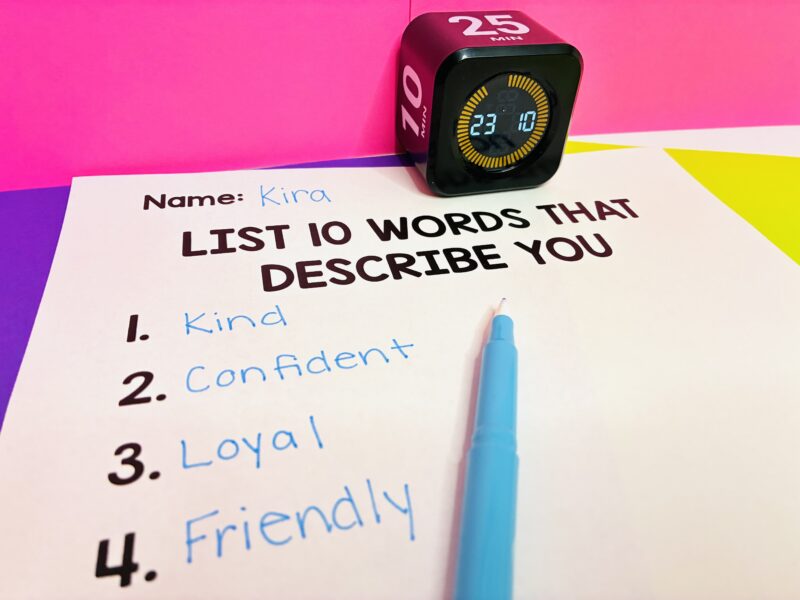
How it works: Give kids one to two minutes to write a list of items (e.g., 10 animals with scales, 10 excuses for being late, 10 words with exactly five letters, etc.). Set the timer and watch them rack their brains and race to finish!
Why it works: “It’s independent. It’s engaging. It requires pen to paper. It gets students turning on their thinking brains. You can then transition to quiet, teacher-led instruction,” Claire promises.
Rock, Paper, Scissors Battle
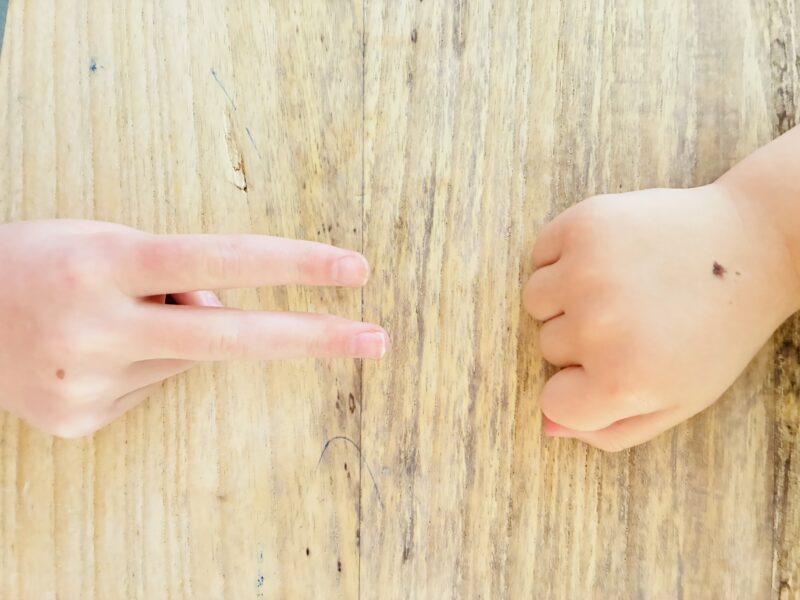
How it works: Students stand, pair up, and play a game of Rock, Paper, Scissors. The loser of each pair sits down, while the winners pair up and play again. Continue until you have a single winner!
Why it works: “This is particularly useful when students are restless and won’t sit in their chairs,” Claire notes. “It gets them up and moving, and then without saying a word, you will have them back in their seats to transition to calm, teacher-led instruction. Buy-in galore!”
Count to 20
How it works: The goal is to count to 20 as a class. Only one person can say each number, but there’s no set order. If two people say a number at the same time, the group starts over at 1. The game ends when the class successfully makes it to 20.
Why it works: “Rather than getting frustrated, you’re positively channeling that energy into a game that is really fun but requires them to stop talking over each other,” Claire explains. “The fact that it’s golden for community-building and rapport is just a bonus!”
Mindful Brain Breaks for Kids
These mindful brain breaks help kids calm their bodies, refocus their minds, and transition back into learning with less stress.
Breathe Like an Animal
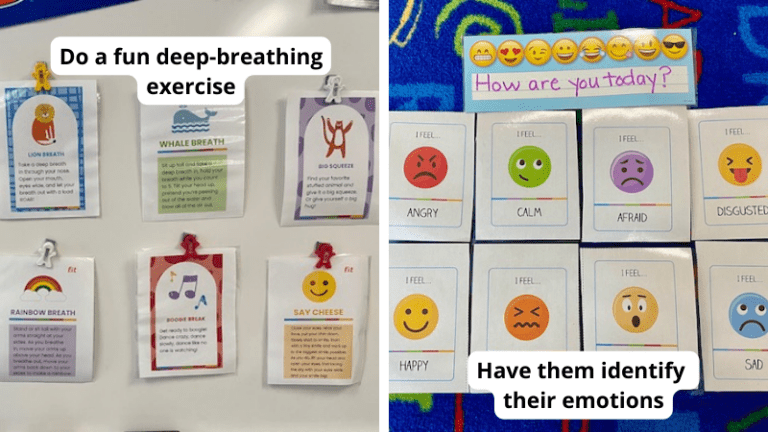
Turn calming breaths into a game by having students act like different animals. They might do a big roar-and-exhale like a lion or short, quick sniffs like a bunny. It feels silly, but it’s actually a powerful way to help kids regulate their breathing, release tension, and settle back into learning.
Try it: Animal Breath Exercises for Kids on YouTube
Guided Meditation
These guided meditations are educational and perfect to use as brain breaks whenever you and your students just need to breathe. Catch your breath with any of these 20 guided video meditations.
Learn more: Terrific Guided Meditations for Teachers
Focus Ball
Walk your kids through the following exercise: Stand or sit with legs and feet together. Bring your palms together in front of your chest. Keep your fingertips touching as you pull your palms apart, forming a ball with your fingers. Press your fingertips together until you feel the muscles in your hands and arms activating. See if you feel your core tighten too. Now close your eyes, and as you breathe in, inflate your ball, and as you breathe out, flatten the ball by pushing your palms together. (Repeat these instructions for 60 seconds.)
Mandala Time
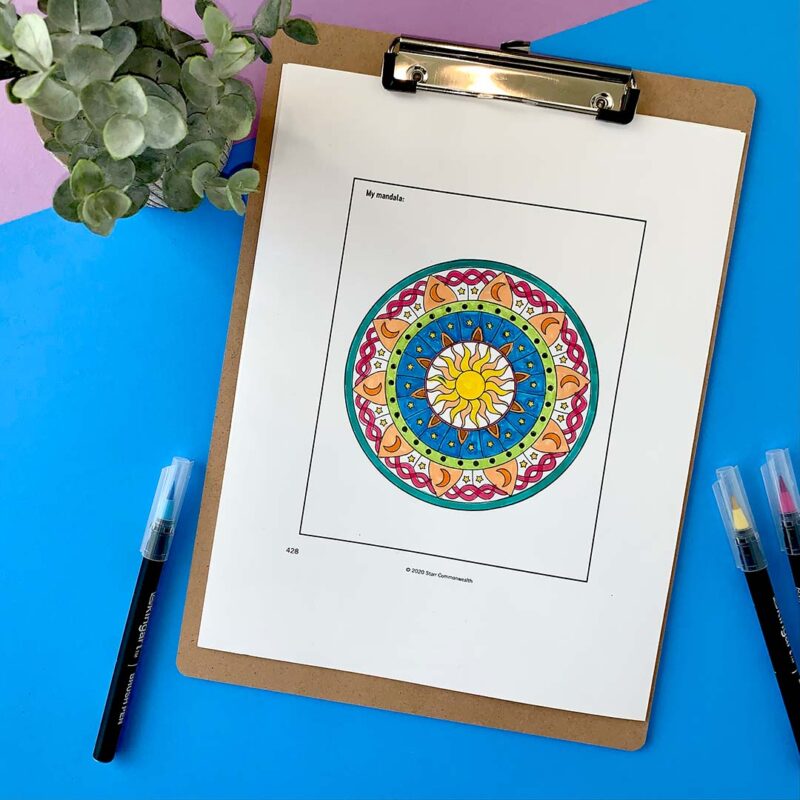
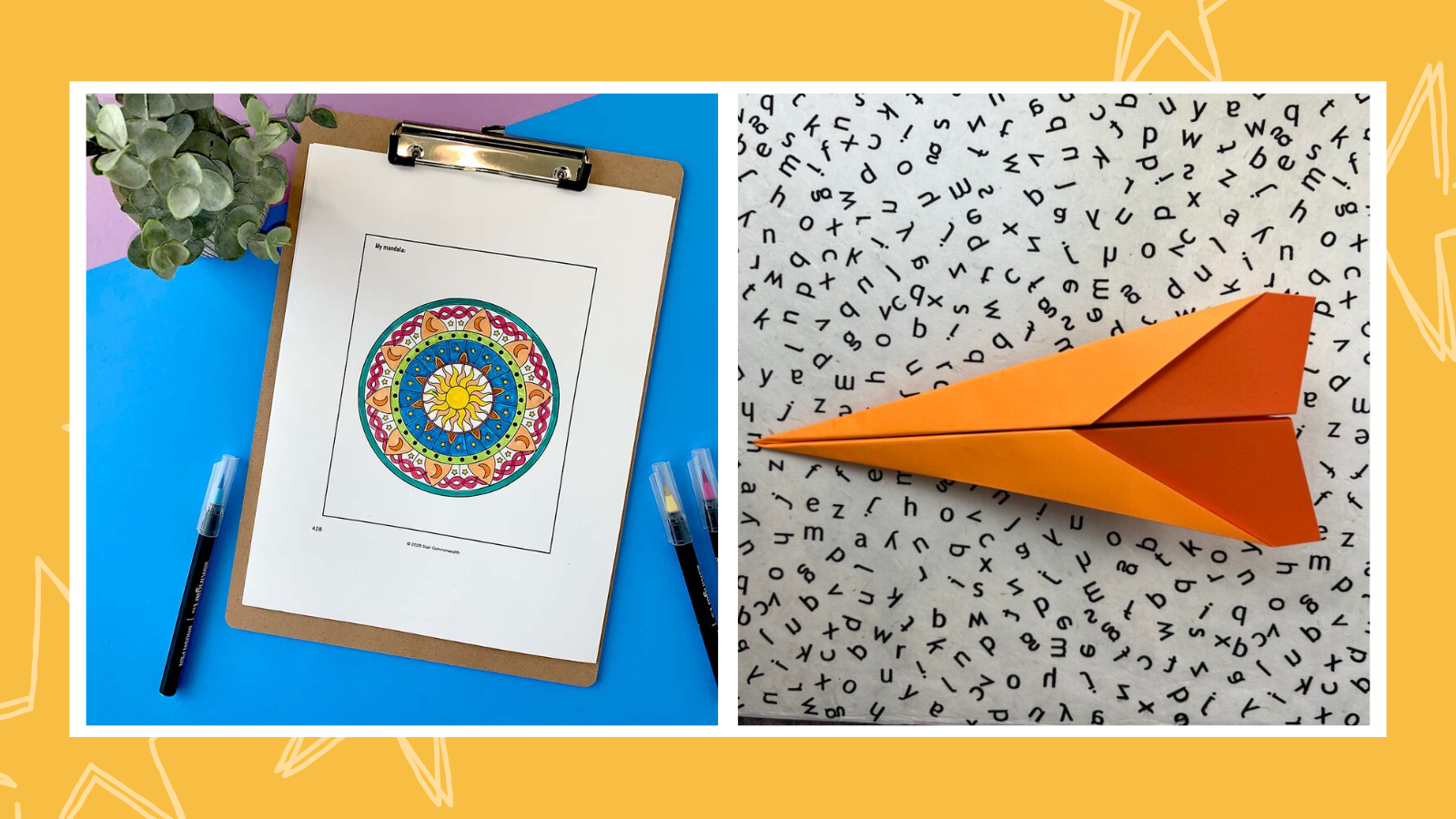
Even grown-ups have picked up on the coloring craze as an excellent way to calm down and zone out. Put on some nice mellow background music and give students 5 to 10 minutes to fill in mandalas from our free printable set.
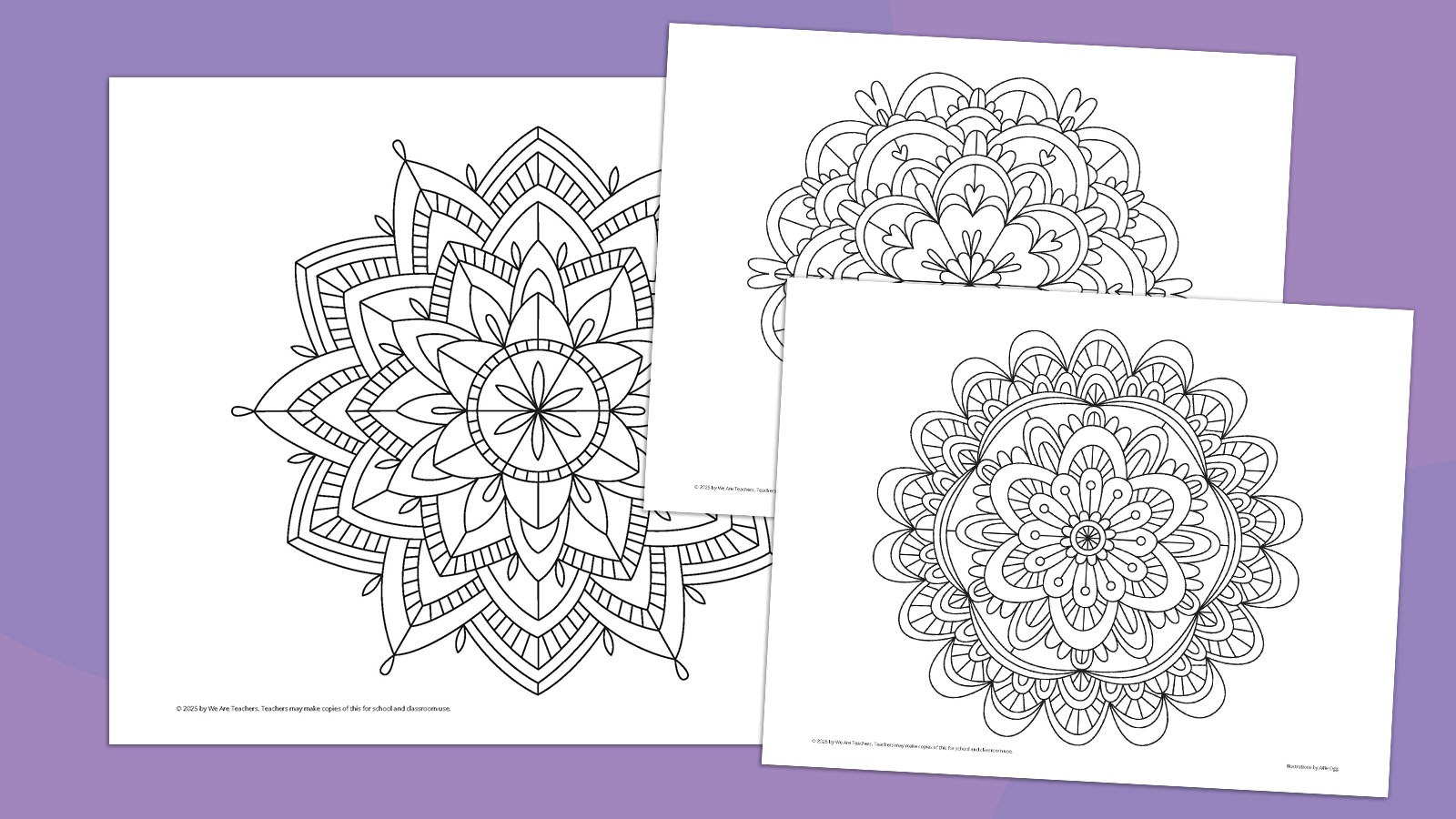
Printable Mandala Pages
Print and share our three free mandala designs. You can color them differently every time!
Ear-Nose Switcheroo
This is a quick and easy challenge to reset the brain. Instruct kids to touch their left ear with their right hand and at the same time touch their nose with their left hand. Then have them switch their hands and touch their right ear with their left hand and their nose with their right hand. Switch back and forth a few times. Then have them close their eyes, take a deep breath, and blow it all out.
Try it: Ear-Nose Switcheroo on YouTube
Yoga Break

Inspire kids to move, stretch, and practice mindfulness with yoga. Flowing through downward dog gets students’ blood circulating, which helps them focus for the lesson ahead.
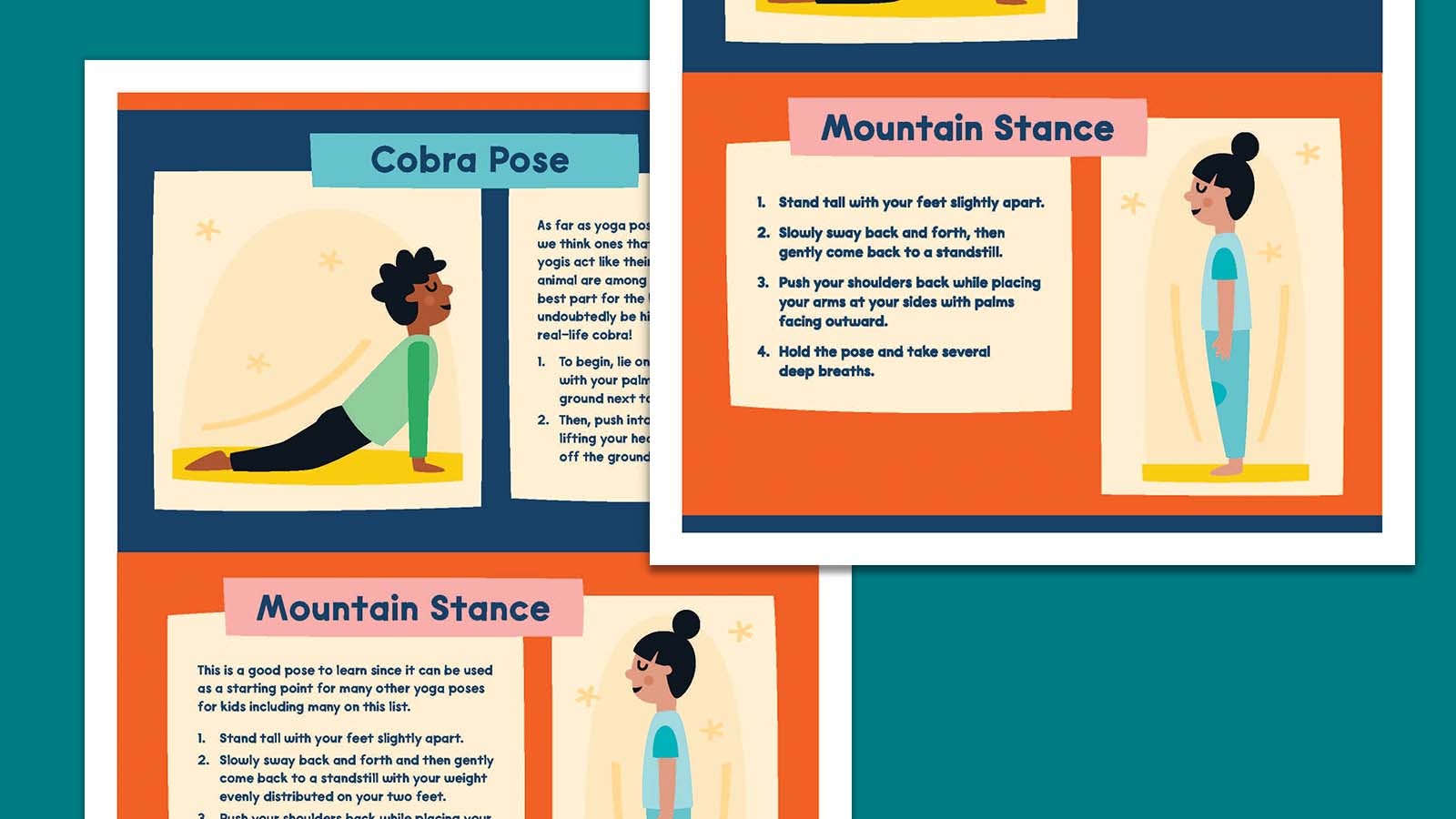
Yoga Poses for Kids Printables
Teach these 15 fun and easy yoga poses with our free printable posters that are perfect for classrooms!
Strrrretch It Out
No one should sit for too long. Build in stretch breaks to allow students to stretch muscles that just sat through a long lesson. One side stretch you can do: Students can stand with their feet shoulder-distance apart. Put their left hand on their hip and raise their right hand overhead. Lean to the left and stretch their arm as far as they can to the left. Repeat on the right side. Then stand tall and slowly roll down one vertebra at a time until their hands reach the floor (or at least their shins). Have them take a deep breath, then slowly roll back up. Repeat as necessary.
Sound Focus
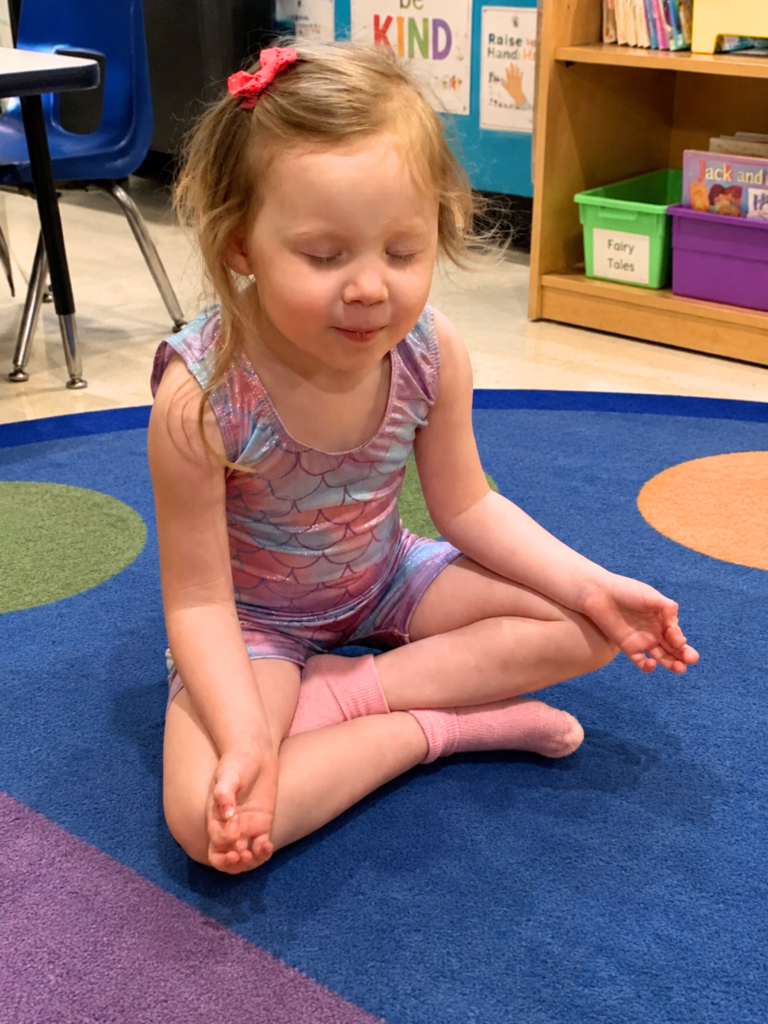
Have kids sit quietly with their eyes closed. Ring a chime or gong. Have them listen carefully to the chime, feeling the vibration in their body as the sound reverberates and then slowly fades. Tell them to breathe slowly and deeply as they focus on the sound.
Finger Breathing
Use your fingers to breathe in and out. Trace your left hand with the pointer finger of your right hand. Breathe in as you move up a finger, breathe out as you move down a finger. Repeat until you’ve breathed through all 10 fingers.
Cross-Body Exercise
Have kids stand tall and cross one leg in front of the other while pressing the outsides of their feet together. Now have them cross their arms over each other at the wrists. Then have them clasp their hands and curl their arms into their chest. Take a few breaths, and uncross and cross the opposite way for a few more breaths.
Float With Jellyfish
When you really need to take the energy in your room down a notch, turn off the lights, set a timer, and put on a calming video that transports kids into a bloom of jellyfish. They’ll be mesmerized by the slow, fluid motions and lulled into calmness by the soothing music.
Try it: Jellyfish Aquarium on YouTube
Hot Hands
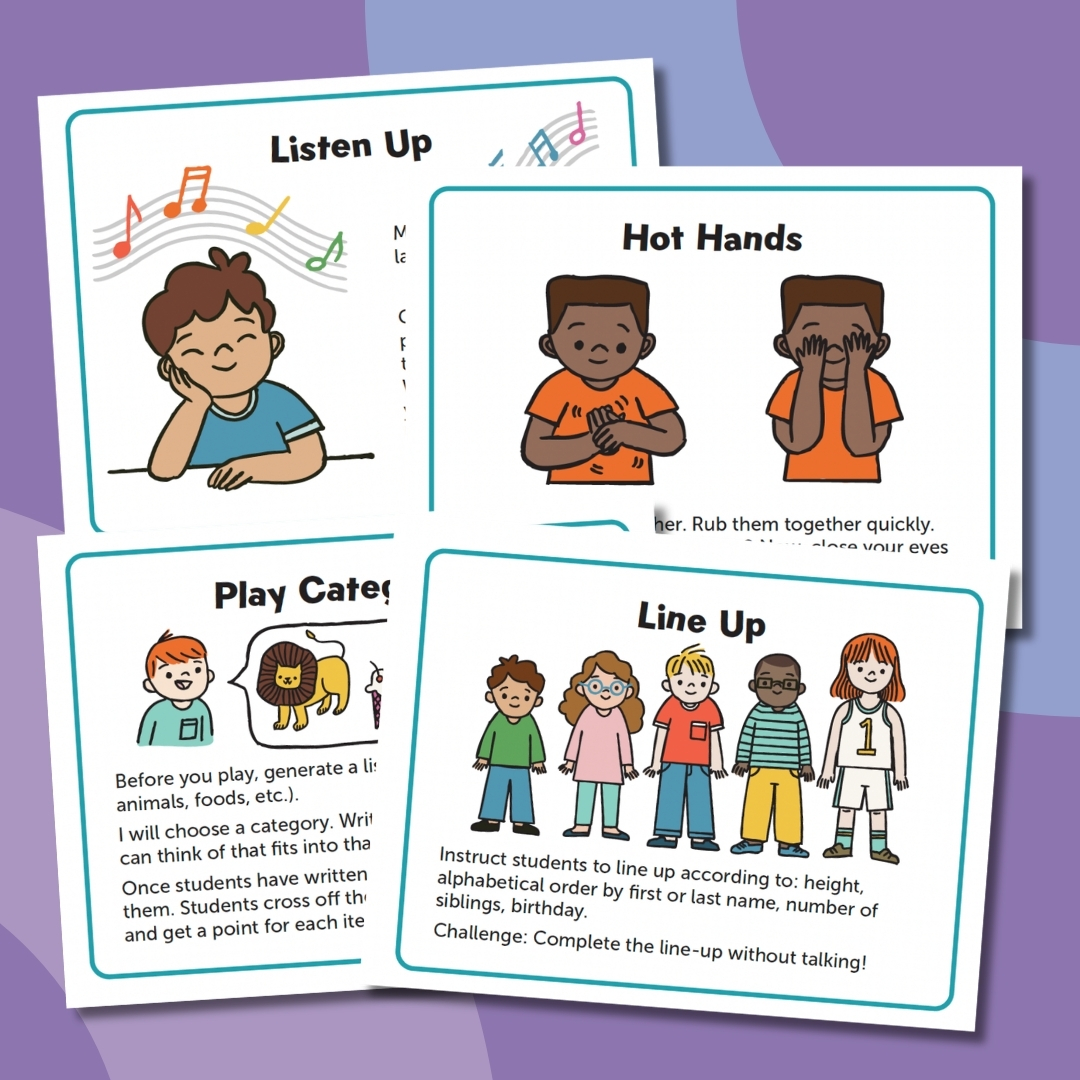
This is a good break to practice when you sense a weariness in the air. Have kids rub their hands together vigorously until they warm up. Tell them to close their eyes and place their hands over their eyes. Instruct them to breathe deeply as they clear their minds and refocus.
Coloring Break
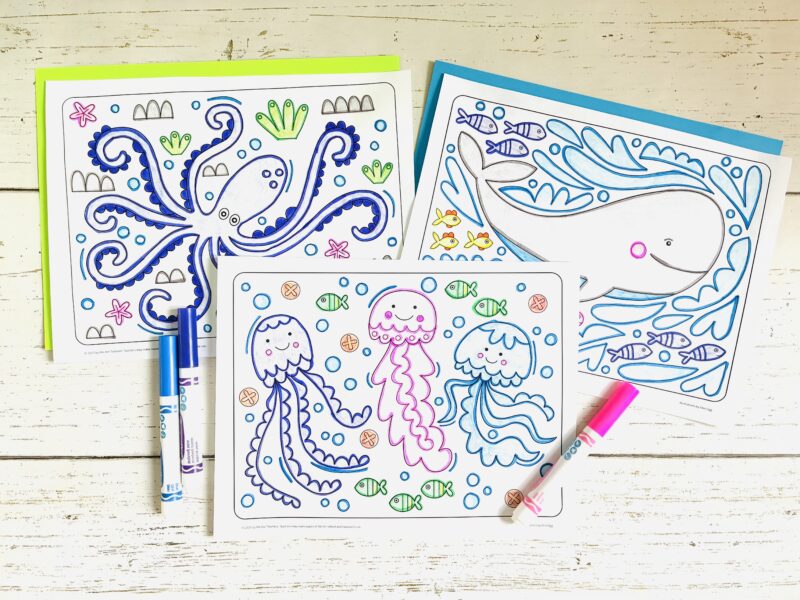
Set a timer for five minutes and have students work on a coloring sheet while you play calming music. The activity is a great way to refocus students as they calm down from a high-energy activity.
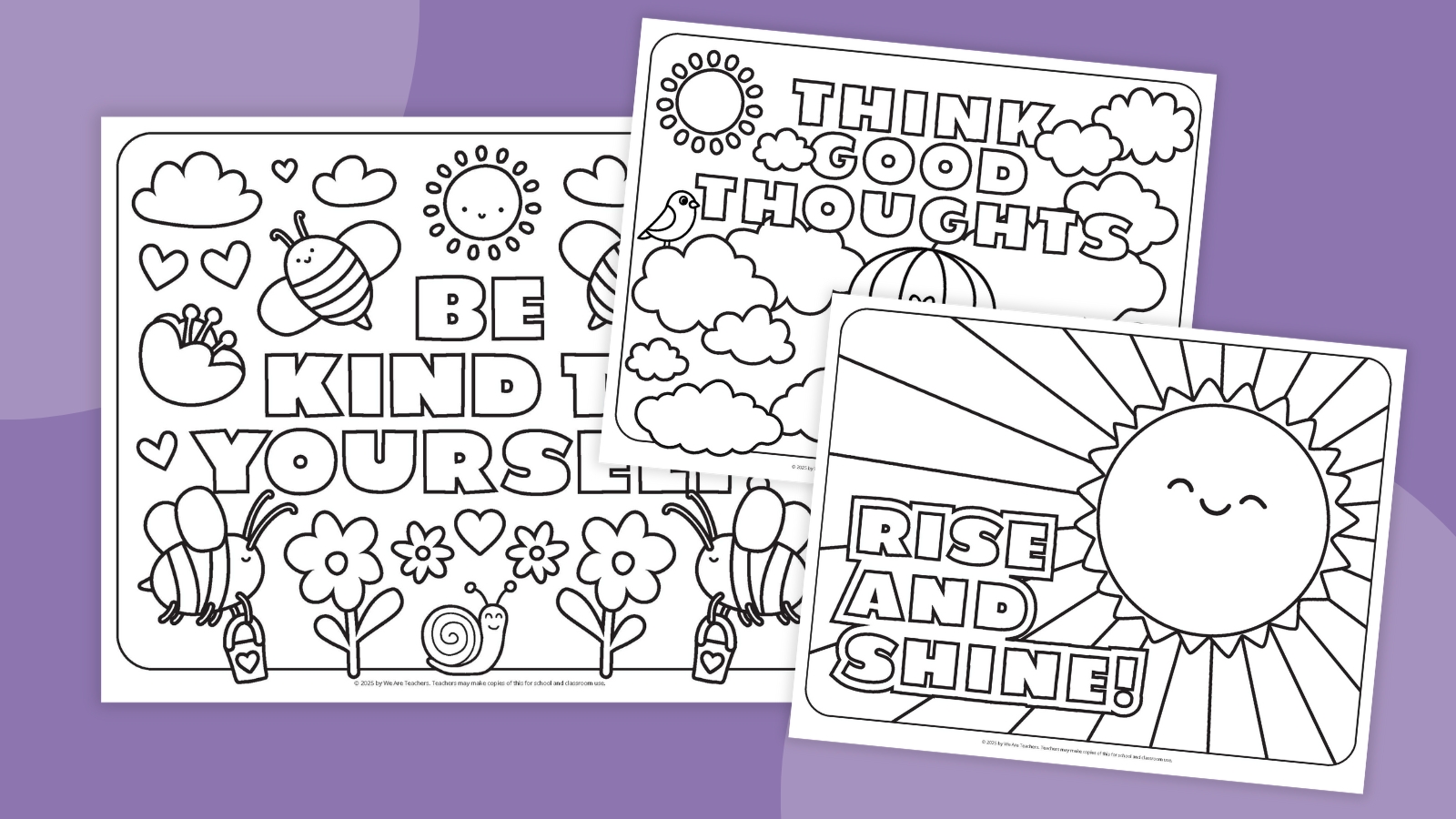
Free Printable Coloring Pages
Check out our huge collection of free printable coloring pages, and keep a stack on hand for brain breaks!
Cat-Cow
This spine-flexibility exercise is a good one to do outside or on the carpet. Have kids start on all fours and then give them the following instructions to complete the cat and cow yoga poses: Place your shoulders over your wrists and hips over your knees. Arch your back to the sky and tuck in the tailbone (cat pose). Let your head fall between your arms. From there, sink the belly toward the ground, and lift the chest and chin (cow pose). Gently alternate between the two poses while breathing deeply.
Two-Minute Reset
Never underestimate the power of stillness. When the energy gets a little ramped up, and it’s time for the entire class to take a pause, have them drop everything and glue their eyes to the screen as you show the countdown video. The gentle lulling of the waves and the sight of the sun sparkling off the water will reset their nervous system in a jiffy.
Try it: Two-Minute Reset on YouTube
Slow-Motion Wings
Walk your kids through this winged movement: Sit cross-legged on the floor. Stretch your arms down by your sides with your palms facing inward toward your body. Slowly raise both arms while rotating hands forward. When your arms reach shoulder level, your hands should be facing forward. Continue raising arms, slowly rotating palms so that by the time hands are overhead, palms are facing each other. Slowly lower arms, repeating the rotation (palms facing each other, palms facing forward, palms facing sides) until they are once again resting at your sides. As you raise and lower your arms, stretch them as long as you can, as if you are scraping the sides of the room and the ceiling. Repeat slowly three times, breathing deeply.
Mental Health Check-in
Transitions are a big part of the elementary school day. When I first started teaching two decades ago, I was surprised by just how much time it takes to get ready for specials or to bring students back from centers. It’s hard not to feel like that’s lost time. That’s why using transition time for mental health check-ins is such a game changer. Mental health check-ins can help students get in touch with their emotions, acknowledge and cultivate positive feelings, and cope with negative emotions, to be more focused throughout the day.
Learn more: How To Use Transition Times (Like Lining Up) for Mental and Emotional Health Check-Ins
Brain Break Games
These quick brain breaks bring a little friendly competition to your classroom, injecting some energy into students who seem a bit checked out.
Heads Up, 7 Up
Remember this game from elementary school? Seven kids are chosen to stand up in front of the room, while the rest of the class puts their heads down with a thumb up. The seven students go around and each lightly tap their chosen person. The chosen seven then try to guess who picked them. Those who guess correctly get to take the place of whoever picked them, and the game continues on.
Simon Says
In this classic game, the chosen leader calls out simple moves for the class to follow, saying “Simon says” before each directive. When the leader tries to trick the group without saying “Simon says” before the directive, those who do the move anyway sit out. Play until only one person is left standing.
Four Corners
The game leader puts their head down and counts to 10. At the same time, the rest of the group scatters into one of four designated corners. Before picking up their head, the leader calls out one corner. Anyone in that corner sits out. The game continues until only one person is left, and then they lead the next time the game is played.
Scavenger Hunt

This gets kids up and moving while sharpening their observation skills. Give students a list of items to find, then set a timer for five minutes. How many can they track down before the buzzer goes off? To build in some cooperation, have students work in small groups instead of on their own.
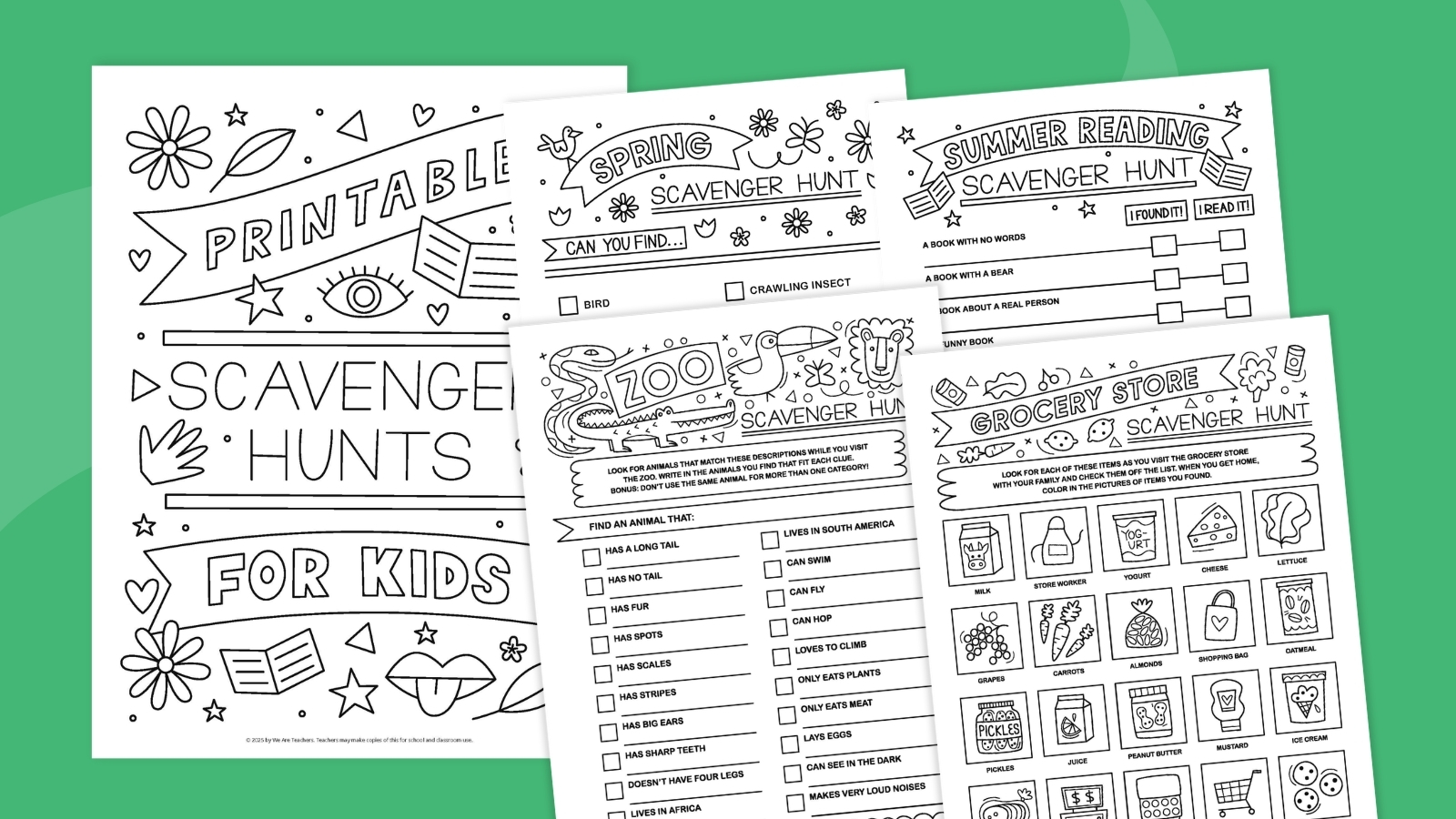
Free Printable Scavenger Hunts
Print some (or all!) of our free scavenger hunts for quick, easy brain breaks kids will love.
Minute To Win It
A Minute To Win It challenge can be a great way to get kids up and moving, with a time limit! Check out the Minute To Win It options that teachers love, like cup stacking and the cereal box puzzle.
Silent Ball
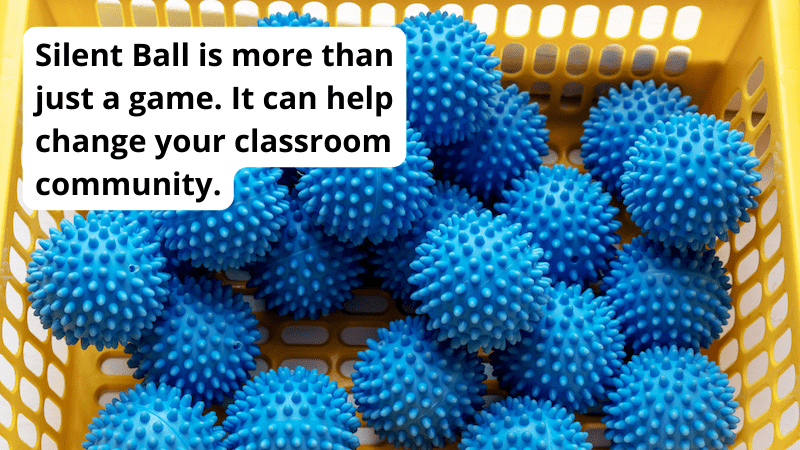
You can play a quick game of Silent Ball anytime, anywhere. Play a quick three-minute game right before dismissal or before transitioning to a new activity. All you need is a small squishy ball. The rules are simple: 1) Stay quiet and 2) don’t drop the ball when passing it around. This activity is one of those educational brain breaks that builds a positive classroom community, fosters friendly competition, and boosts nonverbal communication. Enjoy the silence!
Learn more: Is Silent Ball the Best Classroom Management Tool You Never Knew Existed?
Brain Dash 60
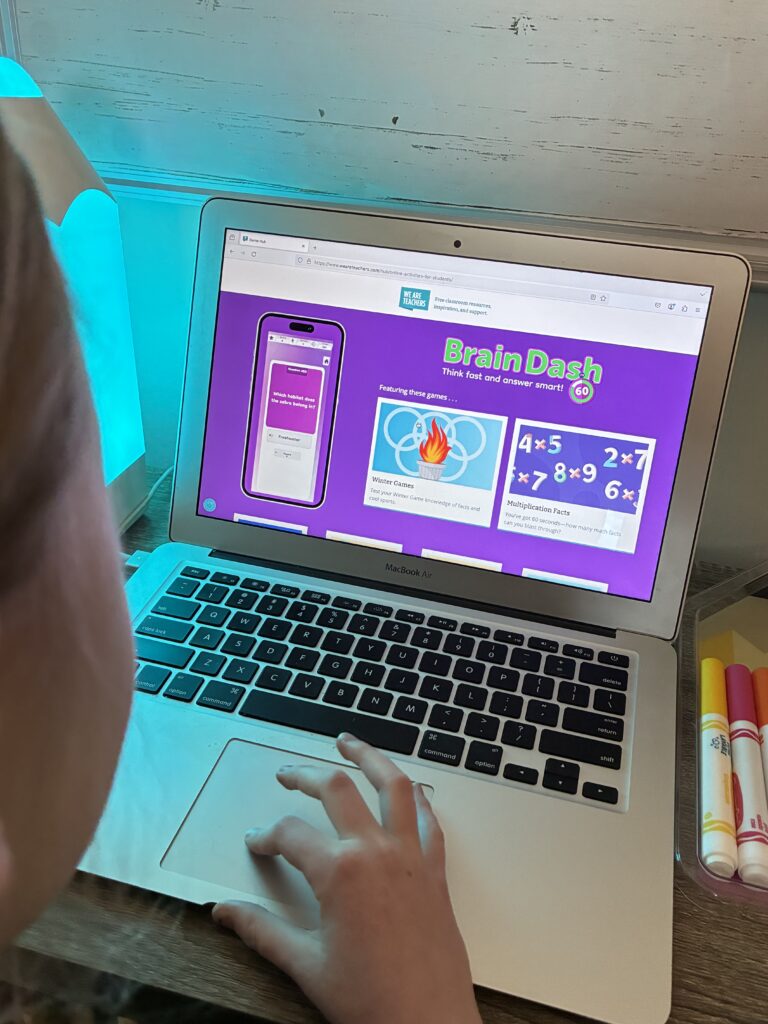
This engaging online game is free, educational, and lots of fun to play with a group! Kids can play independently and compare their scores, or try to beat the buzzer by working together as a class.
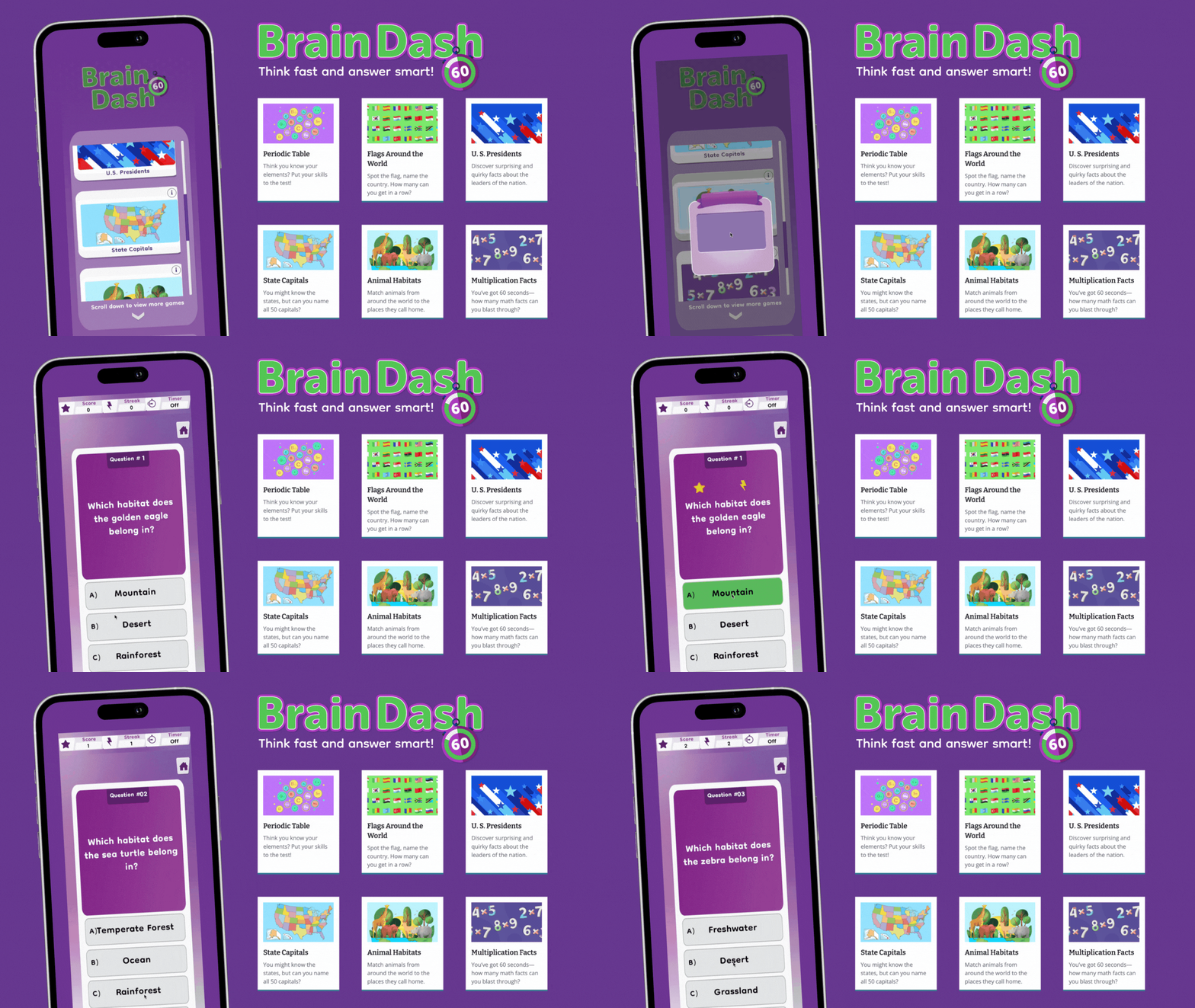
Brain Dash 60
Play our free online trivia quiz game, Brain Dash, with topics ranging from holidays and space to geography and more.
I Spy
Have one student start by finding an object and saying “I spy something beginning with the letter [fill in the blank].” The first person to guess the item correctly gets to choose the next object. You can have kids add in more clues to help.
Connections
By now you have probably heard (and may be a daily player) of the game Connections through the New York Times. Kids of all ages love a challenge, and this definitely provides some brain-bending exercise! You can even make your own custom game to tailor it to your students!
Learn more: You and Your Students Can Make Your Own Custom “Connections” Puzzles
Wordle
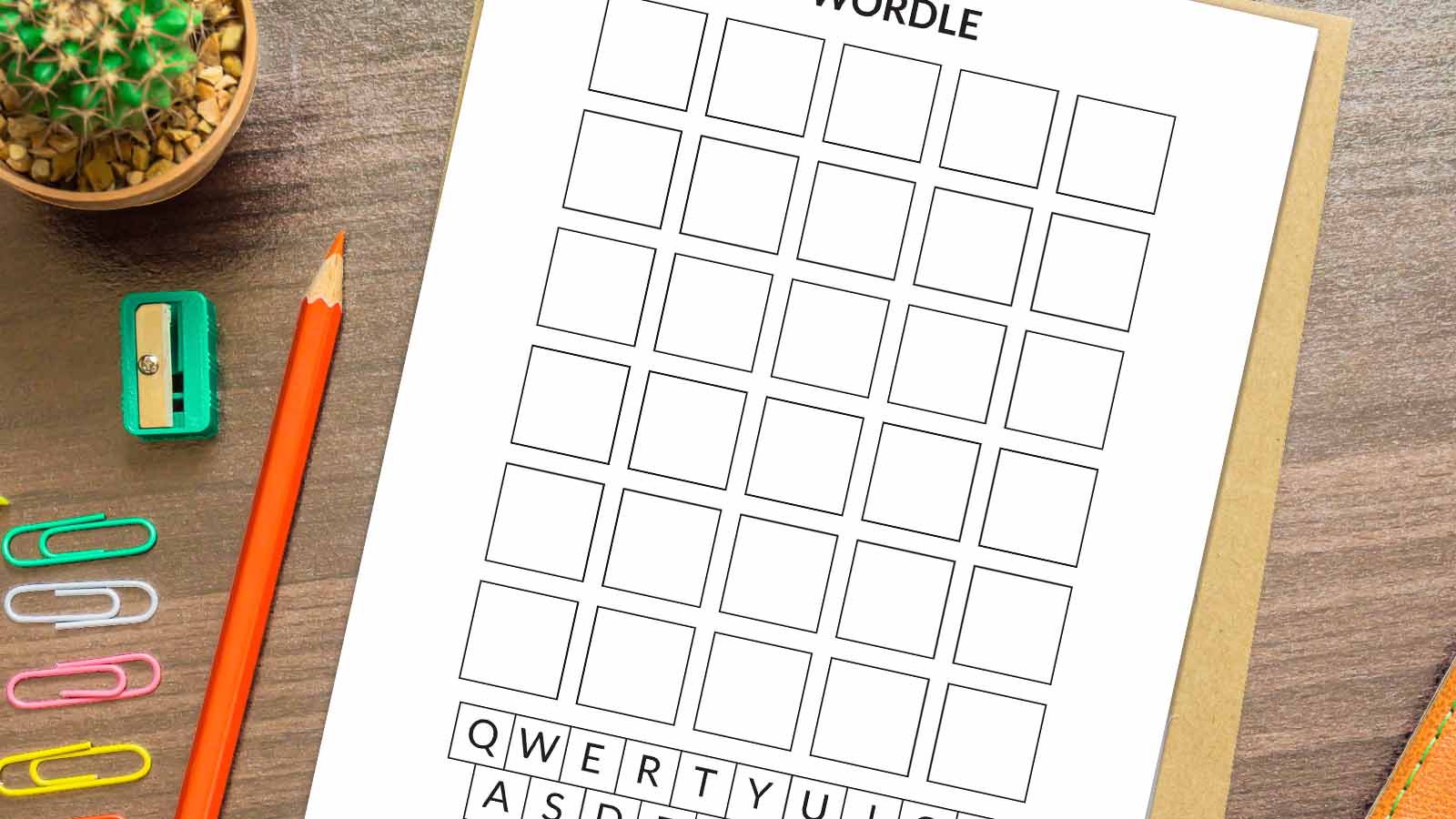
The New York Times daily word game that started it all is a great educational brain break for kids and adults of all ages. Play Wordle daily using the official game online, try it on giant chart paper, or use our free printable worksheet.
Printable Wordle Template
Use this free printable Wordle template to play the game as an educational brain break.
Word Lab
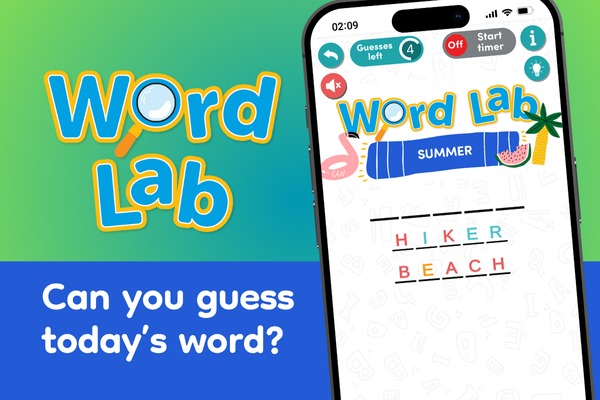
Our free online game is a lot like Wordle, but it’s differentiated for kids of different ages. Each day you’ll find a new three-letter, five-letter, and seven-letter word to guess. Try one or all of them with your class.
Word Lab
Come back daily to play Word Lab from We Are Teachers, an online word-guessing game for all ages.
A-Z Categories
Name a category by subject, like animals or breakfast foods. Students then take turns saying a word that fits into the category for each letter of the alphabet, one at a time. See if you can make it all the way from A to Z (although if you need to skip X, we understand!).
Scattergories
This classic board game is one of our favorite brain breaks for kids. If you don’t own the board game itself, make your own game board. Create a list of around 10 categories (e.g., animals, school subjects, toys, desserts, etc.). Then, choose a letter of the alphabet and give kids five minutes to come up with a word to fit each category, starting with the designated letter. When the timer goes off, kids read their lists and see who came up with the most!
Paper Airplane Challenge
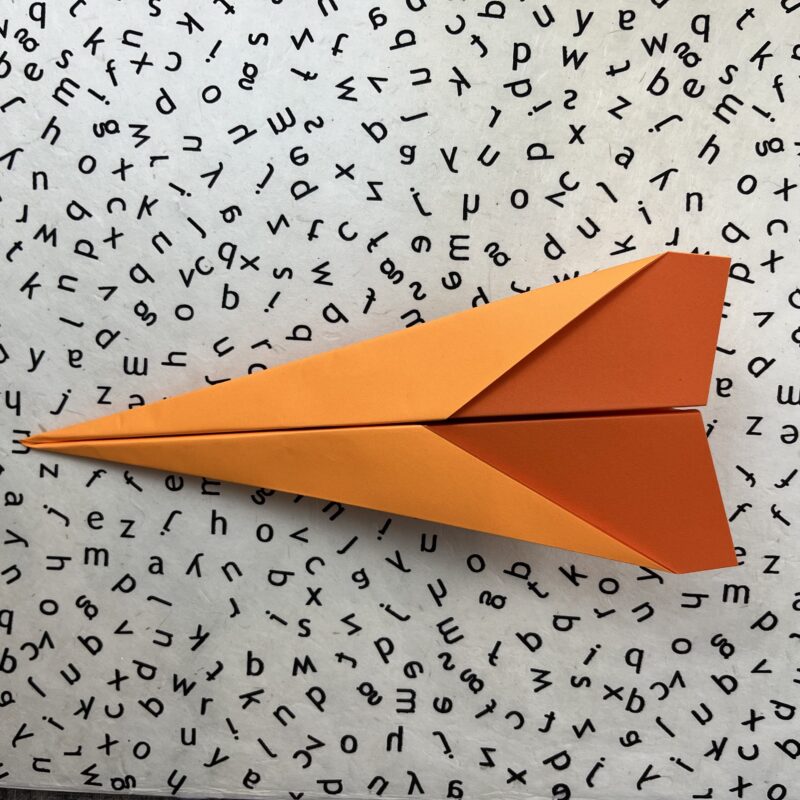
Pass out the scrap paper and give students 60 seconds to build the best paper plane they can. Then, line up and send them flying to see whose plane can travel the farthest!
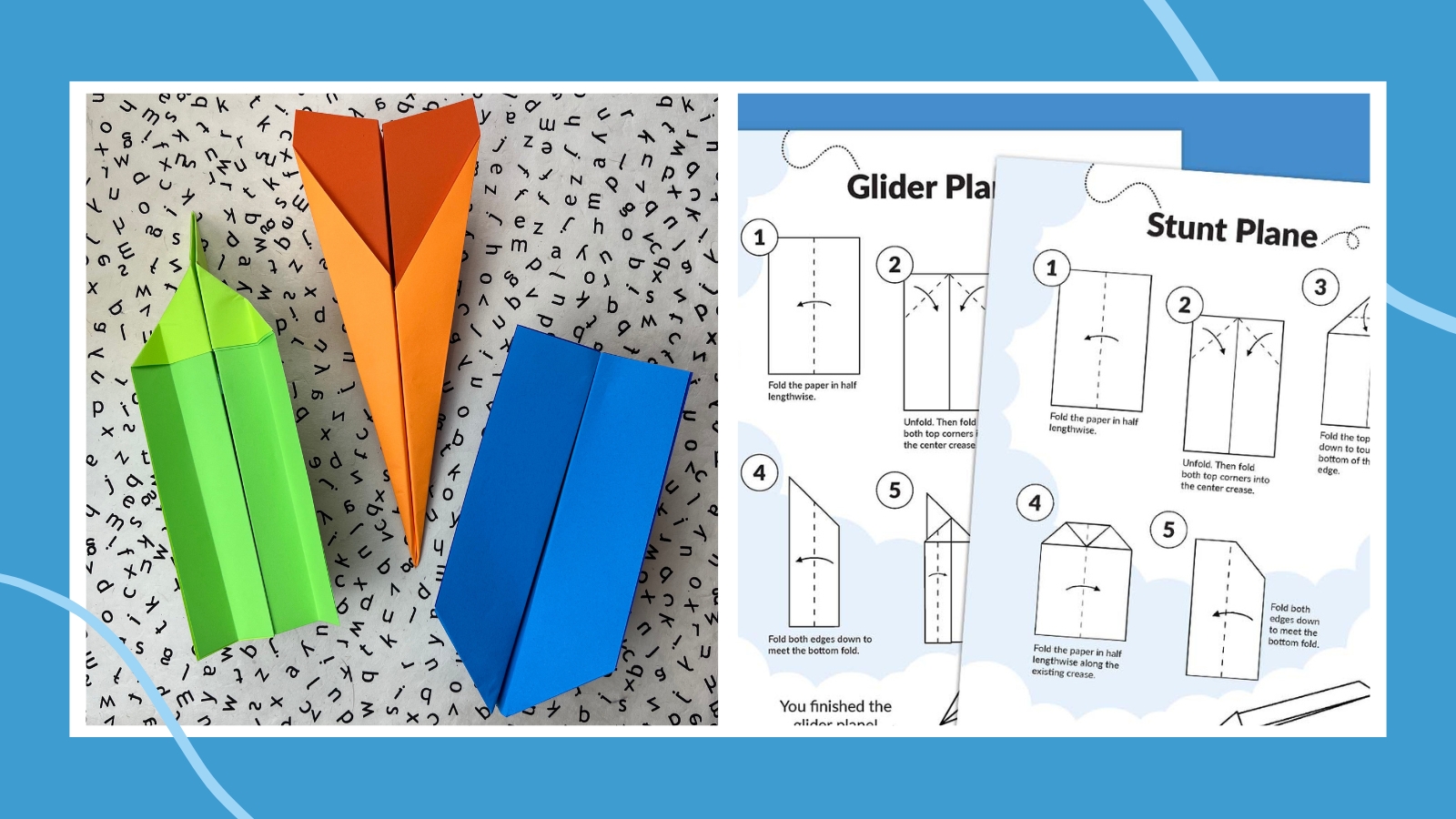
How To Make Paper Airplanes (Free Printable)
Follow our simple step-by-step directions for making three different paper airplanes.
Physical Movement Brain Breaks for Kids
Shake out the wiggles and give students a chance to burn off excess energy with short movement breaks like these.
Line Up
Kids are very social and curious beings. Most of them love to chat with one another at any chance they can get. Lining up to leave the room for anything is the perfect chance for them to mix and mingle. Use line-up time productively by having students line up in special ways. Some fun ideas include lining up in alphabetical order by name, by birth date, or by height order.
Just Jump!
Sometimes kids just need to bounce out their energy. Have them pretend they are bouncing on a mini-trampoline (this will keep their movement on a vertical plane instead of all over the room), and give them a couple of minutes to let loose!
Do the Wave
Here’s one for a group of kids: Start the wave! Beginning at one end of the room, kids stand up and throw their arms overhead, bringing them back down as they return to their seats. Each row follows until you reach the other end of the room. Amp it up by encouraging your kids to tap their feet or tap their hands on their legs so that they are in constant motion. (This activity works great on Zoom too.)
Stir the Pot
Have kids visualize they are standing in front of an enormous cauldron. Inside the cauldron is an ooey-gooey pot of caramel. They take hold of a large stirrer and plunge it to the bottom of the pot. Slowly begin to stir in a clockwise direction. Have them use their whole body to help get a full range of motion in their wrists and shoulders. Instruct them to throw their hips into the action. After a minute or two, reverse the direction.
Make a Pizza
Similar to Stir the Pot, sit on the rug or in a circle outside and have students make an imaginary pizza. As they pretend to roll out the dough, spread the sauce, and sprinkle on toppings and cheese, they’re moving and stretching.
Make It Rain
Conjure up a rainstorm! Sitting or standing at a desk or table, have kids tap one finger on the desk, then two, then three, then four, then their whole hand until you all feel like you’re in the middle of a deluge. Work your way backward from five down to one as the storm ebbs away.
Knee to Elbow
First, instruct kids to touch their left elbow to their right knee, then touch their right elbow to their left knee. Switch back and forth, going slowly at first, building speed until they are going at a vigorous pace. Next, do some windmills by standing tall with their feet shoulder-width apart and their arms stretched out. Then, they bend at the waist and touch their right hand to their left toes, then their left hand to their right toes. Switch back and forth.
Xs and Os
Walk kids through the following exercise: Sitting in a chair with your feet on the ground and legs together, curl your body into your lap, folding yourself into an O shape. Next, open your arms and legs wide, forming an X shape with your body. Pull back into an O shape, then back out to an X shape. Repeat three times.
5, 4, 3, 2, 1
Get hearts pumping with a quick sequence of exercises. Call out five actions for your students to do as quickly as they can. For instance, five jumping jacks, four push-ups, three sit-ups, two squat jumps, and one tree pose.
Imaginary Skateboard
Have your kids line up next to a wall and place one hand on the wall. Tell them to plant the foot closest to the wall and swing the other leg, as if pushing off the ground on a skateboard. Start slowly, with tiny swings, moving up to power pushes. Repeat on the other side.
Dance Break
Music is a great way to reset the mood in a room and raise the energy level. Put on a fun song and have a 30-second freestyle dance party. Here’s a big list of school-appropriate songs for kids you can use.
Dance Class
Take a dance break to the next level by teaching kids actual dances. Teach your kids the steps to popular dances such as the Cha-Cha Slide or the Macarena, or classics like the Charleston!
Try it: Kidz Bop Shuffle on YouTube
Cherry Pickers
This easy activity will get your students’ hearts pumping and give their brains a boost. Have them jump up off the ground, then down to the floor into a push-up position. From there, instruct them to hop their feet up into a frog position, then pop up to a standing position.
Clap On, Clap Off
When you say “Clap on,” kids clap their hands vigorously together. When you say “Clap off,” they stop as quickly as they can and freeze.
Imaginary Jump Rope
When the energy is fading and kids need to get their blood flowing, put on a peppy song and pull out the imaginary jump ropes. Have kids skip or jump-rope in place until the song ends.
Fruit Smoothies
Tell kids it’s time to make fruit smoothies. Ask them to pretend they are in a blender and they are strawberries (or blueberries or bananas, etc.). Dramatically pour orange juice or yogurt into the air in front of you. Tell kids that when you flip the switch, they need to wiggle and jiggle (separately, not together) until they are each individually blended up. Start with a slow speed, moving up to medium, fast, and finally turbo speed. Then reverse it: Start at turbo speed and work back to slow speed.
Silent Cheer
This activity is perfect for the end of a sustained amount of work time—especially for kids who are learning remotely. Let kids stand up and silently cheer and gesture in celebration. How animated can they get?
GoNoodle
If you’re not using GoNoodle yet, check it out! This digital brain breaks site is beloved by teachers and students alike. It’s full of quick videos to help energize, calm, and even teach something new.
Learn more: Teachers Share Their 25 Favorite GoNoodle Videos
Popcorn
Students will all be sitting in their chairs, and at any time, a student can jump up and say “Pop!” Once they do, that student remains standing. If two students pop up at the same time, everyone takes their seats, and the game starts over. How quickly can the entire class pop without having to start over?
Push the Wall
Pushing against a solid object is a good way to displace extra energy from your body. Have kids stand facing a wall with their arms stretched out in front of them, palms on the surface of the wall. They push the wall away with all their strength for a count of 10. Relax for five seconds, then push again. Other activities they can do at the wall include calf stretches and wall push-ups.
3, 2, 1 Blast Off!
Instruct kids to stand and then squat down with their hands on the ground in front of them. All together, count down 3, 2, 1. When you get to zero, they should push up like a rocket, jumping as high as they can—letting all of their energy burst from their center.
Snap, Wink
This is a quick and easy refocusing activity. Tell kids to snap their left fingers while they wink their right eye. Switch to snapping their right fingers while winking their left eye. This activity is particularly effective for younger learners who may find both activities challenging.
Balance Break
A great way to get kids out of their chairs is to practice balance. Have them hop on one foot. Then up the ante by having them stand on one foot and bend their other knee out in front of them.
Tabletop Push-Ups
Kids can use their desk, a chair, the side of their couch—anything really. Have them place their hands on the table and focus their eyes in the center, moving down slowly and pushing back up.
Shake It Out
Using this technique, students pretend to be inside a maraca. After shaking up their bodies, they then settle back for the next activity. Other ideas include pretending to be in a snow globe, tambourine, egg shaker, etc.
Face Gymnastics
Have kids get their silly on for 30 seconds. Tell them to wiggle their eyebrows up and down as fast as they can. Then try to raise one eyebrow at a time.
Say “Cheese!”
This always makes everyone laugh: Make the biggest, cheesiest smile possible. Students automatically get the warm fuzzies, and watching their classmates make funny smiles just adds to the good feelings in the room. Students can walk around smiling at one another, or just do it at their seats.
GIF Replay
Show a funny GIF and have kids mirror what they see. For instance, if the GIF shows a dog running in circles in excitement, kids do the same. Tip: Make a quick slide deck with an embedded GIF on each slide to make it easy to try this brain break anytime!
Educational Brain Breaks for Kids
Keep their brains engaged, but take the pressure off with simple brain breaks that teach fun facts or build new skills.
Which One Doesn’t Belong?
One of these things is not like the other! How quickly can students spot the item that doesn’t match the rest? Be sure to ask them to explain their reasoning to encourage critical thinking skills.
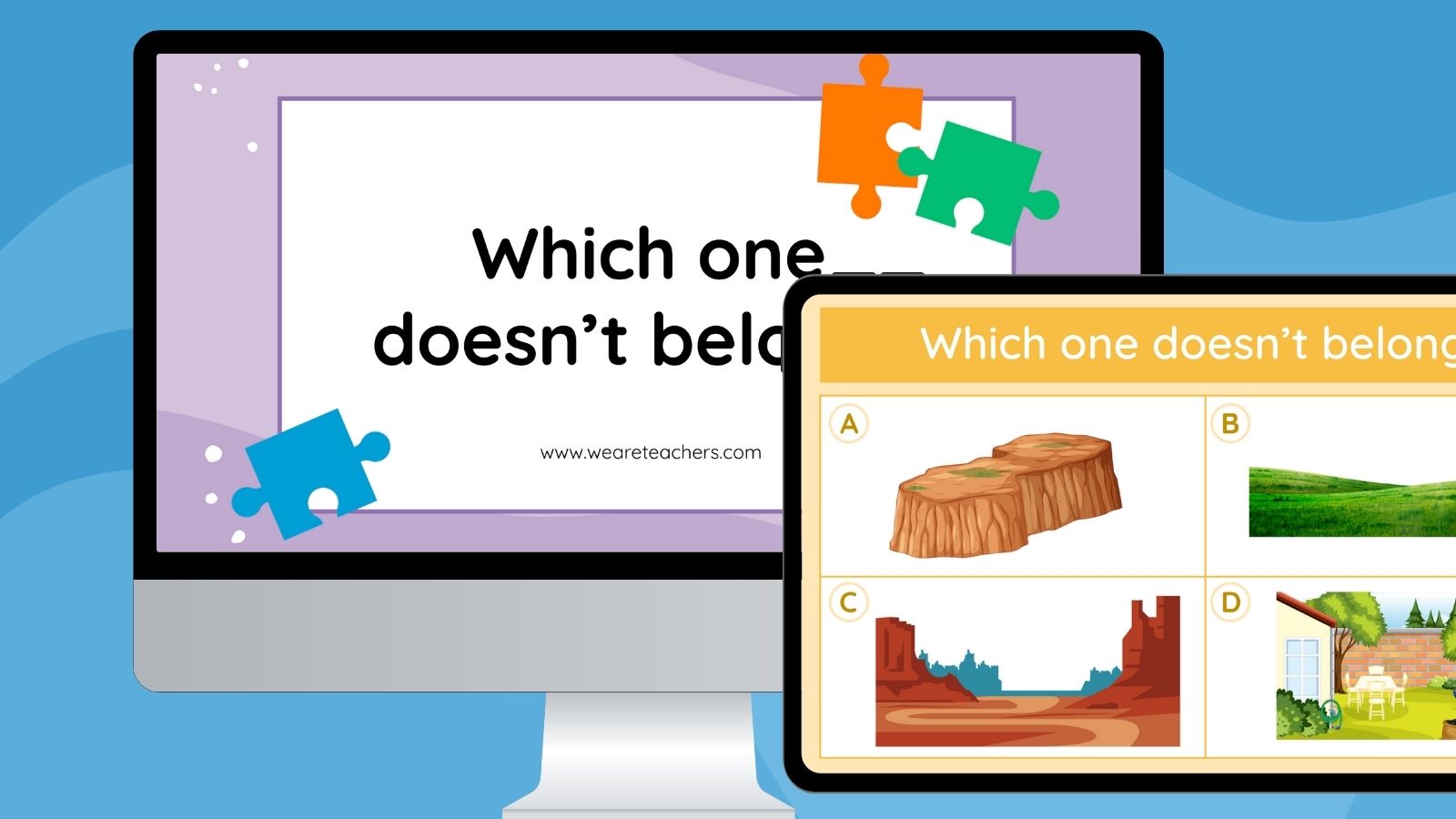
Which One Doesn’t Belong? Slides
Download our free set of slides containing 100+ puzzles for kids to solve.
Learn more: We Are Teachers Joke Lists
Math Brainteasers
Brainteasers are more about using logic than being a math whiz, so students will need to think creatively to solve these. Brain breaks like these teach out-of-the-box thinking and problem-solving skills.
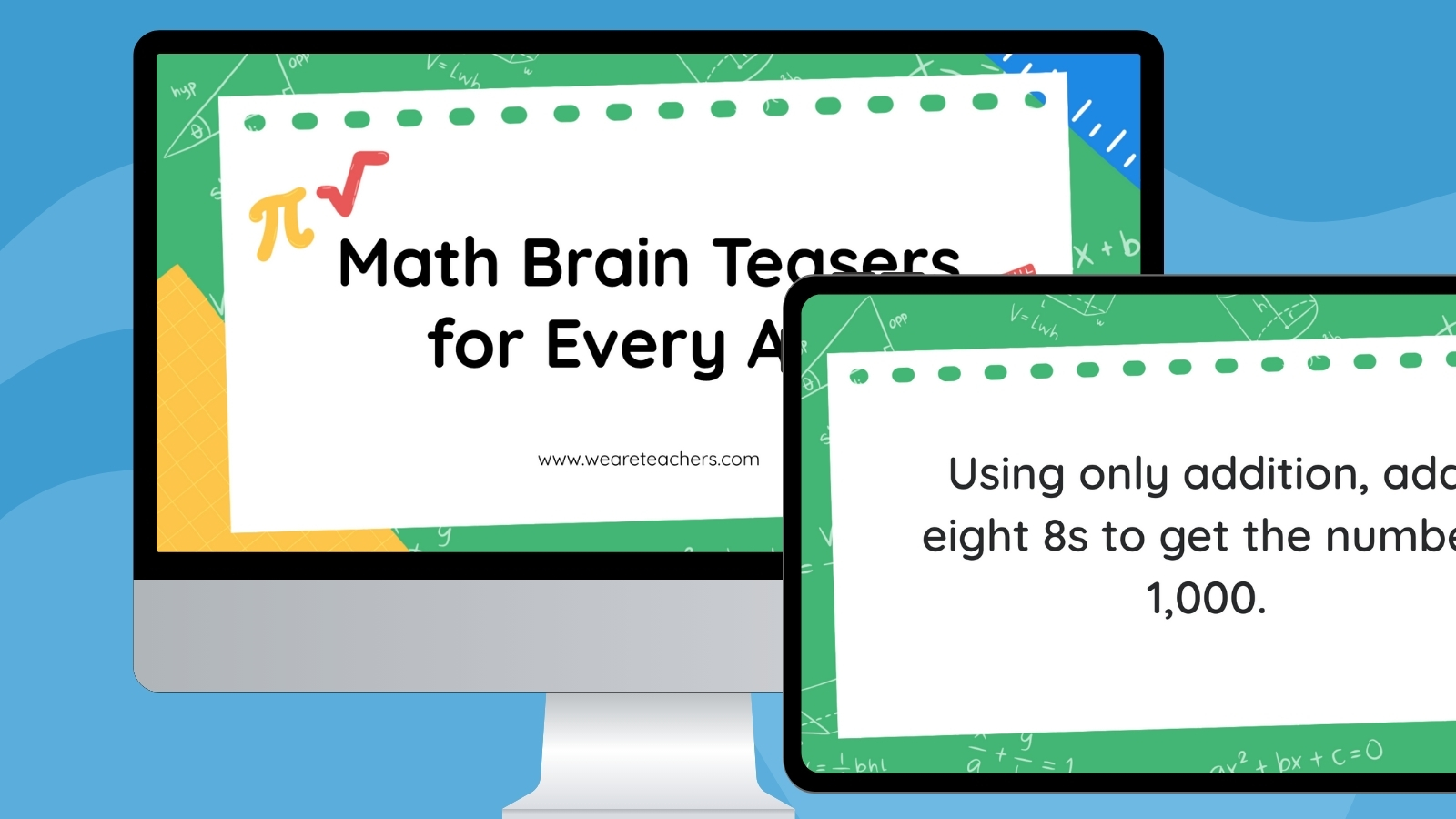
Math Brainteaser Slides
Grab our set of free Google Slides with 60 clever math brainteasers to challenge students of all ages.
Word Search
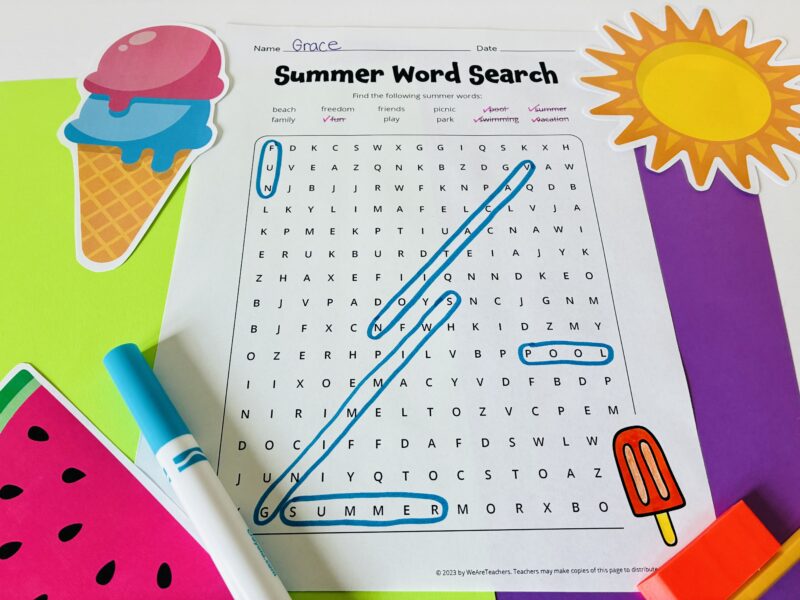
These classic puzzles sharpen observation skills and sneak in a little vocabulary and spelling practice too. Project one onto your whiteboard to solve together as a class, or print and pass out individual worksheets instead.

Free Kindness Word Searches
Encourage kind behavior with these three differentiated word search worksheets—easy, medium, and hard.
Fun Facts
In addition to joke compilations, we have plenty of fun fact lists on our site with themes that will thrill your students. Plus, they’re an educational way to teach your students new information during brain breaks.
Learn more: We Are Teachers Fun Facts Roundups
Directed Drawing
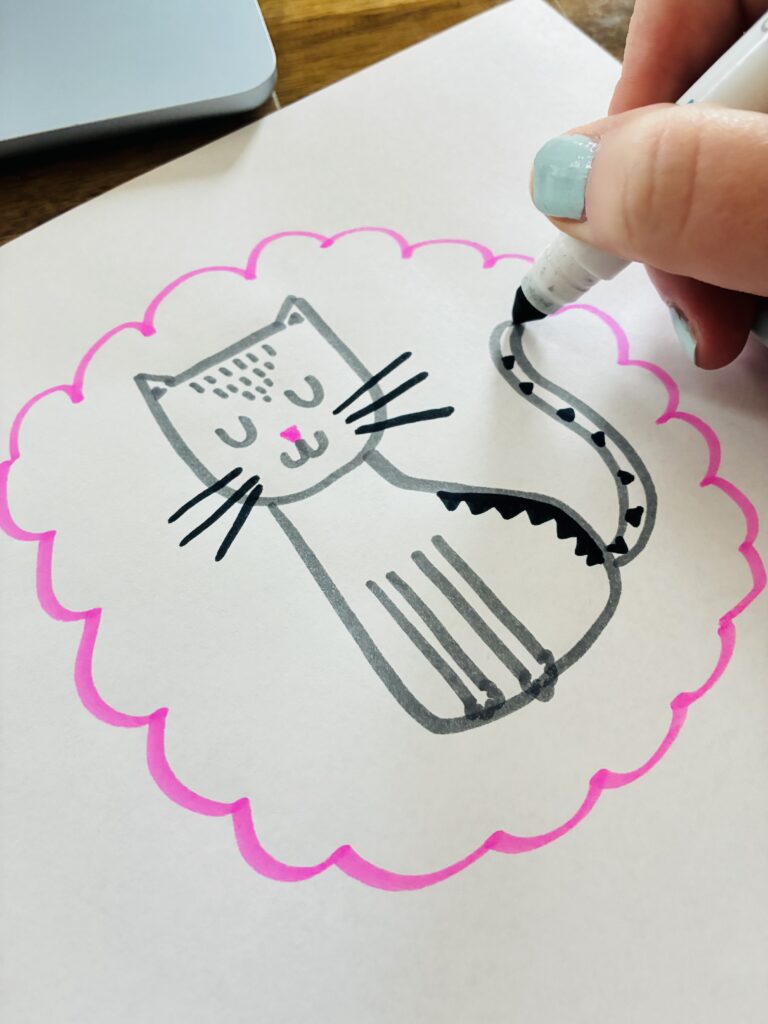
Directed drawing activities are perfect educational brain breaks. They walk your students through the process step-by-step so anyone can create their very own masterpiece. Teachers can lead the session by drawing on the whiteboard or chart paper while students follow along, or use a video instead.

Free Directed Drawing Activities
Grab these free step-by-step drawing printables to use with our how-to directed drawing videos.
Call-and-Response Claps
Pep things up with a little call-and-response clapping. It’s simple to do and is often used in the classroom to get students’ attention. Simply clap out a pattern that your kids will repeat back to you. Switch out the pattern a few times until everyone is focused and engaged. Alternatively, try a vocal call-and-response. Sing out a few riffs and have kids echo the tune back to you. These are terrific for short-term memory development!
Would You Rather …?
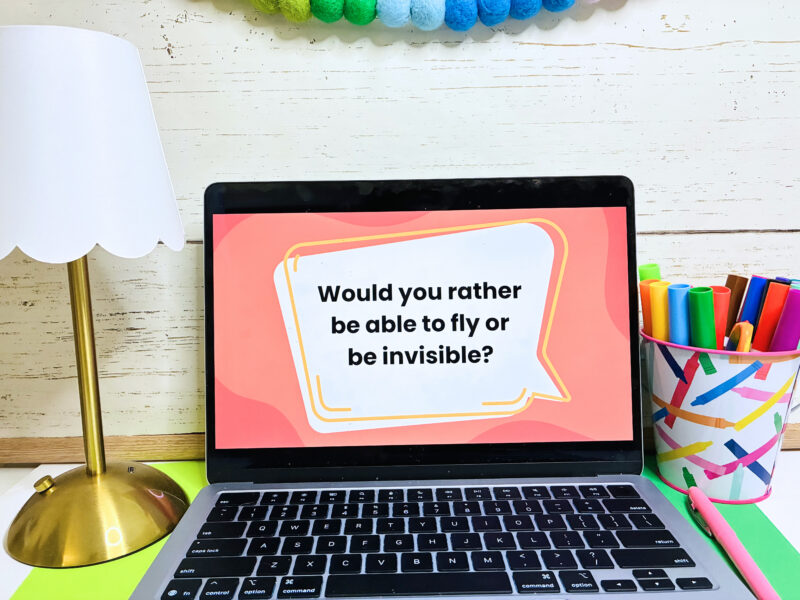
Students of all ages love participating in a round of Would You Rather. Talk them through, or have students move to a side of the room to show whether they would rather be a detective who solves mysteries or a scientist who makes inventions, for example.
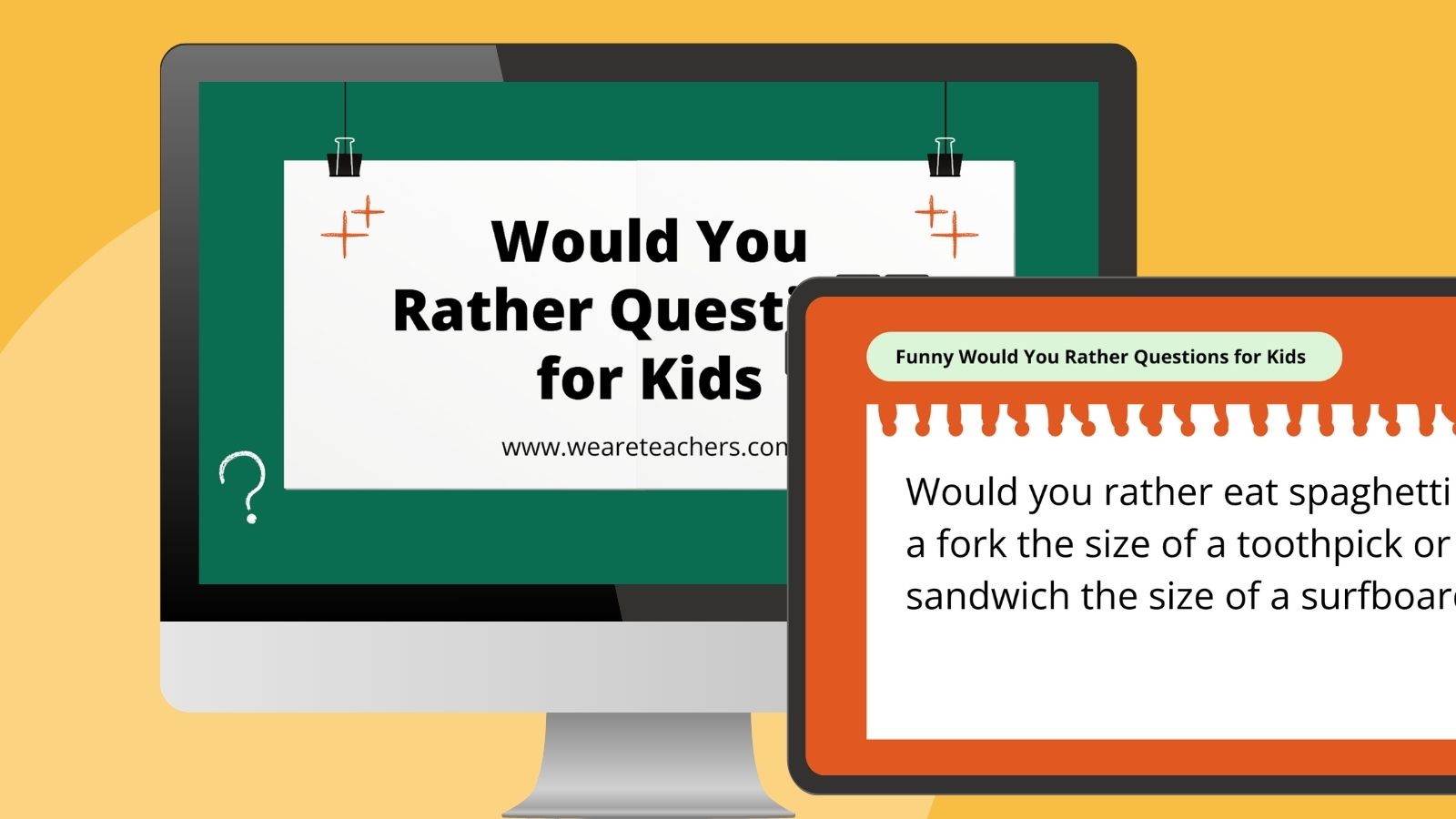
Would You Rather? Google Slides
We’ve got 300+ Would You Rather questions on free slides, making it easy to use them for brain breaks and class discussions.
This or That?
These quick questions are a bit like Would You Rather, but the options are simpler (“Do you prefer cats or dogs?” “Which do you like better, cake or frosting?”). To work in some physical movement, ask students to stand up for the first option or stay seated if they prefer the second.

This or That? Slides
With 400+ This or That questions, these free slides can keep your class engaged for a long time!
Rebus Puzzles
A rebus puzzle is a visual riddle that cleverly uses pictures and words to convey a word, phrase, or saying. It’s a fun challenge that prompts students to flex their problem-solving muscles by deciphering the hidden meaning behind image and word combinations, and they’re perfect as quick educational brain breaks.
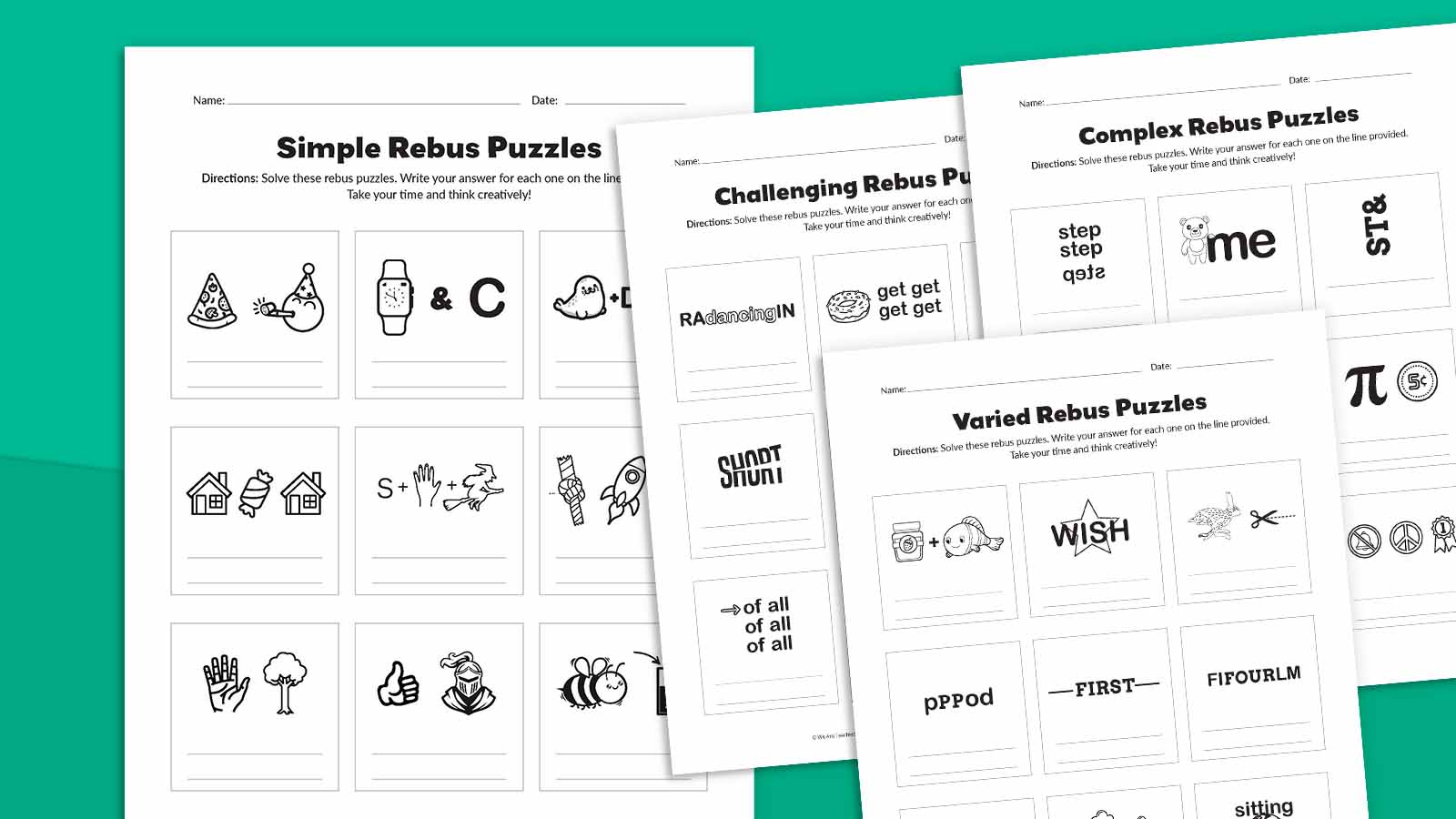
Free Rebus Puzzles
Grab our free set of rebus puzzles—puzzles that cleverly use pictures and words to convey a word, phrase, or saying—to use as brain breaks for kids.
Word Doodle
Give students scrap paper and pencils or crayons. Set a timer for 60 seconds, and ask students to draw whatever comes to mind in response to the word you give them. Try using abstract concepts to get them thinking creatively: happiness, growth, friendship, challenges, etc.
Journaling
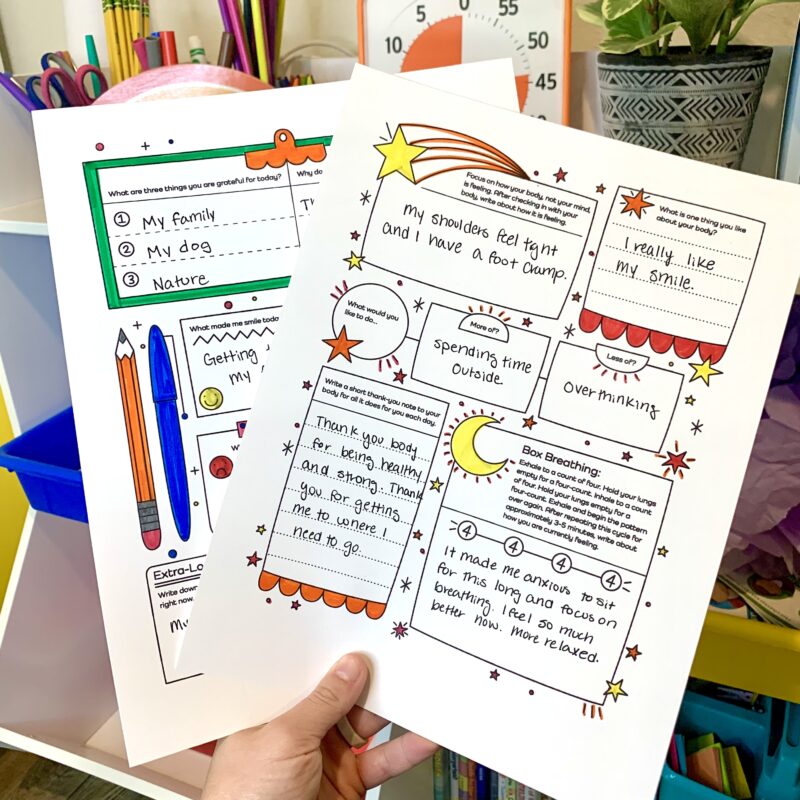
Don’t underestimate the power of journaling or creative writing. Give your kids a 5- or 10-minute break to open up their notebook and write about anything they’d like. They don’t have to share it with the class or do anything else with it; just use the quiet time to focus on something they love and want to write about.
10-Second Talent Show
Give each student 10 seconds to show off a “talent” of some kind. This could include skills and abilities like singing, juggling, or dancing, or sillier talents like wiggling their ears or saying the alphabet backward. Tip: Don’t put kids on the spot—give them a minute or two to think before you start, and let students opt out if they need to.
More Brain Breaks for Kids
If you are looking for a sample of brain breaks suitable for your students by grade level, look no further. We have created separate links of 25 videos each for individual grades at the elementary level. Go down the list and find the right one for you!
- Kindergarten Brain Breaks
- First Grade Brain Breaks
- Second Grade Brain Breaks
- Third Grade Brain Breaks
- Fourth Grade Brain Breaks
- Fifth Grade Brain Breaks
Get your free Brain Breaks for Kids cards!
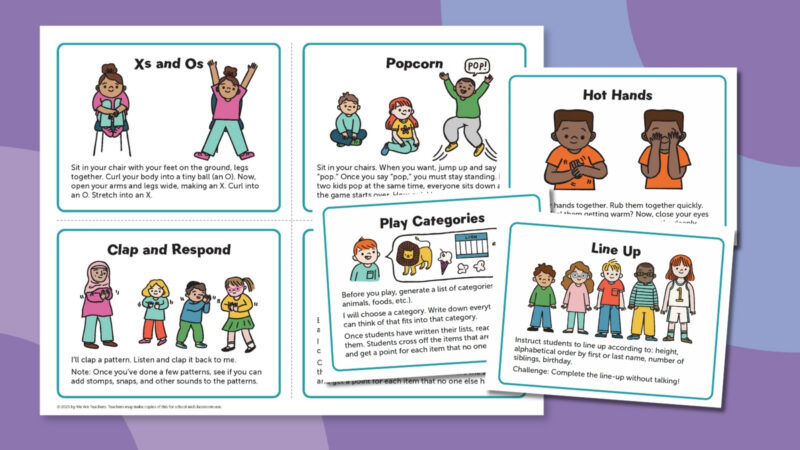
We created a free set of Brain Breaks for Kids cards featuring movement activities, mindfulness moments, brainteasers, and more! Just click the button below and fill out the form to grab them.