
Making science come alive in the classroom is important because it helps keep students engaged. By 5th grade, most students begin to learn some biology basics, including what a plant cell is and how it’s structured. While many plant cell project ideas and lessons are geared toward upper elementary school students, the simpler concepts can be taught to younger students using supplies like play dough.
Whether you have your students create 3D plant cell projects in school or as part of a take-home assignment, they can really help kids better understand cells and their organelles. A plant cell project can be complicated (stitching a cell), but many are fairly easy and require little more than the supplies you likely already have on hand.
To help you get started, here’s a handy, kid-friendly glossary of the parts of a plant cell. Copy it, print it out, and give a copy to each student as they work their way through a few of our activities.
Parts of a Plant Cell
- Cell wall: the tough outer shell that protects the cell, like a castle wall
- Cell membrane: the gate that lets good things in and keeps bad things out
- Nucleus: the “boss” of the cell that tells everything what to do
- Cytoplasm: the squishy jelly that holds all the parts in place
- Chloroplasts: the “solar panels” that use sunlight to make food for the plant
- Vacuole: a giant water balloon that stores water, food, and waste
- Mitochondria: tiny “power stations” that give the cell energy
- Ribosomes: little “factories” that make proteins
- Endoplasmic reticulum: a maze of tubes that helps move things around
- Golgi apparatus: the “mail room” that packs and sends out important materials
- Plasmodesmata: little tunnels that help plant cells talk to each other
- Peroxisomes: small organelles involved in metabolic processes
3D Plant Cell Projects
1. Jell-O Plant Cell Model
What you’ll need: 1 box of powdered Jell-O, assorted candies such as Life Savers, licorice strings, Nerds, taffy squares, etc.
Instructions: Make the Jell-O in a greased 9 x 9 glass pan. Once the square of Jell-O is set, invert it into a larger baking dish like a lasagna pan. Arrange the candies on top to represent the different parts of a plant cell. Finally, create labels with strips of paper and toothpicks and place them appropriately on the model.
2. Clay Model
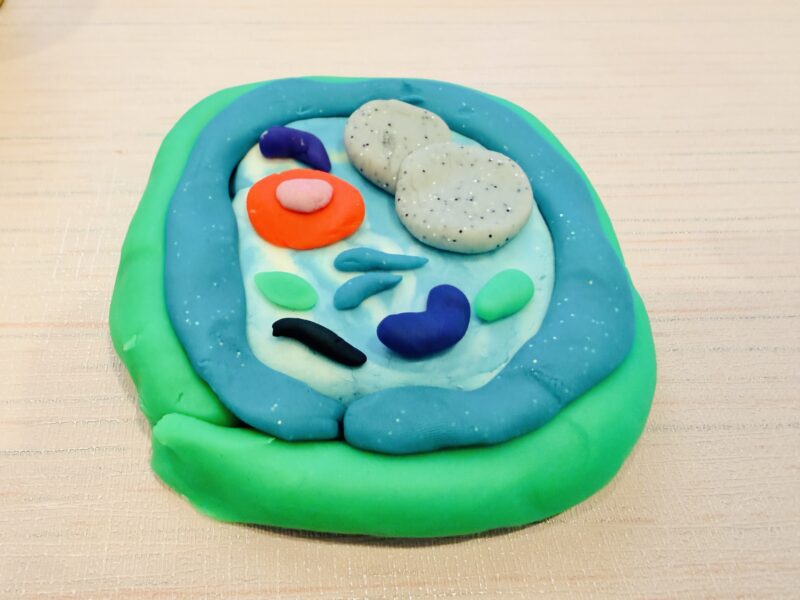
What you’ll need: Air-Dry Modeling Clay in an assortment of colors, paper, toothpicks, tape, markers
Instructions: This project has less jiggle but takes less prep time than the Jell-O model. To begin, form a solid rectangular cube from modeling clay to serve as the base/cytoplasm. Next, form the different parts of a plant cell from different-colored clay and place appropriately. Create labels out of paper and attach them to toothpicks, creating little flags for each part.
3. Digital Model
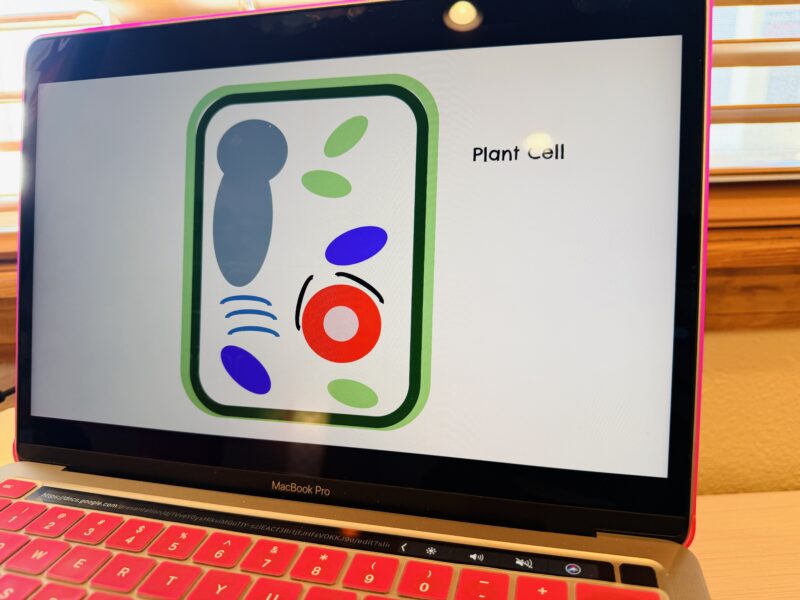
What you’ll need: Digital designing platform like Google Slides, PowerPoint, or Canva
Instructions: Create the cell by using shape blocks, drawing tools, and other effects in the platform. Add another element to the project by adding special effects and animations.
4. Stitched Model
What you’ll need: Felt in a variety of colors, embroidery floss in a variety of colors, needles, buttons, scissors, Poly-fil
Instructions: You’ll definitely want to have sewing experience before tackling this plant cell project. Since it is time-consuming and requires skill, this could be a weeklong project or students could pair up. To begin, cut two rectangles of felt and set one aside. On the primary piece of felt, sew buttons, use different styles of stitch, or apply small patches of felt to form the parts of the plant cell. Finally, sew the second piece of felt to the back, with a layer of Poly-fil in between to create a little cushion.
5. Cardboard Plant Cell Model
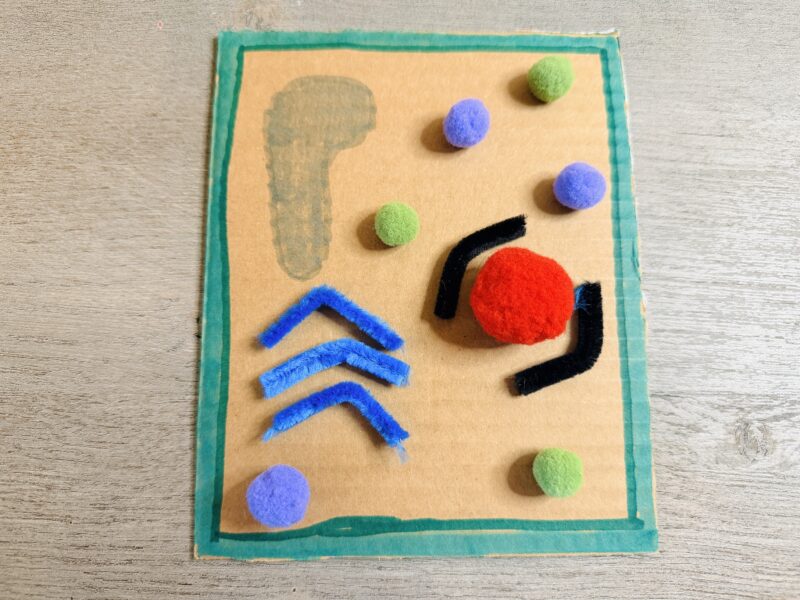
What you’ll need: Shallow cardboard box, construction paper, card stock, glue, markers
Instructions: Line a shallow cardboard box, such as a shoebox lid, with colored construction paper. Next, draw and cut out the different parts of a plant cell from different-colored card stock. Finally, glue the parts into the box and label them. Note: If younger children are doing this project, you’ll need an adult to handle the X-Acto knife.
6. Plant Cell Model From Seeds
https://www.youtube.com/watch?v=hr2uB_5rN-0
What you’ll need: Cardboard or card stock, large craft sticks, glue, a variety of different-colored and different-sized seeds such as poppy seeds, pumpkin seeds, lentils, etc.
Instructions: This 3D plant cell project will take a while, but the results will be well worth it. Glue six large craft sticks onto a piece of sturdy card stock or paper-lined cardboard in the shape of a hexagon. This will form a frame to contain the seeds. Inside the frame, draw the outlines of the parts of a plant cell. Then, fill them with different-sized, different-colored seeds. You may want to embellish the frame with small seeds as well. Finally, place a small numbered label on each element and create a key that defines each one.
7. LEGO Plant Cell
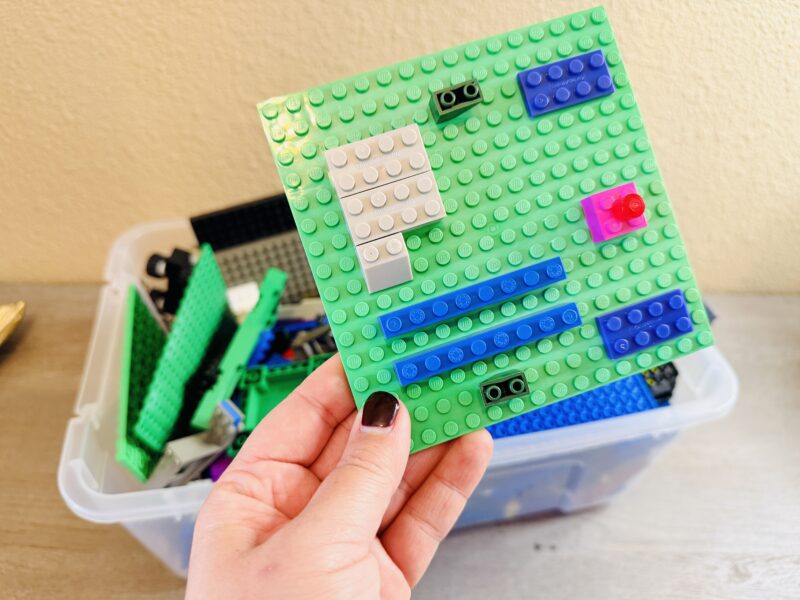
What you’ll need: LEGO bricks of various sizes and shapes, LEGO base board
Instructions: Kids love LEGO so why not incorporate them into your science unit on plant and animal cells? Project a visual model of a plant cell, or give each student a printed version. Then have them pair up and see if they can re-create the model using different-sized LEGO bricks.
8. Plant Cell Cake
What you’ll need: Prepared sheet cake, frosting, tubes of different-colored decorating icing, candies such as Jujubes, gumdrops, licorice, M&Ms, etc.
Instructions: For this activity, you can bake one cake and create the model as a whole-class activity, selecting different students to add the different parts. Or you can ask for adult volunteers to bake a number of cakes so students can partner up and work on their own. Begin with a cooled cake baked in a shallow rectangular cake pan. Frost the cake, then use candies or decorating icing to add the parts of the plant cell. Lastly, label the parts with toothpick flags. What a tasty cell model project!
9. Edible Cell
What you’ll need: Loaf of sandwich bread, peanut butter or other spreadable if your class has allergies, shredded coconut, walnuts, sliced almonds, chocolate chips, butterscotch chips, Rolos
Instructions: Another edible option! This one is so simple that it will be easy for young kids to re-create. Since some kids have peanut allergies, you can replace the peanut butter with a more allergy-friendly spread. Spread the butter, then add other ingredients to create the model. The best part is students will have a tasty treat once the learning is finished!
10. 3D Printed Model
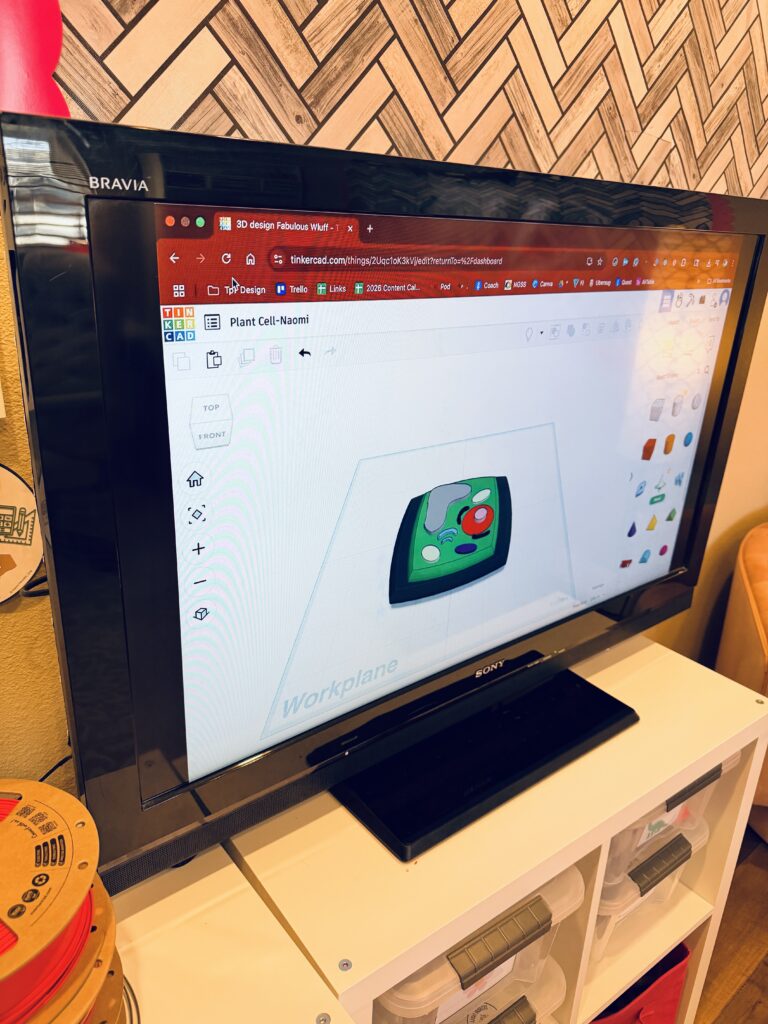
What you’ll need: Devices (laptops, desktops, or iPads), 3D printing software like Tinkercad, Doodle 3D Transform, or SketchUp
Instructions: Create a digital model that can be 3D-printed! These can be printed in multiple colors, or you can print them in one solid color, then color them with paint pens. Don’t have a 3D printer? Plant cells can still be created in this format and be displayed digitally.
11. Shrinky Dinks Model
What you’ll need: Sheets of polystyrene (Shrinky Dinks), markers, oven
Instructions: Shrinky Dinks have been a perennial favorite with kids for decades. Many teachers and parents probably remember crafting with them at some point in their own childhoods. They are essentially thin sheets of plastic that you cut and color and then bake in an oven. Once baked, you have a tiny version of what you created.
Other Plant Cell Projects
12. Plant Cell Drawing Tutorial
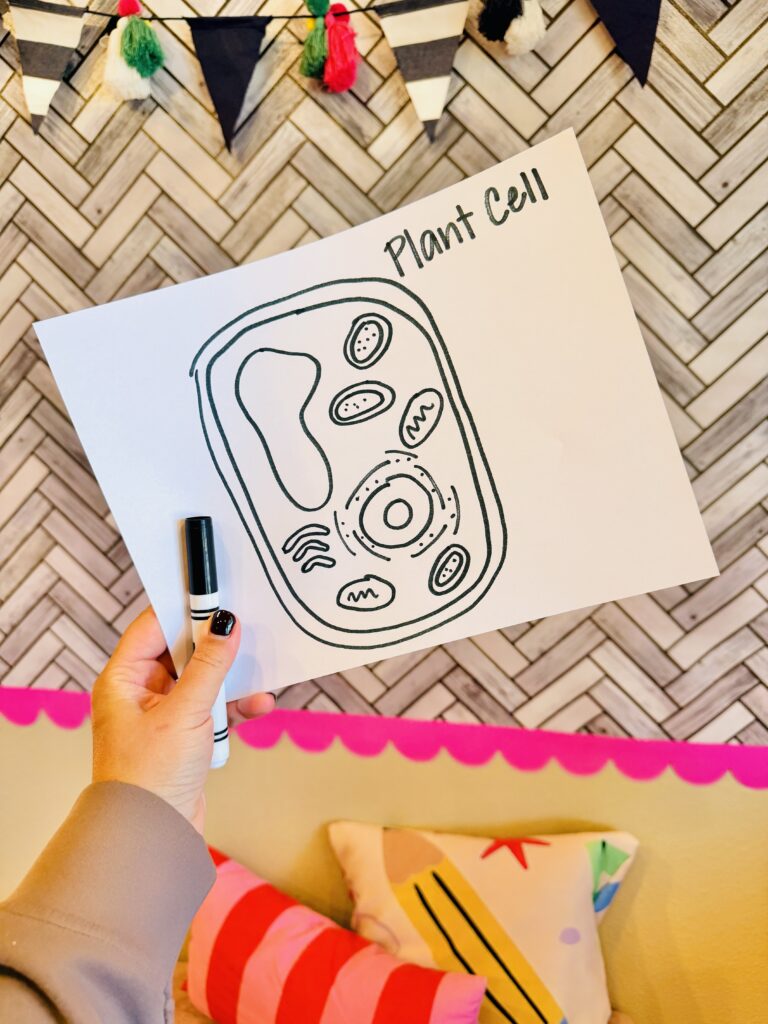
Kids love to follow drawing tutorials, and this one will be no exception. Show a video on how to draw a plant cell, stopping at appropriate parts to make sure all students are following along. Or lead your students yourself with a step-by-step tutorial. The muscle memory involved in actually drawing each part should help them with remembering the various components of the plant cell
13. Cell Role-Play
Assign each student an organelle. They act out the job of their organelle (ex: chloroplast “uses the sun,” mitochondria “makes energy,” vacuole “holds water”). This activity would be fun as a whole-class “cell play.”
14. “Build a Cell” Challenge
Divide your class into even teams, if possible. Each team gets a tray of random craft items (e.g., pipe cleaners, beads, cotton balls, cardboard). The object of the challenge is to build the most accurate model of a plant cell. When everyone is finished, give each group a score based on accuracy, creativity, and teamwork.
15. Plant Cell Puzzle
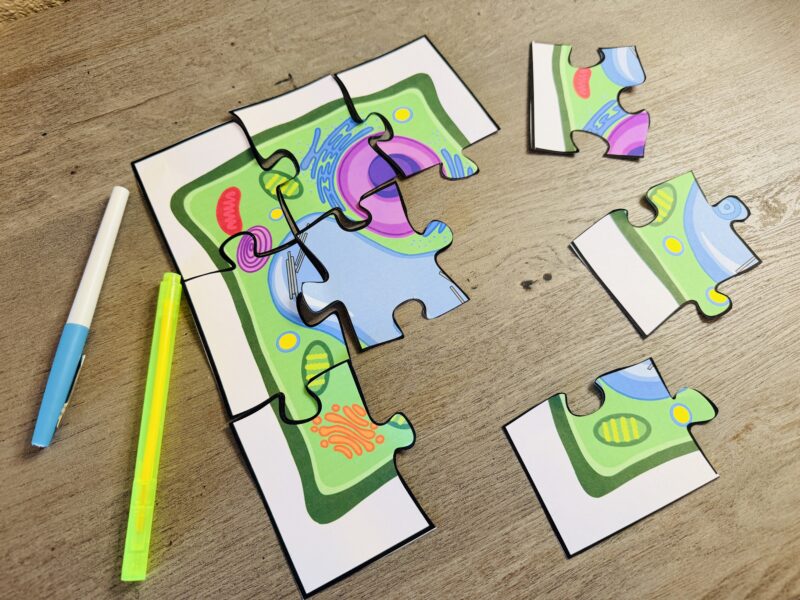
Create a color diagram of a plant cell, print it on card stock, and cut it into puzzle pieces. Have students reassemble the puzzle and match the name of each part. Create a few and store them in zippered plastic bags for kids to use at center time.
16. Microscope Exploration
For this activity, pair students up or form small groups to share microscopes if you have a limited supply. Have students look at onion skin or leaf cells, draw what they see, and label the nuclei, cell walls, and chloroplasts.
17. Water Balloon Vacuole Experiment
In a plant cell, there’s a big “water bag” called the vacuole. When it’s full of water, it pushes outward and helps the cell stay firm. This push is called turgor pressure—and it’s why healthy plants stand tall instead of drooping. Here’s an activity to demonstrate this concept. Give each group a dampened sponge (cell wall) and a water balloon (vacuole). Show how the vacuole pressing outward keeps the cell firm—just like turgor pressure!
18. Plant Cell Storybook
Here’s a creative activity for literacy time. Have students create a short illustrated story told from the perspective of a plant cell. Each organelle could become a “character” with a job in the story.
19. Organelles Parade
Give each student a sign labeled with an organelle’s name and job. Then have them form a line and walk around the classroom in a “parade” that will show how each organelle helps the cell. When you ring the bell, students freeze in poses showing their job (e.g., mitochondria “making energy”).
20. Celery Osmosis Demo
Put celery stalks in cups of water dyed with food coloring. Watch as the colored water moves up the celery, and discuss how plant cells fill their vacuoles (turgor pressure).
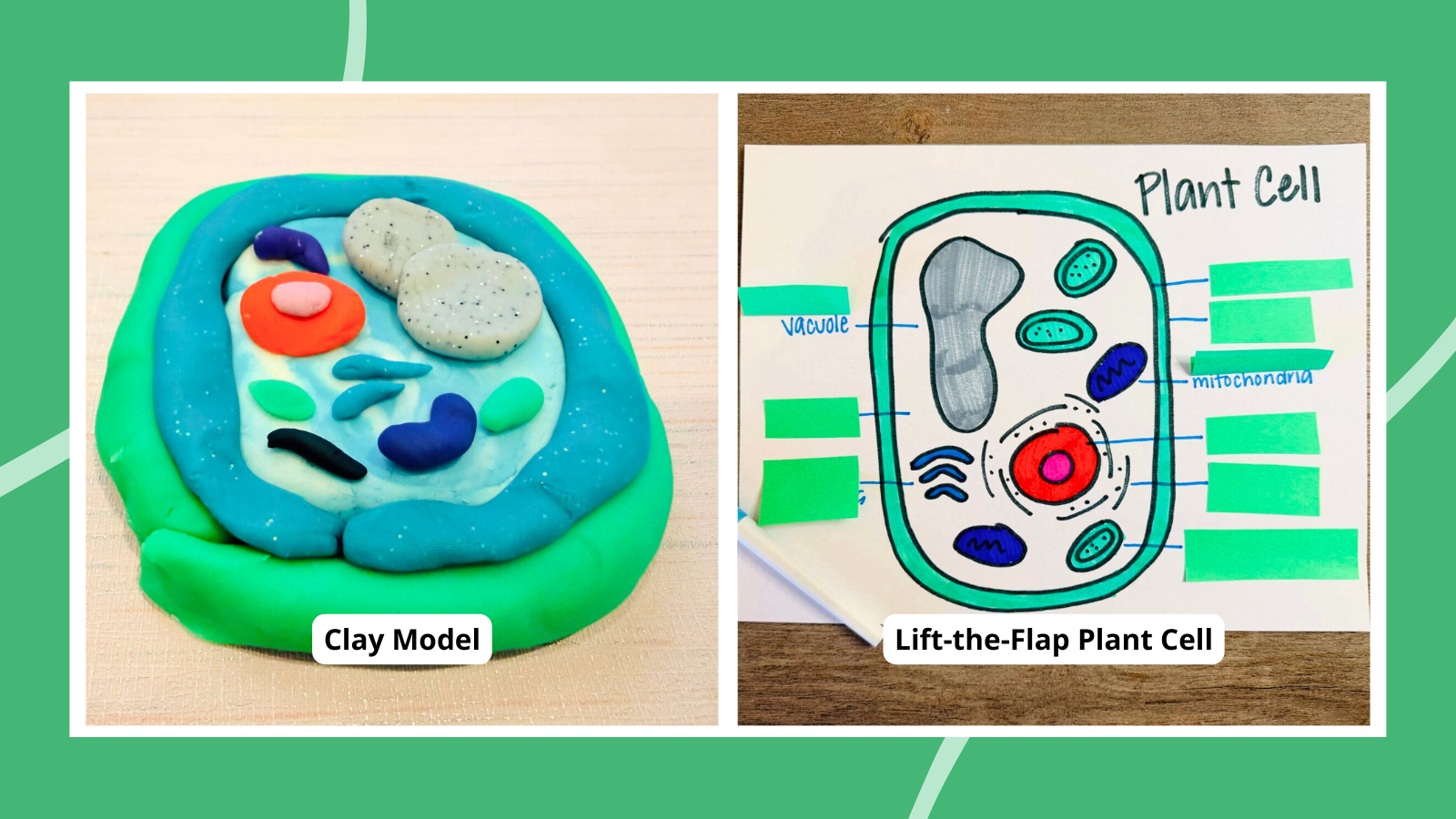
21. Lift-the-Flap Plant Cell
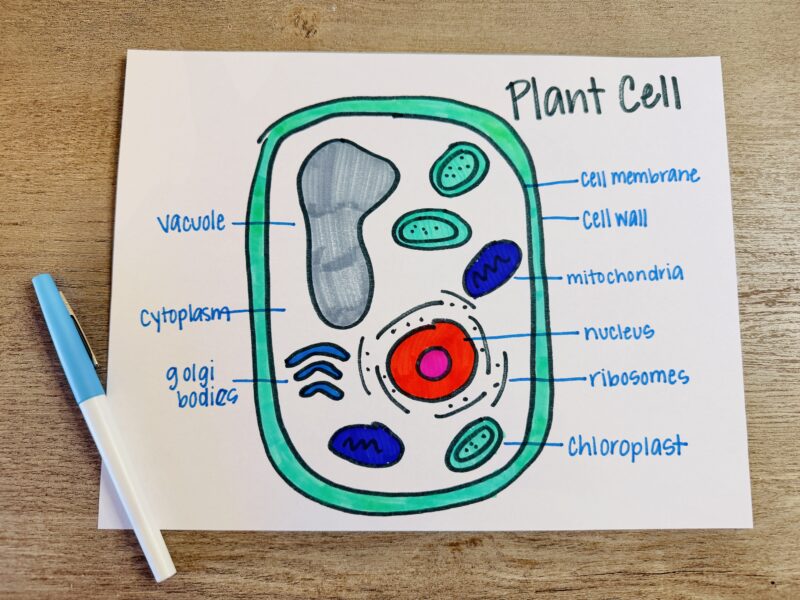
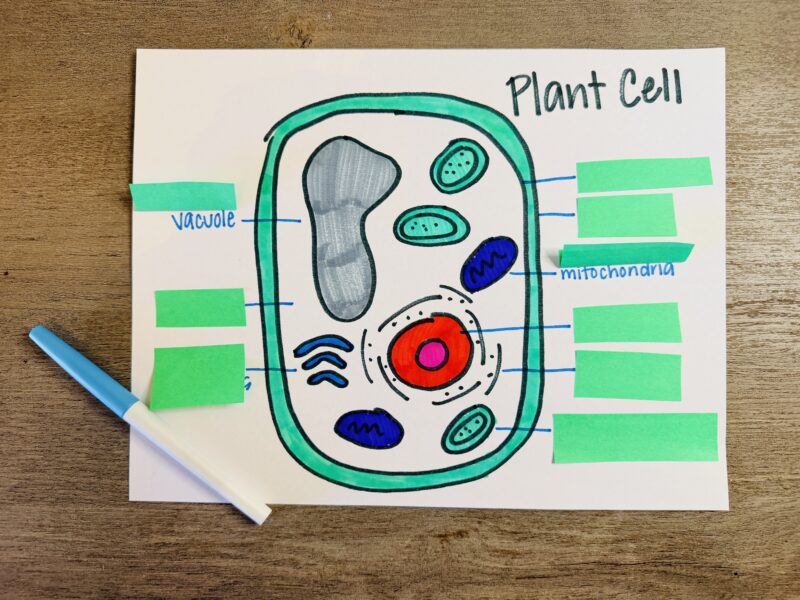
Have students draw a plant cell with colored markers on a piece of white card stock. Next, use squares or rectangles of construction paper to create paper flaps over each part. On the underside of each flap, have students write what that organelle does.
22. Plant Cell Chalk Art
Why not combine outside time with science learning time? Head outside with buckets of colored sidewalk chalk and have kids team up to draw giant plant cells and label each organelle right on the cement. As they work, observe how students work together and talk over the concepts as they create their sidewalk art. And who knows? Maybe their drawings will spark the curiosity of other students.
23. String Art Plant Cell
Pass out templates of a line drawing of the shape of a cell and its organelles. Have students re-create the drawing on foam boards with a marker. Next, have them place straight pins into the foam board, following the lines of the drawing. Finally, have them wind string or yarn around the pins to create a string art model of the plant cell.
24. Plant Cell Bracelet
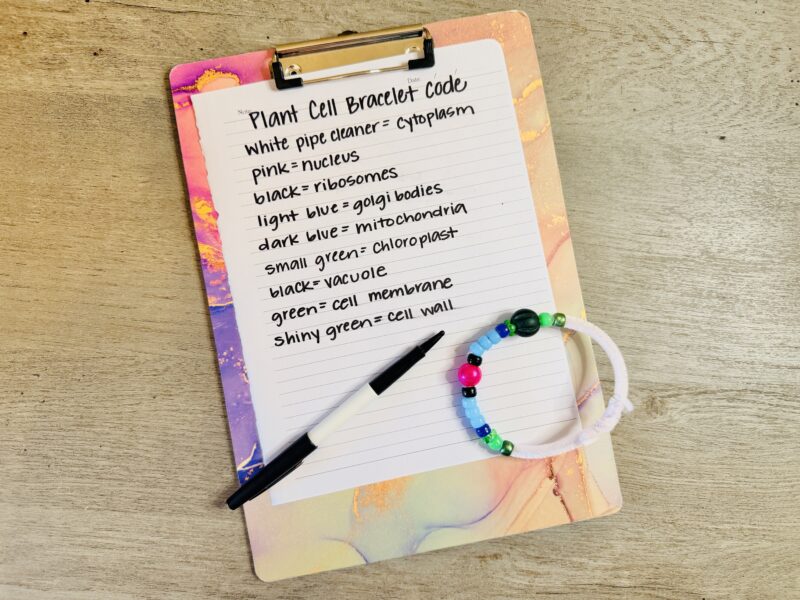
Set out a supply of colored pony beads. Create and display a key, showing which color represents each organelle. Give each student a pipe cleaner to make their bracelet, stringing the different colored beads on it. As they string each bead, they can recite the job of that color’s organelle. This could a clever one-on-one activity to check for understanding.
25. Plant Cell Comic Strip
Students make a comic strip with each panel showing a different organelle performing its job. Such a fun, creative activity, perfect for storytelling. Funny characters encouraged!
26. Plant Cell Rap or Song
Have students team up and write a simple rap song naming the organelles and their jobs. Then have a rap-off, giving bonus points for accuracy, rhyme, and rhythm.
27. Plant Cell Board Game
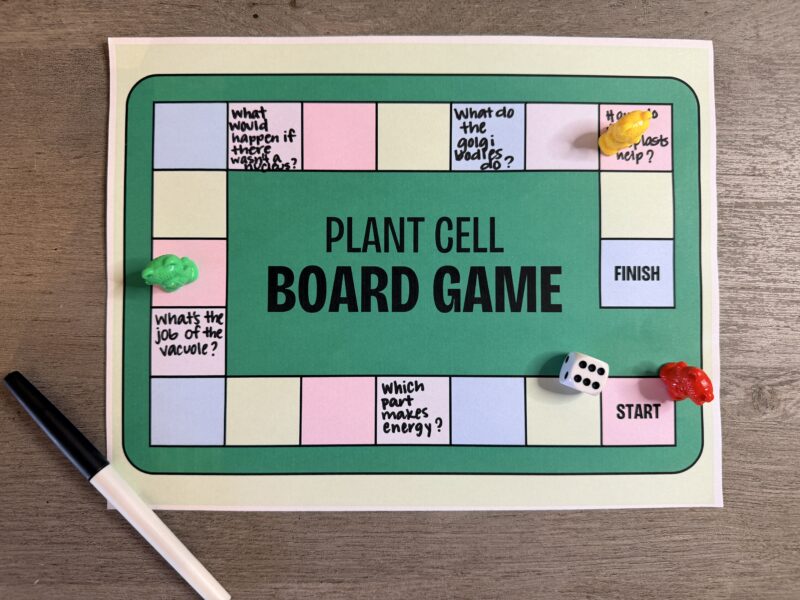
Create a simple path-style board game where students move forward by answering organelle questions like “Which part makes energy?” or “What’s the job of the vacuole?” This activity is so brilliant because, as every teacher knows, repetition through play leads to amazing retention.
28. Plant Cell Floor Map
To prep for this activity, clear a large space in your classroom and use painter’s tape to create a giant plant cell outline on the floor. Next, have students stand inside the cell and assign each one a role as a different organelle. As you call out “Make food!” or “Send proteins!” each kid will perform their organelle’s job. Be sure to do a few rounds so every student gets a chance to show off their plant biology knowledge.
29. Watch Videos
There are so many creative, engaging videos out there that succinctly and entertainingly teach about plant cells. Show a short one each day to teach and reinforce the content.
30. Read Books
Our favorite way to teach, of course: picture books. Before starting your plant unit, stock up on books about plants and plant cells. Be sure to allow time each day for students to explore these books, alone or with a friend.
Grab our free science experiment recording sheets!
Get your free science experiment recording sheet printable today! Just click the button below and fill out the form to get yours.