
Learning new names can be daunting for both students and teachers. Beyond simply matching names to faces, there’s also the challenge of pronouncing and spelling them correctly. Getting names right matters because students are more likely to feel included and respected when they hear their names said properly. While some names may be more familiar than others, every student deserves that same effort and respect—including refugee and immigrant students. Name games offer a fun, low-pressure way for everyone to get to know each other.
Jump to:
- Why Are Name Games Important?
- Tips for Making Name Games Work
- Name Games for Preschool and Elementary Kids
- Name Games for Middle School
- Name Games for High School
To learn more about using name games in the classroom, we reached out to veteran primary teacher and national educational speaker Keri Brown. She shares these tips plus two of her favorite games to get the ball rolling at the beginning of the school year. For more great ideas from Keri, be sure to follow her on Instagram @enchantedkindergarden.
Why are name games important?
Name games play an important role at the beginning of the school year because they help students feel seen, welcomed, and connected from day one. For many children, especially young learners, entering a new classroom can feel overwhelming. Learning names quickly helps turn a group of strangers into a classroom community.
Primary teacher Keri Brown (@enchantedkindergarden) points out that name games can also have literacy and classroom management benefits. “Name games help students recognize their name in print, which is huge at the beginning of the school year,” she says. And since students’ names are everywhere—on cubbies, folders, supplies, papers, etc.—identifying their written name helps students build independence and makes classroom routines smoother for everyone.
Tips for Making Name Games Work
Keri emphasizes that the best name games are simple, playful, and designed to help every student feel comfortable participating, especially at the start of the year when kids are still settling into their classroom community.
Here are a few of her key tips:
1. Make it active and fun
“Anything with movement, rhythm, clapping, dancing, or a fun chant usually pulls students in quickly,” Keri explains. Activities that get kids moving and laughing feel much less intimidating than simply saying names out loud.
2. Keep it low-pressure
At the beginning of the year, students are still figuring out how to participate in a group. Name games should feel light and inviting—not stressful or forced—so kids can engage at their own pace.
3. Give shy students time to warm up
Not every child will jump in right away. Keri recommends letting hesitant students observe at first while offering gentle encouragement to join when they’re ready.
4. Support participation without forcing it
Standing nearby, offering reassurance, or inviting (but not requiring) participation helps build confidence without creating pressure.
5. Let peer connections do the work
Oftentimes, a child will notice another child not participating and help bring them into the game. These natural moments can be a powerful way to start building friendships early on.
Name Games for Preschool and Elementary Kids
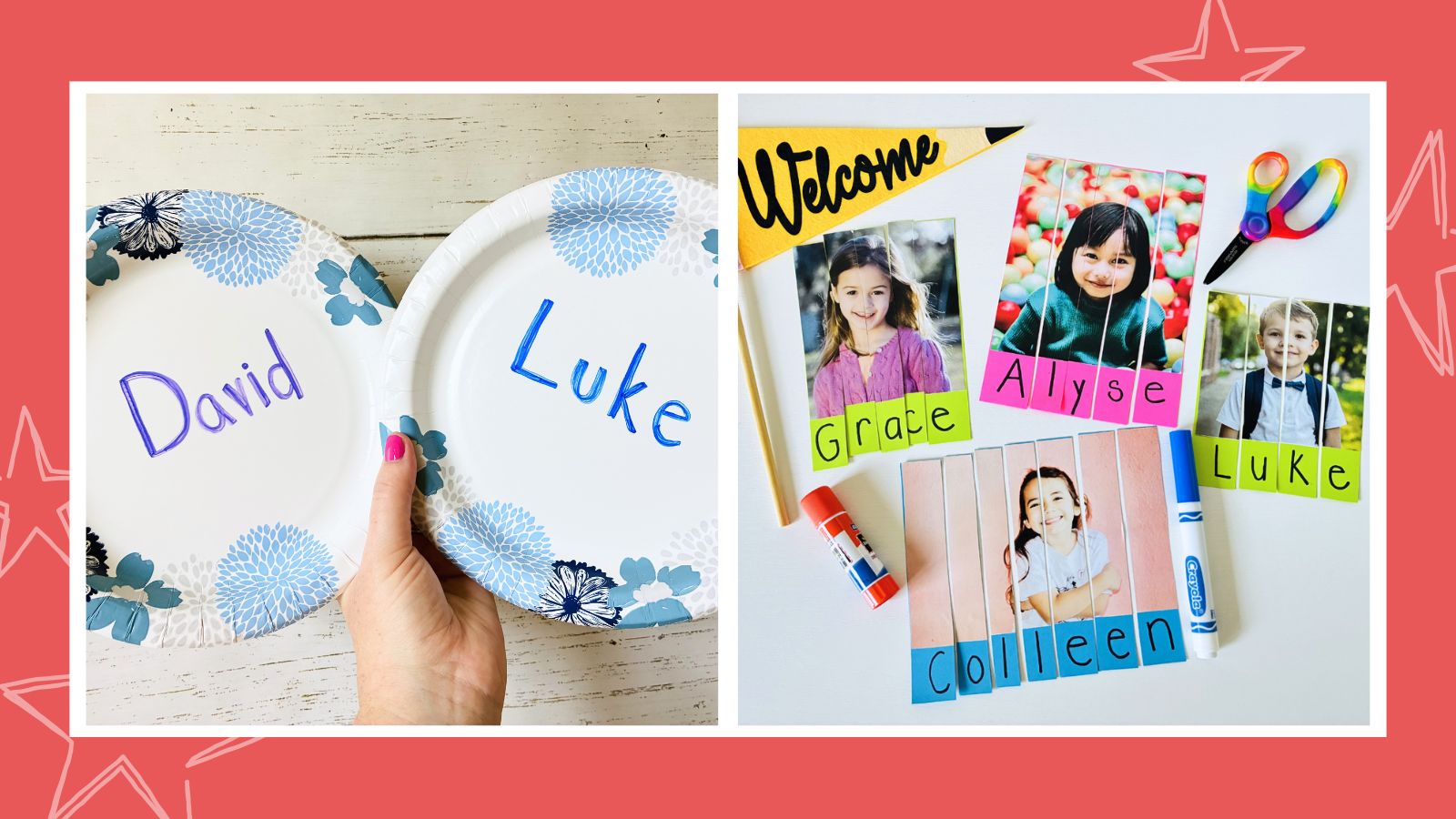
1. Name Plate Song (Keri’s Go-To Game)
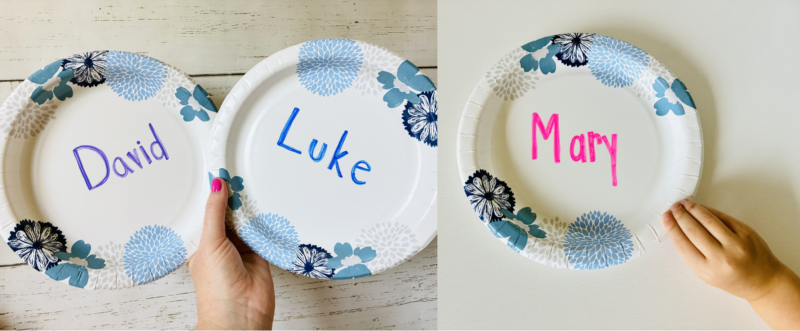
This is Keri’s go-to name game. She recommends starting with simple, low-pressure games that help students feel comfortable while also building early literacy skills and confidence. She explains, “It’s a fun, gentle way to practice name recognition, beginning letters, and classroom community all at the same time.”
- Time: 15–30 minutes
- Materials: White paper plates
- Prep: Write each child’s name in large letters on a plate.
How to play:
- Kids sit around the edge of the rug so everyone can see the middle. Then have them sing the song below.
- After singing, toss one name plate into the center. If the child recognizes their name, they pick it up. If not, simply leave it and keep going.
- “As the game continues, students start noticing letters, comparing names, and realizing, ‘Oh, that might be mine!’” Keri says.
- If plates still remain at the end, Keri adds simple clues like, “This one starts with J—whose name starts with J?” The class works together to figure it out.
If your name is on the plate, pick it up. Clap, clap.
If your name is on the plate, pick it up. Clap, clap.
If your name is on the plate, then that’s really, really great.
If your name is on the plate, pick it up. Clap, clap.
2. Teacher Test
- Time: 5 minutes
- Materials: Name tents
- Prep: Before the first day of school, create card-stock name tents to set on student desks.
How to play:
- Spend the first day of school getting to know your students’ names, using the name tents for help.
- At the end of the first day, have all students turn their tents face down. Start a timer, and see how long it takes you to go around the room remembering everyone’s names. Kids love to see their teacher getting put to the test!
3. Photo Name Puzzles
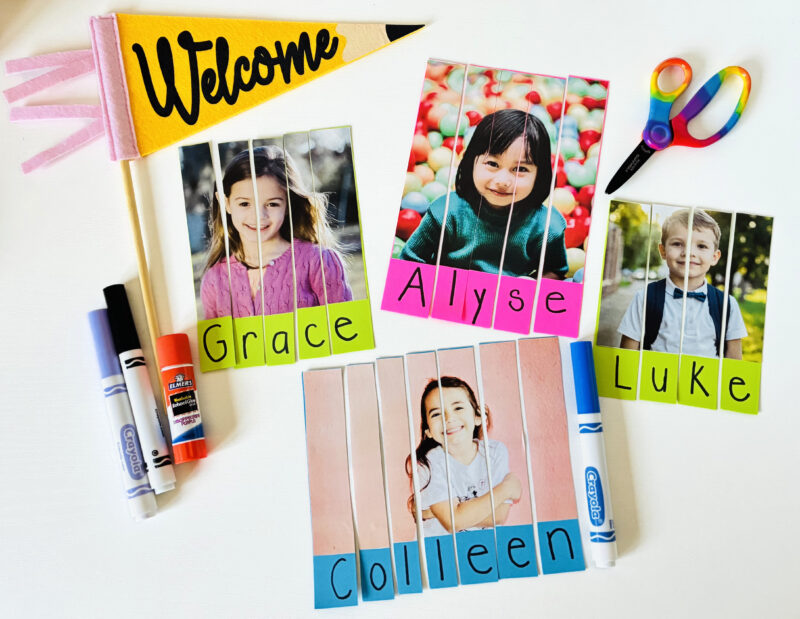
This is Keri’s favorite quick name game to play with students because it builds confidence while reinforcing name recognition in a hands-on, low-pressure way.
- Time: 5–20 minutes
- Materials: Printed student photos (at least 3 x 5 inches), zip-top bags
- Prep: Write each student’s name in large letters on the back of their photo, then cut the photo into puzzle pieces and place in a bag.
How to play:
- Give each student their puzzle and time to assemble it. If they complete the picture first, have them flip it over to see their full name.
- Next, ask students to assemble the puzzle using only the name side. Once they’re comfortable, let them trade puzzles to learn classmates’ names.
4. Johnny Plays the Drum Beat
- Time: 10–15 minutes
- Materials: Small drum
- Prep: None
How to play:
- Introduce the simple song “Johnny Plays the Drum Beat” (see video), demonstrating how to keep time on the drum.
- Once students can sing along, call up the first student. Give them the drum, and ask them to lead the class in the next verse, using their own name.
- Repeat with each student. Pay careful attention to proper pronunciation, making this an inclusive and welcoming game for everyone.
5. Pig on Her Head
- Time: 10–15 minutes
- Materials: Stuffed animals
- Prep: None
How to play:
- Play this video of the Laurie Berkner Band so kids can learn the tune and words to “Pig on Her Head.”
- Now, invite kids to take turns picking a stuffed animal from the pile. As each student places their chosen animal on their head, everyone sings the verse, substituting the student’s name and animal.
6. Bumblebee Name Game
- Time: 10–15 minutes
- Materials: None
- Prep: None
How to play:
- Play the video so students can learn the tune.
- Now, bring each child to the front of the room in turn. The class sings the song and does the actions below.
- Repeat with each student.
Hickety, Pickety, Bumblebee
Won’t you say your name for me? (Designated child says their name.)
Let’s all whisper it. (Everyone else whispers it.)
Let’s all stomp it. (Everyone else stomps it.)
Let’s all clap it. (Everyone else claps the syllables.)
Let’s all shout it! (Everyone shouts it.)
7. Who Do We Appreciate?
- Time: 10–15 minutes
- Materials: None
- Prep: None
How to play:
- Teach your students to chant “2-4-6-8, who do we appreciate? [Name!] [Name!] Hurray!”
- Do the chant for every student in the class, and let them enjoy their shining moment!
8. Favorite Thing
- Time: 10–15 minutes
- Materials: None
- Prep: None
How to play:
- Have students form a line or circle.
- The first student introduces themself: “My name is [name], and my favorite thing is [favorite thing].”
- The next student takes their turn, introducing themself and also the person before them. “My name is [name], and my favorite thing is [favorite thing]. This is [first person’s name], and their favorite thing is [favorite thing].”
- Each student continues, introducing themself and all the students before them. This can get challenging, so you can allow other students to help out as needed.
- Optional: At the end, have the entire class chant the introductions together, pointing to each person in turn.
9. Action Syllables
- Time: 10–15 minutes
- Materials: None
- Prep: None
How to play:
- In this game, each child will choose a different action to use for each syllable of their name. Here are a couple of examples:
- Harper: HAR/clap, PER/stomp
- Christopher: CHRIS/jump, TO/spin, PHER/clap
- Once each child has chosen their actions, ask them to introduce themselves to the class and demonstrate the movements. Then, the whole class repeats their name and actions.
- Continue until each student has had a chance to share their name with the class.
10. Banana Fanna Fo Fanna
- Time: 10–15 minutes
- Materials: None
- Prep: None
How to play:
- Teach kids the classic song, using the first student’s name. For example: “Liam Liam, bo biam, banana fana fo fiam, fee fie mo miam, Liam!”
- Repeat with each student’s name in turn. So catchy and fun!
11. Name Toss
- Time: 10–15 minutes
- Materials: Ball
- Prep: None
How to play:
- Start by forming a circle. Ask everyone to go around the circle and introduce themselves, saying their names clearly.
- Toss a ball to one student and say “Catch, [name]!” That student responds, “Thanks, [teacher’s name]!”
- That student tosses the ball to another student, and they continue the pattern of “Catch, [name]!” and “Thanks, [thrower]!”
- Keep the game going until everyone has caught and thrown the ball at least once.
12. Name Acrostic Poems
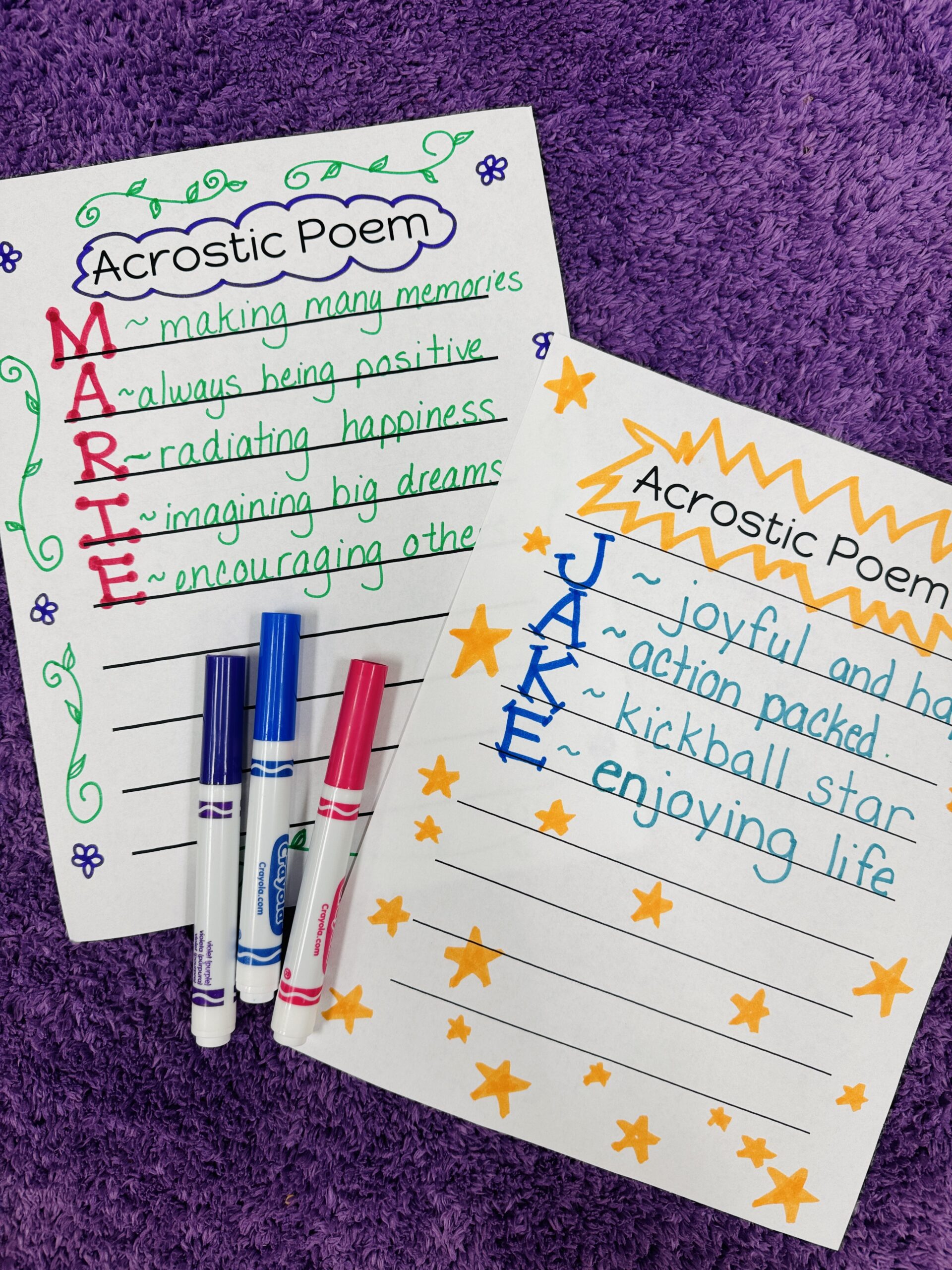
- Time: 20–30 minutes
- Materials: Pen/pencil and paper, Acrostic Template (optional)
- Prep: Write an acrostic poem for your own name to share.
How to play:
- Show students examples of acrostic poems, explaining that each line begins with the letter of a word—in this case, their name.
- Have students brainstorm words that start with each letter of their name, narrowing down the ones they like best.
- Finally, write out the poems, and have students share them with their classmates.
13. Name Ring Toss
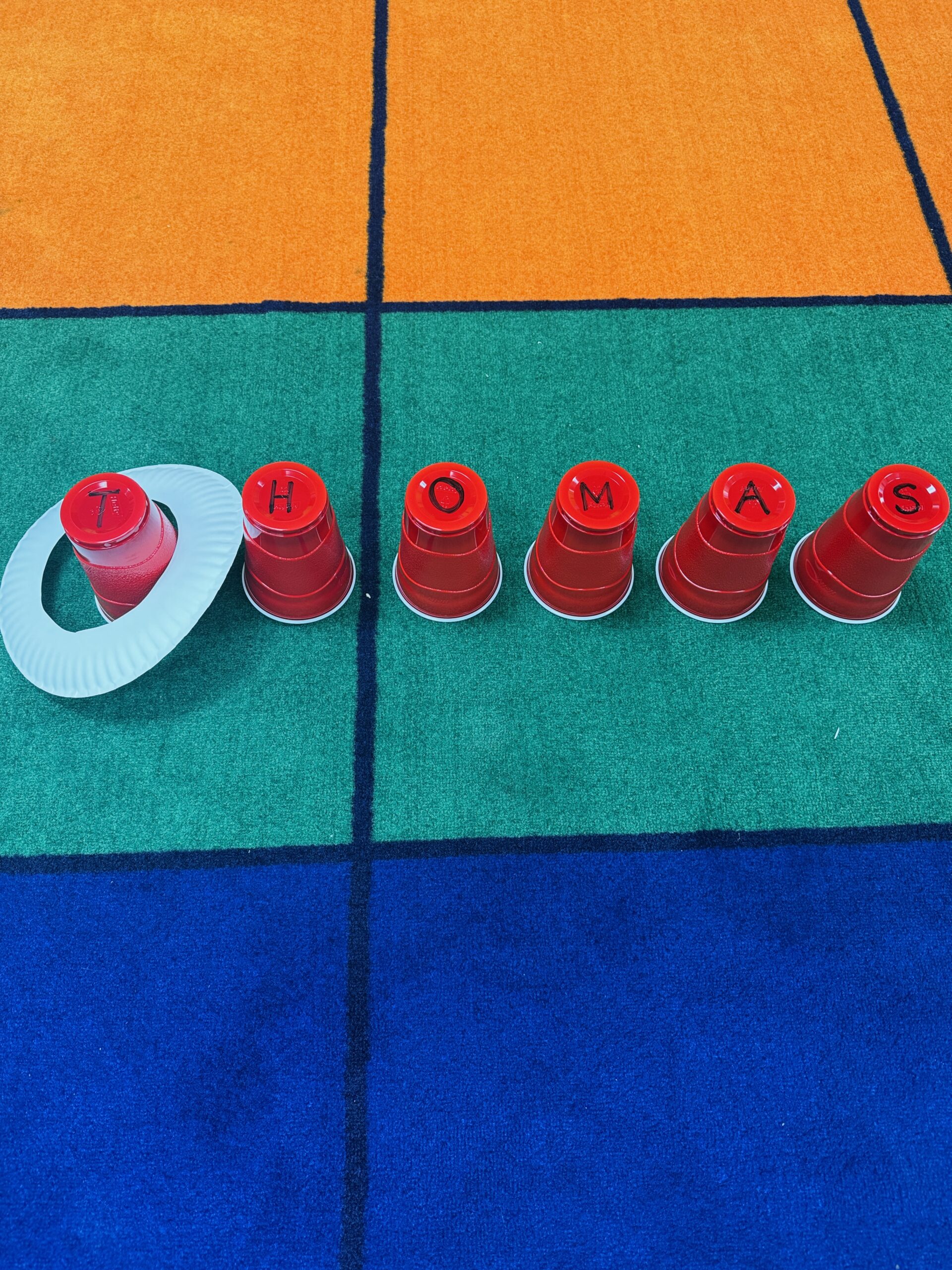
- Time: 15–20 minutes
- Materials: Plastic cups and paper plates
- Prep: For each student, write the letters of their name on the bottoms of plastic cups as shown in the photo above. Cut the centers out of paper plates to create “rings.”
How to play:
- Give each student their own name cups and a paper plate ring. Ask them to set up the cups a few feet away from them, and practice throwing the ring around each letter.
- Then, ask students to trade places with a neighbor, and try to throw their rings around that student’s name cups.
- Continue the game as long as you like, helping kids get to know each other’s names (and how to spell them!).
14. Jump In
- Time: 5–10 minutes
- Materials: None
- Prep: None
How to play:
- Have students stand in a circle.
- In the first round, each student jumps into the middle of the circle and calls out their own name, one at a time. Then they jump back to their spot.
- In the second round, as the student jumps into the circle, the rest of the class calls out their name together before they jump back.
15. Give Me a Name!
- Time: 10–15 minutes
- Materials: None
- Prep: None
How to play:
Bring each student to the front of the class. Lead the rest of the class in the classic “Give me a …” cheer to spell out their name. Example:
(Teacher) Give me an A!
(Class) A!
(Teacher) Give me an L!
(Class) L!
(Teacher) Give me an I!
(Class) I!
(Teacher) What’s that spell?
(Class) ALI!
Name Games for Middle School
16. Letter Card Trade
- Time: 15–20 minutes
- Materials: Note cards, pen or marker
- Prep: Write each letter of each student’s name on a note card, and shuffle the deck.
How to play:
- With the deck of letter cards face down, have each student randomly draw as many cards as there are letters in their own name. (For instance, Ian would draw three cards, while Amelia would draw six.)
- The goal is for kids to trade for the cards that spell their name. Example: If Ian has an M and Amelia has an N, they could trade so each has one of the letters they need.
- Once a student has completed their name, they can help others find and make the trades they need.
17. Snowball Fight
- Time: 15–20 minutes
- Materials: Paper and pens/pencils
- Prep: None
How to play:
- Ask each student to write down one interesting fact about themselves on a piece of paper, then crumple it up into a “snowball.”
- At the signal, let kids toss the snowballs around the room (gently!).
- After a few minutes, give the signal to stop the fight. Ask every student to find and pick up one snowball.
- Now, have students take turns straightening out their snowball and reading the fact out loud. As a class, try to guess who wrote each fact.
18. Trading Cards
- Time: 15–20 minutes
- Materials: Blank note cards and markers/colored pencils, etc.
- Prep: None
How to play:
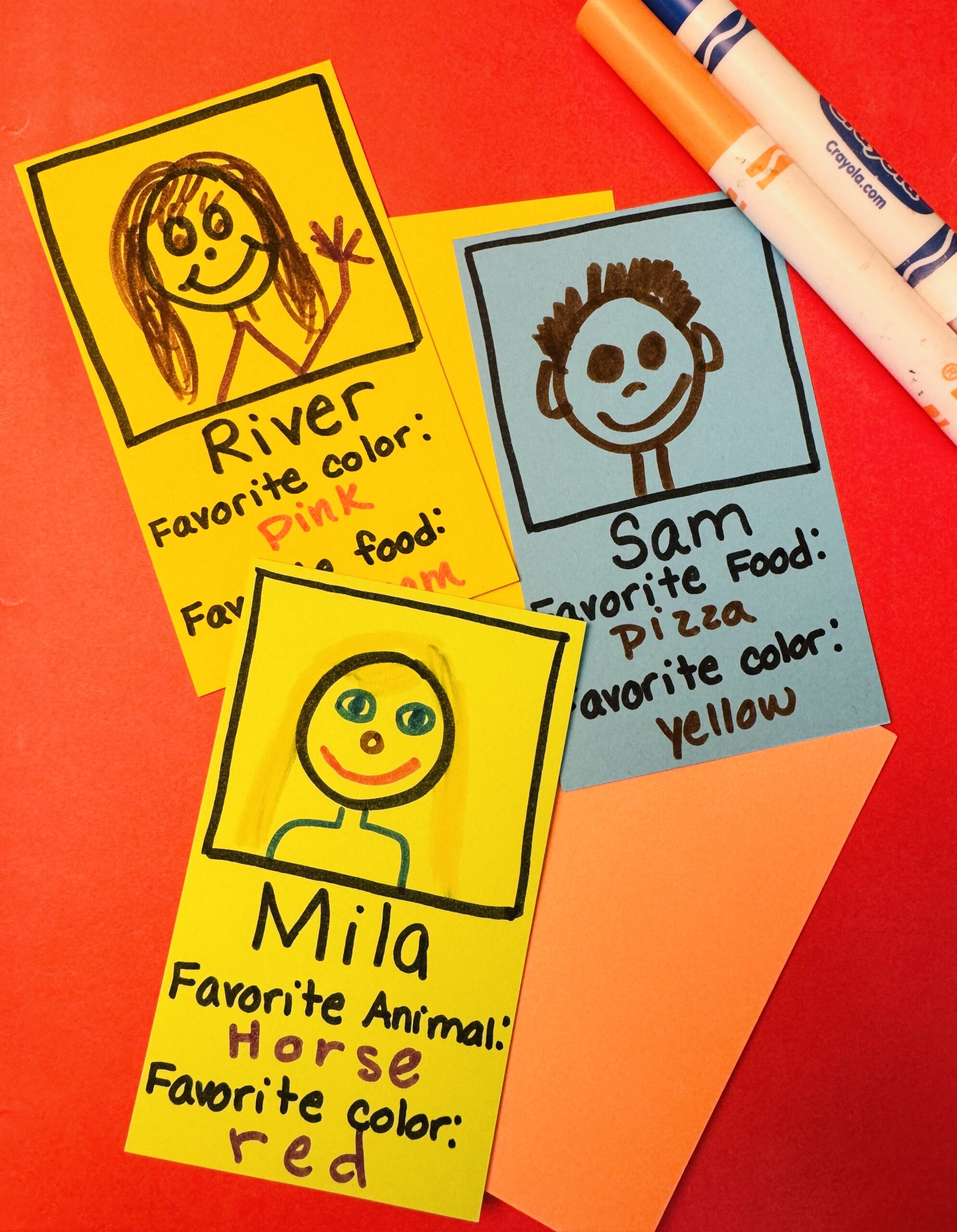
- Have each student create their own personal “trading card” (like Pokémon or similar). They should include their name, a picture, and a few interesting facts.
- You have a few different options for how to use these cards:
- Post all the cards in a central location like a bulletin board for kids to look at when they have time.
- Lay out the cards side by side and make photocopies in sheets. Cut the cards apart and give kids their sets to trade and share.
- Don’t forget to make your own card to share!
19. Peek-a-Who
- Time: 15–20 minutes
- Materials: A large tarp or blanket
- Prep: None
How to play:
- Divide the class into two teams, each on one side of the room.
- Ask another student or teacher to help you hold the blanket up high between the two teams, making a “wall” so they can’t see each other.
- Each team selects one person to stand close to the “wall,” near the middle.
- At the count of three, drop the blanket or tarp so the two chosen students can see each other. The first to shout out the other person’s name correctly wins the point.
- Play until every student has had a turn at the “wall.”
20. Power Pose
- Time: 15–20 minutes
- Materials: None
- Prep: None
How to play:
- As each student introduces themself, ask them to use a “power pose.” They could pose like a superhero, hands at their hips, or like a bodybuilder showing off muscled arms, or even just stand tall and proud.
- After each student poses and says their name, the rest of the class adopts the same pose and says “Hi, [name]!”
- Optional: For an extra bit of fun, take a group picture with everyone in their poses!
21. Partner Name Tags
- Time: 20–30 minutes
- Materials: Adhesive blank tags, markers, icebreaker questions
- Prep: None
How to play:
- Pair up the students in your class, and ask the pairs to sit together.
- Give the pairs 10 minutes to discuss some icebreaker questions (post them on the board or distribute a handout to guide the discussion).
- Now, each person has five minutes to create and decorate a name tag for their partner, using some of the information they learned (favorite color, activity, etc.) to personalize it.
- Finally, have each person put on their name tag, then spend a few minutes mingling with their classmates and checking out their tags.
22. Web of Names
- Time: 10–15 minutes
- Materials: Large ball of yarn
- Prep: None
How to play:
- Have students sit in a circle, and give one student the ball of yarn.
- That student introduces themself to the class, then holds on to the end of the yarn and tosses the ball to another classmate.
- The next student introduces themself, then stretches the yarn tight and holds onto it, while tossing the ball to a new person.
- Keep playing until everyone has introduced themselves and is holding part of the yarn. This “web of names” shows how everyone in the class is part of a larger whole.
23. Zombie Name Game
- Time: 10–15 minutes
- Materials: None
- Prep: None
How to play:
- Have the class stand in a circle and take turns introducing themselves.
- Choose one student to be the first “zombie” and stand in the middle.
- Call out a student’s name. The zombie heads toward that student.
- If the target student says someone else’s name before the zombie reaches them, they’re safe. However, the student can’t use any of the last three names that have been called! Once they shout out an eligible name, the zombie turns and heads for the new target.
- If the zombie reaches the target student before they call out an eligible name, that student becomes the new zombie.
24. Name Bingo
- Time: 5–10 minutes
- Materials: Bingo cards, pen/pencils, small prizes
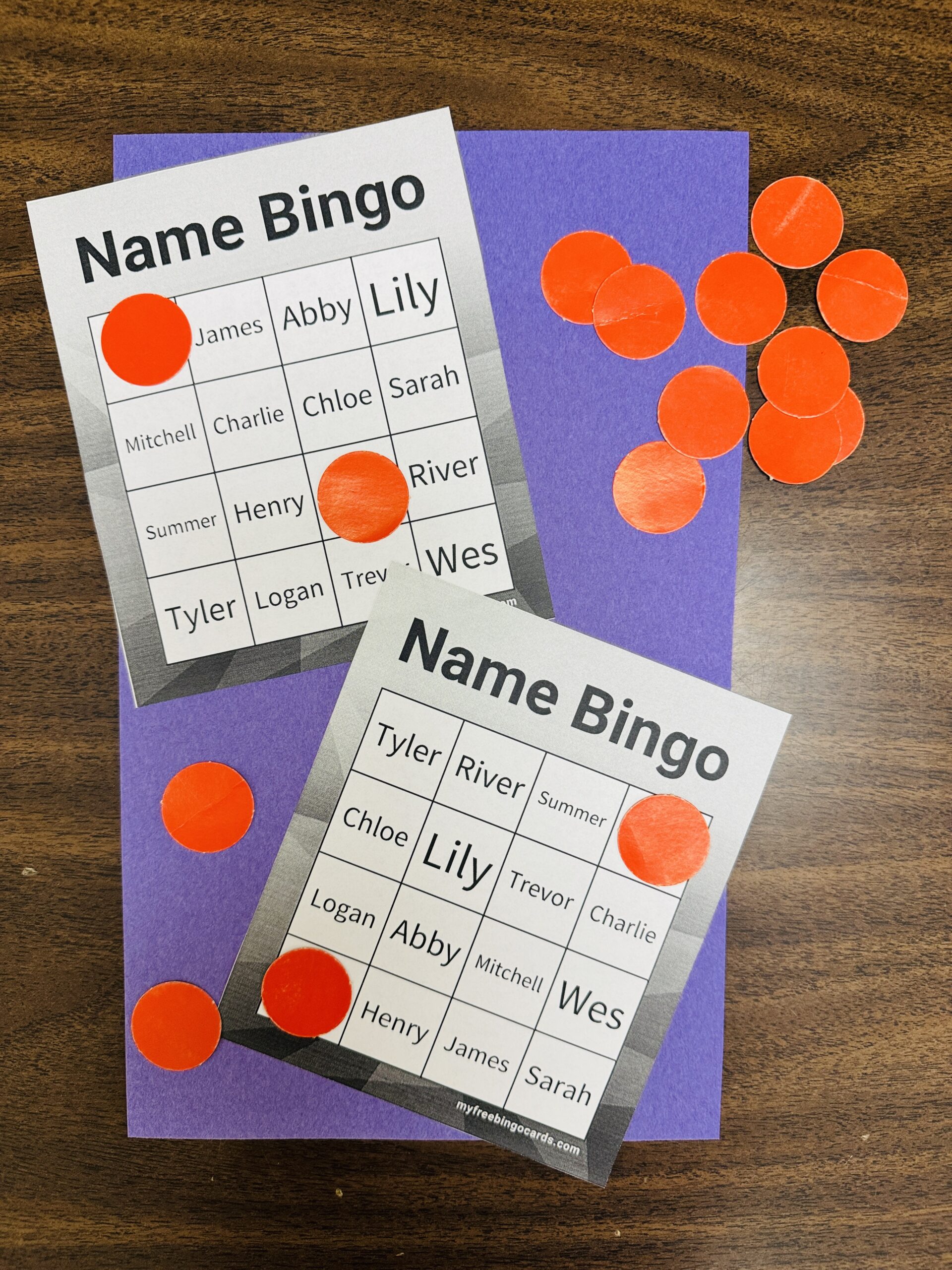
- Prep: Create bingo cards with students’ names. Be sure to create a variety of cards with the names in different orders.
How to play:
- Give each student a bingo card and make sure they have something to write with.
- At the signal, kids begin mixing and mingling, trying to find the people named on their card. Once they do, they have that student initial their square.
- When a student has a complete row across, down, or diagonally, they call out, “Bingo!” and receive a small prize. Continue the game as long as you like.
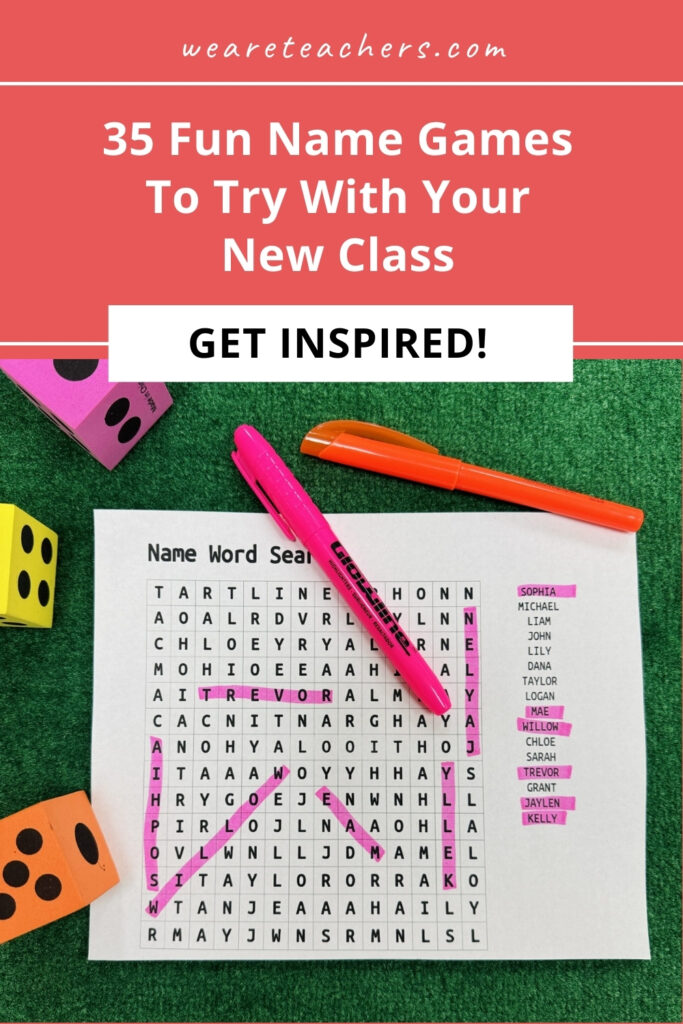
25. Name Word Search
- Time: 5–10 minutes
- Materials: Name-word-search handouts, pen/pencils or highlighters
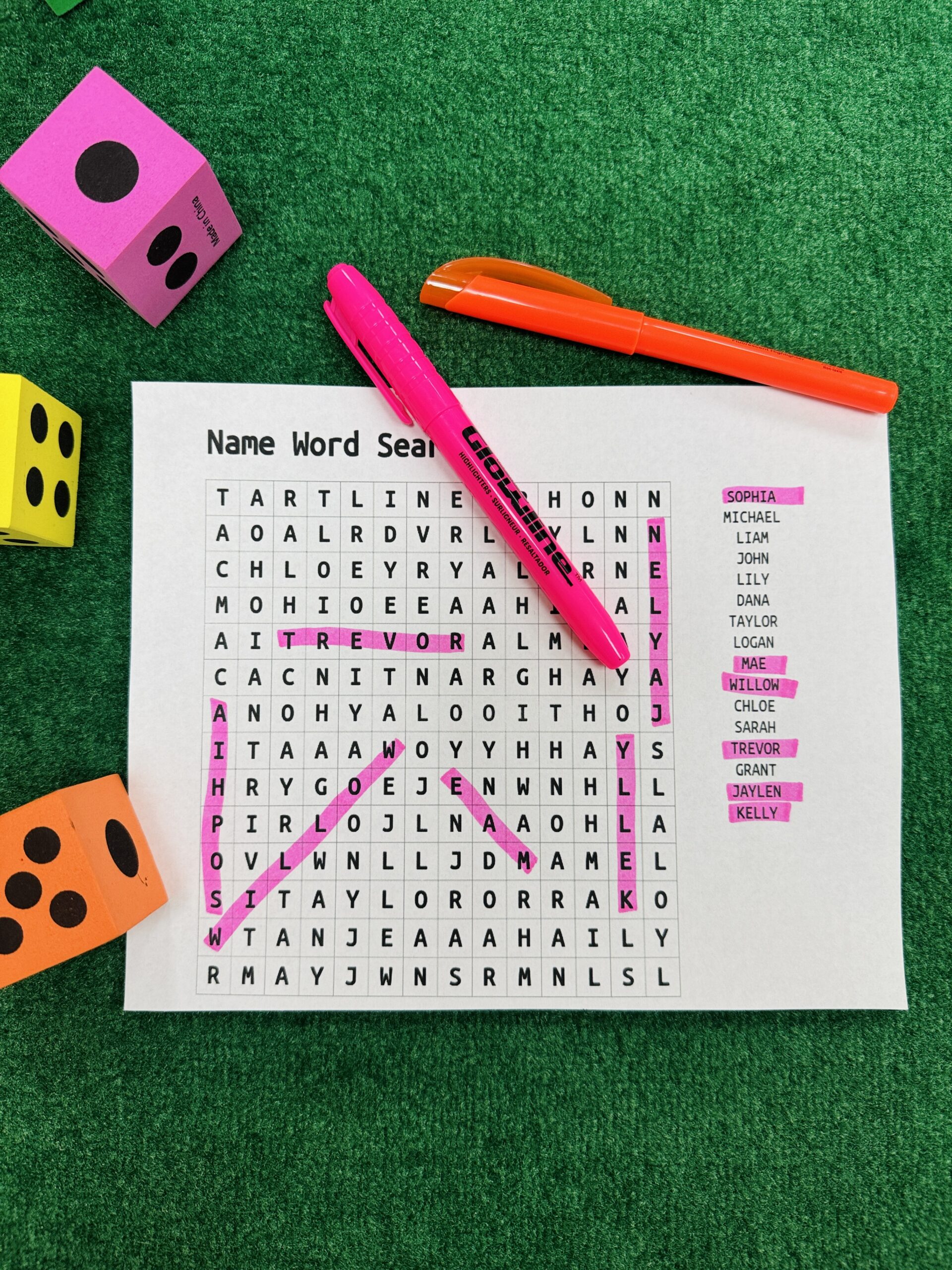
- Prep: Use a word search generator to create a puzzle for your class to solve, and make enough copies for everyone.
How to play:
- Provide the handout to all students.
- Kids search for names on the list, working to complete the entire puzzle.
- After everyone has had a chance to work on the word search, invite each student up to the front of the room to introduce themselves and show where their name appeared in the grid.
Name Games for High School
26. Fingerspelling
- Time: 15–20 minutes
- Materials: ASL Fingerspelling chart (optional)
- Prep: Learn to sign your own name using fingerspelling.
How to play:
- Share the ASL Fingerspelling video and/or chart handouts with students.
- Have students learn to finger-spell their own name, practicing until they feel comfortable.
- Now, let students mix and mingle, sharing their names with their classmates using fingerspelling.
27. Group Juggle
- Time: 15–20 minutes
- Materials: Small ball
- Prep: None
How to play:
- Give one student the ball. Have them say their own name, then choose someone in the circle to toss the ball to, saying their name: “Olivia, [tossing ball] Alex.”
- Each person repeats the action, throwing the ball to someone who hasn’t had a turn yet, until everyone has a turn.
- Now, give the ball to the first student again. The class must try to toss the ball around the circle in the exact same order as they did the first time.
- Optional: Increase the difficulty by adding a second or even third ball going at the same time!
28. Guess Who
- Time: 10–15 minutes
- Materials: None
- Prep: None
How to play:
- Everyone in the class closes their eyes. Choose one student at random to say “Hello!”
- The other students try to guess who the speaker was. (This can be especially challenging if you allow students to use funny voices when they talk.)
- Repeat until everyone has had a turn.
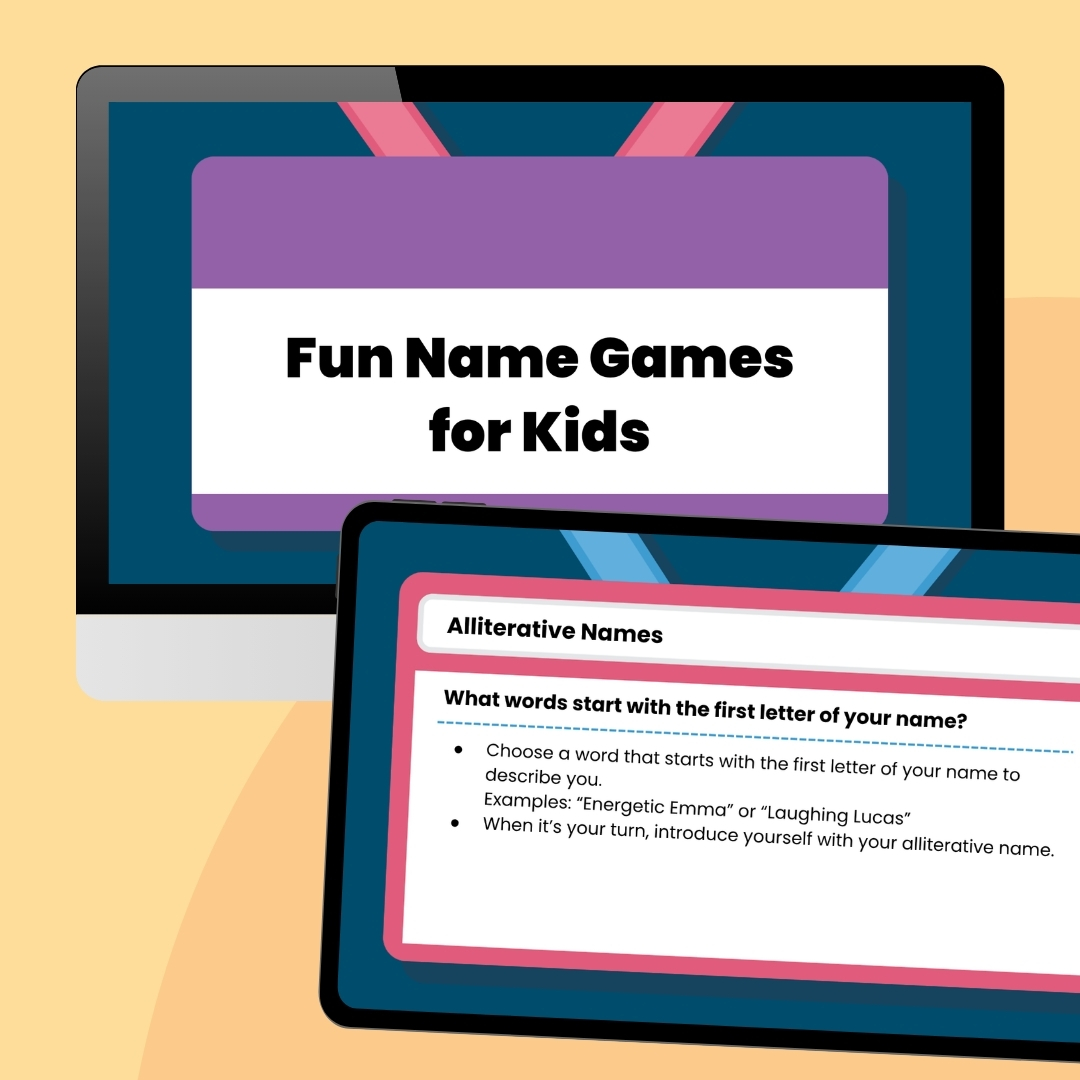
29. Alliterative Names
- Time: 10–15 minutes
- Materials: None
- Prep: None
How to play:
- Give students one minute to come up with an alliterative adjective to describe themselves that matches their name. For example: “Energetic Emma” or “Laughing Lucas.”
- Go around the room and have each student introduce themselves with their alliterative name.
- Optional: Point to students at random and see if the class can remember the alliterative name they chose.
30. Missing Name
- Time: 5–10 minutes
- Materials: Note cards and marker
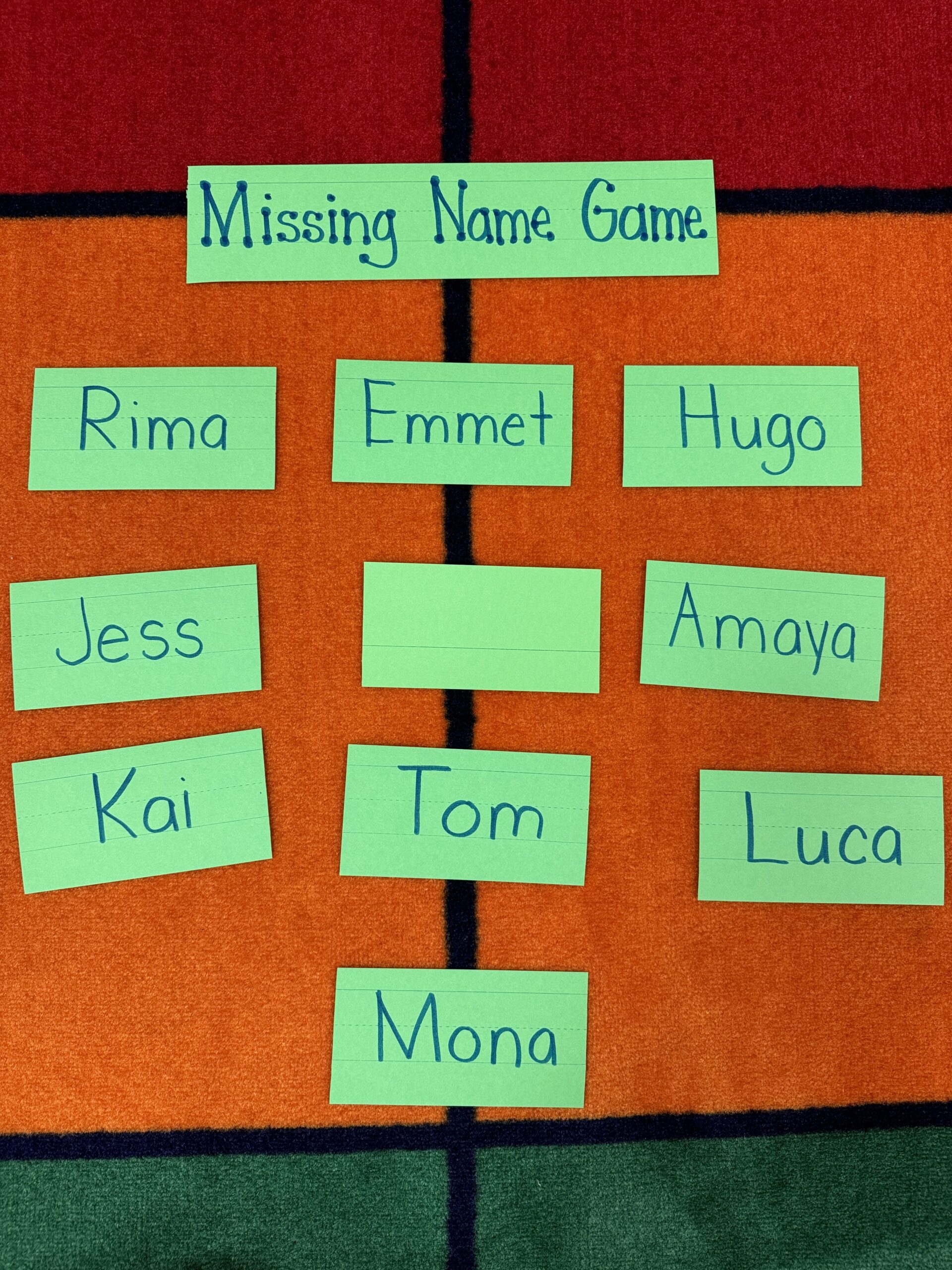
- Prep: Write each student’s name on a card so you have one for each.
How to play:
- Gather students around a central table or space on the floor. Lay out all but one card face up—keep one card face down. See how long it takes kids to figure out which classmate’s name is missing.
- Shuffle the cards and repeat as many times as you like.
31. Roll the Dice
- Time: 10–15 minutes
- Materials: Dice
- Prep: None
How to play:
Each student rolls a die. The number that they land on indicates how they should introduce themselves:
- Share your name and spell it backwards as fast as you can.
- Share your name and your favorite color.
- Share your name and the last movie you watched.
- Share your name and the names of the people on either side of you.
- Share your name and your favorite ice-cream flavor.
- Share your name and the month you were born.
32. Name Impulse
- Time: 5–10 minutes
- Materials: None
- Prep: None
How to play:
- Sit or stand in a circle. Choose a student to start by saying their own name.
- Immediately afterward, the person to their left says their own name. Repeat this all the way around the circle.
- Now the fun begins! Start a timer, and see how quickly the group can go around the circle saying their names. Students try to beat their own record!
33. Letter Lineup
- Time: 10–15 minutes
- Materials: None
- Prep: None
How to play:
- Share the challenge: Students must line up in order of the number of letters in their first name, but they cannot talk while doing so!
- To break ties, count the number of letters in students’ middle names, and then use last names too if needed.
- Time the group. If anyone talks, they must move around the room to mix themselves up and start over again!
34. Name Pictionary

- Time: 15–20 minutes
- Materials: Paper and pen/pencil or markers
- Prep: Create an example for your own name, as shown in the photo.
How to play:
- Share your own Pictionary name with your students to demonstrate the task.
- Have each student create their own Pictionary name drawings with blanks for the letters.
- Collect all the drawings and mix them up, then pass them back out randomly. Each student solves the puzzle they receive, then finds the creator and chats with them for a minute or two.
35. Emoji Name Tags
- Time: 10–15 minutes
- Materials: Adhesive blank tags, pens or markers
- Prep: Create your own emoji name tag.
How to play:
- Give each student a blank tag and pens or markers. Ask them to write their name on the tag, along with a few emojis that describe themselves.
- Bring each student to the front of the class to introduce themselves and explain the emojis they chose.
36. Name Clusters
- Time: 10–15 minutes
- Materials: None
- Prep: Make a list of the “cluster” ideas you’ll use.
How to play:
- To create your “cluster” ideas, come up with different ways students can gather based on their names. For instance:
- Gather in groups based on the number of letters in your first name.
- Gather in groups with others whose name ends in the same letter as yours.
- Gather into two groups: even number of letters in your name, and odd number of letters.
- Gather into two groups: names that start with vowels, and names that start with consonants.
- As students gather in these clusters, give them a minute or two to chat with their group mates before moving on to the next.
Get your free name game Google Slides!
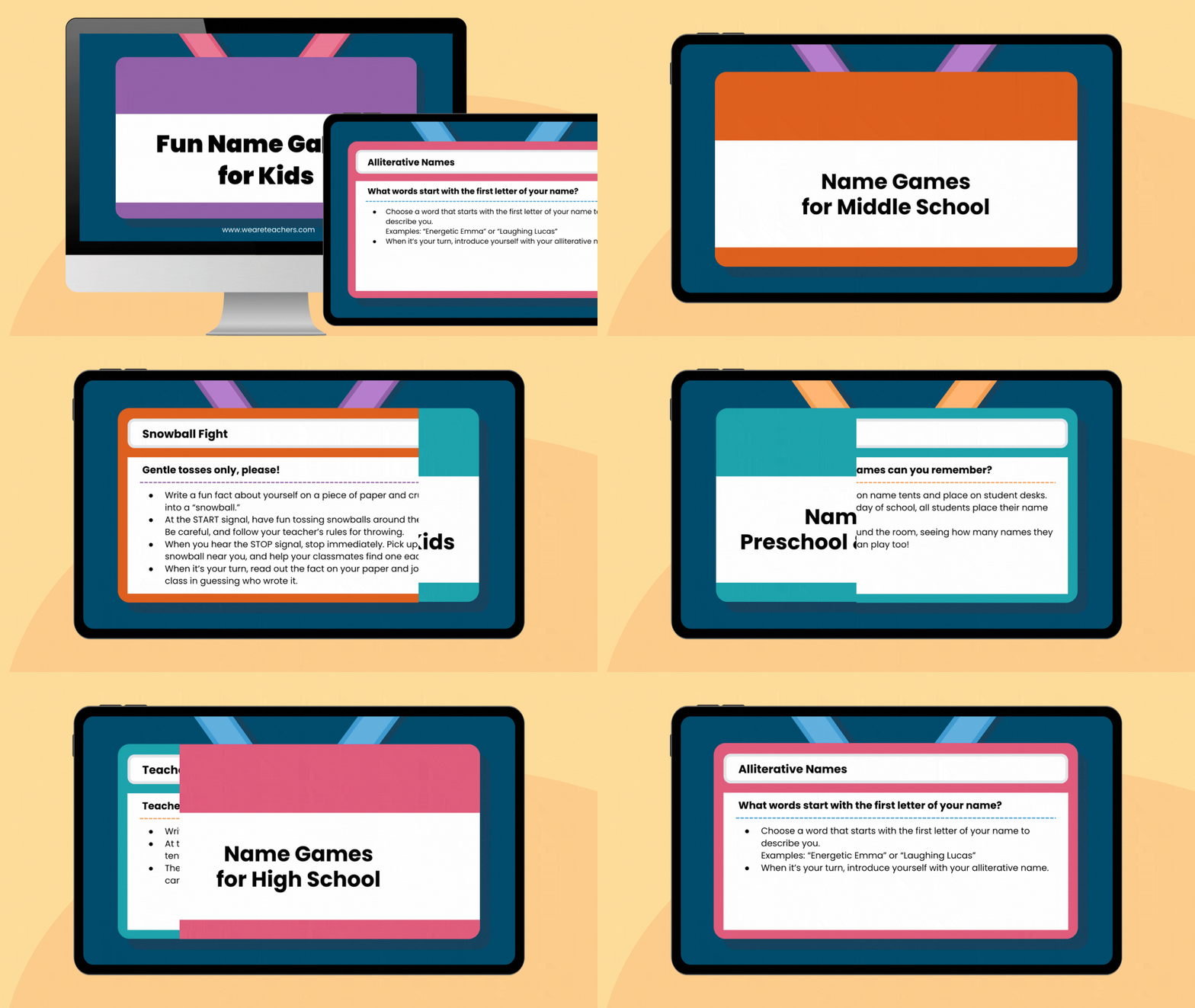
We created a free set of student-facing Google Slides featuring all of the games described above.
What’s one of your favorite name games? Come share in the We Are Teachers HELPLINE group on Facebook!
Plus, explore all of our Back to School Resources here!