
Learning new words is like adding to your writing toolbox. The more tools available, the more interesting and engaging your writing becomes. Use these fun and engaging vocabulary activities and games for kids in grades K–12 to supply your students with the tools they need to build their wordsmith skills.
Jump to:
- How To Teach Vocabulary
- Vocabulary Games for Kids
- Vocabulary Writing Activities
- More Fun Vocabulary Activities
How To Teach Vocabulary
We asked Savannah Campbell, co-author of The Megabook of Vocabulary, to share her top dos and don’ts for teaching vocabulary. She draws on 20 years of working with struggling readers as both an elementary teacher and a reading specialist for these top tips. Follow her on Instagram at @campbellcreatesreaders for more ideas, activities, and expert advice!
DON’T teach all words equally
“Many vocabulary programs encourage teachers to devote the same amount of time and the same routine to every word on the list,” notes Savannah, which does students a real disservice.
“Instead, consider the instructional value of each word. Does it need rich, explicit instruction, or is a quick explanation enough before moving on? Does the word have a transparent morphological structure that students can analyze using prefixes, suffixes, and roots? By varying the depth of instruction based on the word, you can spend more time on the vocabulary that will have the greatest impact while still helping students make sense of less critical words.”
DO explicitly teach key words
“We know that direct, explicit instruction in vocabulary works!” Savannah says. “While we can never teach all the words students will need to learn, we can and we should intentionally teach high-utility academic vocabulary words to our students. The words we directly teach should be ones that will show up time and time again in their academic career. By choosing words with staying power, we give students knowledge they can use far beyond a single lesson.”
DON’T just tell students to “look it up” in the dictionary
“Yes, dictionaries are valuable resources,” Savannah acknowledges. “However, for many elementary students, dictionary definitions often create more confusion than clarity. Definitions frequently include unfamiliar vocabulary, multiple meanings, and language that is too abstract for developing readers. Instead, introduce new words using kid-friendly definitions that connect the word to concepts and experiences students already understand.”
DO teach word-learning strategies
“Over time, the largest contributor to our students’ vocabulary development is not directly teaching words or providing multiple exposures. Instead, it’s wide reading,” explains Savannah. “The majority of the 50,000 words that the average adult knows is learned through reading.” (One more reason that all reading matters!)
“But simply telling students to read does not do enough,” she continues. “Instead, we must teach them strategies for uncovering meaning when they are not with us. Teaching morphology and context clues are word-learning strategies that students can bring with them to any text. Not sure of a word’s meaning? Look around in the sentence for clues, or look within the word itself for meaningful parts. That is how student’s vocabulary grows through wide reading, not just telling them to go read.”
DON’T just teach a word once
“This is one of the biggest mistakes we can make in vocabulary instruction,” Savannah stresses. “Teaching a word during one lesson and then never revisiting it is rarely enough for students to develop deep, flexible word knowledge. Instead, students need repeated opportunities to encounter and use the word in a variety of contexts.
“For example, imagine you’ve taught the word disaster through the story of the Titanic. Students may understand that a shipwreck or a plane crash is a disaster. But can they recognize that a disastrous performance, a disastrous decision, or even a disastrous day all share the same underlying meaning? Seeing words used across many different situations helps students move beyond a single example and develop a richer, more flexible understanding of vocabulary.”
DO provide multiple exposures
“Learning a word takes more than one lesson,” Savannah emphasizes. “Too often, textbooks introduce vocabulary for a week and then move on, leaving students with few opportunities to truly retain those words.”
The key is using and teaching words in context. “Intentionally weave previously taught vocabulary into discussions, writing, read-alouds, and classroom conversation,” she says. “One simple strategy is to include your target vocabulary words directly in your lesson plans. Keeping them visible makes it easy to naturally revisit them throughout the day, giving students the repeated exposures they need to build lasting word knowledge.”
Should you use a weekly vocabulary routine?
Many teachers use a weekly routine with a specific daily vocabulary activity for that week’s words, such as:
- Monday: Introduce the words with kid-friendly definitions.
- Tuesday: Read passages using the words in context.
- Wednesday: Write sentences using the words correctly.
- Thursday: Play a vocabulary word review game.
- Friday: Assign a vocabulary word test.
But these routines may not necessarily be effective or beneficial. “I don’t think what we do on each individual day for vocabulary matters as much,” Savannah claims. “What does matter is the kind of instruction we provide when we are directly teaching words. Directly teaching a word is only one part of it.”
It’s critical to provide kid-friendly definitions and multiple examples of the words in different contexts, and give students opportunities to practice and process new terms. But that doesn’t always need to be through explicit vocabulary instruction. Instead, keep vocabulary fresh and relevant by using it in the classroom. As Savannah says, “When we’re not introducing a vocabulary word, we should be spending that time practicing the words we’ve learned!”
Sentence Frames: The Vocabulary Activity You Need To Try
Chances are, you already give vocabulary assignments asking kids to write sentences using their list of words. On the surface, this seems like a great way to teach words in context, but in practice, it may not be as effective as you think. “Those sentences they write are surface-level sentences that almost always don’t show any depth of understanding for the word’s meaning,” cautions Savannah.
Instead, Savannah recommends sentence frames. Rather than letting students create any sentence they like, provide sentence stems using the target words. The twist? These stems are designed so kids have to demonstrate real understanding. “Giving students sentence frames is a way to scaffold their sentences. If we do this right, they can’t finish the stem without an understanding of the word. And that is what we want.”
How To Use Sentence Frames
Here’s an example of using sentence frames using the word “scour.” On their own, students usually generate simple sentences like “I scoured the floor,” or “He scoured the room.” These are technically correct, but they don’t demonstrate deeper understanding.
Sentence frames require more from kids. “I would scour the playground for __________ but not for ____________.” To fill in these blanks in a way that makes sense, students need a to understand more than just the basic meaning of the word.
The best part of this vocabulary activity is that it’s actually easy for teachers to set up! “Now that we have ChatGPT that can write the sentences for us, sentence frames add very little extra time to your planning,” Savannah promises. Choose your vocabulary words and ask ChatGPT this:
- “Give me sentences stems for the following words: [fill in your target words]. Make it so the students cannot finish the sentence stem without an understanding of the targeted words. This should be appropriate for students in _____ grade.”
Remember to follow Savannah on Instagram (@campbellcreatesreaders) for more teaching tips and ideas, then check out our list of more fun vocabulary games and activities to try!
Vocabulary Games for Kids
Riddle Me This
- Best for: Whole class in teams
- Time: 15–20 minutes
- Teacher tip: Challenge students to start with small clues, making them more obvious as they progress.
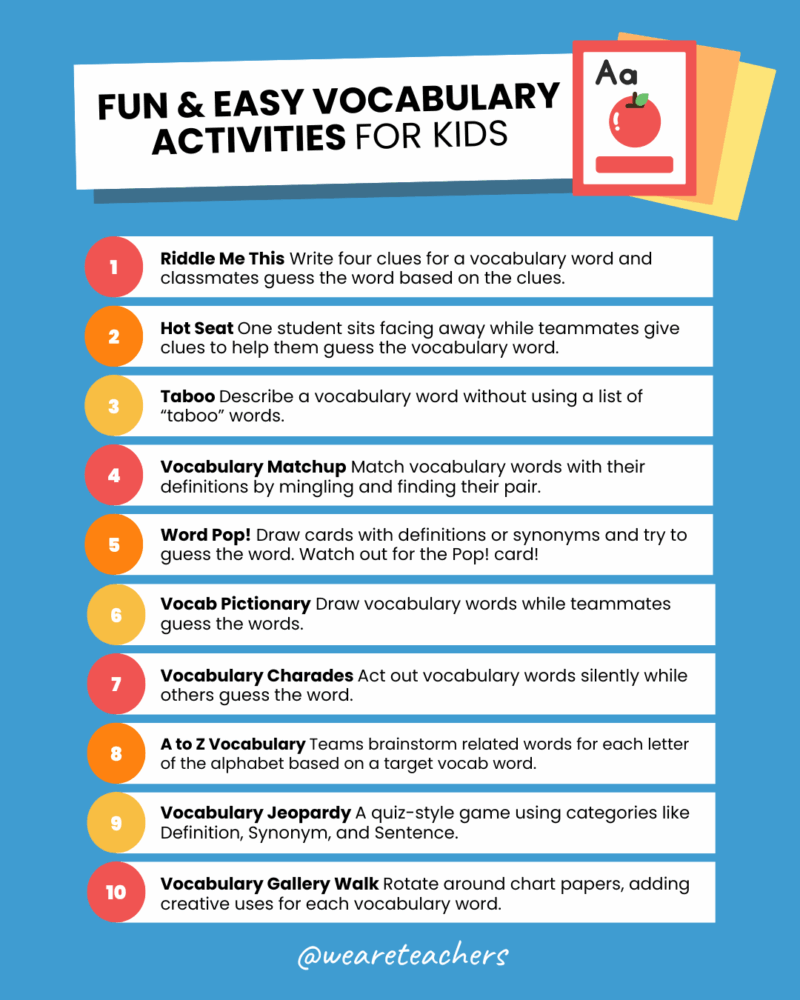
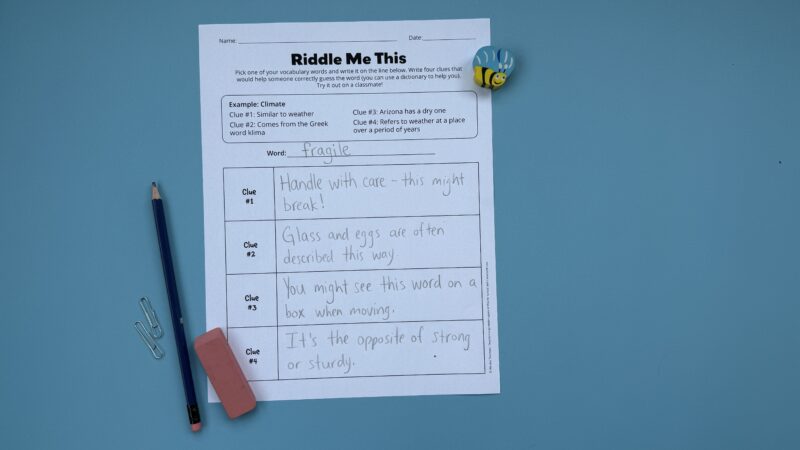
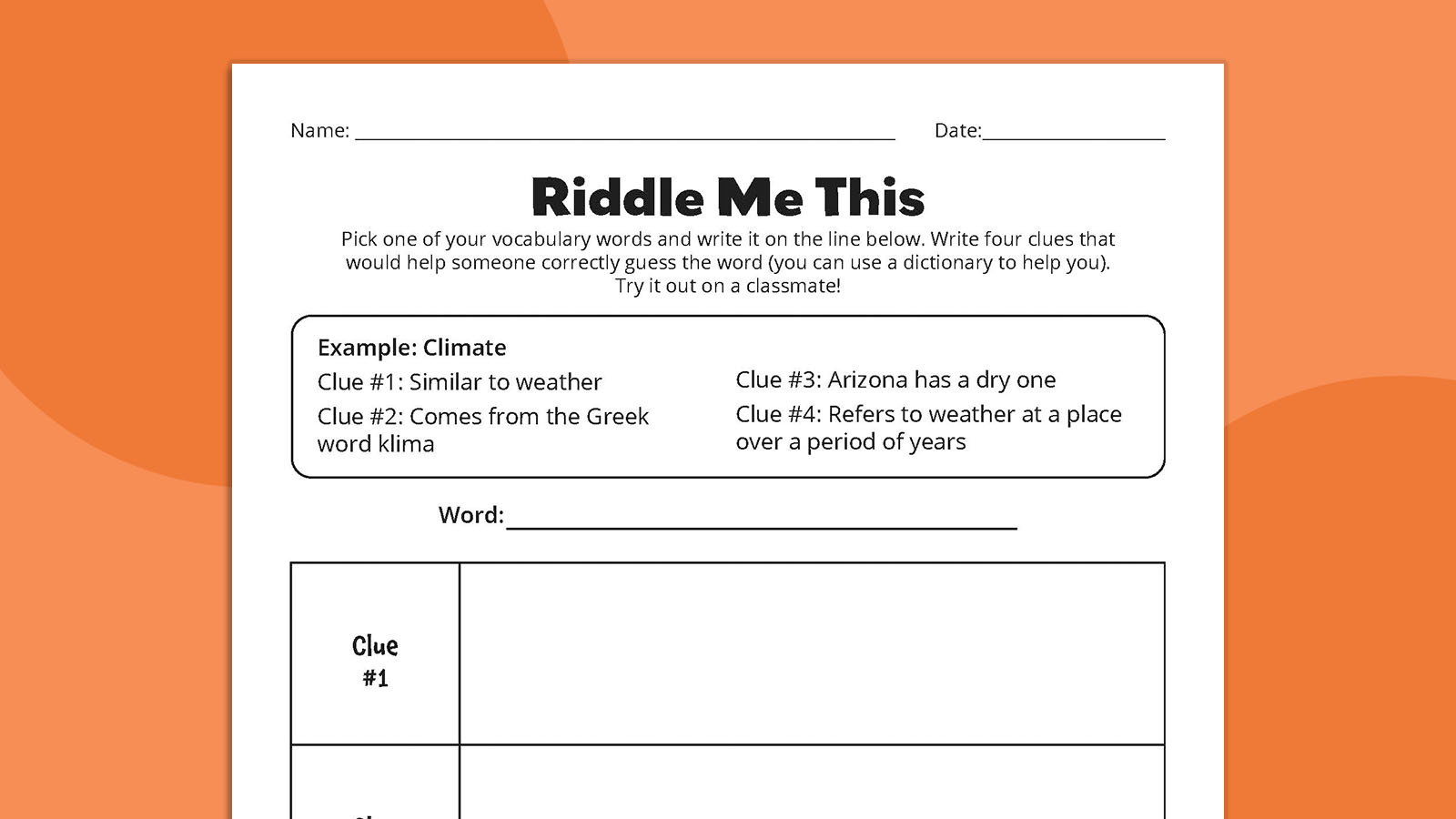
Use our free downloadable worksheet for this fun vocabulary game. First, kids work individually or in teams to create a list of four clues for each vocab term. Then, they use these clues to try to get other students to guess the right word.
Riddle Me This Vocabulary Worksheet (Free Printable)
Students choose one of their vocabulary words and write four clues on the Riddle Me This worksheet to help someone correctly guess the word.
Hot Seat
- Best for: Whole class in teams
- Time: 10–15 minutes
- Teacher tip: For an optional add-on, require students to spell the word correctly to win the point (or earn an extra one).
Here’s one fun way to use Riddle Me This clues. Divide the class into two teams. The first team chooses one student to sit in the “hot seat” at the front of the classroom. Then, the teacher shows their teammates the target word for that round and sets a timer for one minute. The team gives clues to the player, who must guess the correct term before the time is up. Switch teams, and go for round 2!
Taboo
- Best for: Whole class in teams
- Time: 10–15 minutes
- Teacher tip: Create the cards in advance yourself, or have students team up to make them instead.
This is similar to Hot Seat—but with a twist. You’ll need to create the cards for this one in advance: Write each term on your list on a separate card. On each card, also include several words students are NOT allowed to use in the game. For instance, if the word is “alligator,” you might list the taboo words “teeth,” “Florida,” and “swamp.” If players use any of these words when trying to get their teammate to say the target term, they automatically lose the point!
Vocab Show-and-Tell
- Best for: Whole class
- Time: 10–15 minutes
- Teacher tip: Not all words work equally well for this game, so choose carefully.
Think of this like everyone’s favorite preschool activity but with words! Choose a few students each week to “bring” a new word to show the class. Have them choose the word in advance and share it with you to make sure it’s appropriate and they truly understand it. Then, each student brings and presents something that “shows” and “tells” the word and its meaning. Example: If the word is “fuzzy,” a student might bring their favorite stuffed animal. For “delicious,” they could bring a favorite treat to share with the class.
Vocabulary Matchup
- Best for: Whole class
- Time: 10–15 minutes
- Teacher tip: If your class tends to get a bit chatty, try doing this activity silently instead.
Create a pair of cards for each of your vocab terms. One should show the word itself, the other the definition. Mix up the cards and pass them out, one to each student. Their job is to talk to other students until they find the person who has their match. Once everyone is finished, verify their answers, then collect the cards, mix them up, and pass them out again for another round.
A to Z Vocabulary
- Best for: Whole class in teams
- Time: 5 minutes per word
- Teacher tip: For a fun twist, assign points to each letter, as in Scrabble, with trickier letters earning more points.
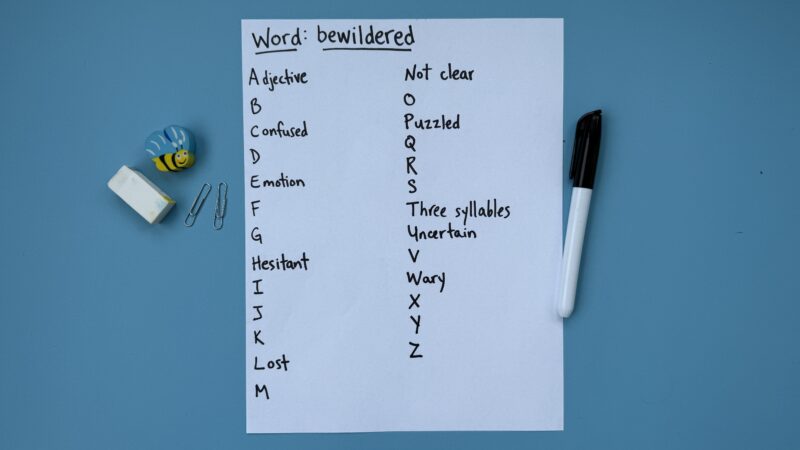
This vocabulary game is fun and challenging, and it can be played by kids of any age. Have kids work in teams. One player on each team—the scribe—writes the letters A to Z down the left side of a page. Then, show the first vocabulary word and set a timer for three minutes. Teams work together to come up with words that relate to the vocab term (synonyms, antonyms, examples, etc.). When time is up, teams share their words and tally up their points.
Word Pop!
- Best for: Whole class, small groups
- Time: 10–15 minutes
- Teacher tip: Trim the cards into popcorn shapes, and place them in a popcorn bucket!
Place cards with the definitions, synonyms, and antonyms of your vocabulary words in a bag or bin. Mix in one or two cards that just say Pop! Kids take turns drawing a card and naming the vocabulary word that it describes. If they get it right, they keep the card—if not, it goes back into the bag. Be careful, though: If you get the Pop! card, you forfeit all your cards!
Vocab Pictionary
- Best for: Whole class in teams
- Time: 10–15 minutes
- Teacher tip: Allow more time for younger students or harder words.
Just like the beloved classic, but the words are vocabulary words! Teams send one player up to draw the word on the card they draw (prepare these in advance), and their teammates have 60 seconds to guess it. This one is always a classroom hit!
Charades
- Best for: Whole class in teams
- Time: 10–15 minutes
- Teacher tip: Make this more challenging by following traditional charades rules—no talking allowed for the actor!
Here’s another classic game that’s perfect for vocabulary word practice. Your students will have a blast trying to act out the words for their teammates to guess. You can also have several students prepare brief skits that demonstrate the terms, then see if their classmates can figure them out.
Vocabulary Jeopardy
- Best for: Whole class in teams
- Time: 10–15 minutes
- Teacher tip: You only need to create the board once—just change out the cards for each new vocab list.
Create a Jeopardy-style board, with categories including Definition, Synonym, Antonym, and Sentence. Then, make a set of cards for your vocab word list, and lay them face down in each category. Kids choose a category and dollar amount, then flip the card to see the vocab word. They must then define the word, offer a synonym or antonym, or use it in a sentence, whichever fits the category.
Vocabulary Writing Activities
Write It Out
- Best for: Independent work, centers, homework
- Time: 15–20 minutes
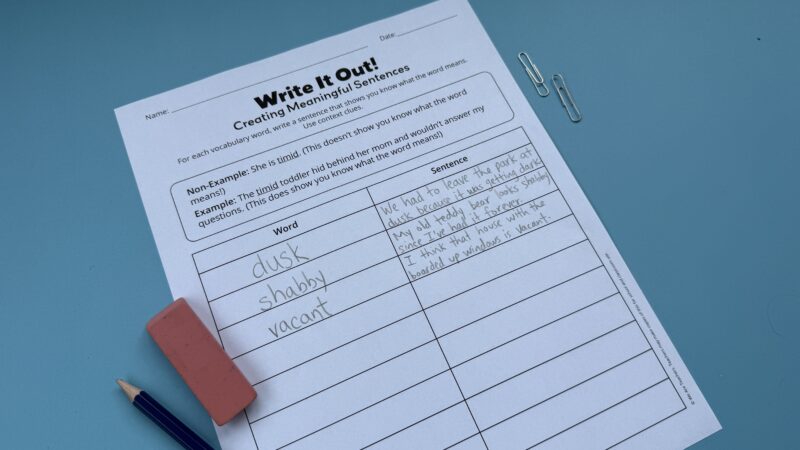
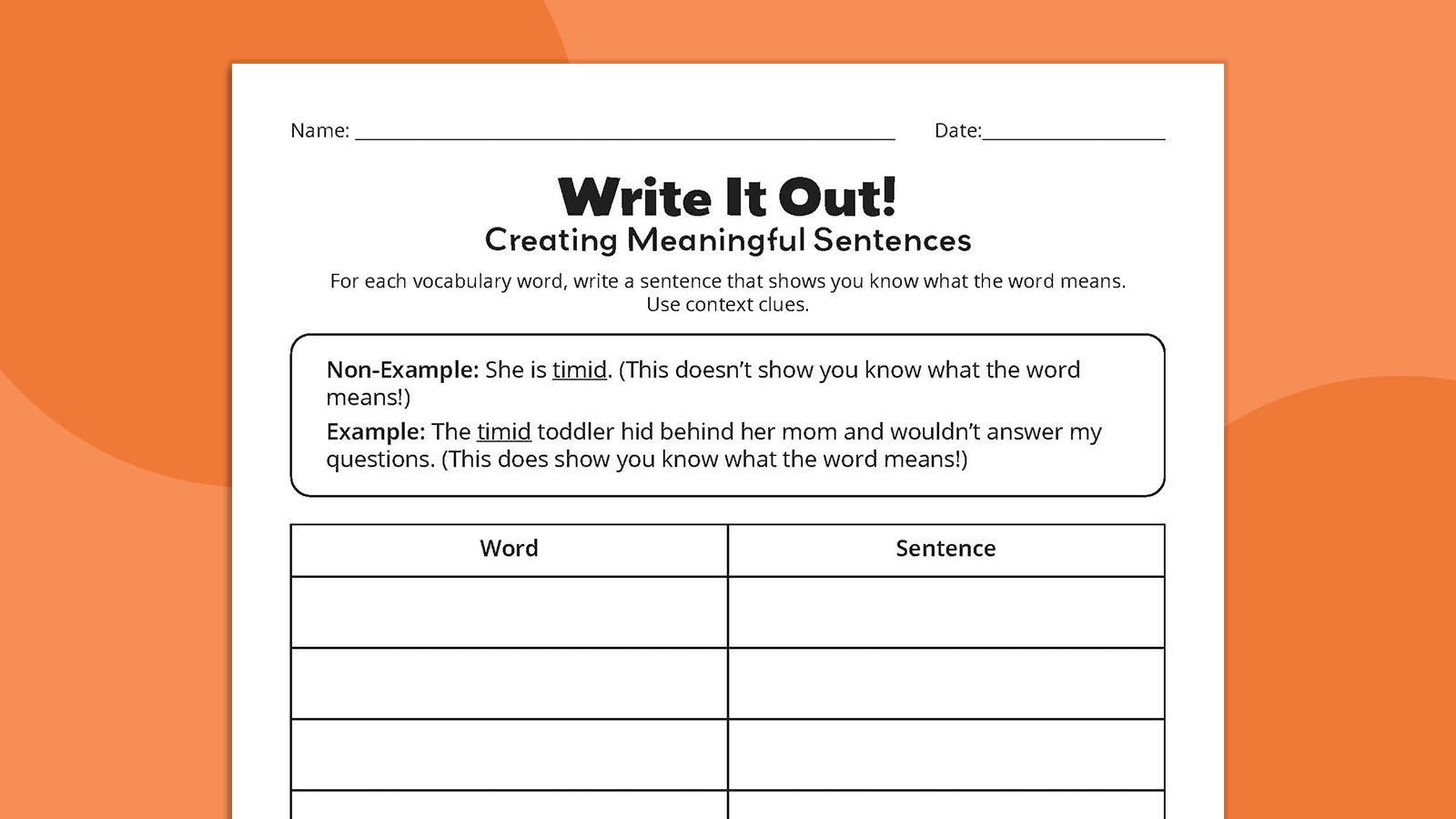
Our free downloadable worksheet makes this activity oh-so simple. Students list their vocab words, then write a sentence that uses each correctly.
Write It Out! Vocabulary Worksheet (Free Printable)
For each vocabulary word, students write a sentence on the Write It Out! worksheet that shows they know what the word means by using context clues.
Write the Room
- Best for: Small groups or partners
- Time: 15–20 minutes
Add a fun twist to Write It Out by posting the vocabulary words on sticky notes scattered around your classroom. Number them, and have kids number their worksheet too. Then, groups circulate the room, looking for the sticky notes. When they find one, they write the word by the correct number, then write their sentences.
Story Time
- Best for: Independent work, centers, homework
- Time: 20–30 minutes
- Teacher tip: Turn this into a group activity by having each student start a story with one sentence and word, then pass their paper to another student for the next sentence/word, and so on.
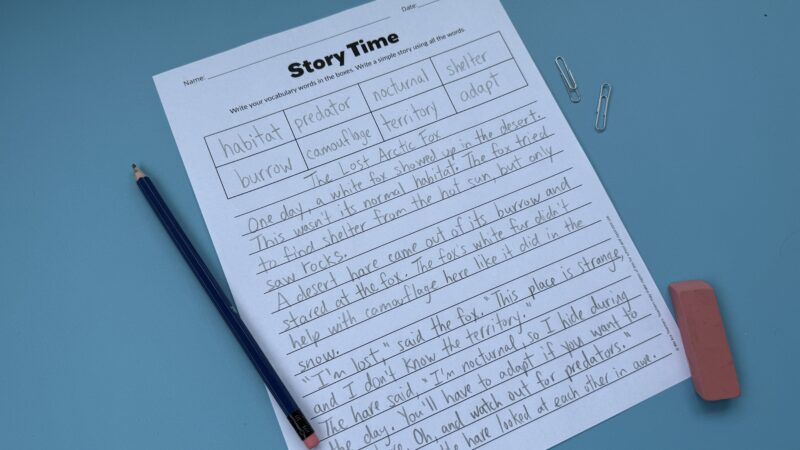
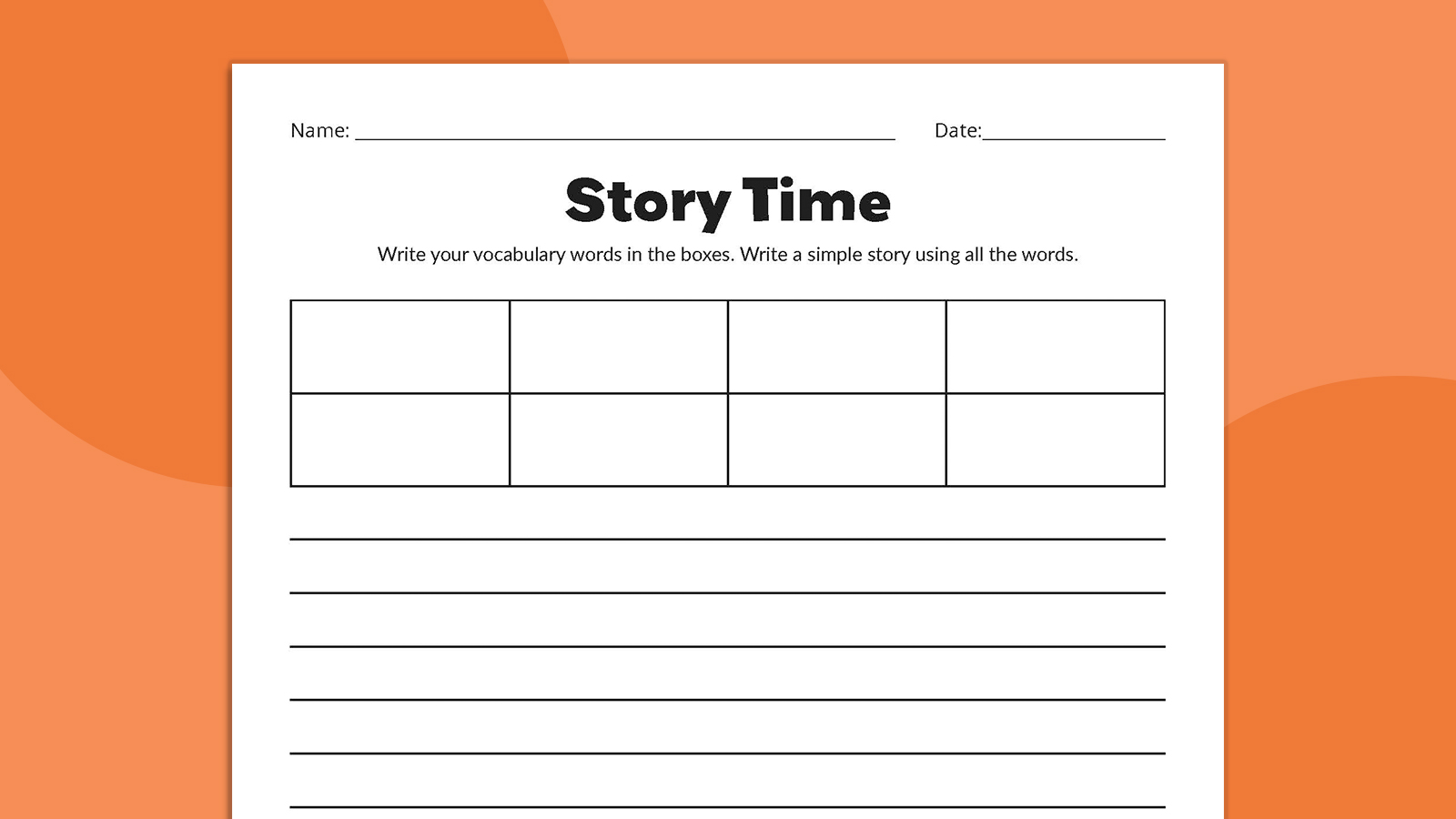
Take the next natural step by challenging kids to use their vocab terms in a short story. We’ve even got a worksheet for this classic vocabulary practice activity.
Story Time Vocabulary Worksheet (Free Printable)
Using all the words on their vocabulary list, students write a simple story using the Story Time worksheet.
Vocab RAFT
- Best for: Independent work, centers, homework
- Time: 20–30 minutes
- Teacher tip: Try our creative writing story starters for ideas!
Writing a story using vocab words is a perennial favorite, but the RAFT method gives it a new twist. Give each student a Role (the point of view from which they’ll tell the story), an Audience, a Format, and a Topic. For instance, they might be an astronaut (Role) writing a postcard (Format) to their friends back home (Audience) about what they’ve seen on Mars (Topic). RAFTs are especially great for kids who claim they don’t know what to write about.
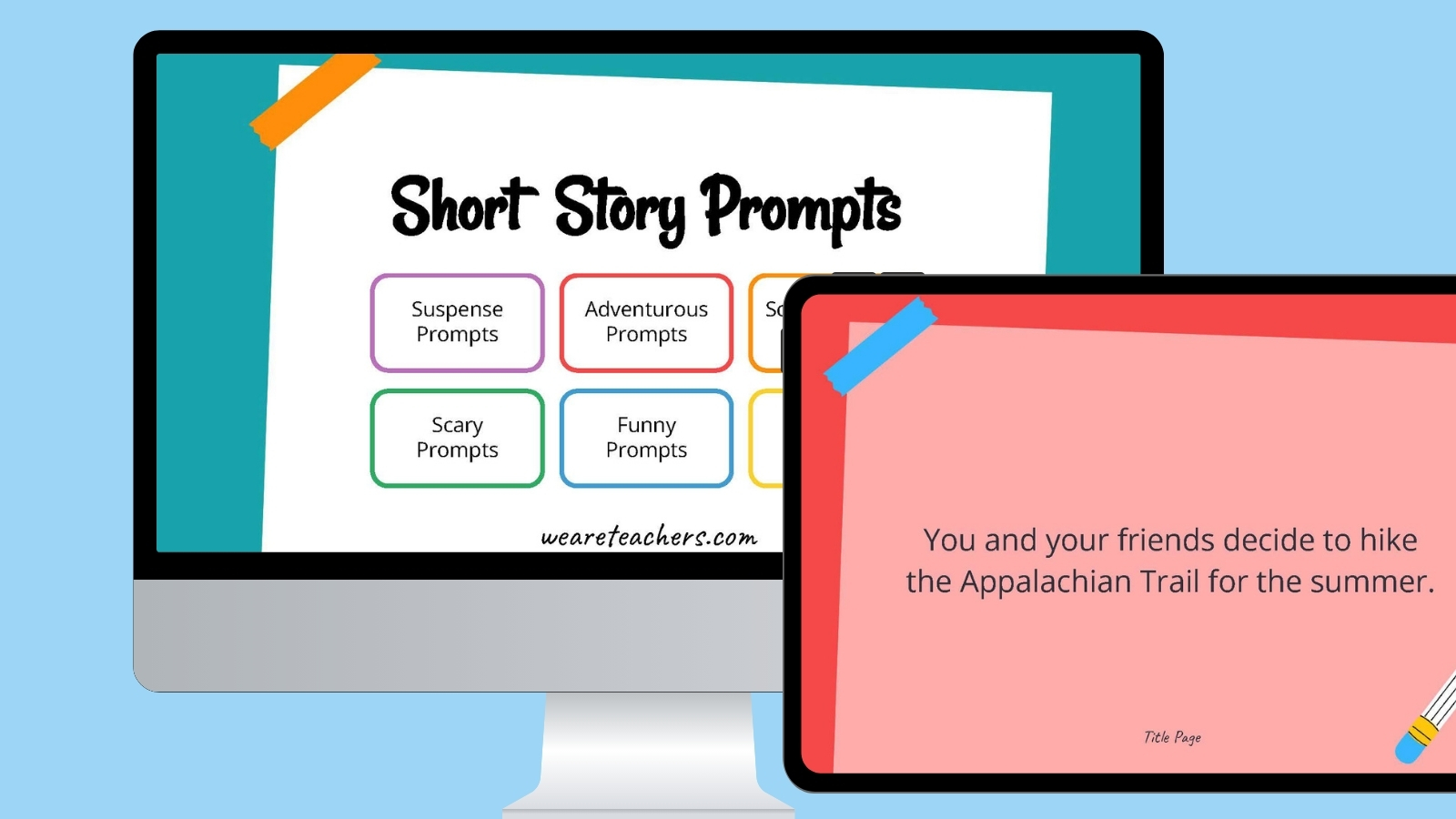
Short Story Ideas & Prompts (Free Slides!)
These story ideas are perfect for RAFT vocab activities! Grab your free set, with slides included.
Vocabulary Journal Prompts
- Best for: Independent work, centers, homework
- Time: 15–20 minutes
Provide kids with a journal prompt, and require them to use each of their vocab terms at least once in their response. Need writing prompt ideas? We’ve got you covered—see all our writing prompts here.
Writing Prompts for Grades 4–8 (Free Slides!)
Check out these free prompts for journal writing with a vocab twist.
Vocab Roll
- Best for: Independent work, centers, homework
- Time: 15–20 minutes
- Teacher tip: Require students to use each number at least once, even if they need to re-roll for some words.
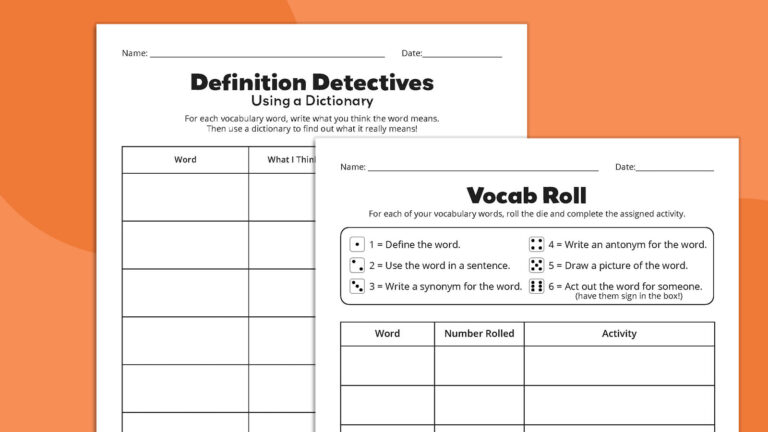
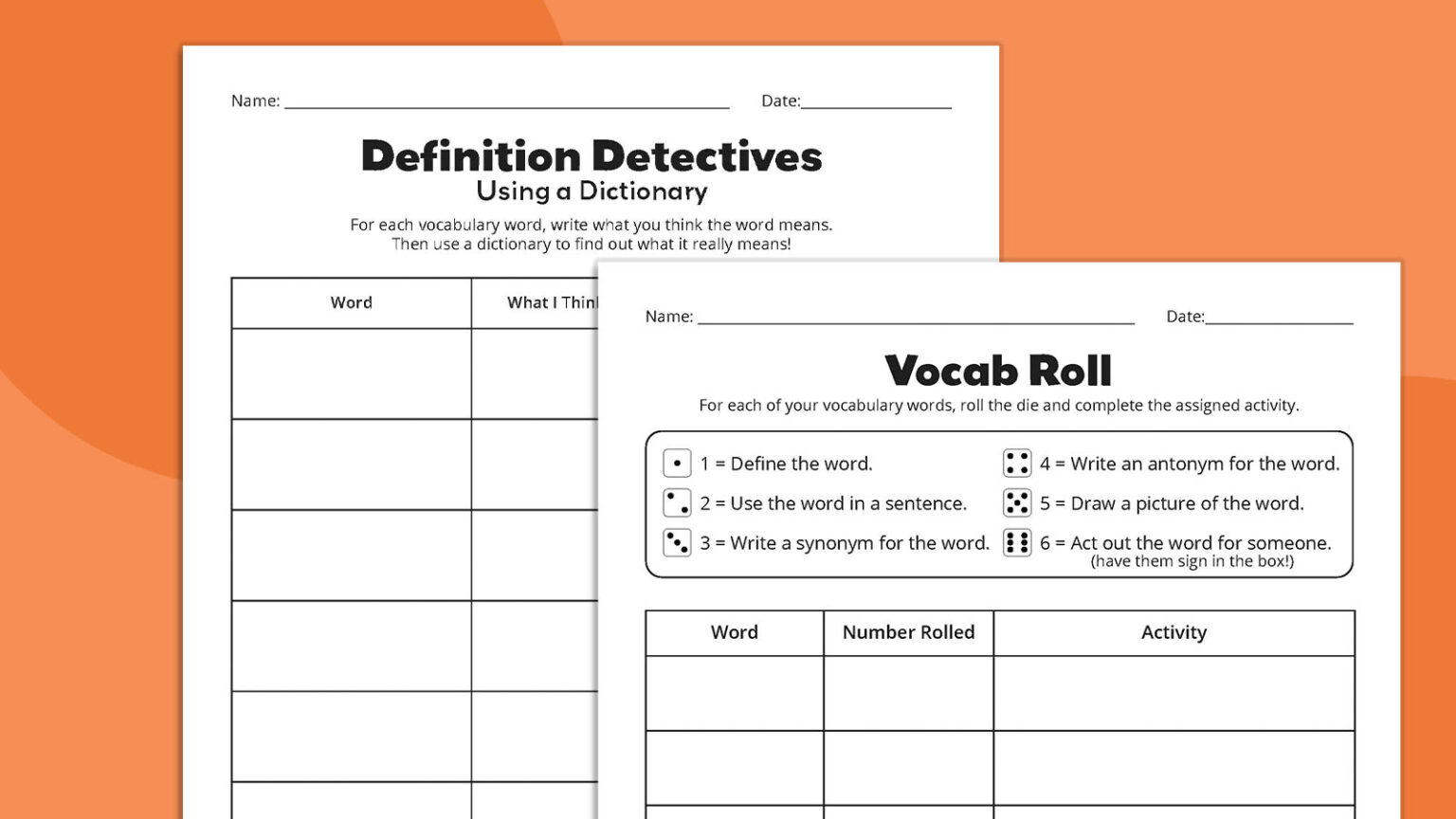
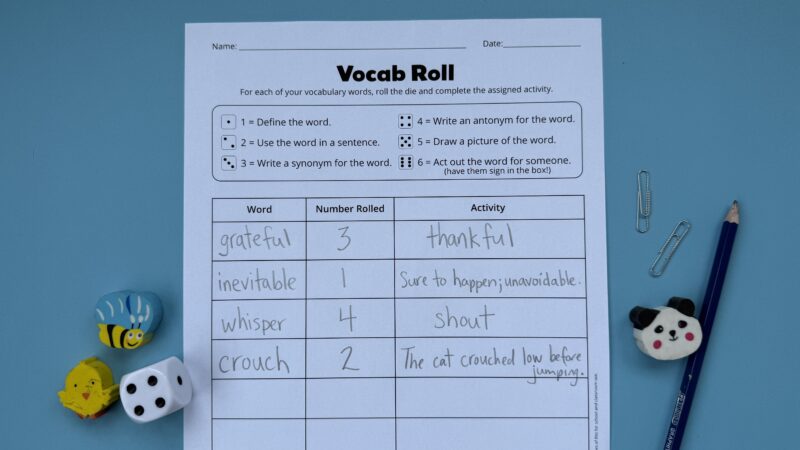
For each word on their list, students roll a die and complete the activity indicated for that number. For example, if they roll a 2, they must use the word in a sentence. If it’s a 5, they draw a picture. Get the free worksheet in our bundle.

Vocab Roll Game (Free Printable)
For each of the vocabulary words, students roll the die and complete the activity assigned to the number they roll on the Vocab Roll worksheet.
Social Vocabulary
- Best for: Independent work, centers, homework
- Time: 15–20 minutes
- Teacher tip: This activity is especially popular with tweens and teens!
Assign each student a word and have them create a faux Facebook, Instagram, or other social media page for it. They can draw them by hand or use an online tool like Fakebook. Post the images to a shared Google Slideshow so other students can use them for review.
Vocabulary Acrostics

- Best for: Independent work, centers, homework
- Time: 15–20 minutes
- Teacher tip: Break students into small groups and assign each group one of the vocab words to work on together.
Write an acrostic poem for each vocab term, using the letters to determine the first word in each line. This can get really challenging when words are longer!
Learn more: How To Write Acrostic Poems
More Fun Vocabulary Activities
Definition Detectives
- Best for: Independent work, centers, homework
- Time: 20–30 minutes
- Teacher tip: Turn this into a game by awarding points to students whose initial guesses are close to the actual definition!
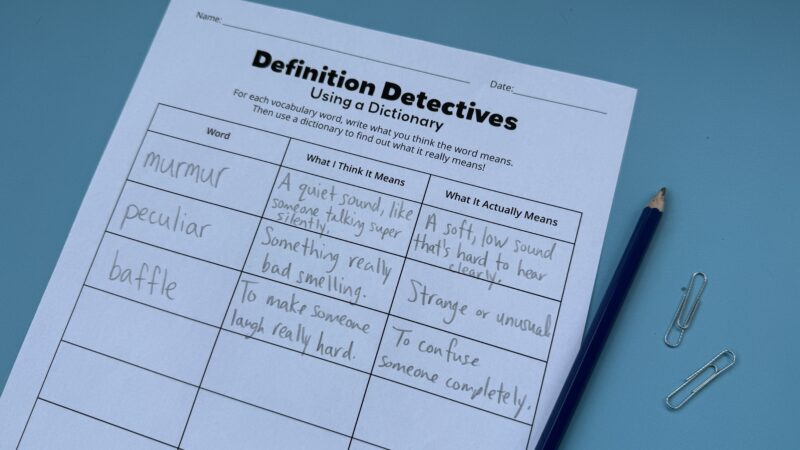
Instead of just giving kids word definitions, have them use our free downloadable worksheet to seek them out instead. First, they write down their best guess as to the definition. Then, they use the dictionary to find the correct meaning.
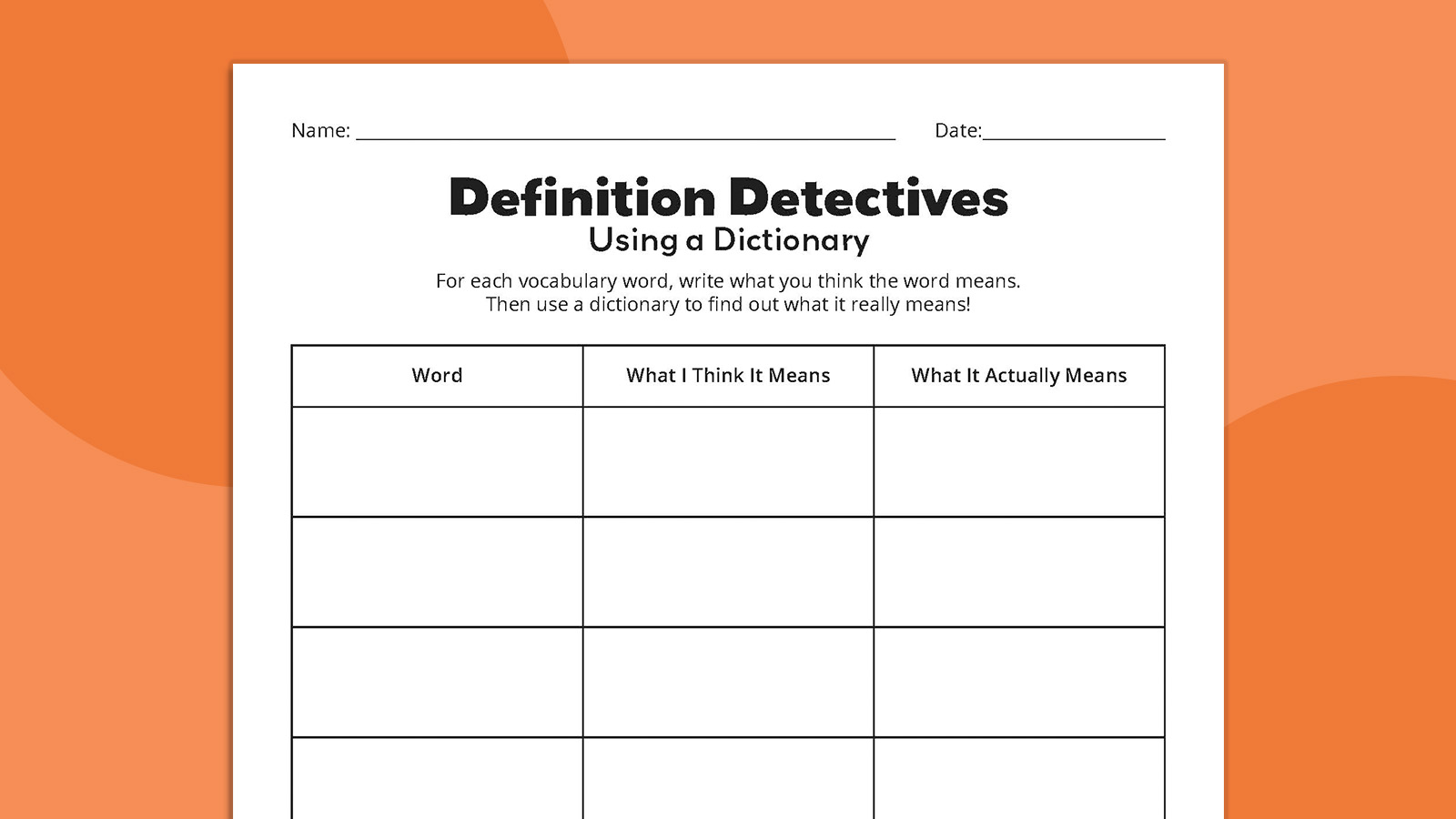
Definition Detectives Vocabulary Worksheet (Free Printable)
For each vocabulary word, students write what they think the word means. Then, they use a dictionary to find out what it really means, recording it all on the Definition Detectives worksheet.
Word Maps
- Best for: Independent work, centers, homework
- Time: 15–20 minutes
- Teacher tip: This is another activity that works well with small groups. Give each a piece of chart paper to create their map, then display them around the classroom.
Creating word maps from vocabulary words encourages students to find the relationships between the vocabulary word and other words. Have them include words, pictures, examples, real-world connections, definitions, descriptive words, etc.
Sketch It Out
- Best for: Independent work, centers, homework
- Time: 15–20 minutes
- Teacher tip: Try this activity before playing a whole-class came of Vocabulary Pictionary. It’s a smart way to help kids brainstorm before putting them on the spot, scaffolding the game for less confident players.
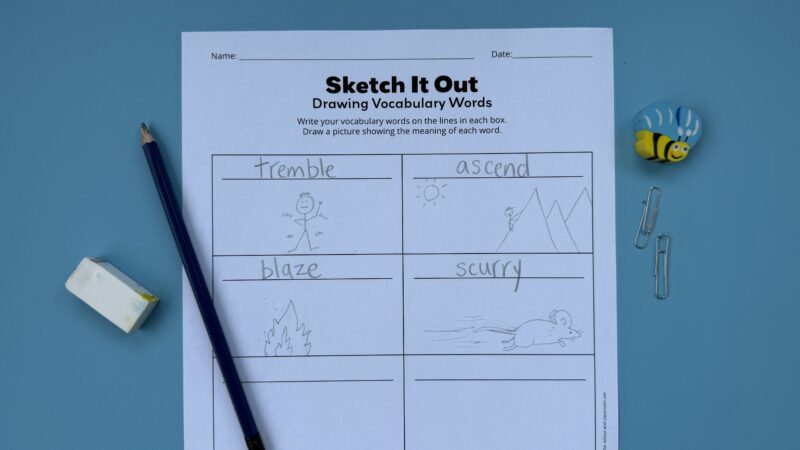
Rather than writing out definitions, have students draw a sketch that sums up each word instead. It’s a lot more fun and gives kids an image for visual association to help them remember the word meanings.
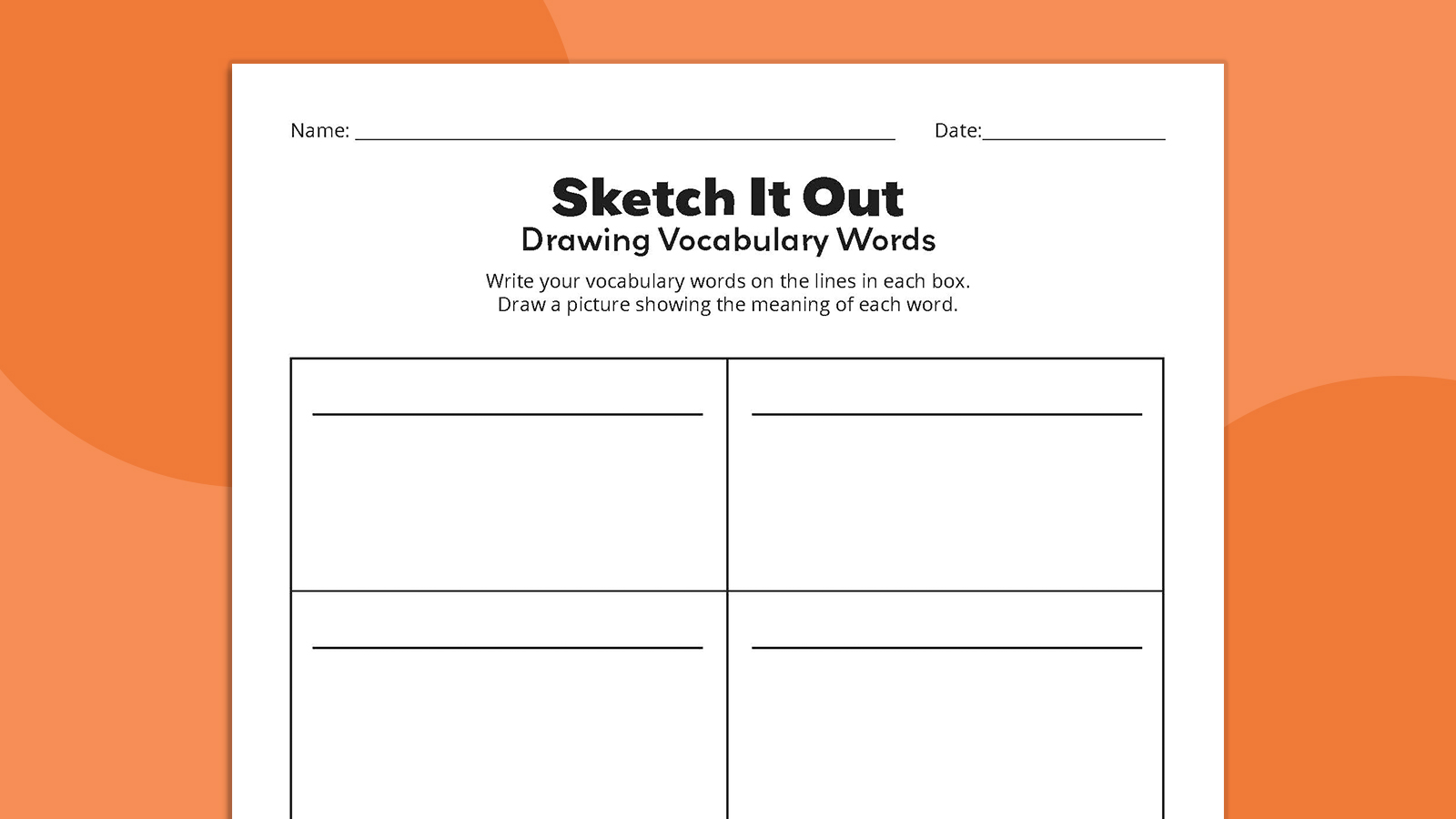
Sketch It Out Vocabulary Worksheet (Free Printable)
Students will write their vocabulary words on the lines in each box on the Sketch It Out worksheet and draw a picture showing the meaning of each word.
Vocabulary Gallery Walk
- Best for: Small groups
- Time: 20–30 minutes
Hang six to eight large sheets of chart paper in various places around the room. On each sheet, write one vocabulary word. Have students work in small groups, rotating between stations. At each station, ask students to come up with a different, original way to use each word, adding it to the chart. Continue the activity until all students have visited every station, then review them all together.
Four Square Words

- Best for: Independent work, centers, homework
- Time: 15–20 minutes
- Teacher tip: Slip the Four Square printables into sheet protectors, and students can reuse them over and over again with dry-erase markers.
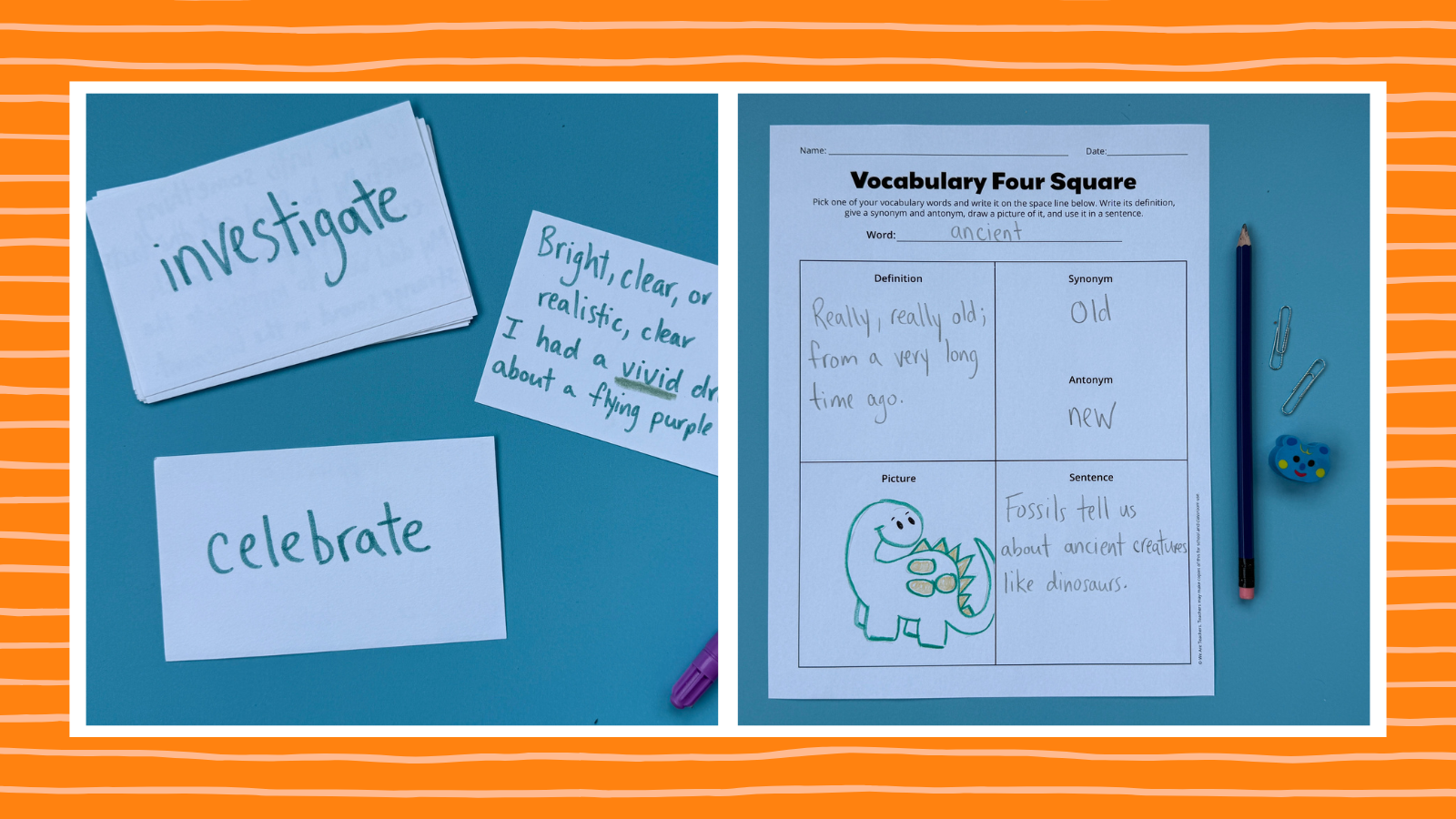
Also known as a Frayer model, this activity requires kids to provide the following for each term on their list: definition, synonym, antonym, and a drawing. You’ll find a free worksheet for it in our collection.
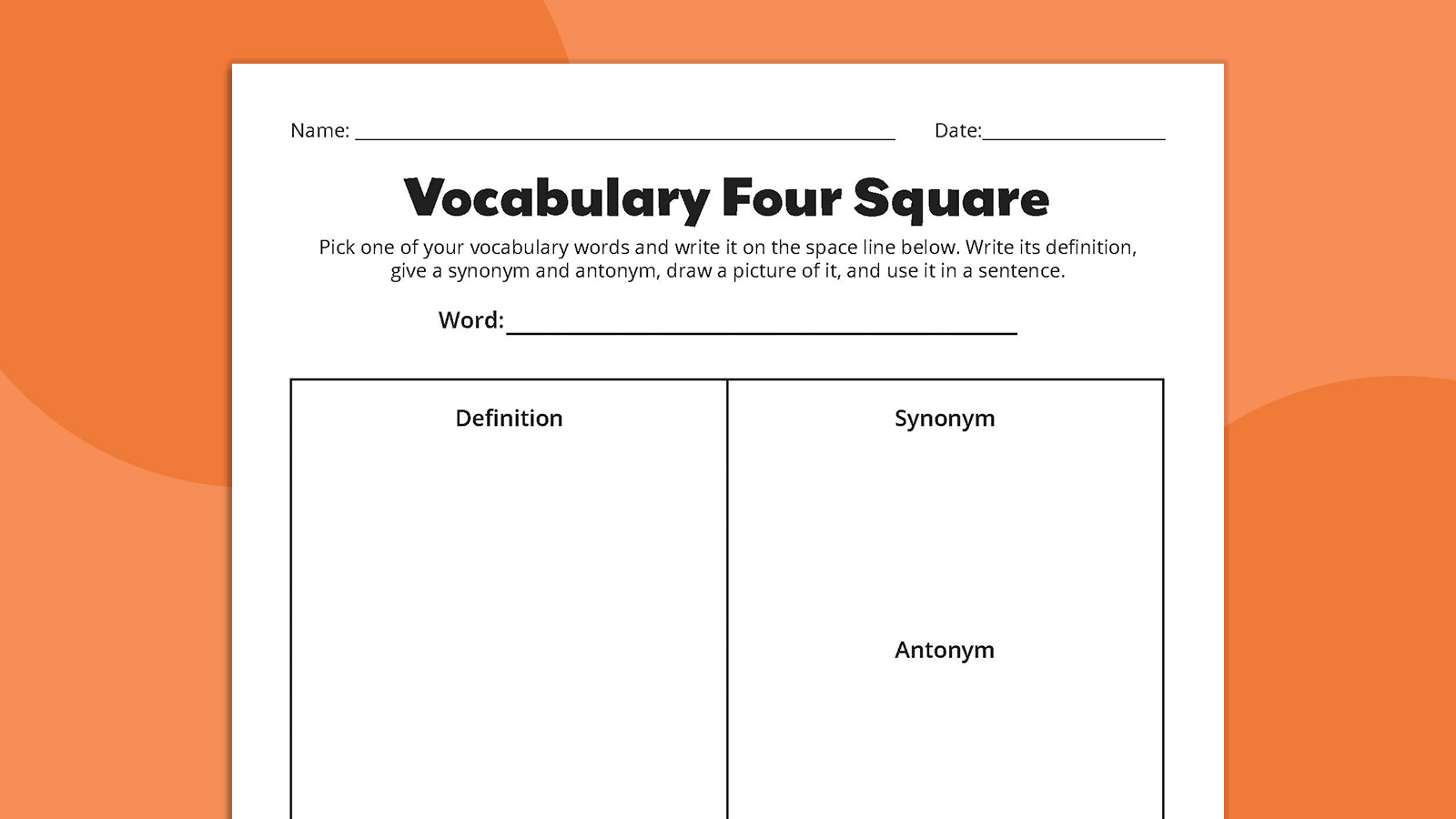
Vocabulary Four Square Worksheet (Free Printable)
Grab this printable four-square Frayer model worksheet to use with any vocabulary words.
Graffiti Wall
- Best for: Whole class instruction, centers, small groups
- Time: 15–20 minutes
- Teacher tip: Try this activity online with a collaborative tool like Padlet or Google Slides.
Think of a vocabulary graffiti wall like a collaborative word wall. In the classroom, post the words on the wall and have kids add sticky notes to illustrate the term (they can use words or pictures).
Learn more: Engaging Ways To Teach With Graffiti Walls
Graphic Organizers
- Best for: Independent work, centers, homework
- Time: 15–20 minutes
- Teacher tip: Want to go digital? Have kids make a slideshow, one slide per word.
Take illustrations one step further with graphic organizers. KWL graphic organizers work well for vocab words—students record what they know about the word, what they want to know, and what they learn.

KWL Chart Printable Bundle
Get free printable graphic organizers using the KWL format, plus KWLQ, KWLAQ, and more.
Vocabulary Flash Cards
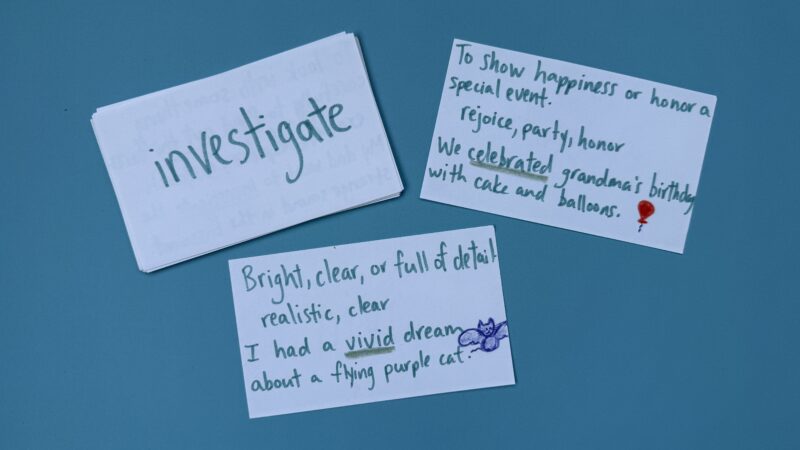
- Best for: Independent work, centers, homework
- Time: 15–20 minutes
Simple but effective! Give kids a stack of note cards, and have them write one vocab word on each. Then, flip the cards over and ask them to write the definition, draw a picture, or make any other helpful notes they can use when they review the word independently or with friends.
Vocabulary Character Match
- Best for: Independent work, centers, homework, small groups
- Time: 15–20 minutes
This is a terrific way to practice vocab words pulled from books you’re reading. Ask students to use various words to describe the different characters in the book and their feelings, thoughts, and actions.
Word of the Day
- Best for: Whole class
- Time: Varies
- Teacher tip: Reward students who use the Word of the Day appropriately (and without prompting) with a small treat!
Give really important terms the attention they deserve. Choose a new vocab word each day, then explore it in depth and make an effort to use it in class the whole day long.
Parts of Speech Sort

- Best for: Independent work, centers, homework
- Time: 5–10 minutes
Knowing which part of speech each vocab term is can help kids use them correctly. Our free printable worksheet makes this minimal-prep activity easy for teachers and meaningful for kids.
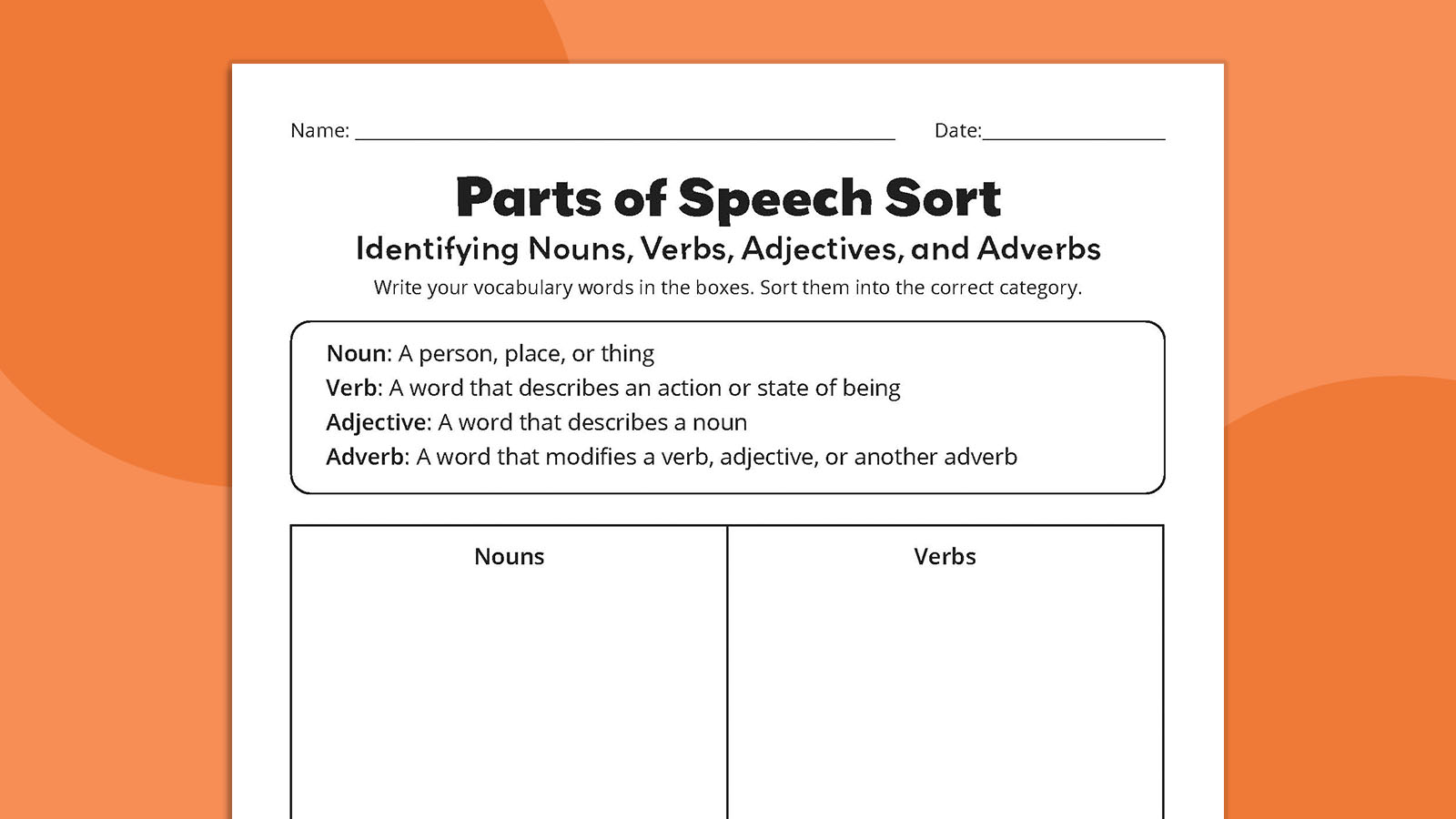
Parts of Speech Sort Worksheet (Free Printable)
Students use the Parts of Speech Sort worksheet to sort vocabulary words into the correct category: noun, verb, adjective, or adverb.
Golden Word Club
- Best for: Whole class
- Time: Varies
- Teacher tip: Set a goal for every student to become a member of the Golden Word Club, and reward students (extra recess, special snack, or other prize) when they achieve it.
Post a list of target vocab words. If a student uses one of the words in class (outside of vocabulary activities), they become a member of the Golden Word Club! You can have them sign their name on a wall in the classroom or award a badge online. You could even develop this into a reward system for homework passes or extra credit.
Shades of Meaning
- Best for: Independent work, centers, homework
- Time: 15–20 minutes
- Teacher tip: Challenge students to pick paint strips that they feel “match” the vocabulary words (e.g., red shades for “irate” or blue for “soothing”).
This is a cool idea for exploring synonyms and the slight differences that make words unique. Ask for paint sample strips at your local hardware store. Write a vocab word at the top of each. Then, have students write similar words (synonyms) on each strip. Make notes about the subtle shades of difference between the various words.
Learn more: How This Teacher Uses Paint Samples for Poetry, Short Stories, and More
New-Word Journal
- Best for: Independent work, centers, homework
- Time: Varies
- Teacher tip: Once a week, invite each student to share a new word from their journal with the rest of the class.
Give kids a small notebook they can carry around with them. Whenever they encounter a word they don’t know, they write it down in their journal on a new page. They’ll find new words on signs and menus, in conversations or on TV shows, or while surfing the web. When they have time, they can look up the definitions and write them in.
Sticky Words
- Best for: Independent work, centers, homework
- Time: Varies
When students read a new book from your classroom library, have them keep a pad of sticky notes handy. As they encounter words they don’t know, they write each one on a sticky note, then look up the definition and write that too. Stick each note to the inside covers of the book so others who read the book can use it as a glossary.
Don’t forget to download your free printable vocabulary practice activity worksheets!

Get your free printable vocab worksheets that match these fun vocabulary activities! Just click the button below to get them.
Plus, check out all of our Elementary ELA Resources here!
Get all the latest teaching tips and ideas when you sign up for our free newsletters!