


Teachers are among the most dedicated people in today’s workforce, but the job is getting harder every day. The sad reality is that more teachers than ever are opting out of the traditional classroom for the sake of their mental health, physical health, life balance, or other reasons. Yet most who leave still want to remain connected to teaching and learning. After all, that is where their passion and experience lie. So what are the best jobs for former teachers who are ready to leave the traditional classroom? The number of options may surprise you!
Finding Jobs for Teachers Outside the Traditional Classroom
Are there jobs for former teachers that use your skills but don’t take place in the classroom? You bet! Teachers are smart and skilled workers who often easily qualify for a wide variety of jobs in a variety of industries. Many former classroom teachers choose to stay in some form of education, working as instructional designers, corporate trainers or private tutors—just to name a few.
If you’re ready to leave the education industry behind altogether, consider a career that takes advantage of your subject-area expertise instead. Former math teachers may become accountants or insurance actuaries. Chem teachers could work in lab settings, while ELA educators may transition to publishing or become freelance writers. The opportunities are incredible once you start looking!
Jump to:
- Hot Fields for Former Teachers
- Teaching Jobs Outside the Traditional Classroom
- Jobs for Former Teachers Who Love To Read and Write
- Best Jobs for Former Teachers Who Love Math
- STEM Teacher Jobs Outside of Education
- Best Jobs for Former Humanities and World Language Teachers
- Jobs for Former Teachers Who Excel at Communication
- Best Jobs for Former Teachers Who Love Kids
- Jobs for Former Teachers With Strong Organizational Skills

Game Plan for Teachers Ready to Leave the Classroom
Moving out of teaching is a process of translating what you already know into language employers outside education recognize. You don’t have to start over; you do need to show how your experience fits the work you want to do next. Here’s a manageable six-step action plan to set you on your new path.
1. Identify your transferable skills
Start by listing the work you do each and every day. For each responsibility, note the skill behind it. Now think about how that skill could apply in another field. For example,
- Creating learning materials=> writing, editing, curriculum development and instructional design
- Planning lessons and units=> project planning, research, prioritizing and meeting deadlines
- Managing a classroom=> team leadership, conflict resolution, communication and adapting to changing needs
- Differentiating instruction=> tailoring services or information to different audiences
- Assessing student progress=> analyzing data, tracking outcomes and using feedback to improve results
- Communicating with families and co-workers=> customer service, relationship building and explaining complex information clearly
- Coordinating events or activities=> logistics, scheduling and cross-functional coordination
- Supporting students’ social and emotional needs=> coaching, mentoring and problem-solving
2. Explore career paths
Once you’ve identified your skills, start your research. Look up job descriptions in fields that interest you. Highlight the skills that appear repeatedly and gather examples from your own experience that demonstrate those skills.
Teachers looking to leave the classroom can find work in almost any industry, given their own subject matter expertise, skills, and passions. That said, there are several industries where teachers especially have a real leg up. Check out our roundup of 50+ Companies That Hire Former Teachers where you’ll find the best professions for former teachers and the companies that hire them.
3. Rework your resume
Remember, your experiences and skill set are a valuable resource that can align with many jobs outside of education. It’s just a matter of how you present them in your resume. Here are a few ways to rework your resume to position yourself as a valuable candidate for the job.
- Lead with a brief summary that describes your strengths and the kind of role you’re pursuing.
- Replace education-specific language with language employers outside schools will understand. For example, describe “classroom management” as ‘leading groups, setting expectations and resolving issues.’
- Focus on accomplishments, not just duties. Include scale and results where you can: number of students, programs developed, events coordinated or improvements achieved.
- Match keywords from the job posting to your experience.
- Keep your teaching credentials and relevant education, but give more space to the experience most connected to your target role.
- Consider creating a separate version of your resume for each type of job you’re pursuing.
For more valuable tips on crafting a solid, industry-spanning resume, check out Leaving Teaching? How to Make Your Resume Stand Out in the Corporate World.
4. Tap into your network
As a trusted member of the community, teachers have the advantage of connecting with people from a wide range of backgrounds, professions and communities. Spread the word! Tap trusted colleagues, friends, former classmates and family members. Let them know you’re exploring a transition, and be specific about the roles or fields you’re considering.
Set up informational conversations. Ask people in jobs you aspire to how they got started, which skills matter most and what they wish they had known. Join professional groups, attend local events and participate in online communities related to your target field. Keep the focus on learning and building relationships; you don’t have to ask someone for a job to make a useful connection.
5. Prepare for interviews
The best way to make a great impression in an interview is to do the hard work before you enter the room. It may be time consuming, but it’s worth the effort: entering the room fully prepared and confident will make all the difference in achieving your goal. Here are a few tips to focus on.
- Be ready to explain why you’re exploring a change and what kind of work you’d like to do next.
- Think of a few stories that show how you lead, communicate, stay organized, solve problems, adapt and get results.
- Keep each story simple: What was happening? What did you do? What happened next?
- Use everyday language instead of school-specific terms. Explain the challenge and your role as if the interviewer has never worked in a school.
- Practice answering questions like “Why are you leaving teaching?” Keep your answer positive and focused on the kind of work you hope to do.
- Bring a few questions about the job, the team, what success looks like and what training you’ll receive.
For timely ways to use technology to prepare, check out 3 Ways AI Can Help You Nail Your Next Job Interview.
6. Create a transition timeline
A job change, not to mention an industry change, can take longer than expected, so build a plan that fits your finances, school calendar, and personal responsibilities. Here is a workable framework to help you get started.
- First month: Identify two or three fields to explore, list transferable skills, review job postings and begin informational conversations.
- Months two and three: Update your resume and online profile, fill any skill gaps that repeatedly appear in job listings, and apply to a manageable number of well-matched roles.
- Months three and beyond: Continue networking and applying, practice interviews, evaluate offers and plan your departure in line with your contract and school requirements.
To help manage the process so it doesn’t take over every spare moment, set up a weekly time for transition tasks. Track applications and conversations and revisit your plan every few weeks. The goal is steady progress toward work that fits your skills, interests and financial needs.
To help you exit gracefully, check out our Teacher Resignation Letter Examples and Free Templates.
Hot Fields for Former Teachers
Instructional Design and L&D
Learning and development roles can be a natural fit for teachers who enjoy planning lessons and creating materials. Often part of human resources or talent management, these jobs help employees build skills, gain knowledge and grow through training, coaching and other learning opportunities.
A small portfolio can show how your teaching experience translates. You might include an online lesson, a short training module, a facilitator guide or a sample assessment. Some roles also call for experience with tools used to create training or manage online courses.
Customer Success and Implementation
Customer success and implementation roles may appeal to teachers who enjoy working with people and finding solutions. Read job descriptions closely: customer success positions may include sales goals or account renewals, while implementation roles can involve learning software, keeping projects on schedule and sometimes traveling.
AI Training
AI training can be a good way to use your subject knowledge, writing and evaluation skills. Many roles are contract-based and pay by the hour, so the amount of work and income can vary. For example, some jobs involve writing prompts or labeling data. Treat advertised pay and project availability as specific to that role or platform—there may not be a steady stream of work.
Project Management/Coordination
Project management can be a natural fit for teachers. Teaching means keeping many things moving at once, often while plans change along the way. If you’ve led school programs, events, curriculum rollouts or team projects, you’ve already used many of the skills project managers rely on. To help employers see the connection, highlight the budgets, timelines, people involved and results you managed.
Teaching Jobs Outside the Traditional Classroom
Your teaching skills are most directly transferable to other jobs in the education industry. If you still love teaching but don’t want to deal with some of the problems associated with traditional schools and classrooms, these career paths may appeal to you.
Corporate Trainer
Corporate trainers are teachers that work in corporate or other professional settings to promote employee growth and development. They may train teams in person to develop their skills or create entire training programs used to teach and train employees.
According to WGU, the career path of a corporate trainer can be rewarding for those with a passion for teaching. Anyone who is outgoing, loves being around people, and likes to teach would be an excellent fit for this position and can take simple steps to get started.
Technical Instructor
Technical instructors provide a variety of training in fields such as auto repair, healthcare, culinary science, and others. They design curricula, encourage class discussion, and teach technical skills to students (for example, auto repair tech instructors might teach how to fix a damaged car frame or replace a tire).
Online Educator
Red tape and pressure still apply, but one of the best jobs for former teachers is an online educator. It’s been a game changer for many people, especially those who mastered it during quarantine. The pay, even when salaried, is less, but so is the stress. Kellie T. agrees: “I’m still teaching but virtually on a virtual platform. I’ve been working for a couple of years. I enjoy it because I teach what I want and how I want.”
Private Tutor
Use your expertise as an instructor to start your own tutoring business. Yes, tutoring jobs are some of the most obvious jobs for former teachers. However, if you build up your own clientele, you can make serious money, with experienced tutors charging anywhere from $35 to $50 per hour. Tap into those good relationships you’ve built over the years and make the transition to working at your own pace and on your own terms.
Michele T. shares, “I resigned after 20 years of teaching, and I’ve never been happier! My school families started reaching out to me almost immediately to ask if I’d be interested in becoming a personal tutor for their children. I designed individual plans based on their needs.”
Adult Education Teacher
This job is perfect for the educator who wants to work in a different environment and with nontraditional students. These teachers work with adults who have not yet finished high school and are ready to get the skills to advance in their careers. It is an opportunity to work with students who are usually highly motivated and appreciative of the chance to learn to read or to qualify for their general equivalency diploma (GED).
Other instruction-focused positions:
Post-Secondary Educator, Prison Educator
Jobs for Former Teachers Who Love To Read and Write
Former ELA teachers, this section is for you! Make good use of your knowledge of composition, grammar, and other key writing skills with jobs like these.
Curriculum Writer/Creator
Want to improve the quality of what students learn? Interested in working with teachers? Informing curriculum is a great way to directly impact what goes on in the classroom without actually being in it! Whether that means going with one of the big education curriculum companies or producing your own content on paid teacher sites, it’s a great opportunity to share your knowledge with other teachers.
Freelance Writer
If you love to write and are a hard worker who will do the detective work to land writing gigs, then freelancing is an awesome option for you. There are lots of education-related publishers looking for contributors. You can work from home, write when it fits your schedule, and make decent money. Susan G. says, “I became a copywriter when I retired after 32 years because I love to write and it combined my English and journalism major.”
Editor
If you don’t feel much like writing but still want to facilitate the distribution of content, you may want to look at becoming an editor. An editor typically works with writers to develop content that fits within the editorial guidelines of an online or print publication. Writing and management skills are a must! And if you worked within a particular subject, you may find your knowledge is even more in demand for editorial work.
User Experience Designer
A User Experience (UX) Designer’s role is to make a product or service usable, enjoyable, and accessible—skills that teachers work on every day. After all, good teachers create lessons with their students’ experience in mind. This role is particularly suited for teachers with strong tech skills. While many companies design user experiences, the term is most often associated with digital design for websites and apps.
Digital Content Creator
Want to write about education, your subject area, or any other topic that interests you? Websites are always looking for new content creators to help expand their offerings (including We Are Teachers!). Content creators write informative web articles on specified topics, using skills like SEO to maximize their content’s reach. You can find full-time, part-time, or contract work in this area, and you can often work remotely.
Social Media Manager
Organizations rely more and more on social media to reach people these days, meaning you can make a career out of posting on behalf of a company on Instagram, Facebook, TikTok, and more. This job requires creative flair along with a good understanding of the algorithms that govern social media sites behind the scenes.
Other jobs for teachers who love to read and write:
Librarian, Grant Writer, Journalist, Copy Editor, Journalist
Best Jobs for Former Teachers Who Love Math
If numbers are your game, check out these potential career paths. Former math teachers tend to have terrific attention to detail and a flair for logic, making jobs like these easy to transition to.
Data Scientist
Love analyzing numbers and other information? Data scientists use technology and scientific methods to help businesses understand trends and patterns. They analyze and visualize raw data so companies can better use it to meet their goals and optimize their strategies.
Statistician
These mathematicians also look closely at data, but they’re more focused on learning the causes behind the raw information. For example, they may work in healthcare exploring epidemiology or for the government analyzing census statistics.
Financial Planner
Savvy with money? Put your skills to use advising others on investments, budgeting, retirement and estate planning, and tax strategies. Many financial planners set up their own businesses, building a client base of individuals and small businesses.
Market Research Analyst
Companies perform market research to learn more about consumer preferences and buying trends. A market research analyst collects data through primary and secondary research, then analyzes it to provide strategic advice to an organization.
Logistics Coordinator
A logistics coordinator oversees a company’s goods and materials, managing their movement, storage, and usage. They coordinate with suppliers, warehouses, and shipping companies to ensure everything is where it needs to be, safely and on time.
Other jobs for teachers who love math:
Actuary, Accountant, Bookkeeper, Tax Consultant
STEM Teacher Jobs Outside of Education
Whether your favorite subject is biology, physics, chemistry, engineering, health and nutrition, or any other topic, these jobs make good use of your STEM subject knowledge.
Educational Technology Consultant
The ed-tech field is constantly expanding, with new job opportunities on the rise. As a former STEM teacher, you might find work managing educational technology for schools and districts. Or you could work for an ed-tech company, helping to develop new products or as part of the sales force. Kela L. says, “Lots of ed-tech and consulting jobs out there need a teacher’s experience. Think about all the software we used to transition to distance learning. All those companies are booming and may be hiring.”
Software Developer
Software developers design, create, and maintain software applications and systems. They work on everything from mobile apps to large-scale software solutions for businesses. Though some jobs require a degree in software development, others may be open to years of experience instead. You can also consider a coding boot camp to get your skills up to snuff.
Lab Technician/Research Assistant
Love to tinker with beakers? Lab technicians assist scientists, researchers, and healthcare professionals by preparing samples and conducting tests. They keep careful track of data and prepare reports, analyzing and interpreting information.
A research assistant expands on the duties of a lab tech, overseeing scientific research studies for academic institutions, medical facilities, or business organizations. In addition to collecting lab data, they may perform fieldwork, conduct experiments, prepare reports, and provide administrative support.
Environmental Scientist
Governments and organizations rely on environmental scientists to help them make smarter choices related to their environmental impact. Environmental scientists gather and analyze data, advise on best practices, and ensure compliance with environmental laws. They often get to work in the field, surveying conditions and overseeing projects.
IT Coordinator
Are you the one who gets called when the printer breaks or a computer won’t work? Your new career might be in information technology! You could work for a school or district, managing and maintaining their tech equipment. Or branch out into the corporate world and work in person or remotely helping companies keep their tech running smoothly. Former school counselor Julie R. went from a school to the admin center to share her deep knowledge of IT with new teachers. “It was a natural progression of the skills I built over a couple of decades.”
Health Coach
A health coach works to be a mentor and wellness authority to assist individuals in making food and lifestyle changes. Wendy A. shares, “I left teaching because I replaced my income within six months’ health coaching, and I am impacting so many lives. Most rewarding career I have ever had and freedom to work from anywhere.”
Other jobs for STEM teachers
Public Health Educator, Nutritionist, Personal Trainer/Coach,
Best Jobs for Former Humanities and World Language Teachers
Whether you love history, government, and civics or speak multiple languages fluently, you’ll find your skills transfer well with these jobs for teachers outside of education.
Foreign Language Interpreter/Translator
Did you teach a foreign language? Why not pivot those skills to being an interpreter or translator? You’ll be working on converting the spoken or written word in at least two languages, so your fluency level must be high.
Interpreter for the Deaf
Look within your school district for job opportunities for former teachers. If you have the skills, serving as an interpreter for the deaf is a great way to work one-on-one with students in a classroom setting. Teacher Becky N. reports, “I find working one-on-one with hearing impaired students so much rewarding than the juggle of the general classroom. I feel I’m having a greater impact.”
Adult ESL Teacher
Maybe you’ve got the skills to teach English language learners but are tired of working in the public school system or with children. Adult ESL (English as a second language) teachers instruct adults in fundamental skills such as reading, writing, and speaking English. In addition, they may help newcomers to our country with customs and everyday life questions.
Archivist
Archives provide valuable primary sources of material for research and exploration through the years. An archivist helps to choose, catalog, preserve, and store important materials, such as papers, photographs, recordings, maps, and more. They literally ensure that history continues to live on.
Genealogist
Fascinated by family trees? Help others trace their family history by becoming a professional genealogist. Use your research skills to dig into historical records, archives, and even DNA data to help your clients better understand their background.
Public or Private Historian
Historians combine jobs like genealogist and archivist with research and analysis to form a complete picture of society, area, culture, or person. Many governments and academic institutions employ historians to research and preserve local history, as well as educate the public about important findings.
Jobs for Former Teachers Who Excel at Communication
Really, don’t all teachers excel at communication? If you truly enjoy that part of the job, consider using your communication skills for a teacher job outside of education like these.
Educational Policy Expert
If you’re considering leaving the classroom, there’s a chance it’s because you don’t agree with a mandated policy … or 30. Be the change by becoming a policy expert, a person who has hands-on administrative experience with a desire to review and adjust policies within educational institutions.
Curriculum Service Rep
Publishing companies that create curriculum for school districts often employ former teachers as service representatives. Your job is to connect with and train educators on using the company’s products. The advantages of this position are that you get to use the knowledge you’ve gained as a classroom teacher (which makes it easier to connect with clients), you can usually work part-time, you control your schedule, and you make a lot more money.
Instructional Coach/Mentor
Many districts promote senior teachers to positions where they mentor and coach new and struggling teachers. Some coaches work at only one school, and some travel throughout the district. In these jobs for former teachers, you’ll get to spend time in classrooms but not be responsible for your own kids.
Meghann R. started her coaching business after seeing how desperate fellow educators had become to simply keep their heads above water. “I’m a literacy coach for ELA educators,” she shares. “I coach teachers who are new to the profession or immensely struggling with their instructional strategies. As someone who personally experienced those same struggles in my earlier years of education, I felt I could make a tremendous impact on others by offering my expertise where some are really struggling.”
Career Coach/Life Coach
A career coach is a development professional who helps people adjust and improve their career paths through one-on-one guidance and advising. You may consider a career coach for several reasons, including to find a new job, to change careers, or to work toward a promotion.
Life coaching is similar to teaching in that you’ll be helping someone find their strengths and work to meet the goals they create. The big difference is you’ll be working with adults outside of a classroom setting.
College Academic Advisor
As a teacher, you’re well versed at looking at the big picture when it comes to helping students succeed—both academically and personally. Being an academic advisor is often a good match for people who’ve left the teaching profession but don’t want to leave the education sector altogether. Note: Most universities prefer candidates with master’s degrees and relevant higher-education experience.
Other jobs for teachers who excel at communication:
Dog Trainer, Homeschool Education Consultant, Parenting Coach, Addiction Counselor
Best Jobs for Former Teachers Who Want to Keep Working with Kids
Many educators got into teaching for the kids and hate the thought of leaving them behind. Fortunately, there are lots of jobs for former teachers outside of education that still keep kids front and center in your life. Some of them are jobs that involve teaching without the heavy responsibilities. Others take you beyond the classroom into other fields instead.
School Counselor
School counselors are in a unique position to help students and make improvements to the school. While still working within a school district, counselors serve as personal advocates for students in need and are responsible for organizing programs to help the student body. It may take further education, but the investment is worth it.
Paraeducator
Still want to work one-on-one or in small groups with children? Being a para gives you the opportunity to teach and connect with kids, without all the additional stressful responsibilities like staff meetings, parent-teacher conferences, etc. The downside, of course, is the move comes with a significant pay cut. Paraeducator Priscilla L. loves the life balance she has achieved working as a para. “I love helping teachers where they need me the most,” she say, “and have the opportunity to really connect with kids, but I don’t get bogged down by all the responsibilities lead teachers have.”
Driving Instructor
If you love working with teens looking to build valuable life skills, this might be a good position for you. It’s the instructor’s job to analyze a student’s current ability and tailor driving lessons in a way that leads to success and minimizes the seriousness that potential mistakes could lead to.
College Admission Coach
Choosing a post-secondary destination is often an overwhelming process. The options seem endless, and there are many factors to take into consideration. College coaches provide students with college admissions services like help with college essays, applications, and SAT/ACT prep. College admission coaches can also help with financial aid, scholarships, and grants.
Museum Educator
If you enjoy the hands-on aspect of education, you might love being a museum educator. They interact with museum guests, especially kids, to inform and entertain. Some museums have set museum education programs they’ll train you on, while others may be looking for someone to help develop new activities and ideas.
Youth Sports Coach
Turn your love of athletics into a career. You might work with local youth, coaching school or community teams. No leagues of your favorite sport in your area? Consider starting and running your own!
Jobs for Former Teachers With Strong Organizational Skills
If you love planning, organizing, and overseeing, you might be ideally suited for an administrative or project manager job. You’ll find plenty of jobs for teachers outside of education that still put your stellar classroom management skills to good use.
Community Director
Think of your local YMCA or youth center—anyplace kids go for extracurricular enrichment. Who better than a former teacher to organize and facilitate educational and athletic programs and events? In addition, this position allows you to impact your community on a larger scale.
Corporate Education Manager
Big corporations are a great place to look for jobs for former teachers. An education manager typically works within a company to facilitate teaching and learning activities. They may have administrative duties like organizing educational programs, obtaining funding, instructing, and more. Karen L. says, “I’m an education manager for a nonprofit farm-to-school organization. I create and edit/revise lessons and teach young adults how to teach garden lessons to students.”
Educational Curator for the Public
Do you have a passion for culture? This role helps create and implement educational events and programs at places like museums and zoos. You still get to work with curriculum and learning and, best of all, kids.
Disability Services Coordinator
This type of job helps support individuals with disabilities to live independently in the community. Melissa M. shares, “If you have any medium- to large-size companies that employ people with disabilities, maybe start there. City and county offices and child protective services need SPED-educated folks all the time.”
Event Planner
Were you the teacher who liked to plan all the events and functions at your school? If so, extend that passion to the event-planning space. You’ll still get to interact with others and plan and lead projects through to fruition.
Get your free teacher resignation letter template!
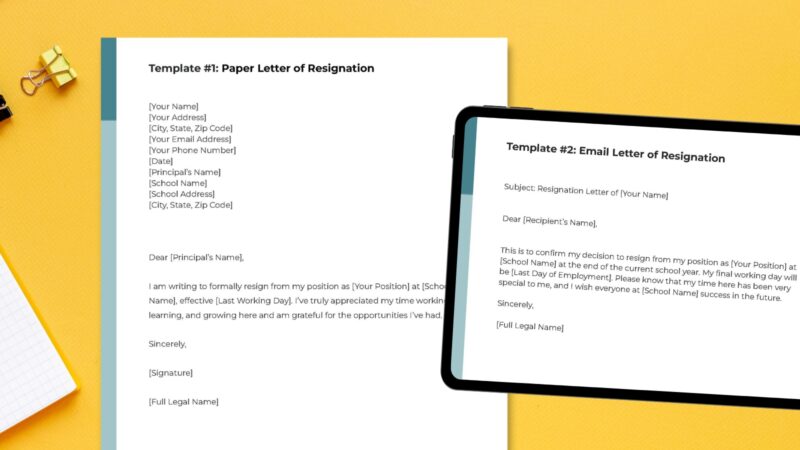
Writing a resignation letter is fairly straightforward—make it even easier by grabbing our free template. Just edit it to fit your needs and you’re ready to go! Click the button below to get it.
