
Looking for great ways to help students learn to work together, listen carefully, communicate clearly, and think creatively? Try some of these awesome team-building activities for kids. They’re a super way to give your students the chance to get to know one another, build trust as a community, and, best of all, learn valuable life skills that will last long beyond their school years.
Jump to:
- Benefits of Team-Building Games for Kids
- Get-To-Know-You Team-Building Activities for Kids
- Problem-Solving Activities for Kids
- Outdoor Team-Building Games for Kids
- Team-Building Games and Activities That Foster Cooperation
- Circle Games That Build Community
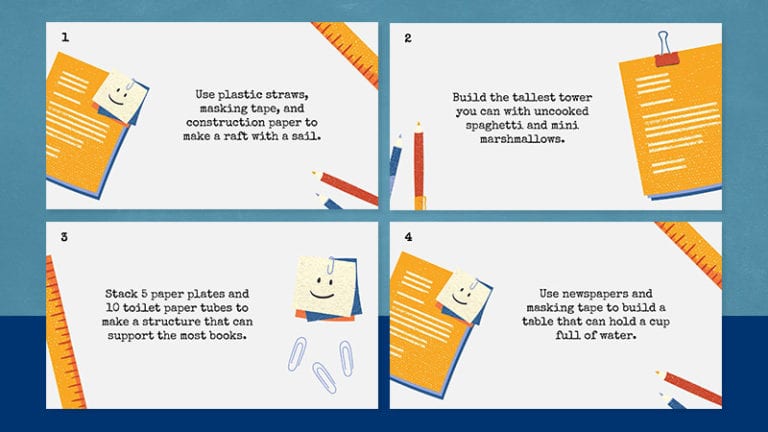
- STEM Team-Building Activities for Kids
- More Team-Building Games for Kids
First grade teacher Lindsay Sauer (@sweetnsauerfirsties) can’t speak highly enough about the power of team-building activities in building a strong classroom community. The experienced teacher says these activities help her students feel like they belong. “And that sense of belonging changes everything in a classroom,” she explains. “When students laugh together, solve problems together, and encourage one another, they start seeing their classmates as teammates instead of just kids they sit next to.”
That sense of belonging creates a domino effect throughout the classroom. “Over time,” Lindsay notes, “it creates a classroom culture where students are more willing to participate, help each other, and take academic risks.” In turn, she has found that a strong classroom culture often leads to fewer behavior issues, as students feel more connected to, and invested in, the community around them.
Check out several of Lindsay’s favorite team-building games and activities below.
7 Benefits of Team-Building Games for Kids
Team-building games for kids are a great way to build community as you start a new school year—or anytime of year for that matter. Not only are they super fun (and what kid doesn’t like fun?), team-building activities help kids:
1. Develop communication skills
When students work together, they learn how to express ideas clearly and actively listen. Both verbal and nonverbal communication skills are critical for classroom participation and success in the real world.
2. Teach classroom structures
One of the biggest mistakes teachers make with team-building activities is assuming students already know how to work together. “We sometimes jump into a fun activity without explicitly teaching the skills first,” explains Lindsay. “Students need modeling for things like taking turns, learning to encourage teammates, disagreeing respectfully, and including everyone.”
“Without those structures,” she notes, “team-building activities can turn into frustration or chaos instead of actually building community.” In Lindsay’s experience, the most successful activities have been the ones with clear expectations and built-in opportunities for every student to contribute.
3. Encourage problem-solving and critical thinking
Many of these games and activities involve challenges or puzzles. Working together to solve them helps students think creatively, plan strategically, and persevere when they get stuck.
4. Foster collaboration and cooperation
According to Lindsay, the most effective team-building activities are simple, structured, and include everyone. “In my classroom,” she shares, “the activities that work best are the ones where students have to communicate, solve a problem together, or encourage each other instead of just ‘winning.’”
5. Boost confidence and promote leadership skills
Making a contribution and accomplishing a goal as a team member is very rewarding. And when a student develops the strength to take the lead, it boosts their self-image in long-lasting ways.
6. Promote social inclusion and foster friendships
Engaging with people you don’t know very well can sometimes feel risky. But team-building games provide a structure that allows for students to move out of their comfort zone. Lindsay agrees. “An effective team-building activity should help students feel successful, connected, and safe enough to take risks with their classmates,” she says.
7. Teach conflict resolution skills
Team-building activities for kids are a perfect tool for teaching conflict resolution skills. After all, conflict can occur in any group setting. Conflicts allow you the opportunity, as their teacher, to model and guide them through a constructive process for a happy ending.
Get-To-Know-You Team-Building Activities
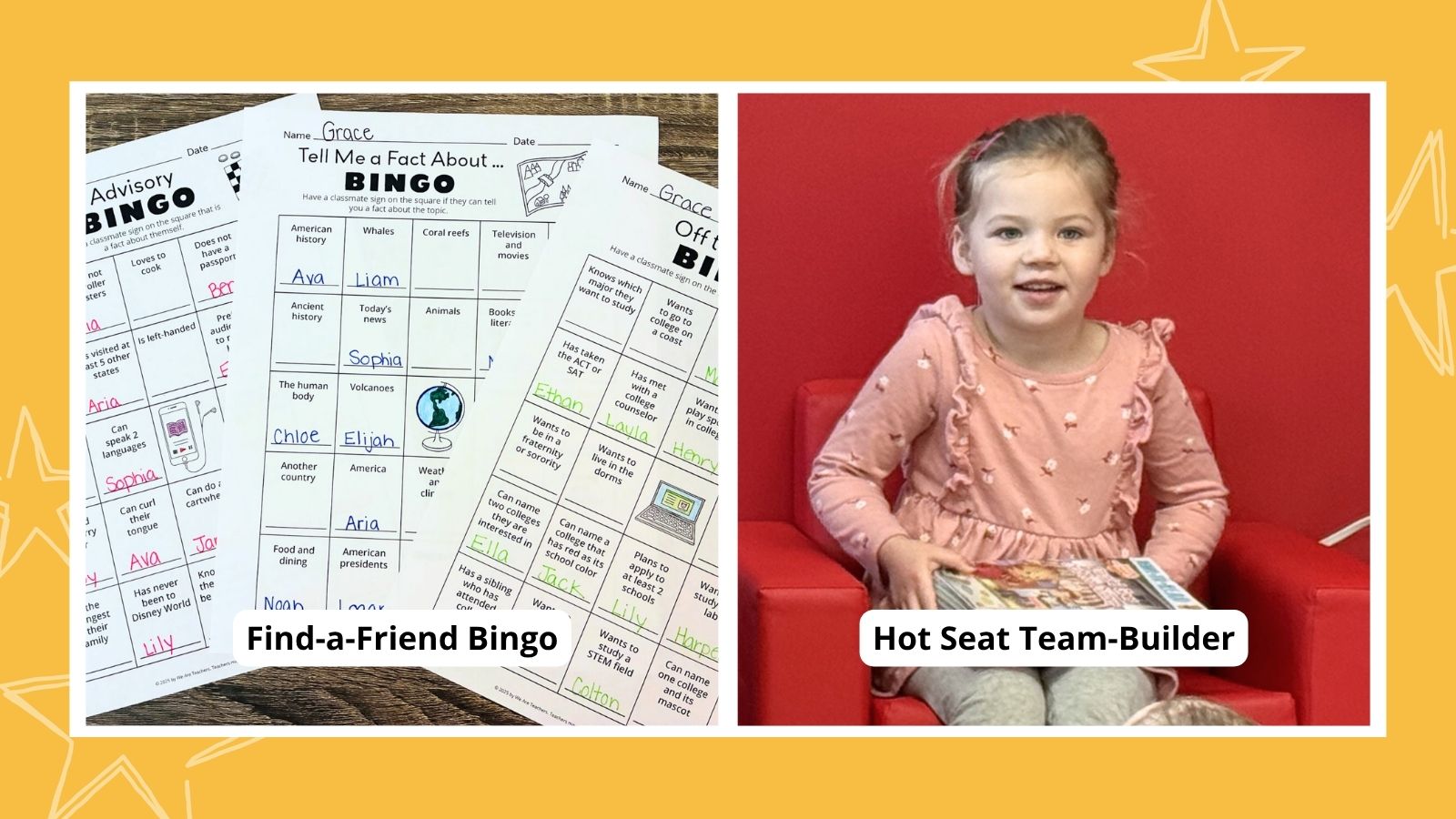
Lindsay’s Find-a-Friend Bingo

This activity is a fan favorite In Lindsay Sauer’s classroom. “It’s always an exciting game,” she says “and it’s another gem to get your little ones moving around. “
- Objective: To fill in your bingo sheet.
- Materials: Pre-printed bingo sheet and pencil or pen
- Participants: Whole class
How to play:
- Give each student a bingo sheet, a clipboard, and something to write with.
- Have kids circulate around the classroom to find different people whose names they can write in the different boxes on their bingo sheet.
- The game is over when one student gets their card completely filled in or time runs out.
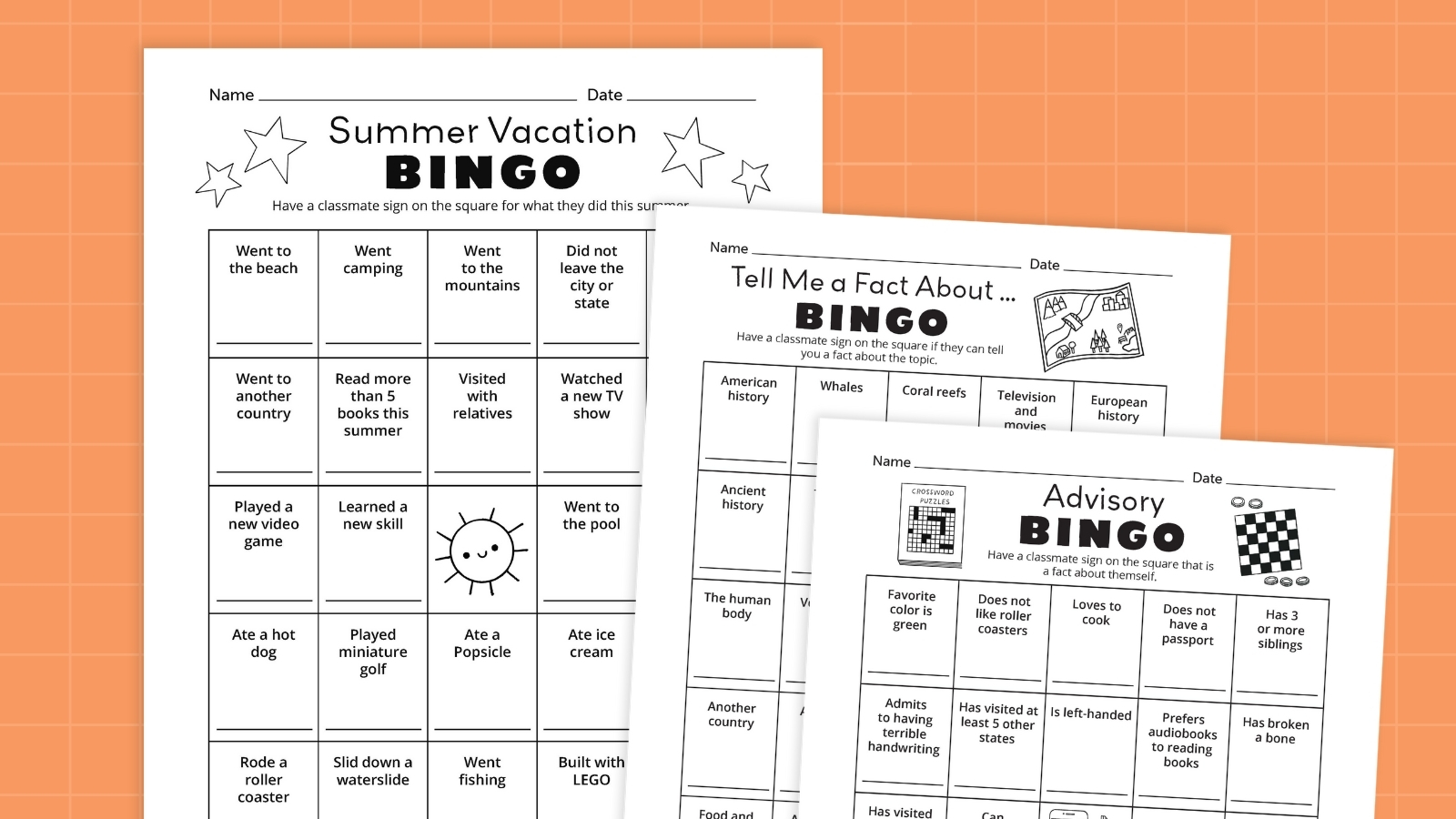
Icebreaker Bingo (Free Printable)
Download our bundle of six pre-printed bingo cards and send your kids off to get to know one another.
Lindsay’s Hot Seat Team-Builder
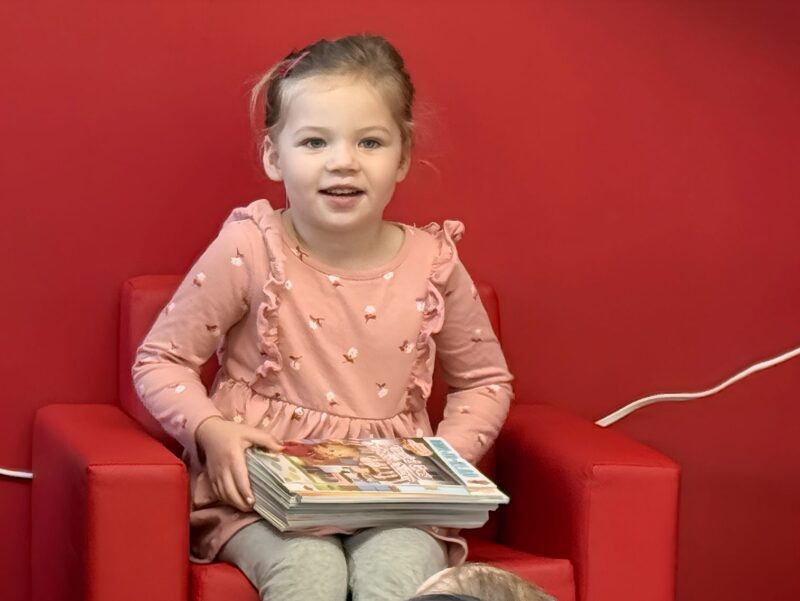
Lindsay shares this awesome team-building game that can be played over multiple days as a time-filler during the first couple weeks of school. “Students absolutely LOVE this team-building activity to get to know one another,” she says. “Of course the teacher takes a turn in the Hot Seat too!”
- Objective: One student sits at the front of the class while others ask them questions about themself.
- Materials: One chair and students’ curiosity!
- Participants: Whole class
How to play:
- Students take turns sitting in the Hot Seat for about three to five minutes, depending on how much time you have allotted.
- While the student is in the Hot Seat, the other kids take turns asking questions to get to know the student better.
- The child in the Hot Seat can take the reins on how to get their questions asked. They can have their classmates raise their hand and feel awesome calling on who they want. Or they may simply have their friends shout out their questions.
- When time is up, another student rotates into the Hot Seat.
Yes, No, Stand Up
- Objective: This easy yes-or-no game is a fun way for younger kids or English language learners to get to know one another.
- Materials: A list of yes-or-no questions
- Participants: Whole class
How to play:
- Before the game begins, prepare a list of yes-or-no questions to ask students. For example, “Do you like chocolate?” “Is your favorite color blue?” “Have you ever traveled outside the country?”
- If their answer is yes, the student stands up. If their answer is no, they sit down.
- Pause between questions to give students time to look around and find students they have answers in common with.
- If time allows, let students come up with questions of their own.
Spiderweb
- Objective: Students sit in a circle and pass a ball of yarn around as they get to know one another.
- Materials: Ball of multi-colored yarn
- Participants: Whole class
How to play:
- Sit in a circle. The leader chooses a topic (favorite food, favorite place, funny story, one thing that makes me unique, etc.).
- Play begins when the first person, holding a large ball of yarn, shares their answer with the group.
- Then, keeping a hold of one end of the yarn, they toss the ball (gently) to someone else in the circle.
- Play continues around the circle until every person has had the chance to share.
- In the end, the yarn will form a “spiderweb” of color, reminding students that they are all connected in one community.
Birthday Line-Up
- Objective: Students must communicate and cooperate to line up in birthday order.
- Materials: None
- Participants: Whole class
How to play:
- Set a timer for 5 or 10 minutes, depending on your grade level.
- The objective is to have students line up in order of their birthdays—January 1 through December 31—before time runs out.
- To accomplish this, they will need to talk with one another in order to figure out who goes in front of whom.
- Try this activity with other fun ways to line up—by height, alphabetically, by shoe size, etc.
Would You Rather?
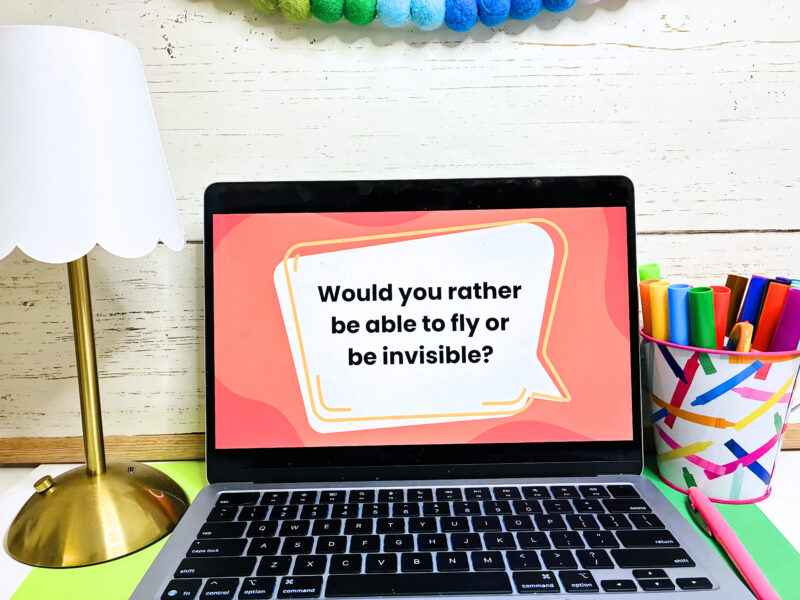
- Objective: To learn more about classmates and see who students have things in common with.
- Materials: Would You Rather? questions
- Participants: Whole class
How to play:
- Download our Would You Rather? Google Slides to display during the activity.
- Partner students up.
- Display one of the slides and give both students time to answer to each other.
- Continue for five slides, then have students change partners.
- You may use an inside circle / outside circle format to make sure kids pair up with different friends.
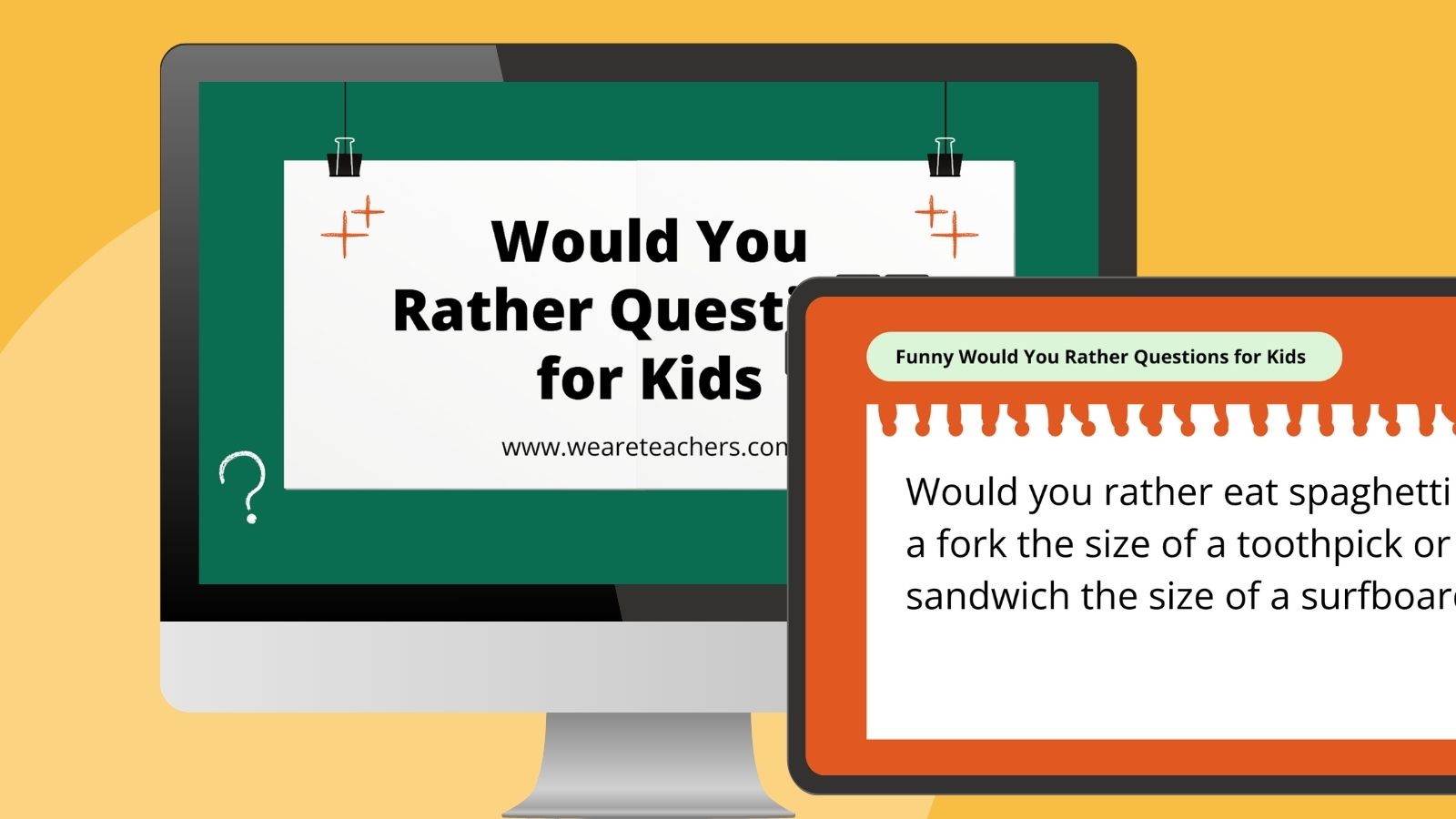
Would You Rather Questions (Free Google Slides)
Download our free Would You Rather slides and use them for loads of different activities with your students.
Problem-Solving Activities for Kids
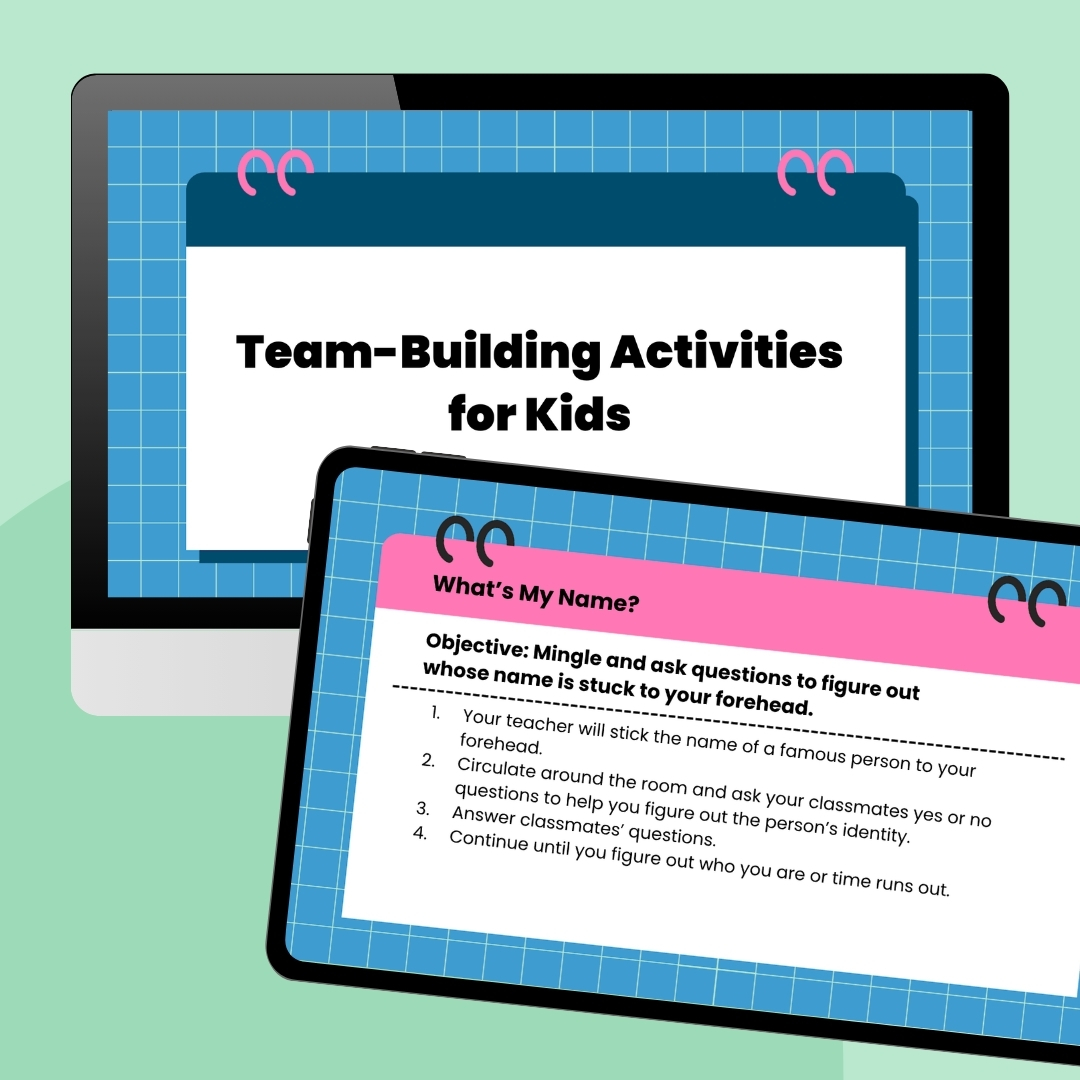
What’s My Name
- Objective: This game encourages students to mingle, ask questions, and use deductive reasoning skills as they try to figure out whose name is stuck to their forehead.
- Materials: Sticky notes
- Participants: Whole class
How to play:
- Write the names of famous people your students will know, such as actors, athletes, or characters from a book or show, on sticky notes.
- Once every student has a name on their forehead, set a timer and have students circulate around the room asking yes-or-no questions to figure out who they are.
- Continue play until everyone guesses their identity or time runs out.
Categories
- Objective: Students work cooperatively in small groups to sort items into categories.
- Materials: A tray with 20 unrelated items or an image of 20 unrelated items
- Participants: Groups of 3 or 4
How to play:
- For this activity, prepare a tray with 20 unrelated items, e.g., a book, an eraser, a juice box, etc. Alternatively, create a document with 20 images of things to project on a screen.
- Divide students into groups and set a timer.
- Have each group divide the items into four categories that make sense to them. For example, things you wear, things you use with your hands, etc.
- Have groups work quietly so that their ideas are kept secret.
- When each group is finished, give each one time to present their categories and the rationale behind their thinking.
Solve Riddles
- Objective: To compete with your team to solve riddles.
- Materials: Easy and Hard Riddles for Kids (Google Slides)
- Participants: Whole class, divided
How to play:
- Divide students into teams of four or five students.
- Have each team sit together in different areas of the room.
- Starting with one group, ask one of the riddles from the Google Slide deck.
- Give the students a time limit to answer.
- If they answer correctly in that time, they score a point.
- If they do not, the next team gets to give it a shot.
- Move onto the next team for the next riddle.
- Repeat.
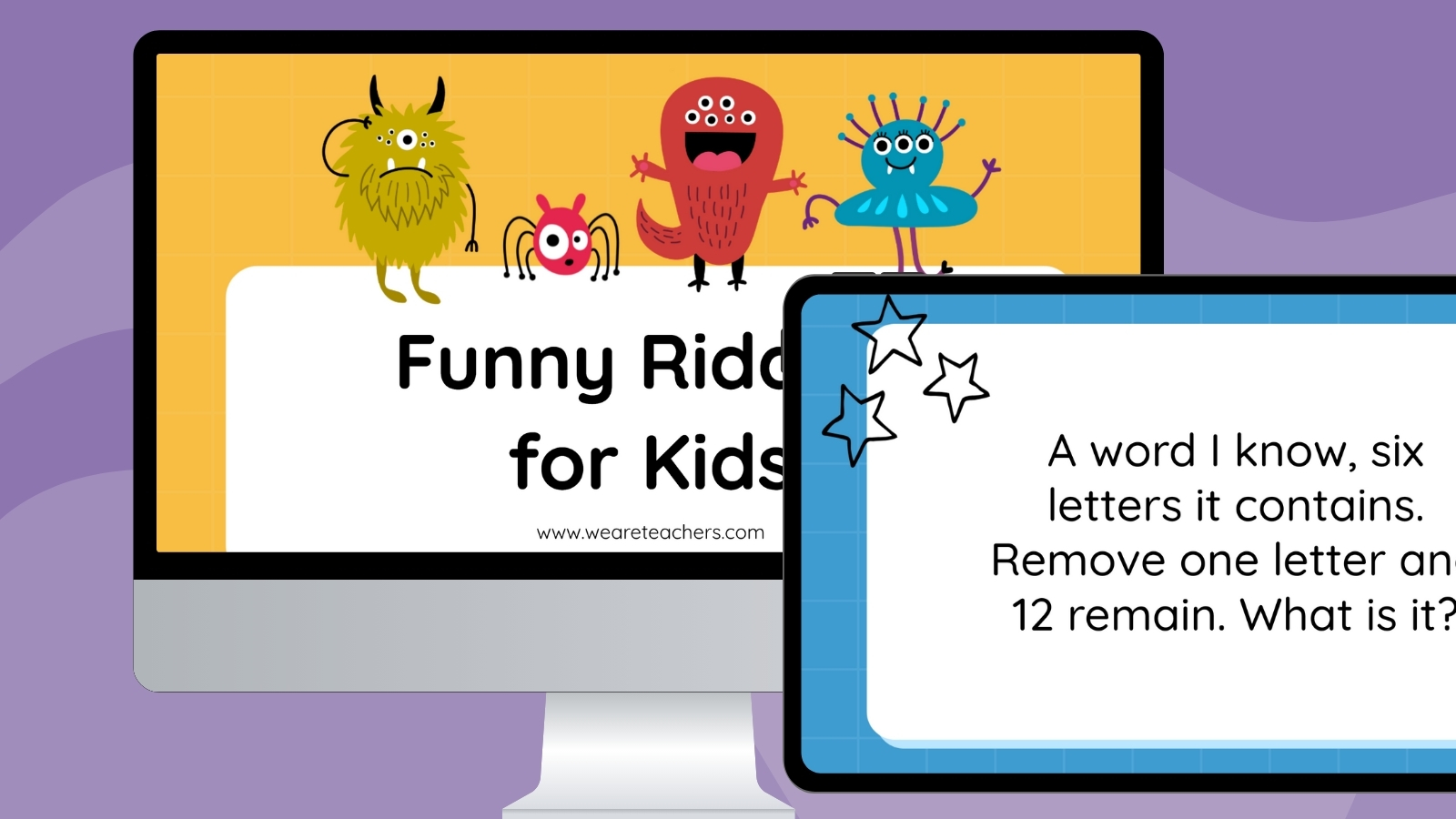
Riddles for Kids (Free Google Slides)
Download our free slide deck of all sorts of riddles for your class!
Flip the Tarp Challenge
- Objective: Students cooperatively flip over a tarp while standing on it.
- Materials: Flat sheet, tarp, or blanket
- Participants: 2 teams
How to play:
- Divide students into two teams. One team will do the challenge while the other team watches, then they will switch places.
- Gather one team on a flat bedsheet, tarp, or blanket. They should fill up all but about a quarter of the space.
- Now, students must work together to figure out how to flip over the sheet/tarp without anyone stepping off or touching the ground.
Scavenger Hunt
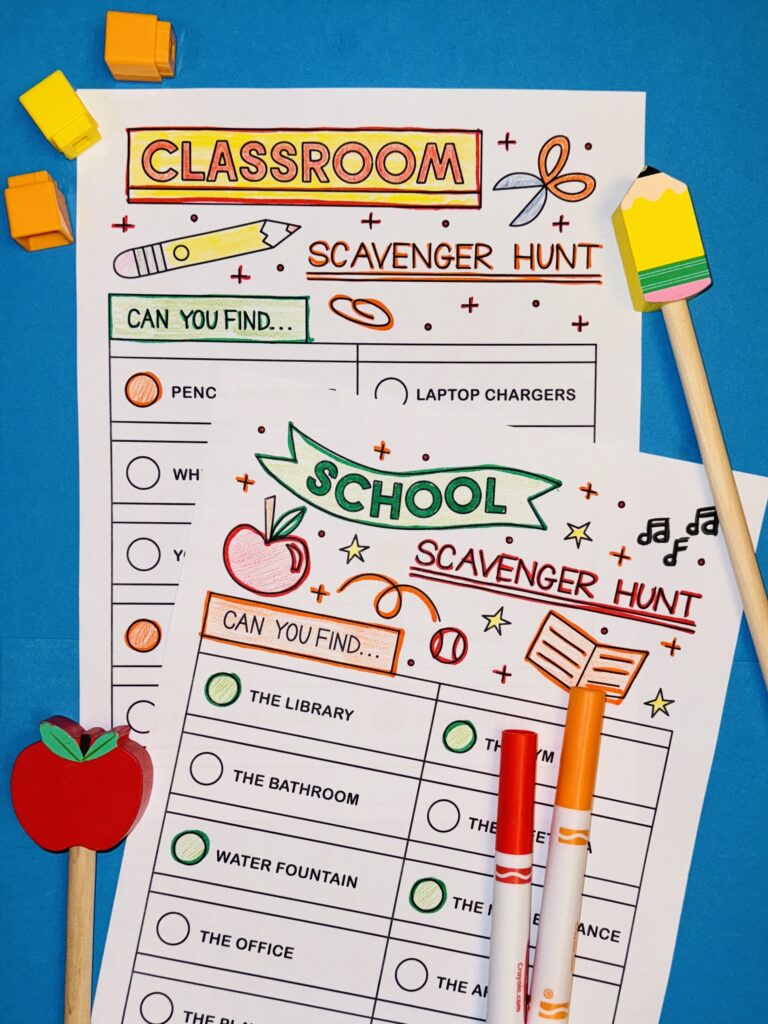
- Objective: Students work together to get to know the classroom/school (and each other) with a scavenger hunt.
- Materials: Scavenger hunt lists
- Participants: Partners
How to play:
- Pair up students randomly.
- Prepare a list of important things to find in the classroom and have students copy it into their journals. For instance, a pencil sharpener, nonfiction books, a turn-in basket, etc.
- Have students work with their partner to check off all the items on the list.
- This is also a great idea to get to know the layout of the school, e.g., the library, nurse’s office, lost and found, etc.
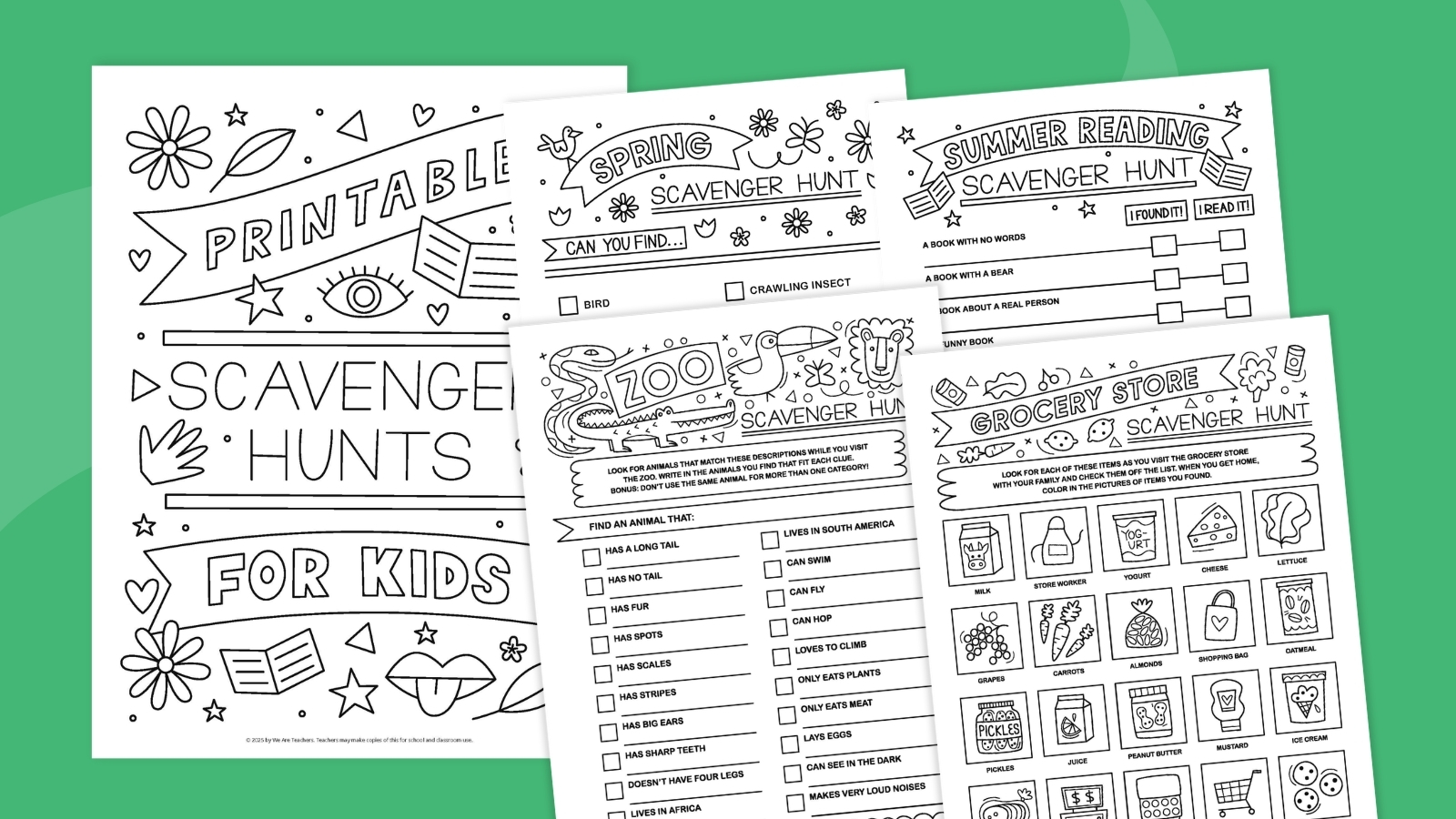
Scavenger Hunts for Kids (Free Printable)
Download our bundle of 40 scavenger hunts for kids and let your students loose!
Outdoor Team-Building Activities for Kids
Lindsay’s Hula-Hoop Circle Challenge
This fun activity is one of Lindsay’s favorites. She tells us, “It’s a great game to practice teamwork and cheering each other on!” You can play it over and over, as many times as students have the attention for. And as they get better at it, you can challenge them to do it faster and faster
- Objective: Students work together to pass a Hula-Hoop around a circle.
- Materials: Hula-Hoop
- Participants: Whole class
How to play:
- Have your students stand in a circle and join hands.
- Unclasp one pair’s hands and place the Hula-Hoop between the two. Then have them rejoin their hands.
- The object of the game is to pass the Hula-Hoop all the way around the circle without unclasping hands.
- Students work together using listening, coordinating, and strategizing skills to figure out how to maneuver their bodies all the way through the hoop to pass it on.
Balloon Battle
- Objective: Using a pool noodle and balloon, students race to score a goal.
- Materials: Pool noodles, balloons
- Participants: Whole class
How to play:
- This fun game teams students up as they try to bat a balloon over each other’s goal line using a pool noodle.
- Divide students into two teams and let play begin.
- Periodically blow a whistle to have students substitute in so that everyone gets a chance to play.
- The first team to score 10 points wins.
Rock, Paper, Scissors Tag
- Objective: For this fun tag game, students play Rock, Paper, Scissors to determine who chases whom.
- Materials: None
- Participants: Whole class
How to play:
- Before you begin, stake out the boundaries and position a home base at either end for each team.
- Divide students into two teams.
- At the start of each round, both teams will huddle up and decide whether they are rock, paper, or scissors.
- The two teams line up facing each other, and on your signal, all players flash rock, paper, or scissors.
- The kids on the losing team must run back to their base before they are tagged by the kids on the winning team.
- If your kids love this game, try one of these fun tag game variations.
Orange Relay
- Objective: Students will race to pick oranges up using only their knees and hop to transfer them to a target.
- Materials: Oranges, Hula-Hoops
- Participants: 2 teams
How to play:
- Have students line up in two equal teams.
- Place a bowl of oranges at the front of each line. The first two students each take an orange and squeeze it between their knees.
- Next, they hop or take tiny steps to deposit their orange into a Hula-Hoop across the field.
- Once their teammate’s orange is deposited, the next student goes. Play continues.
- The team that transfers the most oranges in two minutes (or whatever time limit you wish) is the winner.
Tic-Tac-Toe Relay
- Objective: Students play an IRL tic-tac-toe game.
- Materials: Hula-Hoops, beanbags
- Participants: Teams
How to play:
- Set out Hula-Hoops in the shape of a tic-tac-toe frame.
- Divide students into two teams and give each team a supply of different-colored beanbags.
- One student from each team runs to the frame and drops a beanbag in their preferred spot.
- They return to the start and tag the next runner, who does the same thing.
- Play continues until one team achieves a tic-tac-toe (three beanbags in a row)!
Team-Building Games for Kids That Foster Cooperation
Elbow Pass
- Objective: This simple passing game encourages students to work together, look each other in the eye, and have a good laugh.
- Materials: Four-square ball or similar-size ball
- Participants: Whole class
How to play:
- Have students stand in a line.
- The first student will hold a ball between their elbows in front of their chest and then pass it to the next player.
- Continue until the ball reaches the end of the line.
- If the ball drops, the game starts over at the beginning.
Move On, Back Up, Flip
- Objective: Students stand connected in a circle and must cooperate to follow directions.
- Materials: None
- Participants: Whole class
How to play:
- Start with students in a circle with their hands on the shoulders of the person in front of them.
- At the signal “Move on,” students take one hop forward together.
- At the signal “Back up,” students take one hop backward together.
- And at the signal “Flip,” students will turn 180 degrees and place their hands on the shoulders of the person who was behind them.
Straw Balance
- Objective: This fun balancing exercise requires coordination and cooperation.
- Materials: Plastic straws
- Participants: Whole group
How to play:
- Have your students form a large circle and give each one a plastic straw.
- The challenge is to balance each straw between one person’s right pointer finger and the left pointer finger of the person next to them.
- Challenge your students to make movements such as rotating the circle, squatting down, raising one foot, raising your right hand, etc.
- The goal is to make the movements while keeping the straw connections intact.
Group Juggle
- Objective: To see how many balls students can keep in the air.
- Materials: Small foam balls
- Participants: Whole class
How to play:
- Start with kids standing in a circle.
- Call out a name and toss a ball to that person.
- Next, that person will call a name and toss the ball over.
- Do a round this way, then, when they seem to have the knack, add in another ball.
Circle Games That Build Community
Common Ground
- Objective: To find out what you have in common with your new classmates.
- Materials: None
- Participants: Whole class
How to play:
- Have students form a large circle.
- Randomly call out a student’s name.
- That student goes into the center of the circle and reveals something about themself. For example, “I have two sisters,” “My favorite color is purple,” “I love to read,” etc.
- Everyone who agrees joins that student in the center (finding common ground).
- Student takes a moment to high-five their new friends and return to their spot.
- Next student is called.
Bumpity-ump-bump-bump
- Objective: Students race to follow directions and learn one another’s names.
- Materials: None
- Participants: Whole class
How to play:
- Students stand in a large circle with one student in the middle.
- That student walks around the inside of the circle, stops in front of one person, and gives them a direction.
- There are four choices: Left = say the name of the person to the left. Right = say the name of the person on the right. It = say the name of the person who is “it.” And Self = say one’s own name.
- After they give the direction, they say “bumpity-ump-bump-bump!”
- The student who was given the direction races to say the name of the correct person before the student finishes the phrase.
- If they can’t, they’re the next person on the inside of the circle.
Zip, Zap, Boing!
- Objective: This is a super-fun game that involves strategy and fast thinking.
- Materials: None
- Participants: Whole group
How to play:
- This super-lively circle game involves careful listening, quick thinking, and three actions—Zip, Zap, and Boing.
- Zip means point to the person on your right. Zap means point to the person on your left. And Boing means point to a classmate on the opposite side of the circle. (Boing cannot be passed to the person standing right next to you.)
- All students place their palms together in front of their chest. This will act as their pointer.
- The first person starts by calling out one of the actions and points their hands the right way. The person they’re pointing at chooses the next action, and play goes around the circle.
- Try to play as fast as you can. If you perform the wrong action, you are out. Last player standing wins.
Change Places if …
- Objective: To learn more about classmates and find kids you have things in common with.
- Materials: Floor spots or markers
- Participants: Whole class
How to play:
- Stand in a circle on floor spots or markers.
- Teacher will call out commands such as “Change places if you have a birthday in summer,” “Change places if you like video games,” “Change places if you have a brother,” etc.
- If the command is true for you, you must change places with someone else in the circle.
- Continue for several rounds. Great game for right before recess or lunch so kids can follow up with new friends.
STEM Team-Building Activities
Lindsay’s Cup-Stacking Challenge
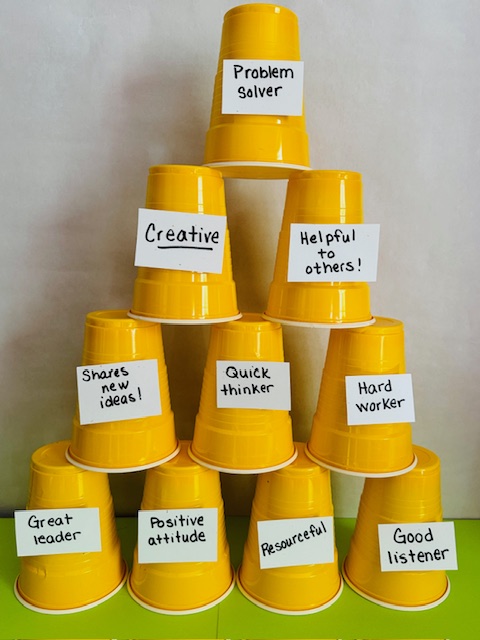
“Who doesn’t love stacking up a bunch of cups?” asks 1st grade teacher Lindsay Sauer. This is the version she plays in her classroom, and she reports it is one of the most fun activities and her students love it!
- Objective: Using patience and perseverance, students will stack cups using rubber bands and paper clips.
- Materials: Stacking cups, rubber bands, paper clips
- Participants: Groups of 4–6
How to play:
- Give each team five cups to work with and have them work together to stack the cups into a structure using their hands.
- Allow them a few minutes to build, then have them talk about how they worked together and what they made.
- For the next round, students will not be allowed to use their hands to move the cups.
- This time around, give each group a rubber band with pieces of string or paper clips attached. You’ll need as many pieces of string or paper clips as you have students in the group.
- Now, they have to figure out how to work together using ony the materials to move and stack the cups.
- Afterward, talk about the difference between being able to use their hands versus not using their hands and how they had to work together to get the cups stacked.
Team Mural
- Objective: To create a beautiful work of art together.
- Materials: Large poster paper, paint and paintbrushes, markers, colored pencils or crayons
- Participants: Teams of 3–8
How to play:
- Divide students into small teams.
- Have one helper from each team get supplies.
- Give students time to paint or draw a mural on a specific topic. For instance, what they love about school, their favorite things, animals, etc.
Marshmallow Tower Challenge
- Objective: This STEM activity challenges students to create a sturdy tower.
- Materials: Marshmallows, wooden toothpicks
- Participants: Partners or small groups
How to play:
- Divide students into partners or groups of equal numbers.
- Pass out an equal number of marshmallows and wooden toothpicks to each group.
- Challenge the groups to create the tallest, largest, or most creative structure in a set amount of time, each member taking turns doing the actual building.
- Afterward, have each group present their creation.
No-Hands Drawing Challenge
- Objective: Students will work together to maneuver a pen with strings.
- Materials: Markers, string, paper
- Participants: Small groups
How to play:
- Just like the activity above, this hilarious “no hands” exercise requires cooperation and patience.
- Divide students into small groups and give each group a marker with the matching number of strings attached.
- Tell the students what they will be drawing, e.g., a tree, a house, or a shape.
- Groups will gather around a desk or small table as each student holds the far end of their string, pulling the line taut to support the pen upright over the paper.
- The challenge is to manipulate the pen to draw whatever image is called for.
Aluminum Foil Sculptures
- Objective: To collaborate with teammates to create objects from foil.
- Materials: Aluminum foil and big imaginations!
- Participants: Partners or groups of 3 or 4
How to play:
- Pair students up, or divide them into small groups.
- Provide them with a roll or squares of aluminum foil.
- Pose a challenge such as “Create a free-standing animal,” “Build a tower at least 2 feet high,” “Build an object that holds something else,” or the like.
Mystery Bag Build
- Objective: To encourage kids to work together, along with their imaginations, to build something.
- Materials: Brown paper bags filled with different craft materials such as cups, craft sticks, tape, rubber bands, straws, etc.
- Participants: Groups of 3–5
How to play:
- Give each group a bag of random supplies and give them a second to look them over.
- Pose a challenge such as “Build something that moves,” “Build something that balances,” “Build the tallest structure,” etc.
More Team-Building Games and Activities for Kids
Lindsay’s Rock, Paper, Scissors Championship
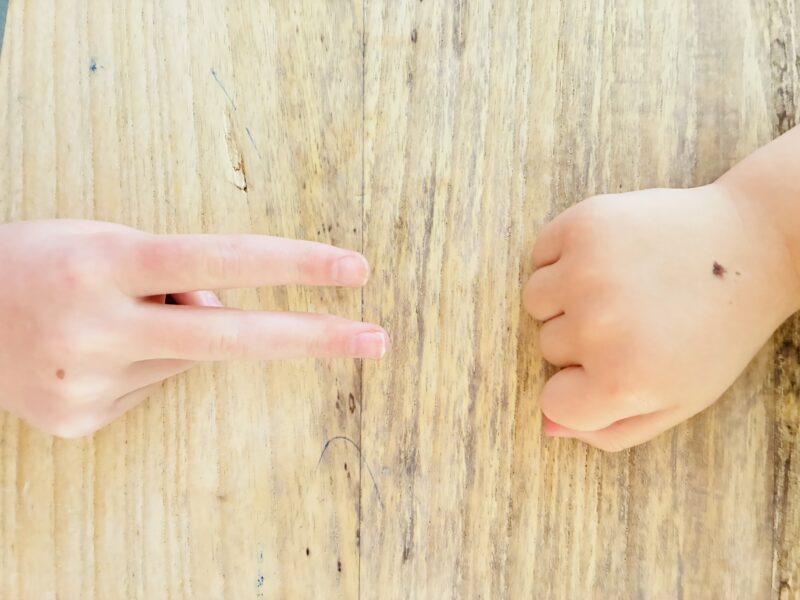
Who doesn’t love a good game of Rock, Paper, Scissors? This tournament-style version is an exciting twist on the classic game. “It’s such a fun way to cheer each other on and have a little competitive fun,” says Lindsay. “And it’s one of my students’ absolute favorite team-building activities.”
- Objective: To play a round-robin version of Rock, Paper, Scissors and build camaraderie.
- Materials: None
- Participants: Whole class, with 2 students pairing up at a time
How to play:
- Students pair off to play a game of Rock, Paper, Scissors.
- If they lose, they become a cheerleader for the person they lost to.
- The winner then finds another opponent with their cheerleader by their side.
- By the end, two players will remain, each with an awesome cheering section!
Hot and Cold
- Objective: Students guide a “finder” to locate an object in the classroom with the prompts “hot” or “cold” to lead them in the right direction.
- Materials: Classroom objects
- Participants: Whole class
How to play:
- One student, the “finder,” steps out of the classroom.
- The rest of the class picks an object (e.g., the pencil sharpener) in the classroom for the finder to find.
- When the finder comes back in, they begin walking around the classroom in search of the object.
- If the finder is far away from the object, the only advice the group will give is to say “cold.” When the finder gets close to the object, the group will say “hot.”
- Play continues until the finder picks the correct object.
- Variation: Instead of saying “hot” and “cold,” students can applaud softly for cold or vigorously for hot.
Body Parts
- Objective: Following directions, students will try to be the first to snatch a plastic cup.
- Materials: Small plastic cups
- Participants: Pairs
How to play:
- Students stand facing their partner. A plastic cup is positioned on the ground between them.
- When the leader calls out a body part, the players must move both hands to that spot—knees, toes, shoulders, hips, etc.
- When the leader says “Cup!” each person tries to grab the cup.
- The student who snatches the cup remains in the game. The other players are out for the round.
- Students pair up with new partners, and play continues until one person wins.
Human Alphabet
- Objective: Students will form letters of the alphabet with their bodies.
- Materials: None
- Participants: Individuals and partners
How to play:
- Have students spread out, and show them how to form letters with their body. For instance, stand tall and spread arms straight out to form the letter T, or raise arms at an angle to form the letter V.
- Once they get the hang of individual letters, call out short words. Start with two-letter words (e.g., on, so, it), then three (and, now), then four (past, four).
- Students must team up to correctly form each word.
Back-to-Back Artists
- Objective: This blind drawing activity requires teamwork and clear communication as one student directs the other to draw a picture.
- Materials: Drawing paper, pen or marker, sample drawings
- Participants: Partners
How to play:
- Pair students up and have them sit back-to-back.
- Give one student a blank piece of paper and a pen or a marker. Give the other student a picture of a simple object.
- The student holding the illustration will not tell their partner the name of the picture. They will verbally describe how to draw the picture, step-by-step, to their partner.
- The other student must draw the picture using only the verbal cues given by their partner.
- When they are finished, the pair will compare the drawing and the original to see how close they came.
Get your free Team-Building Games for Kids Google Slides!
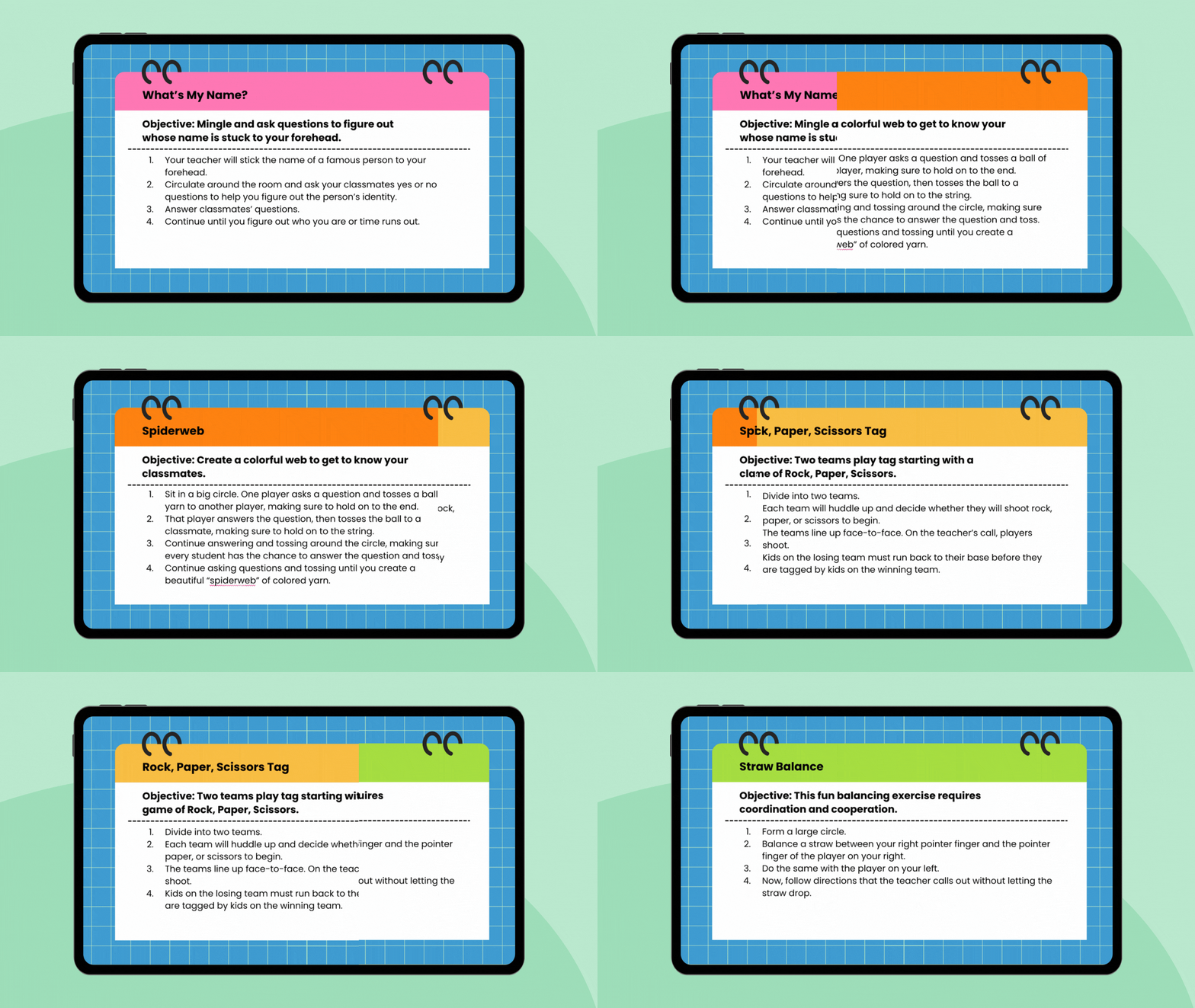
Ready to get bonding? Download our Google Slides and have them on hand when playing these team-building games. Just fill out the form on this page to get your free slides.