
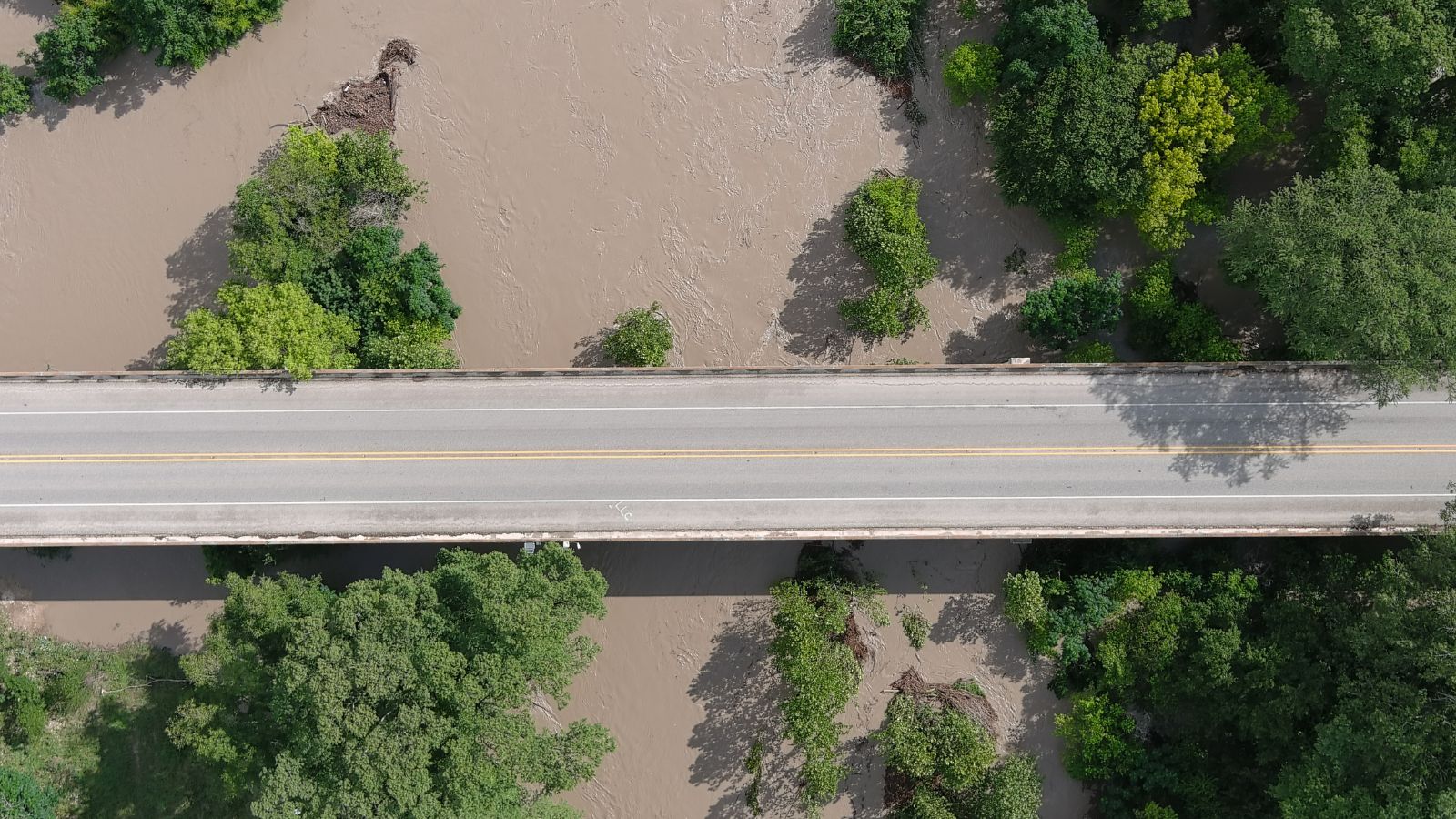

Teachers in Texas: Our hearts break for the grief and terror you’re experiencing right now. For yourselves, for your own families, and for the students and school communities you love so deeply. With several of our We Are Teachers community connected to Kerr County and other flood-impacted regions, this sorrow feels personal, immediate, and gutting.
I’ve lived most of my life on the Texas coast and have weathered more than a few storms—flash floods, hurricanes, and a near miss with a tornado. I was teaching during Hurricane Harvey in 2017, when many of our students and colleagues here in Houston lost homes, cars, and entire neighborhoods. But what’s unfolding now in Kerr County is heartbreak on a different scale.
We grieve the precious lives lost. We mourn the destruction of homes, schools, and sacred community spaces. And we acknowledge the heavy truth: For many, the hardest parts of this journey are still ahead.
If you’re a teacher picking up the pieces right now, I know you might not have the space to feel proud of your strength or resilience. You may feel exhausted, angry, afraid, or just numb. (If so, you might want to go ahead and bookmark this to come back to when you’re ready.) But when that moment does come, let me offer you my gratitude, and maybe leave you with a few words of encouragement for this school year and beyond.
This school year, “Be flexible” will take on new meaning.
Teachers are already champions of adaptability. But when your school is underwater, your classroom is gone, and you’re suddenly teaching out of a borrowed gymnasium or church hall—with no access to technology, books, or even basic supplies—flexibility reaches a whole new level.
Hold your plans loosely. When you reunite with your students—whether in person or virtually—they may need space to cry, to ask questions, or just to be. Let that be enough for the day.
So will creativity.
You may not feel like you’re on your A game this year. Lesson plans may feel patched together. You may not reach every benchmark or cover every unit. That’s OK.
Rather than judge yourself by the usual standards, consider this: You’re crafting educational experiences from what’s left. You’re showing up, thinking on your feet, and modeling problem-solving in the face of disaster. That’s not failure—that’s remarkable creativity and care.
It’s OK to not be OK.
Teaching in a community ravaged by a natural disaster—while living through the same trauma yourself—is beyond difficult. If you’re struggling, that doesn’t mean you’re failing. It means you’re human.
Please give yourself the same compassion you offer your students. And if you’re in crisis, here are 35 free counseling resources for teachers that may help. Many of your students will also be navigating loss, fear, or instability—know that you don’t have to do the heavy emotional lifting alone. Mental health professionals can—and should—step in.
It’s also OK—when you’re ready—to laugh.
A few weeks after Hurricane Harvey, our staff was back in the building, even though students hadn’t yet returned. Rain started to fall hard on the roof, and you could feel the panic rise in the room. Then, our normally reserved math teacher shouted, “TOO SOON, MOTHER NATURE!”
We all burst out laughing. And in that moment, something inside us loosened.
Laughter doesn’t erase grief. But it reminds us that grief doesn’t get the last word. Kids still need joy even in the midst of pain. It helps us reclaim a little piece of power from a situation that feels entirely outside our control.
Your students will remember your hope.
You don’t have to become your students’ therapist or fix what’s broken in their world. You don’t need to force “normal” into a space where everything is far from it.
What they will remember is how you showed up. That you created moments of peace. That you smiled when they entered the room, even if your heart was heavy. That you reminded them—through your actions more than your words—that the world still held kindness, and that healing was possible.
Life won’t feel normal for a while—not for you, not for your students. But your presence, your patience, your grit—they matter more than you know.
So keep going, one breath and one day at a time.
You’re doing more than teaching—you’re helping rebuild lives. And maybe, just maybe, one day your students will face a challenge of their own and think, I can do this. I’ve seen what resilience looks like.
Because they saw it in you.