Food Web & Food Chain Worksheet & Activity Bundle
$8.50
Explore food chains, food webs, and energy transfer through engaging science activities! 🌿 Students learn how organisms depend on one another while building ecosystem knowledge, critical-thinking skills, and environmental awareness.
Description
Help students uncover the fascinating connections that keep ecosystems balanced while building a deeper understanding of how energy moves through living systems. 🌿🦅🔗
This Food Web & Food Chain Worksheet & Activity Bundle is a comprehensive collection of science, literacy, vocabulary, research, and hands-on learning activities designed to help students explore ecosystems, energy transfer, predator-prey relationships, and the interconnectedness of living things. Students investigate how organisms depend on one another for survival and discover how changes within an ecosystem can affect entire food webs.
What’s Included in the Food Web & Food Chain Bundle
This resource supports students as they explore ecosystems, producers, consumers, decomposers, trophic levels, energy transfer, keystone species, invasive species, and environmental interactions. The digital download includes a variety of printable activities, including:
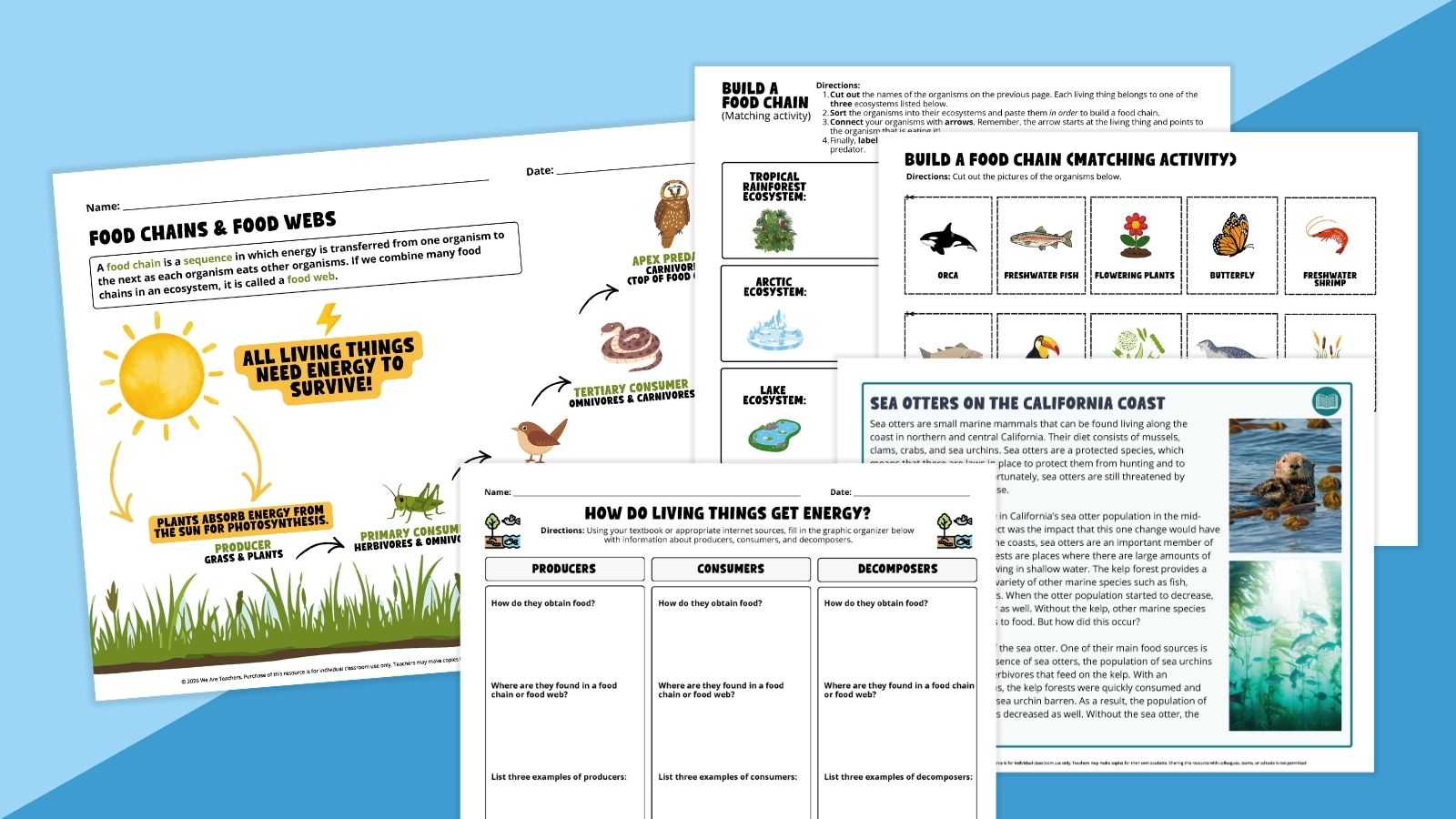
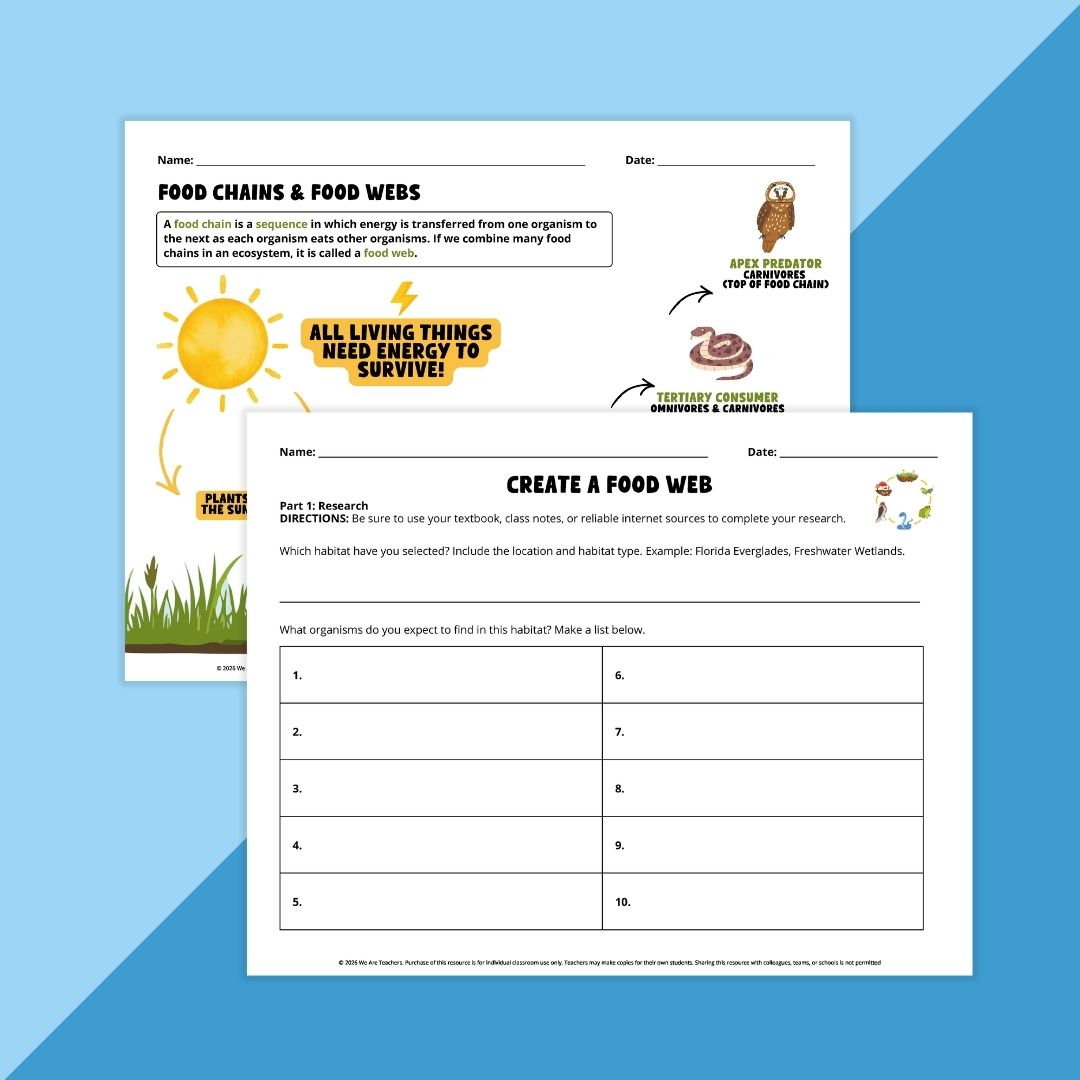
✔ Food chains and food web vocabulary activities and review pages
✔ Producers, consumers, and decomposers graphic organizers
✔ Food chain and food web anchor chart
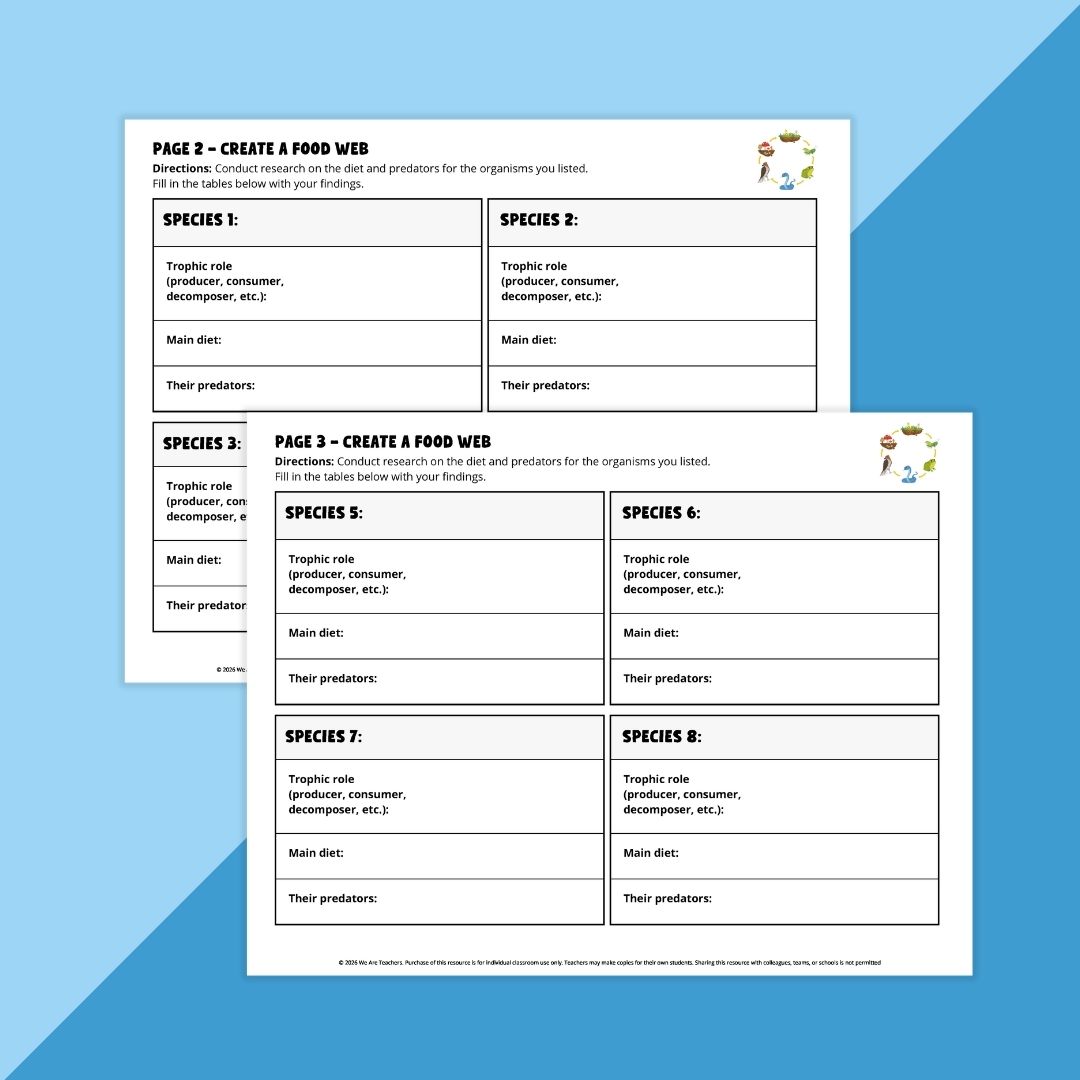
✔ Create-a-Food-Web research and project activity
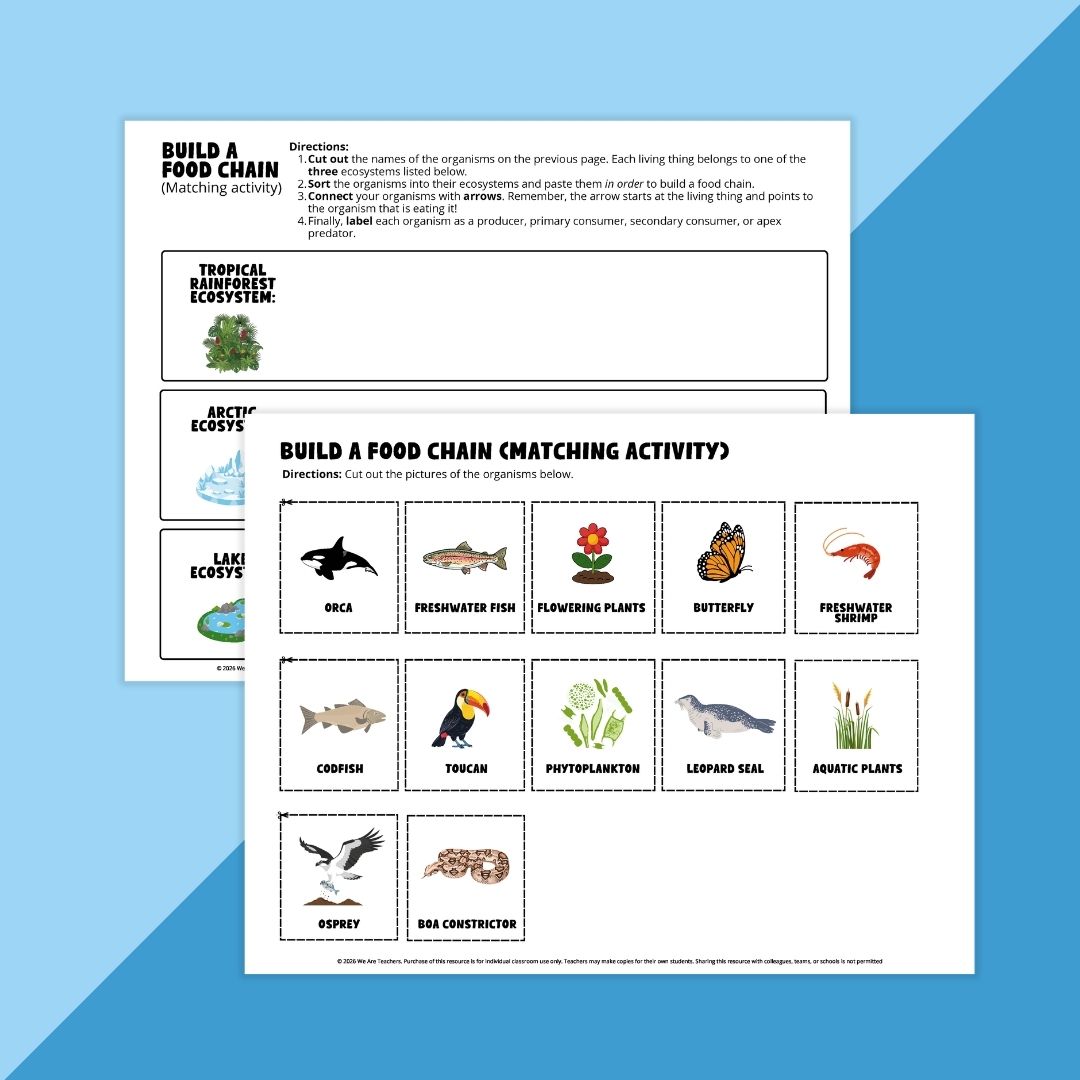
✔ Food chain cut-and-paste matching activity
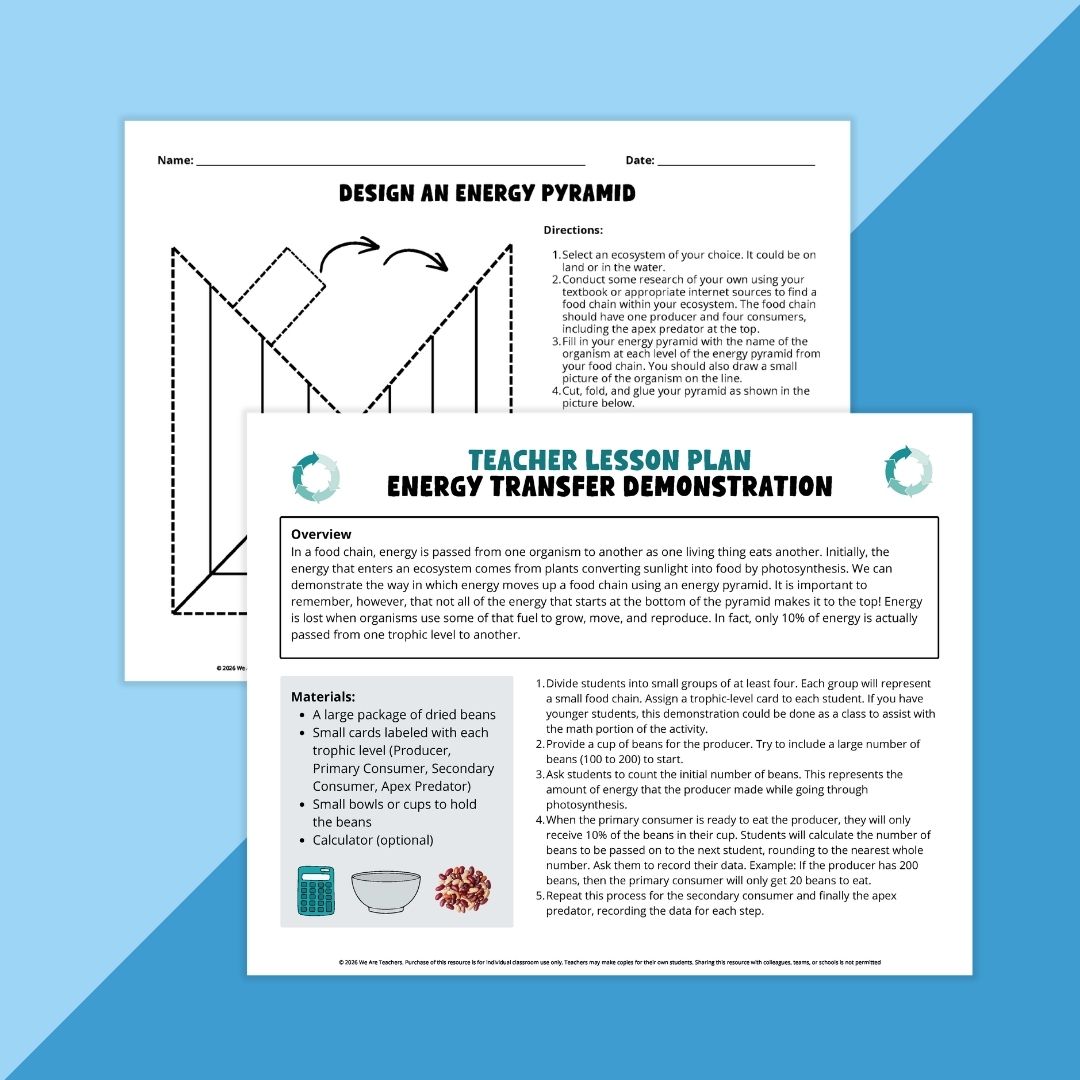
✔ Design an Energy Pyramid project
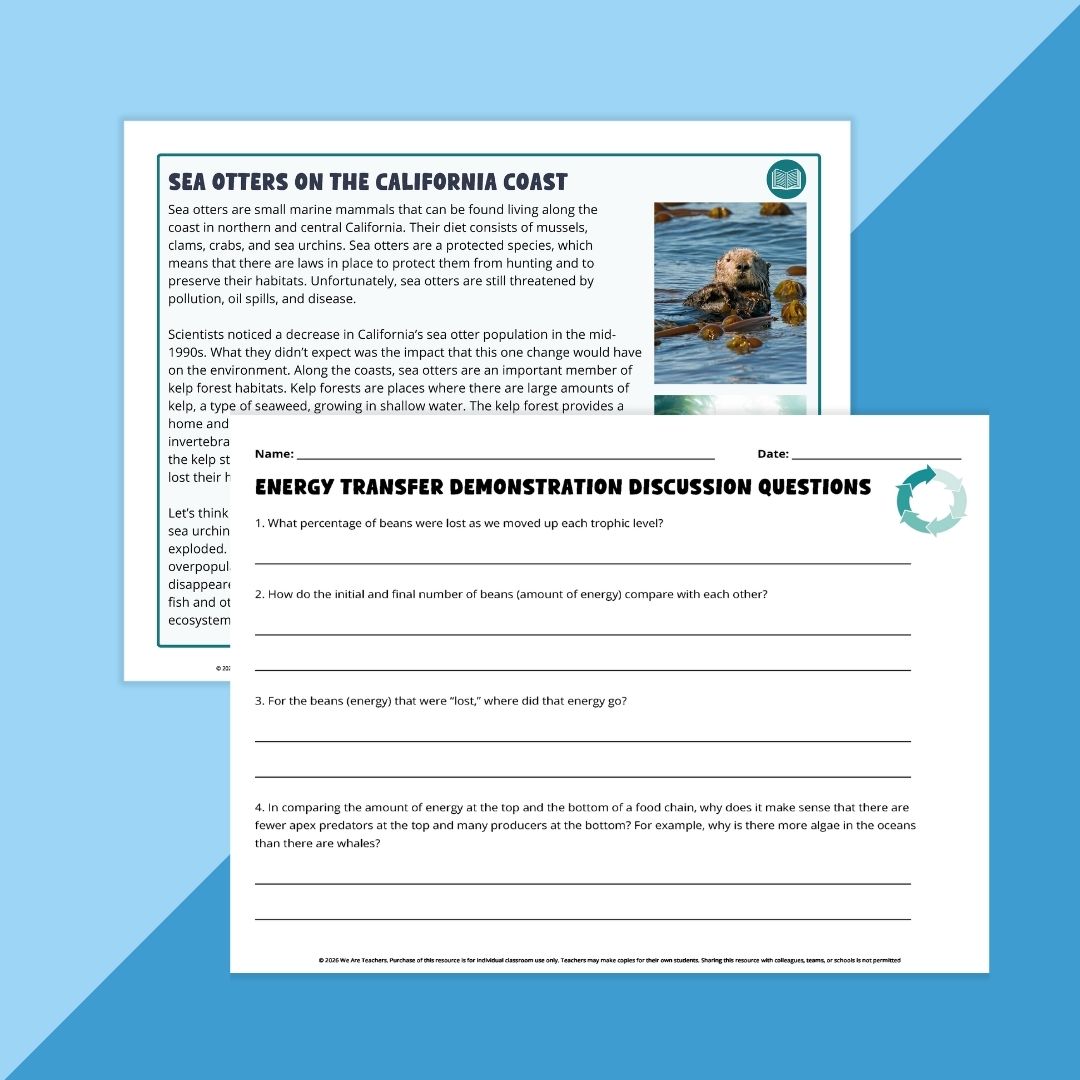
✔ Energy Transfer Demonstration with teacher lesson plan and discussion questions
✔ Keystone Species reading passage and comprehension questions
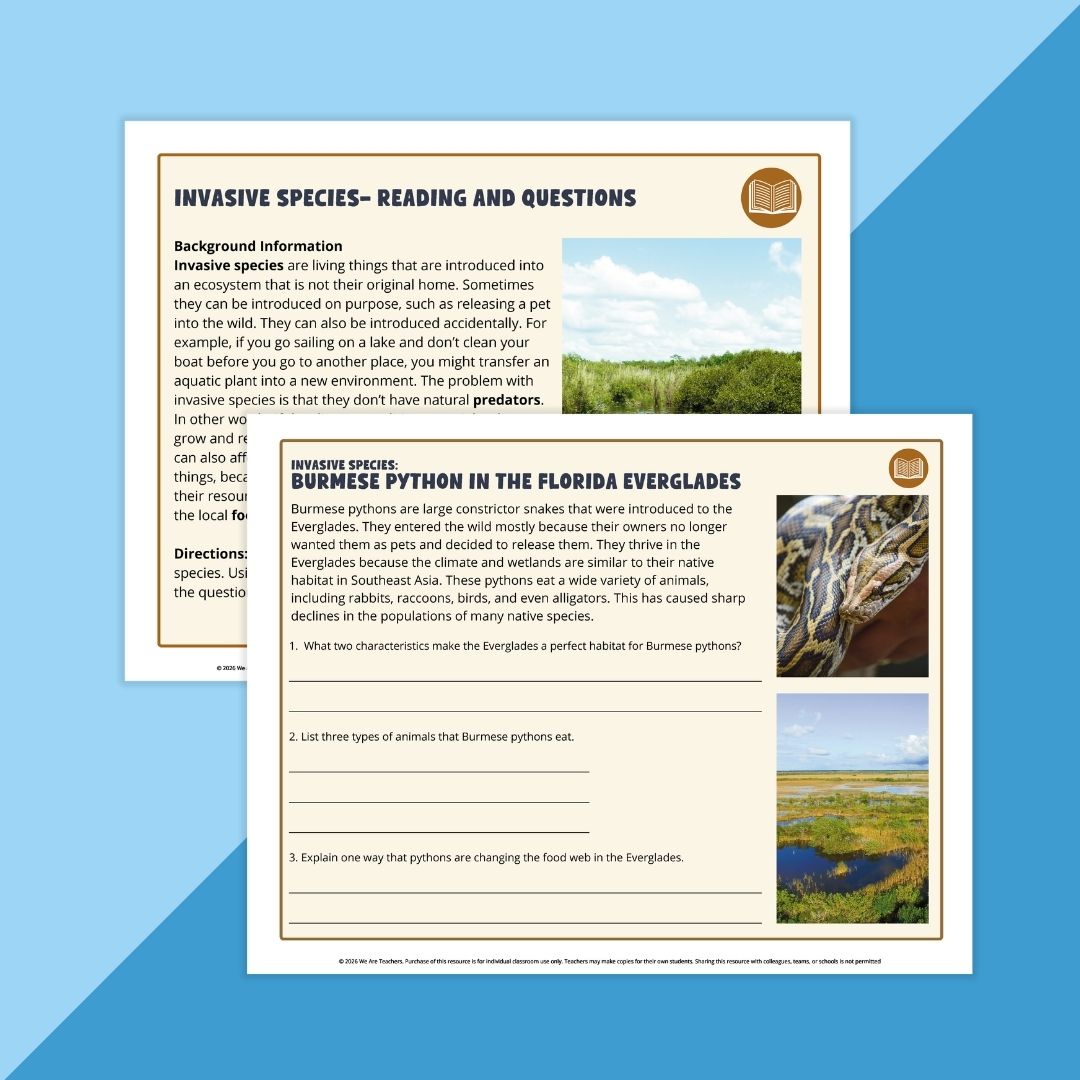
✔ Invasive Species reading passages and analysis activities
✔ Food chain and food web trivia and review opportunities
Classroom Ideas
Introduce ecosystem vocabulary
Build foundational science knowledge by teaching key concepts such as producers, consumers, decomposers, food chains, food webs, apex predators, trophic levels, and energy pyramids through vocabulary and graphic organizer activities.
Explore energy flow in ecosystems
Use the anchor chart, food chain activities, and energy pyramid project to help students visualize how energy moves from the sun through producers and consumers within an ecosystem.
Develop research skills
Challenge students to investigate a real habitat and create their own food web by researching organisms, diets, predators, and ecological relationships. This inquiry-based project encourages scientific thinking and independent learning.
Bring ecosystems to life
Use the food chain matching activity and energy transfer demonstration to provide hands-on opportunities for students to model and experience scientific concepts in meaningful ways.
Investigate ecosystem disruptions
Help students understand ecological balance through engaging readings about keystone species and invasive species. Students learn how the loss or introduction of a single organism can impact entire ecosystems.
Strengthen literacy connections
Incorporate reading comprehension, evidence-based responses, and scientific writing through informational texts and critical-thinking questions tied directly to science content.
Encourage environmental awareness
Guide discussions about biodiversity, conservation, and ecosystem health as students explore real-world examples such as sea otters, Burmese pythons, zebra mussels, and kudzu.
✨ The result?
Students gain a deeper understanding of ecosystems and energy flow while strengthening science literacy, critical thinking, inquiry skills, and environmental awareness through engaging, hands-on learning experiences. 🌎🦉🌱