

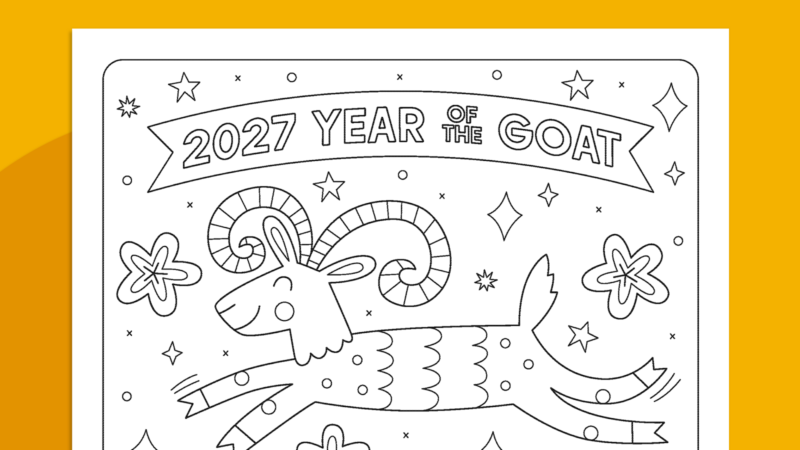
As a Chinese American growing up in the United States, I was fortunate to be able to learn and celebrate the holidays important to both my Chinese and American communities. In many cultures, Lunar New Year celebrations are some of the most important days of the year. Lunar New Year 2027 celebrations begin on February 6, which begins the Year of the Goat (also referred to as Sheep/Ram). They end about two weeks later, on February 20, known as the Lantern Festival in China and some other cultures. Learn about the holiday, including its traditions, foods, and more, with these resources about Lunar New Year for kids to use in 2027.
Plus, don’t miss our free downloadable. Grab your full set of ready-to-go Lunar New Year for Kids Google Slides with kid-friendly explanations and discussion questions for your classroom.
Jump to:
- Lunar New Year Explanation for Kids
- Lunar New Year Traditions and Foods
- Lunar New Year Videos
- Lunar New Year Books, Crafts, Activities, and Lesson Plans
Lunar New Year 2027 Explanation for Kids
What is Lunar New Year?
Lunar New Year is a celebration of the arrival of spring. The beginning of the new year is determined by the lunisolar calendar (based on the sun and the moon). Each year, Lunar New Year falls on a different date, as it is celebrated during the first 15 days of the first month of the lunisolar calendar, which lead up to the first full moon of the year. This year, Lunar New Year begins on Saturday, February 6, 2027. Learn more about the Lunar New Year here.
Who celebrates Lunar New Year?
Lunar New Year is celebrated by a variety of countries and cultures that typically follow the lunisolar calendar. These countries include China, Vietnam, and Korea. Other places around the world, especially wherever large populations of people from these countries have gathered, also often hold big Lunar New Year celebrations. Learn more about which countries celebrate Lunar New Year as a public holiday.
Teacher Tip: Use Lunar New Year as an opportunity to discuss how holidays can be shared across cultures while maintaining unique traditions.
Are there different names for Lunar New Year?
Different countries have different ways of referring to Lunar New Year. Some of these include:
- Chūn Jié (Mandarin) (Chinese New Year)
- Seollal (Korean New Year)
- Tet (Vietnamese New Year)
- Losar (Tibetan New Year)
Teacher Tip: Invite students to discuss how traditions are carried from different countries between generations to the United States and how they may be similar or different from their country of origin.
When is Lunar New Year?
Lunar New Year starts with the arrival of the first new moon in the lunar calendar. It lasts 15 days and ends with the first full moon. The exact dates vary slightly each year due to moon cycles, but the holiday typically falls between January 21 and February 20. Lunar New Year falls on Saturday, February 6 in 2027.
How does Lunar New Year relate to the Chinese zodiac?
In China, Lunar New Year is often referred to as Spring Festival, since the spring season on the traditional Chinese calendar begins around this time.
What are some Lunar New Year traditions?
People around the world celebrate the Lunar New Year in many ways. Here are some of the most common traditions, activities, and foods.
Cleaning
In the two weeks leading up to the start of the festival, people spend time thoroughly cleaning their homes, sweeping out the old “bad luck” and preparing for a fresh new year. Once the celebration officially begins, cleaning of any kind on the first day is strictly forbidden.
Parades
Huge parades with music, floats, and especially large puppets controlled by people inside are a classic part of many Lunar New Year celebrations. In cities around the world, people gather by the thousands for these events, held both during the day and at night. Highlights of these parades often include the Lion Dance and Dragon Dance.
Fireworks/Firecrackers
This is one of the most ancient Lunar New Year traditions, tied closely to the legend of the monster Nian. People attend massive public fireworks displays and set off their own fireworks or firecrackers at home too.
Hóng Bāo Red Envelopes
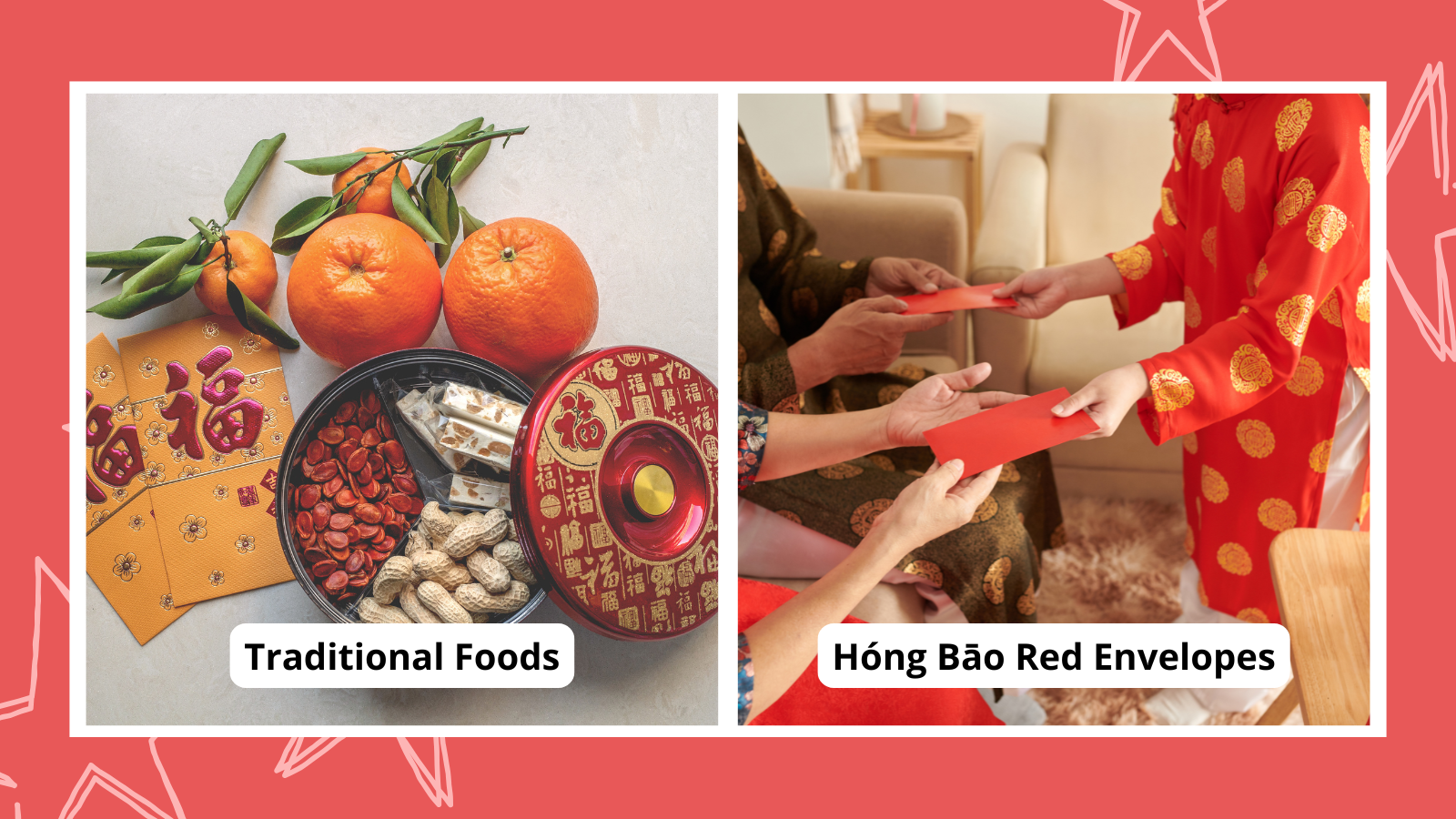
In China and some other countries, a red envelope with cash inside is a traditional Lunar New Year gift for young (often unmarried) people. The red symbolizes luck and wards off evil, and the envelopes may also have gold decorations of lucky images or characters. Learn more about Hóng Bāo here.
Traditional Foods
These foods and dishes are important parts of many Lunar New Year feasts in different countries. Follow the links to find out more about each one. (Note that many of these foods are eaten in multiple countries and cultures, each of which has their own name for them.)
- Lucky fruit, especially mandarin oranges
- Dumplings
- Longevity noodles
- Glutinous rice cakes (Nian Gao in Chinese, banh tet/banh chung in Vietnamese)
- Spring rolls
- Tangyuan (sweet rice balls)
- Tteokguk (떡국) (sliced rice cake soup)
- Watermelon seeds
- Xoi Gac (red sticky rice)
- Steamed whole fish
Teacher Tip: Invite students to compare Lunar New Year traditions with New Year celebrations in their own families and communities.
Teaching Lunar New Year Respectfully
Lunar New Year is an integral holiday to many Asian and Asian American people. Some of the traditions and practices may be unfamiliar to students and teachers. It’s important that as we teach about Lunar New Year, we avoid perpetuating stereotypes and negative perceptions about culture and practices. Below are some tips to help guide your instruction.
- Avoid treating Asia as having one culture: It’s important to highlight the diversity of people and traditions in the variety of Asian countries and Asian Americans residing in the United States.
- Highlight differences among Tet, Seollal, and Lunar New Year traditions.
- Use authentic books and sources: It’s important to always research the authors and sources of information, utilizing resources from individuals who are representative of those cultures and traditions.
- Encourage curiosity, not stereotypes.
Videos About Lunar New Year for the Classroom
Share the traditions and cultural significance of this holiday with your students using the videos below. (Always preview videos first to ensure they’re appropriate for your intended audience.)
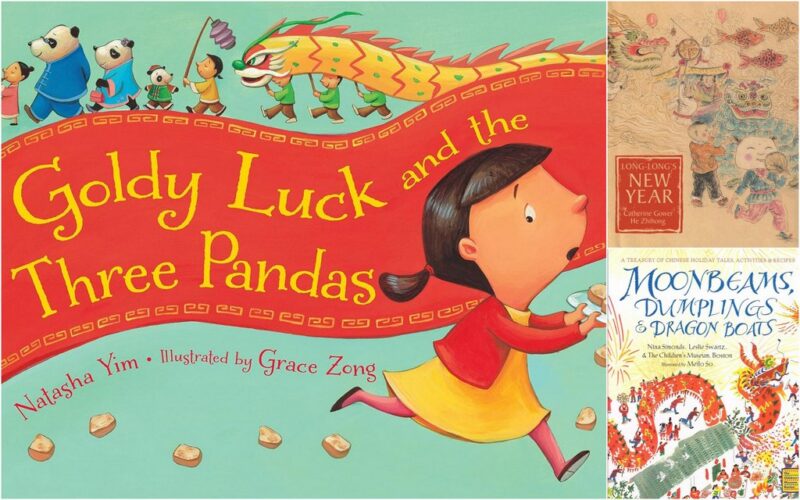
Lunar New Year 2027 Books, Activities, Crafts, and Lesson Plans for Kids
These books, activities, and craft projects are a fun way to prepare for Lunar New Year. Use them to decorate your classroom as the holiday approaches.
Chinese New Year Red Envelope Craft
One of the most popular Chinese New Year traditions is the hóng bāo, a red envelope of money given to young people. Make your own red envelopes with this template, and decorate them however you like.
Learn more: Red Envelope Craft
Chinese Dragon Puppet
Make these easy puppets, then use them to put on your own Dragon Dance!
Learn more: Chinese Dragon Puppet
Flickering Lantern Craft
Lanterns are another big part of Lunar New Year celebrations. Use plastic cups and tissue paper to create your own for the holiday.
Learn more: Chinese New Year Lights
Chinese Pellet Drum
The driving beats of drums are vital to Chinese music and dance. These pellet drums, called bolang gu, are easy to make and a lot of fun to play.
Learn more: Chinese Pellet Drum Craft
More Lunar New Year Lesson Plans and Learning Resources
Use these lesson plans to share more about Lunar New Year around the world with students of all ages.
- Learning About Lunar New Year at We Teach NYC
- Lunar New Year Lesson Plans for Young Learners and Teens at Cambridge University
- Chinese New Year Lesson at the British Council
- Lunar New Year at the History Channel
Get your free Lunar New Year Google Slides!
Don’t miss our free downloadable. Grab your full set of ready-to-go Lunar New Year for Kids Google Slides with kid-friendly explanations and discussion questions for your classroom.