Writing resumes is a skill, one that many adults struggle with. High school students, who are new to career planning, will need instruction and solid resume examples to get it right, whether they’re applying for a summer job or full-time position.
According to the Bureau of Labor Statistics, during the summer of 2026, 53.8% of teens and young adults (age 16 to 24) were employed. July is typically peak employment for teens. After high school graduation, most teens who want jobs have them; the unemployment rate for high school graduates was 4.3% in fall 2025.
A job isn’t the only way to get into the labor market. Students may pursue an internship that allows them to test out a field and make connections while they are young. The National Association of Colleges and Employers predicts that this year, hiring of college interns is expected to increase, topping 5.6%. As students start looking for their first summer job, or applying for a full-time job or college internship, the resume is still the tool that will tell employers what they bring to the job. Check out these tips and tools for creating a 2026 market resume.
What High School Students Should Include on their Resumes
When you don’t have years of work experience to showcase, what should you include on your resume? Here are some experiences and resume sections students can include:
- Academic strengths.
- Extracurricular activities including clubs, sports, and volunteerism.
- Honors, awards, or other achievements.
- Leadership experience.
- Projects or gigs, including any internships.
- Skills including computer skills, languages spoken, and other “soft” skills.
- Hobbies and interests that are related to a job.
Resume Writing for Application Tracking Systems
First, help students narrow down their career options and understand the paths they can take after graduation by exploring post-high school options. Today’s resumes aren’t read by people, they’re read by A.I. or ATS, Applicant Tracking Systems. Help students build resumes that can make it through an ATS system:
- Use a clean, simple layout. A single column with clear headings and short text descriptions will be found and read easier than a fancy resume with graphics, sidebars, and fancy formatting.
- Use exact keywords. Review the job description for key words and make sure those words are in the resume in meaningful ways.
- Use words from the listing. If a job requires specific skills or credentials, include those in a resume, written out first, then including acronyms so the ATS can find what it’s looking for.
- Save in a simple file format. Save the document as a pdf or word file so the tracking system can read it easily.
A.I. Resume Writing Tips
A.I. is an inevitable part of job searching and resume writing (and reading). Companies are increasingly using A.I. to help with hiring, which can feel impersonal or intimidating to applicants. If students are writing a resume that will be read by A.I., use these tips to make sure it gets read:
- Simple formatting. Resumes should not include text boxes, graphics, columns, and logos. These aren’t easily read by A.I. systems. Similarly, keep the font and section headers simple. Sections for “Education,” “Skills,” and “Experiences” are short and clear.
- Save as the right file type. Save as a pdf or word file, those are the most easily read.
- Don’t stuff the document with key words. Identify key words for the job you want and incorporate those words into application materials, but don’t flood the application with them. Students can ask A.I. for key words that they may not think of to help them target their resumes for a specific job posting.
- Spell out acronyms. Write out all acronyms before shortening them because the A.I. will look for full terms first.
- Read it aloud. Read over the resume aloud to make sure it still speaks in the student’s voice.
Writing a Resume with A.I.
If students are using A.I. to write a resume, not just revise it, use these tips to make sure students are driving the process.
- Give detailed prompts. Students can tell their work history, experiences, and target jobs then ask A.I. for ways to describe their experiences.
- Quantify as much as they can. Even for young applicants, A.I. can help them quantify their impact. Did they run a high school club? Ask A.I. how to show their impact on this club. Of course, prompting A.I. this way may require that they go back and do some thinking to get the exact data to show what they accomplished.
- Double check. A.I. will fill space, so students must read over their resume to make sure A.I. didn’t make anything up.
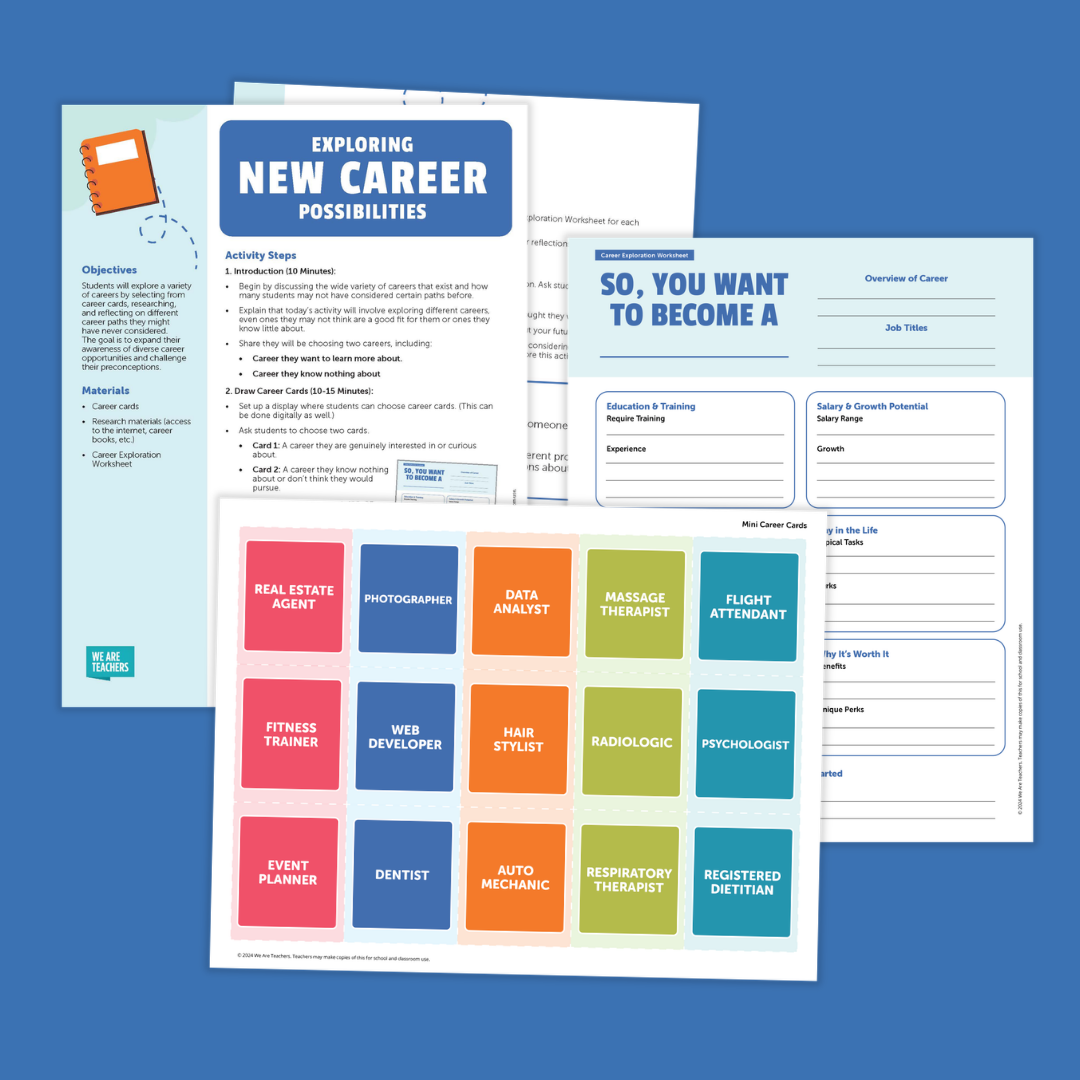
Do you have students who are still figuring out what they want to do? Use our free Career Exploration bundle to help them narrow down the options.
How to Support Your Students
Each student has a different starting point. Here’s how to support the various types of students you’ll work with.
Students with no work experience
Many high schoolers won’t have any job experience, and everyone has to start somewhere. Help a student with no formal work experience craft a resume by thinking through what they have done and the skills they’ve learned. Have they run a club? Organized a fundraiser? Volunteered? All of those experiences can go on a resume.
Internship applicants
An internship application should include the same information, and a cover letter explaining why they want this internship experience and what they bring to the work. Often, internship coordinators are looking for interest over skills–they know they’ll have to teach the skills students need on the job. So, clear communication and expressing genuine interest go a long way.
Students applying to volunteer experiences
Volunteering is a great way to build experience that can segue into a job. While a volunteer position may not require a resume, writing one is a good way to prepare for an informational interview. When a student engages in a volunteer experience, make sure they are thinking about how they will add this to their resume. What impact can they have? How can they quantify that impact? What specific skills could they learn that will build their future resume?
Students who are school leaders
Many high schoolers have had leadership experiences in clubs or teams. Help students explain these by thinking through their impact: how many students did they lead on the team? What specific actions did they do? Even tasks like managing a team’s social media or scheduling events for a club are real life jobs skills.
College applicants
Students who are applying to college can also make a resume even if it is not part of the application process. Thinking through their experiences can help them identify what to write in their essay, or if they apply for a job while they’re in college, having a resume ready to go can help them once they’re on campus.
Scholarship applicants
A scholarship application is a good way to hone some of these career writing skills as well, including writing a scholarship essay. Students must identify why they are a good fit for the scholarship, why an organization should invest in them, and communicate this clearly and professionally.
Learn more with our Ultimate Guide to College Scholarships.
Common Resume Mistakes
We’ve all seen bad resumes with formatting that looks off, spelling errors, and missing punctuation. Help your students avoid these common resume blunders:
- Using the same resume for every job. A standard resume just doesn’t cut it today. Students should think about each job they apply to and how to tweak their resume for that job’s requirements.
- Starting with an objective. An objective isn’t necessary anymore. Employers know applicants want the job; save space for experiences and skills.
- Listing what they did rather than what they accomplished: Have students review their verbs to make sure they are expressing what they achieved in their experiences, not just what they did.
- Filing space with buzzwords. A resume should not be filled with generic terms like “hardworking” or “detail-oriented.” Students can show how they demonstrate these traits in their experience summary.
- Typos and grammar errors. Run every resume through spell check and grammar checker to make sure there are no embarrassing mistakes.
- Getting too personal. High schoolers are learning about professionalism, so make sure they do not include any unnecessary personal information, like their home address or reference contact information. The goal of a resume is to share what skills they have, not where they live or who they know.
Resume Examples for High School Students
High school student resume templates and examples
These helpful resume templates and examples are perfect for high school students trying to land their first job or internship. This resource shares tips on how to make a great impression.
Resume with no experience: first job examples
Trying to land a job with no work experience? No problem! This template offers an ideal resume for high school student applicants who are entering the workforce for the first time.
Resume for a part-time job
For students looking for a part-time job, their high school resume needs to reflect their availability. This sample offers guidance for creating a resume that sends the right message.
Experienced high school student resume
Multiple work experience examples should be listed on an experienced high school student resume, so you might need to change the layout to make everything fit nicely.
McDonald’s resume
While this resume specifically highlights McDonald’s, it could easily be modified for any fast-food chain. The important thing is that students’ work history includes customer service and interpersonal skills and the ability to take orders, prepare food, accept payments, keep a restaurant clean, and more.
Customer service resume
Hiring supervisors are aware of and anticipate the fact that you may not have much work experience as a high school student, but this template will help tailor your resume to the demands specified in the customer service job description.
Camp counselor resume
If you’ve ever worked as a camp counselor (or similar leadership role), you likely have a well-rounded set of skills. This resource provides tips and examples of how to list your achievements and abilities in a way to stand out above the competition.
High school student sales resume
Writing a high school student sales resume can be challenging, especially if you have little professional experience. One solid strategy is having numbers on your side. This great template will help you get started!
Athlete resume
Depending on the student, athletics can make up a huge part of their high school experience. Should athletics be mentioned on a resume? If it’s relevant to the job or if a student was a stand-out athlete, gained leadership skills, or was recognized for their great attitude and/or outstanding abilities, this guide will show you how to include it.
High school graduate resume
Once students graduate, they’ll either be continuing their education or heading into the workforce (or both!). This great, straightforward high school resume is perfect when applying for their first real job.
College resume for high school students
The future is bright, which is why high school students need to focus on creating a college admissions resume that will really make an impression. These tips and samples offer clear guidance on how to make a college application truly shine.
High school student office worker resume
It’s alright if a high school office worker resume isn’t packed with noteworthy achievements. Instead, list any project that highlights your leadership qualities or relevant skills you’ve acquired along the way!
Scholarship resume
You already know that college tuition is expensive. There are plenty of scholarships out there, but the competition is fierce. This high school resume template focuses on academic achievements while highlighting skills, professional experience, and career objectives to help students stand out from the crowd.
High school student music resume
Of course you want to highlight any musical work you’ve done, whether it’s in school or professionally. Also highlight lessons, achievements, and interests that showcase your love and passion for music. This template will give you a good idea of where to begin!
Internship resume
It can be tough to find a decent internship as a college student, which is why high school students should start looking before they graduate. These types of jobs might not come with a paycheck, but the rewards are immeasurable in terms of experience. This template offers tips for writing a strong resume for an internship position.
Ready for more career education resources? Check out the We Are Teachers Career Hub for virtual field trips, resources, and more.
And, want more articles like this? Be sure to subscribe to our free newsletters!