
Dear We Are Teachers,
Our principal recently announced that during parent-teacher conferences, we’re only allowed to share “positive feedback.” If there’s a concern—academic, behavioral, or otherwise—we’re supposed to keep it to ourselves and let the parents “enjoy a celebration of their child.” I get wanting to highlight strengths, but I also believe parents deserve an honest picture of how their kid is doing. What’s the point of a conference if I can’t address areas of growth? I feel like I’m being asked to sugarcoat reality, and it doesn’t sit right with me. How do I balance being truthful with respecting my principal’s directive?
—Positivity Prisoner
Dear P.P.,
Can I make a guess here? My guess is that principals have heard feedback way too many times about parents being thrown off-guard by getting bad news at parent conferences. So, principals have told teachers to avoid the bad news—for now—and let student conferences serve as positive relationship-building opportunities. I don’t blame principals for that.
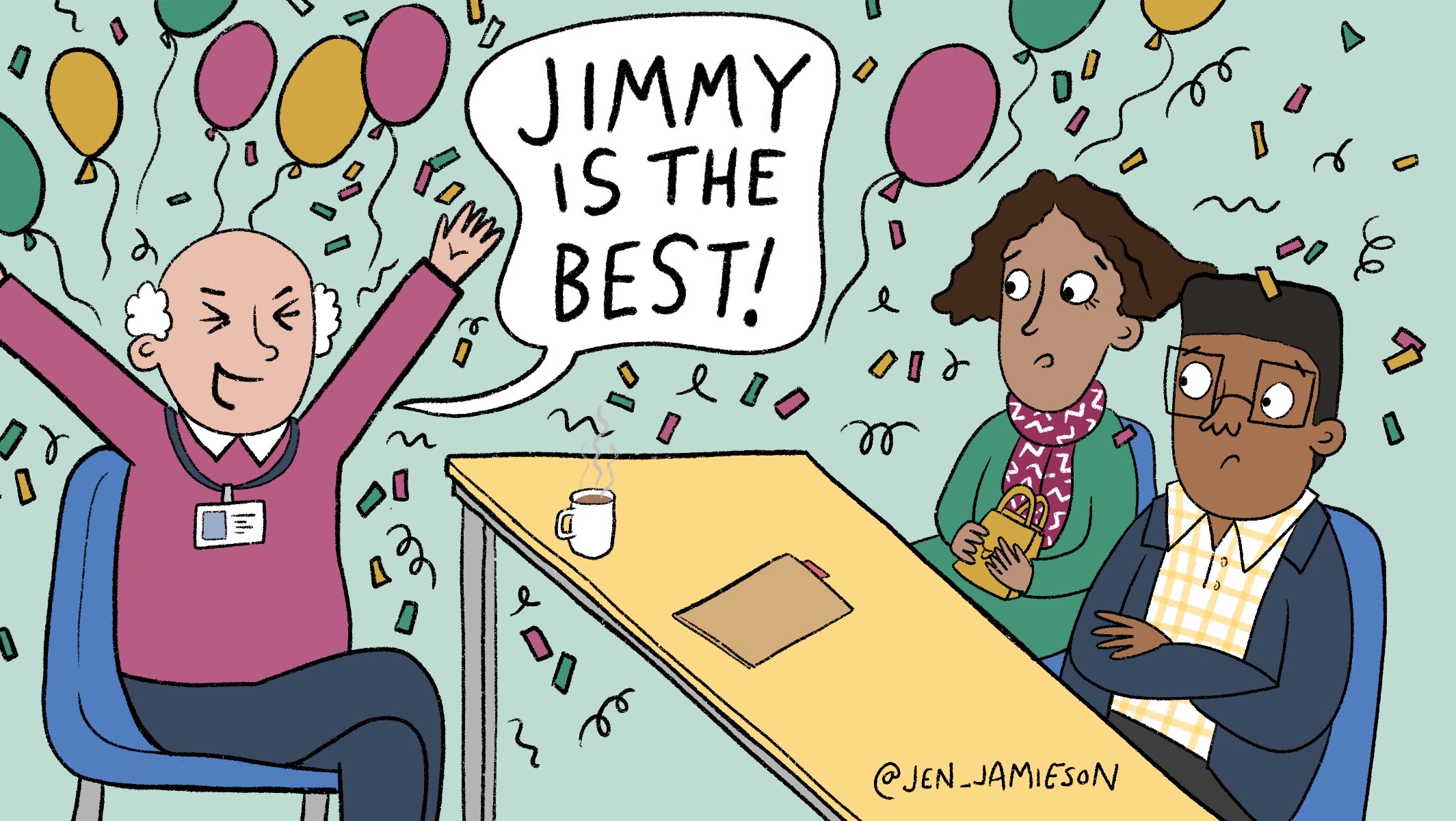
But here’s the issue: Conferences need to be a two-way conversation, not a shower of gold star confetti. Parents deserve an honest, balanced picture of how their child is doing—including both strengths and areas for improvement.
That said, your principal gave a directive, and I personally don’t believe this is one worth pushing back on. Instead, you’ve got to walk a fine line. Here’s how to navigate without getting yourself in hot water:
- Lead with the good. Even in a tough conference, parents hear you more clearly when you start with what’s working. (“Sally is a deep thinker who makes great connections …”).
- Reframe “concerns” as “next steps.” Instead of “They never turn in homework,” try “One area we’re building is consistency with homework. Here’s how I’m supporting them, and here’s how you can help at home.” That way you’re not “negative,” you’re growth-oriented.
- Follow up outside of conferences. A quick phone call, email, or note home is often a better place for the harder stuff anyway. If your principal wants conferences to be 100% sunshine, you can respect that and still keep parents in the loop through other channels.
Now, there’s one caveat to all of this: Student conferences cannot be the time parents are first hearing about serious behavioral or academic concerns. Think about it: If you haven’t contacted them at all before about a big concern, you can’t drop that on them in a 15-minute meeting slot and then be like, “Welp, bye!” If you’ve been waiting for student conferences to have the first conversation about serious disrespect or big learning gaps, don’t. Instead, like my last point, let them know you’ll be following up ASAP about something you’ve noticed that requires a bit more time than your 15 minutes.
Dear We Are Teachers,
I teach 9th grade, and my students have no idea how to take notes. Their stamina is so low, they shut down at anything beyond fill-in-the-blank (which to me is more like Mad Libs than actual note-taking). I’ve tried modeling, scaffolding, even giving sentence starters, but it feels like I’m dragging them uphill every step of the way. How do you teach kids this very basic skill without losing your mind? Am I wasting my time?
—Out of Notes (and Patience)
Dear O.O.N.A.P.,
You’re not wasting your time — you’re teaching a foundational skill. The tricky part? A lot of students come to high school without ever being explicitly taught how to take notes. They’re used to fill-in-the-blank sheets because that’s all they’ve known.
Here’s how to build their stamina (and your sanity):
- Start ridiculously small. Model taking notes on just a paragraph or two. Then stop, have them try, and compare. Scaling up gradually helps them realize it’s doable.
- Teach multiple styles. Cornell Notes, boxing, mapping, charting—let them try out different methods of note-taking (here’s a list of 11 different types). Some kids thrive with visuals, others with outlines.
- Focus on purpose, not format. Have them answer: Why are you taking these notes in class? (To review? To prep for a quiz? To capture big ideas?) Why might people need to know how to take notes for their jobs? Architect, influencer, NFL head coach, etc. The “why” makes the “how” less painful.
- Check for transfer. Instead of grading the notes themselves, use them in a short quiz or reflection. When they see their notes work, the buy-in grows.
Good on you for putting in the work. You’re investing in a skill that their college professors and bosses (and honestly, maybe even their partners) will silently thank you for.
Dear We Are Teachers,
After 15 years teaching high school, I made the switch to middle school. It’s been great apart from one thing: My 6th graders’ executive functioning skills are basically nonexistent. If I give verbal directions, it’s like yelling into the void. “Open a new Google Doc.” “Wait—how? Where? Like this?” Unless I’m standing behind each kid pointing to their screen and affirming them six times in a row, nothing gets done. It’s exhausting, and I can’t be a human GPS for 30 students all year. How do I help them become more independent without totally losing it?
—Directions Go in One Ear and Out the Chromebook
Dear D.G.I.O.E.A.O.T.C.,
Weird, my 6th graders always clocked verbal directions the first time.
Hahahahahaha.
Welcome to the land of still-developing frontal lobes, my friend. All jokes aside, you can’t magically rewire their brains (please do not attempt), but you can make things easier on yourself and your students. Here’s how:
- Chunk it, always. Give one step, let them do it, then give the next. Over time, combine steps to build stamina.
- Use written + visual cues. Directions on the board, in Google Classroom, or with icons (like a Doc symbol) stick better than words floating in the air.
- Make routines do the heavy lifting. If “open a Doc” is a constant, create a class ritual: same place, same clicks, same expectations. Eventually it becomes muscle memory.
- Practice independence. When a student asks “Wait, how do I—?” redirect: “Check the board” or “Ask your table first.” At first it feels mean; later, it feels like freedom.
- Make games out of verbal directions. As a brain break, play games like Simon Says or have students follow verbal directions to draw something without telling them what the finished product is. This will build their listening skills and their independence.
- Celebrate tiny wins. When your class actually follows a two-step direction without intervention, stop and cheer. Positive reinforcement goes a long way.
Remember, it’s not you—it’s their age. Unlike the high schoolers you’re used to, 6th graders’ executive functioning is still under construction. But with consistency and patience (and maybe a deep breath before answering the 50th “Wait, what?”), you can build independence one step at a time.
Do you have a burning question? Email us at [email protected].
Dear We Are Teachers,
When I accepted my current teaching position, I was promised regular classroom support—an aide to help with behavior, interventionists for struggling students, and a mentor teacher for guidance. Months into the school year, none of that has materialized. Instead, I’m drowning in paperwork, managing behavior issues solo, and scrambling to meet impossible demands with zero backup. Every time I ask about the promised support, I get vague excuses about “staffing shortages” or “budget cuts.” I’m exhausted and feeling duped. How do I advocate for myself without putting a target on my back?
—Supportless and Stressed