Literature Circles Classroom Resource Kit
$12.99
Description
Transform independent reading into meaningful, student-led conversations that build comprehension, critical thinking, and a love of reading. 📚💬
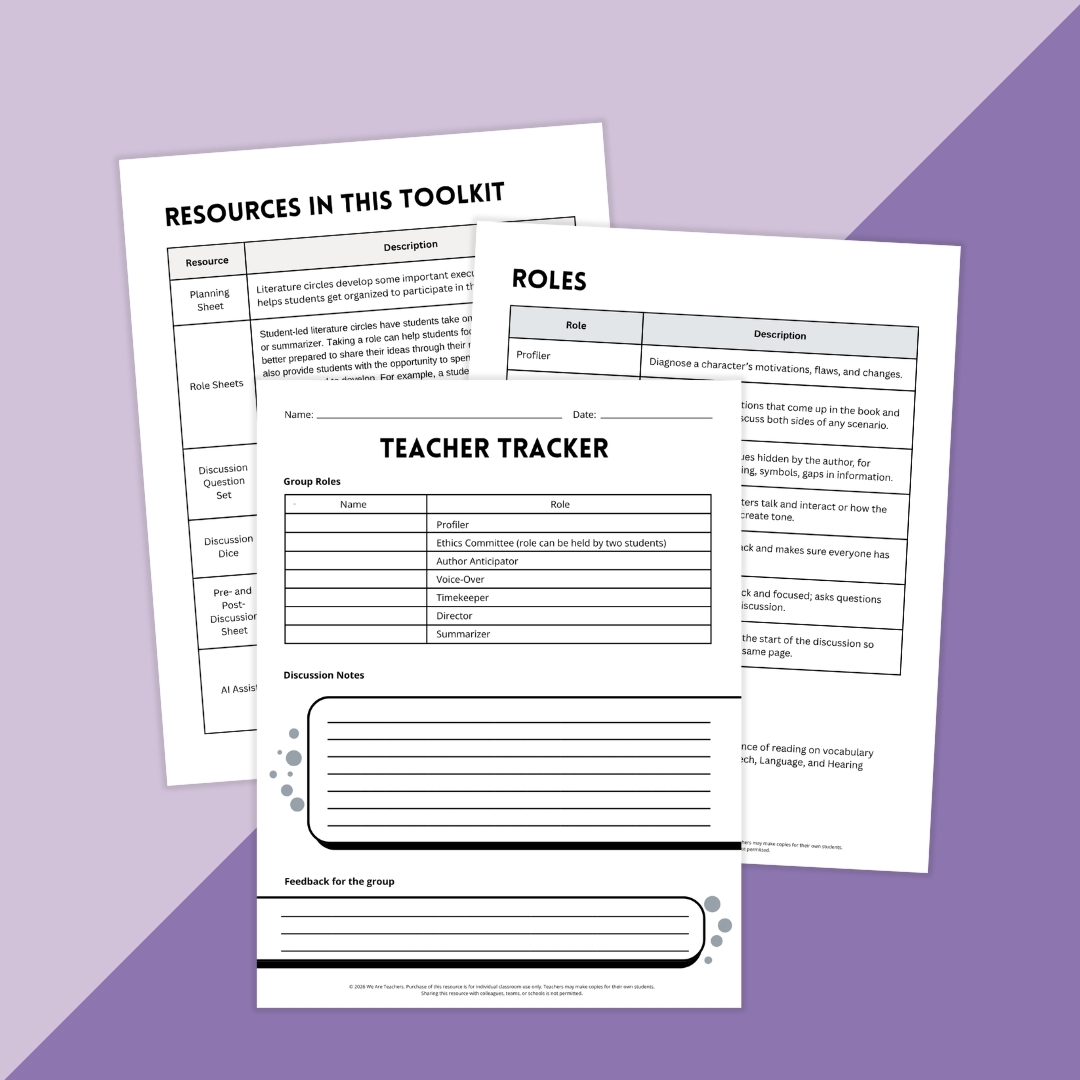
This Literature Circles Classroom Resource Kit gives teachers everything they need to launch, manage, and sustain engaging literature circles in middle and high school classrooms. Designed to help students take ownership of their reading and discussions, this resource provides structured roles, discussion tools, planning sheets, and reflection activities that encourage deeper analysis, collaboration, and independent thinking. Literature circles help students move beyond simply reading a text to actively discussing themes, characters, author’s craft, and ideas with their peers.
What’s Included in the Literature Circles Resource
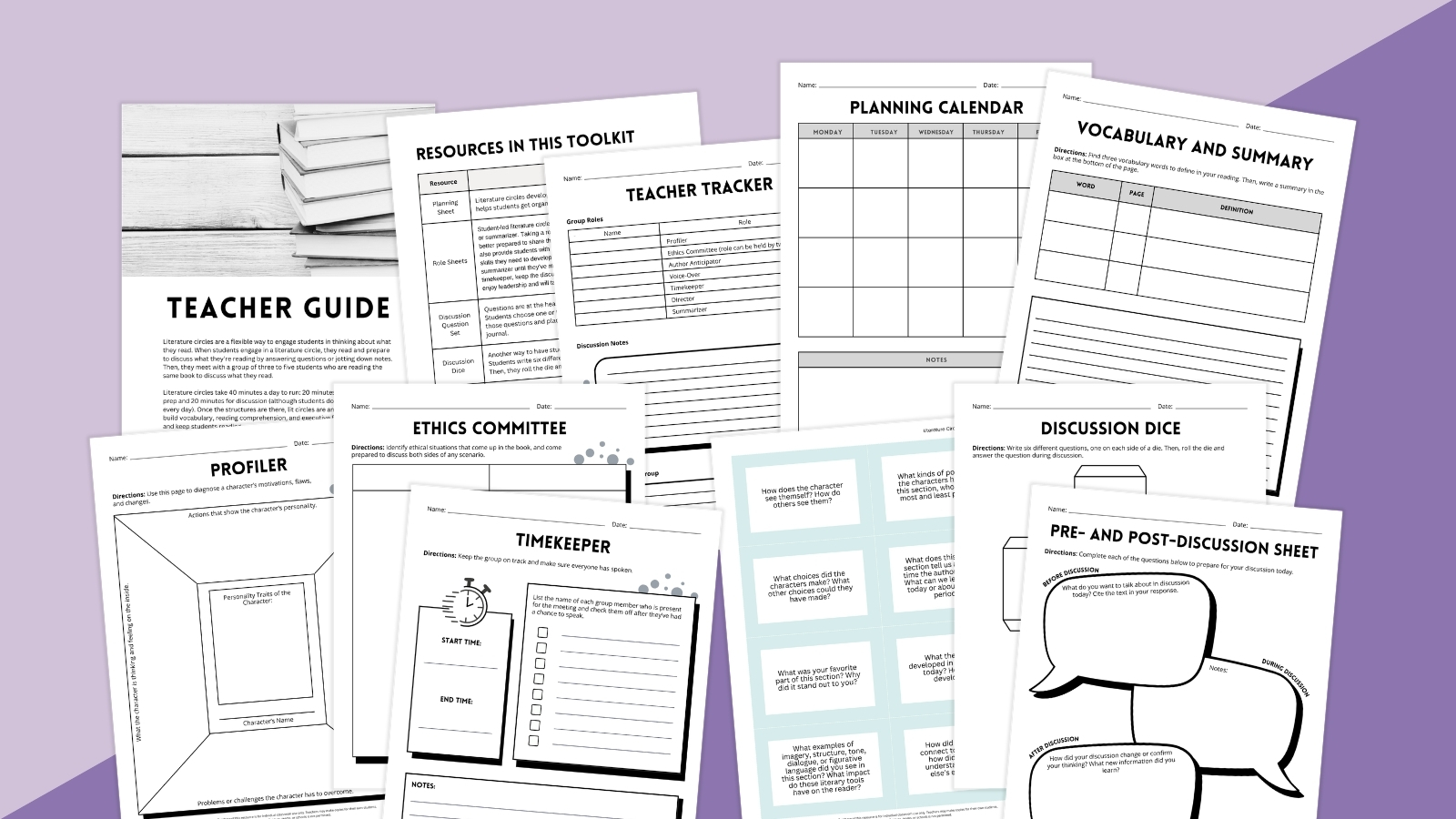
This resource supports student-led reading discussions while building reading comprehension, vocabulary, executive functioning, and speaking and listening skills. The digital download includes:
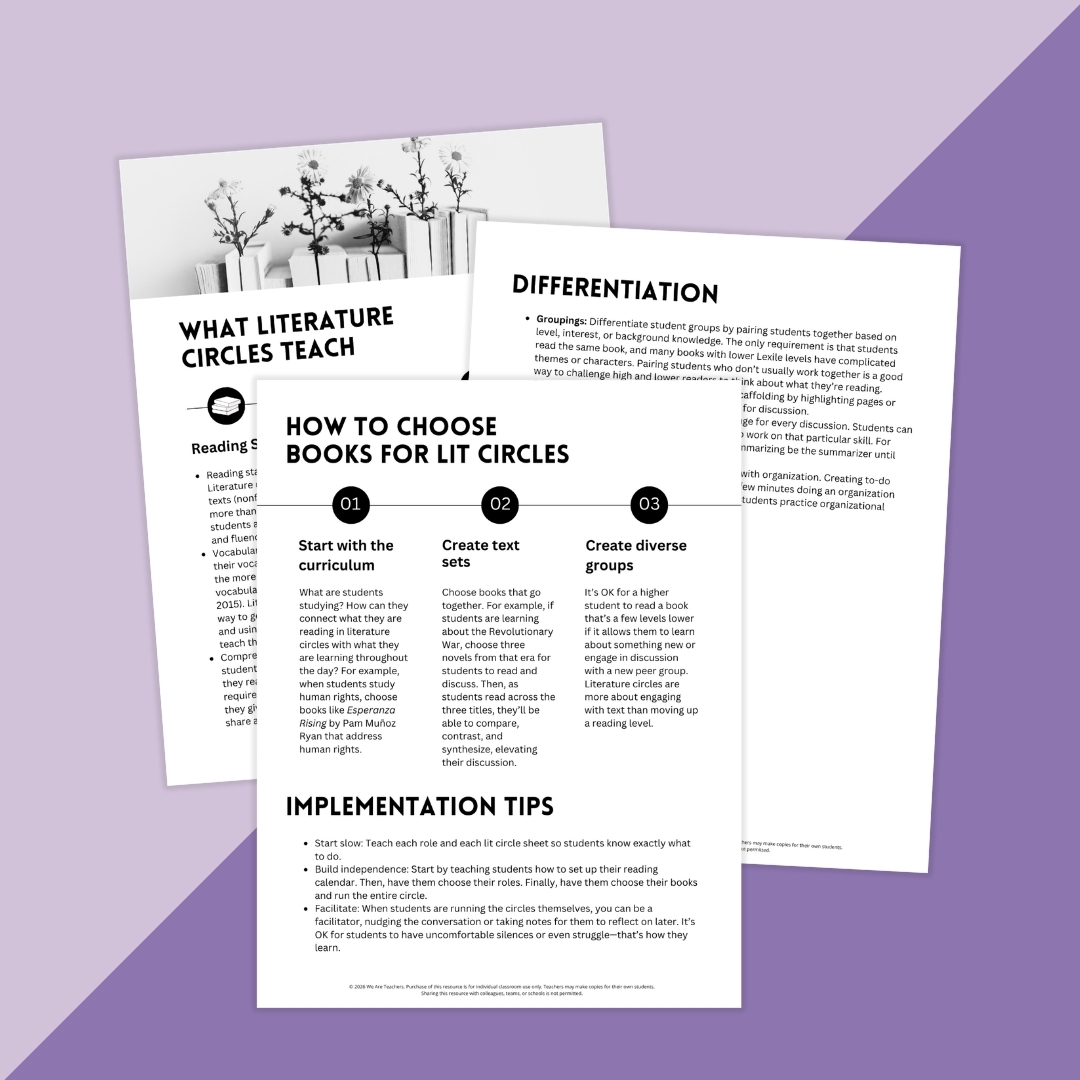
✔ Teacher guide with implementation tips and differentiation strategies
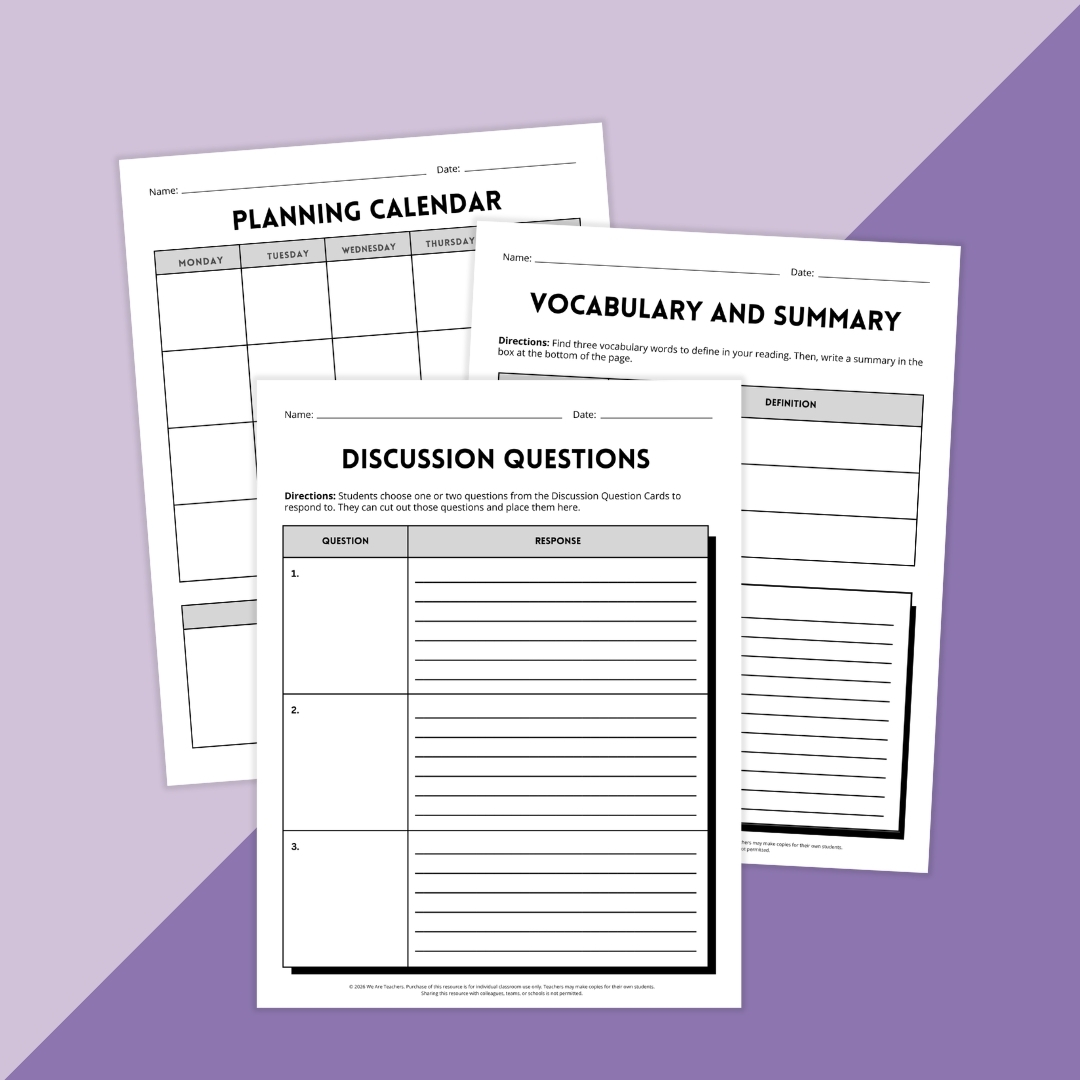
✔ Literature circle planning calendar
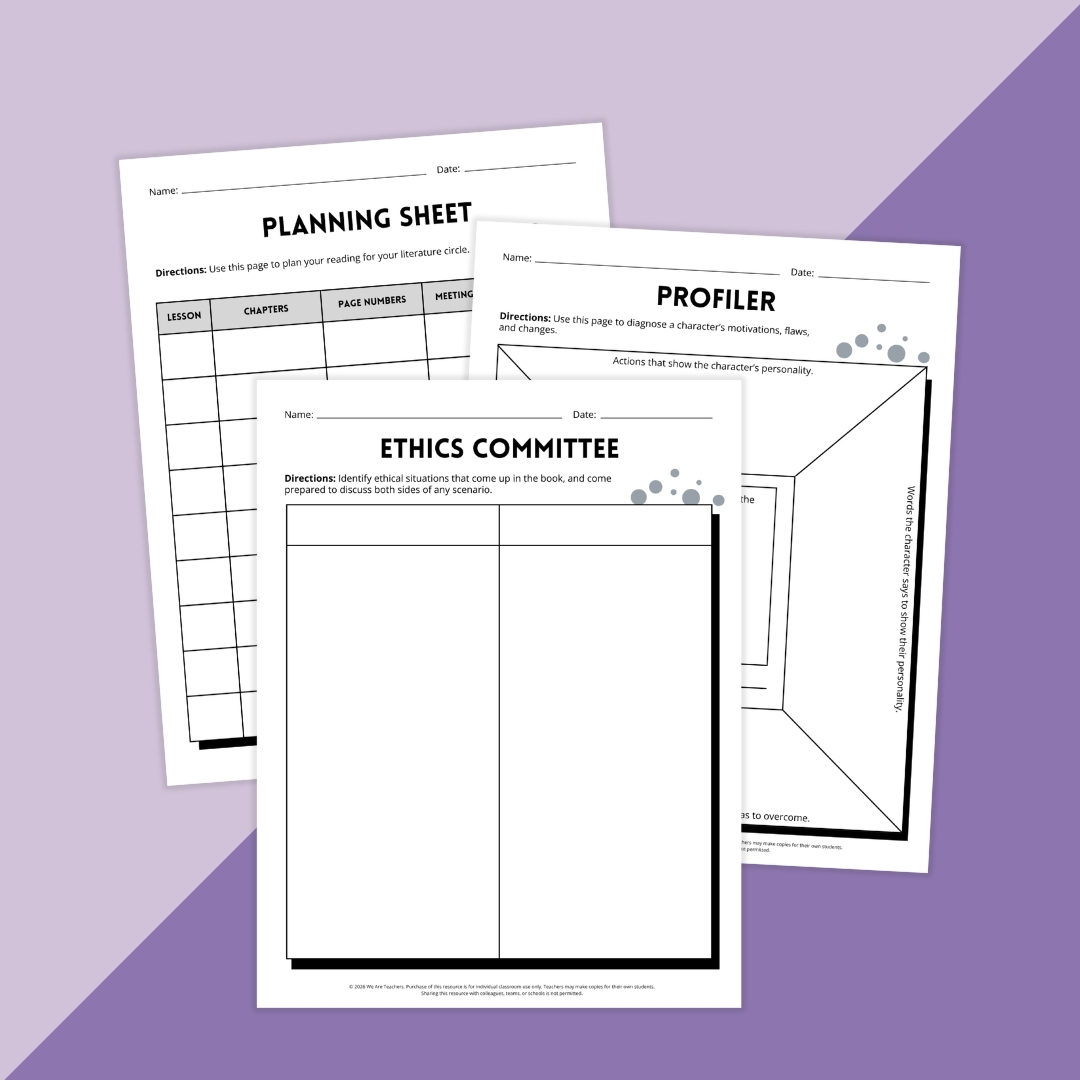
✔ Student planning sheets
✔ Teacher tracking forms
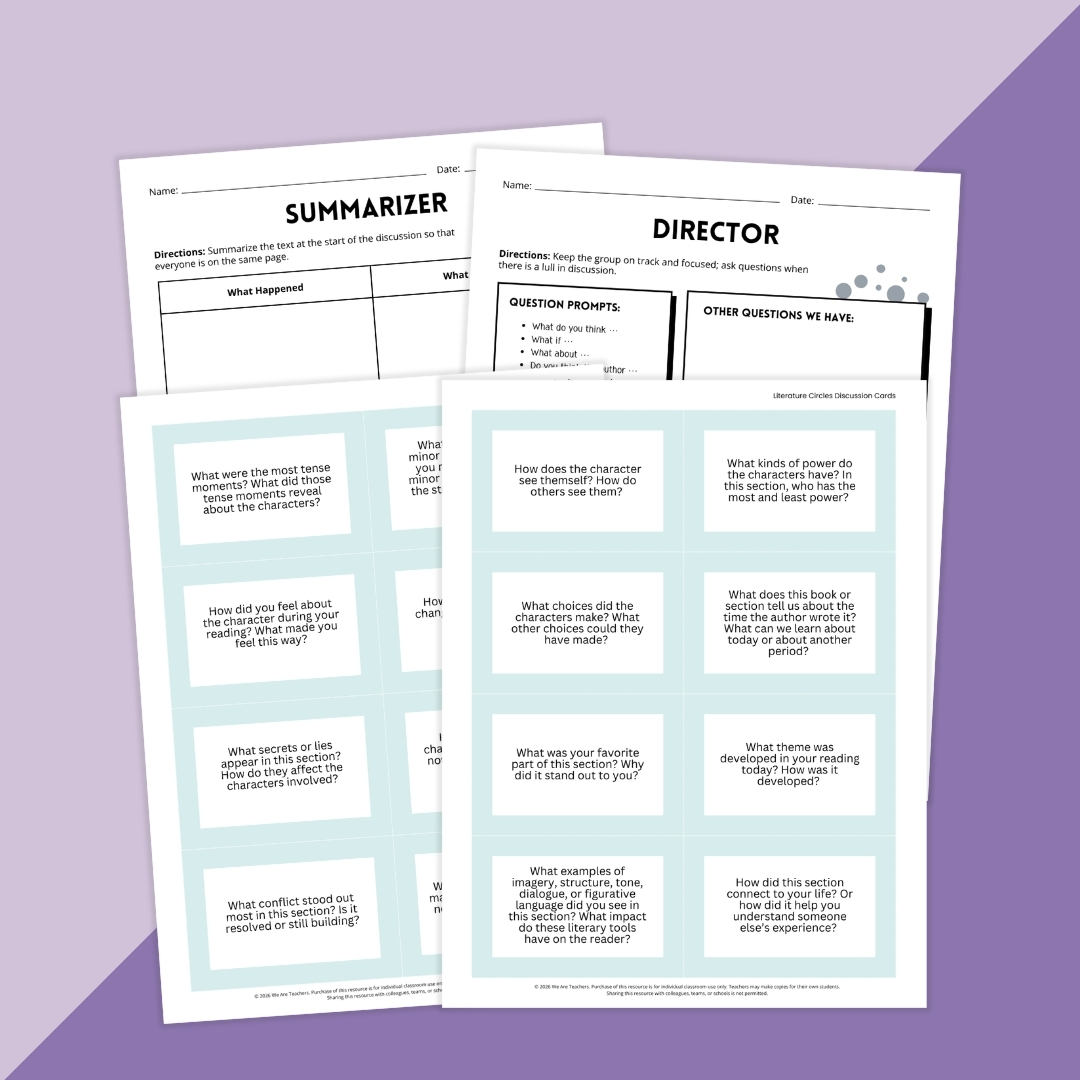
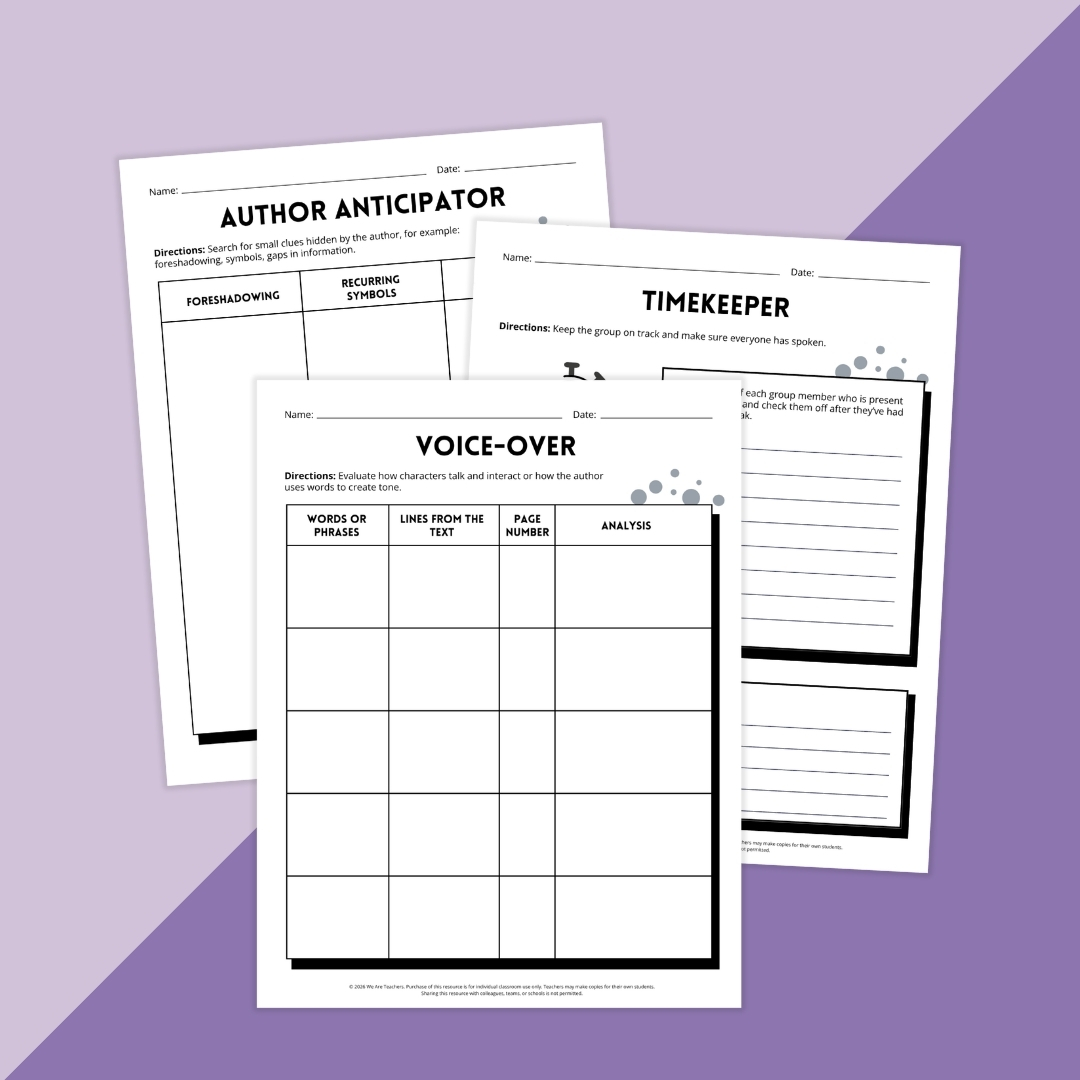
✔ Literature circle role descriptions and worksheets for each role: Profiler, Ethics Committee, Author Anticipator, Voice-Over, Timekeeper, Director, and Summarizer
✔ Vocabulary and summary worksheets
✔ Literature circle discussion cards
✔ Discussion response worksheets
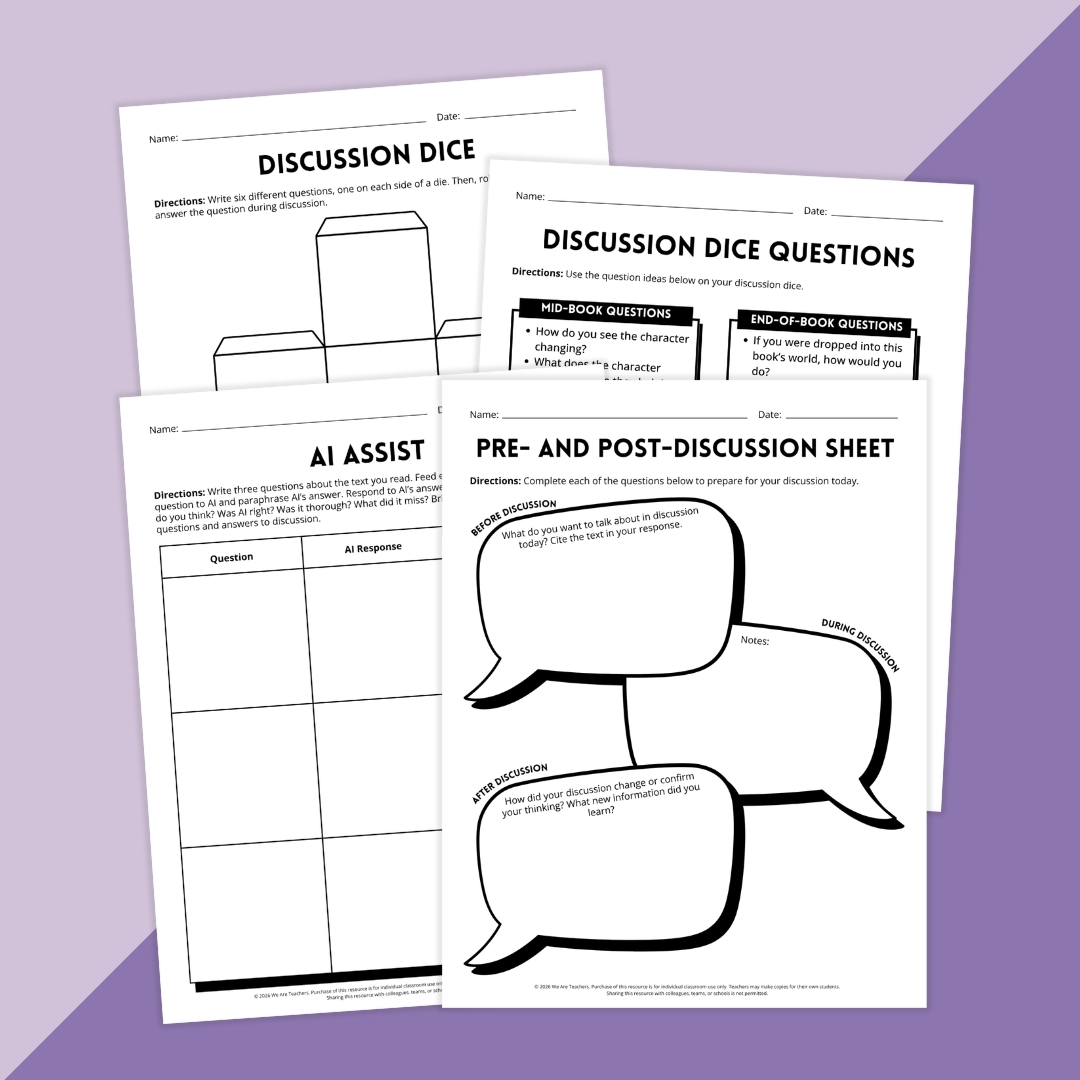
✔ Discussion dice activity
✔ Discussion dice question bank
✔ Pre- and post-discussion reflection sheets
✔ AI Assist critical-thinking activity
✔ Ready-to-use discussion prompts and reflection tools
Classroom Ideas
This literature circle resource works well in ELA classrooms, novel studies, book clubs, reading workshops, intervention groups, and independent reading programs.
Build student ownership
Give students responsibility for planning, preparing, and leading discussions while developing independence and accountability.
Deepen comprehension
Use discussion roles and prompts to encourage students to analyze character development, themes, conflicts, author’s craft, and textual evidence.
Strengthen discussion skills
Provide structured opportunities for students to practice active listening, asking questions, supporting ideas, and building on peers’ contributions.
Develop executive functioning
Support organization, planning, self-monitoring, working memory, and time-management skills through reading calendars, planning sheets, and discussion preparation activities.
Expand vocabulary
Encourage students to identify, define, and discuss new vocabulary encountered in authentic reading contexts.
Differentiate instruction
Assign roles strategically to support individual student growth while allowing students to practice specific literacy skills over time.
Promote critical thinking
Engage students in text analysis, ethical discussions, literary interpretation, and evidence-based conversations that extend beyond surface-level reading.
✨ The result?
Students become more engaged readers, thoughtful discussion participants, and independent learners while developing the literacy and communication skills needed for long-term reading success.