
Looking for simple sight word activities that work? These ideas will give students the practice they need with reading and spelling high-frequency words through games, movement, and hands-on fun.
What are sight words?
As the name suggests, sight words are any words a reader knows how to read automatically, “by sight.” This happens when the brain successfully stores the letters and sounds in the word and associates them with its meaning, a process called orthographic mapping.
Any word can become a sight word—one of the first for students is often their own name! To help students read and write fluently, the sight words we usually prioritize for instruction and practice are high-frequency words—those common words that come up again and again in print.
FREE PRINTABLE
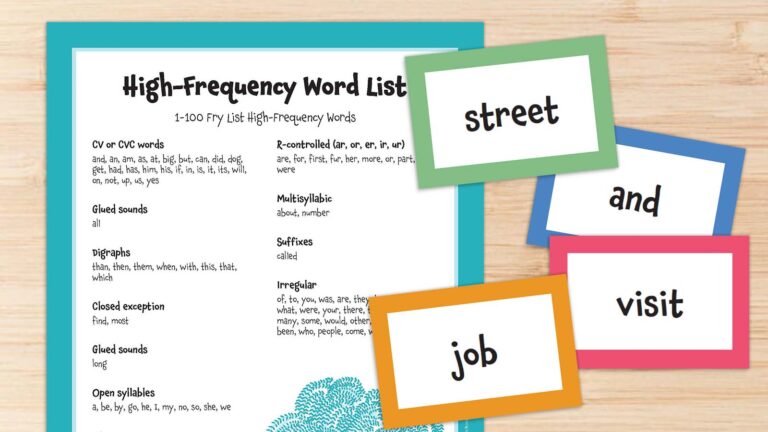
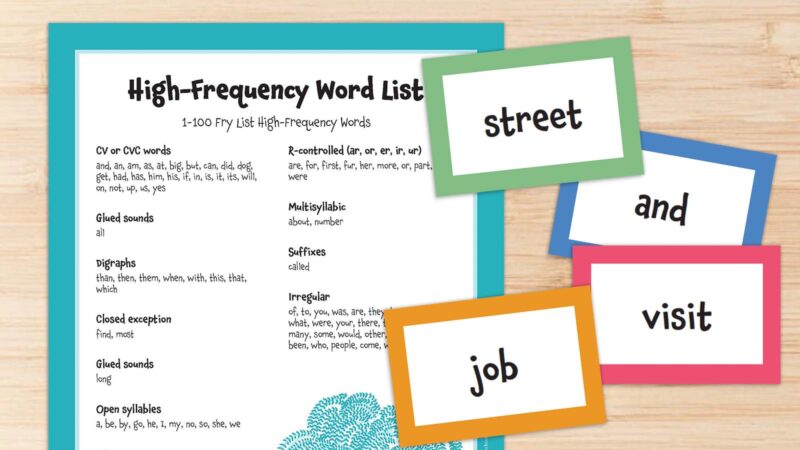
High-Frequency Words Bundle
This free bundle includes a printable word list plus word cards, perfect for classroom activities that teach high-frequency words.
Sight Words vs. Heart Words
We caught up with Susan Jones (@susanjonesteaching), a 1st grade teacher in Massachusetts who loves to share ideas, activities, and advice for K–2 teachers, to get some expert tips for planning sight word activities for kids. The conversation immediately went to “heart words.”
Susan explains heart words like this: “When teaching students to read sight words, instruction should focus less on memorization and more on decoding individual sounds. Many of the high-frequency words students encounter are actually decodable! If they aren’t fully decodable, then we can teach them the part of the word that needs to be memorized, so they don’t need to memorize the whole word. We call this the ‘heart part.’”
For example, in the word “said,” the ‘ai’ represents a short ‘e’ sound, which isn’t one of the common sounds of this vowel team. The ‘ai’ will always be the “heart part.” In the word “is,” the /z/ sound will likely be a temporary “heart part” for kids, until they learn that /z/ is one of the common sounds the letter ‘s’ represents.
Susan went on to talk about how sight word instruction should line up with phonics instruction and practice, encouraging teachers to use skills students are already learning to highlight high-frequency words whenever possible. For example, she says, “If students have learned short ‘a,’ short ‘i,’ and the letters m, t, n, d, they can read the words am, at, and, in, and it.” These high-frequency words don’t need special treatment as heart words, and, with practice, they can easily become sight words for kids.
Teacher Tips for Introducing New Words
Let’s say it again for the people in the back: Sight word instruction should emphasize the connection between the letters and sounds in words!

Free Printable Elkonin Boxes
Use these free printable Elkonin boxes with writing lines for words with 2, 3, 4, and 5 phonemes, plus step-by-step instructions on how to use them.
With this in mind, Susan says, “Phoneme-grapheme mapping is going to be the most effective activity for students to learn to read and spell new sight words. For this, students will say the word aloud, then tap the sounds they hear in the word. ‘Said,’ for example, has 3 sounds (/s/ /e/ /d/). They will use sound boxes or draw lines to show that the word has three sounds. When they spell this word, they will need to remember that the /e/ sound they hear is actually spelled ‘ai,’ and they will put a heart over that part of the word. Last, they will write it and read it back a few times.”
Of course, once you’ve introduced a word to students, they need repeated exposure to it before it can truly become a “sight word.” We’ve pulled together a list of easy and fun sight word activities that emphasize sounds and spellings, including one of Susan’s favorite games, below.
Sensory and Hands-On Sight Word Activities
1. Drive a sight word
Best for: Guided small groups
Prep: Medium (5–10 minutes)
Materials: Butcher or poster paper, LEGO bricks, toy cars
Directions: Write previously taught sight words all over the paper. Place bricks under each word to match the number of sounds. Have students drive a toy car by the bricks to say each sound and read the word.
2. Write with shaving cream

Best for: Guided small groups
Prep: Low (<5 minutes)
Materials: Trays, shaving cream, cleanup wipes
Directions: Kids love sight word activities that get a little messy! Spray shaving cream onto a tray and tell students a word. They write the word and then “erase” it by smearing the shaving cream.
3. Smush sight words
Best for: Guided small groups or literacy centers
Prep: Low (<5 minutes) once mats are made
Materials: Prepared mats in sheet protectors, play dough
Directions: Prepare mats with a sight word word printed above boxes for each sound, slipped in a sheet protector. So, the word “they” would have boxes for ‘th’ and ‘ey,’ Have students put a small piece of play dough on each sound box. As students read each sound, they smush the play dough, then say the whole word.
Buy it: Set of sheet protectors and 10 pack of Play Doh at Amazon
4. Map words with a magnet wand
Best for: Guided small groups or literacy centers
Prep: Low (<5 minutes) once mats are made
Materials: Prepared mats in sheet protectors, magnet wands and chips
Directions: Prepare mats with sight words and sound boxes as described above in sheet protectors. Have students move a magnetic chip to each sound as they read the sounds in the word. Then they read the whole words as they collect the chips again. Dragging those magnetic dots around is so satisfying!
Buy it: Set of sheet protectors and magnetic wand and chips at Amazon
5. Pop it, learn it!
Best for: Guided small groups, whole-group review
Prep: None
Materials: Pop-Its, whiteboard or cards to display sight words
Directions: Use Pop-Its to reinforce reading each part of a word. Write or display a sight word. For example, “said” becomes ‘s’ ‘e’ ‘d.’ Have students press a “button” on the Pop-It as you say each sound in the word together, then say the whole word.
Buy it: Set of Pop-Its at Amazon
6. Write words on a sensory bag
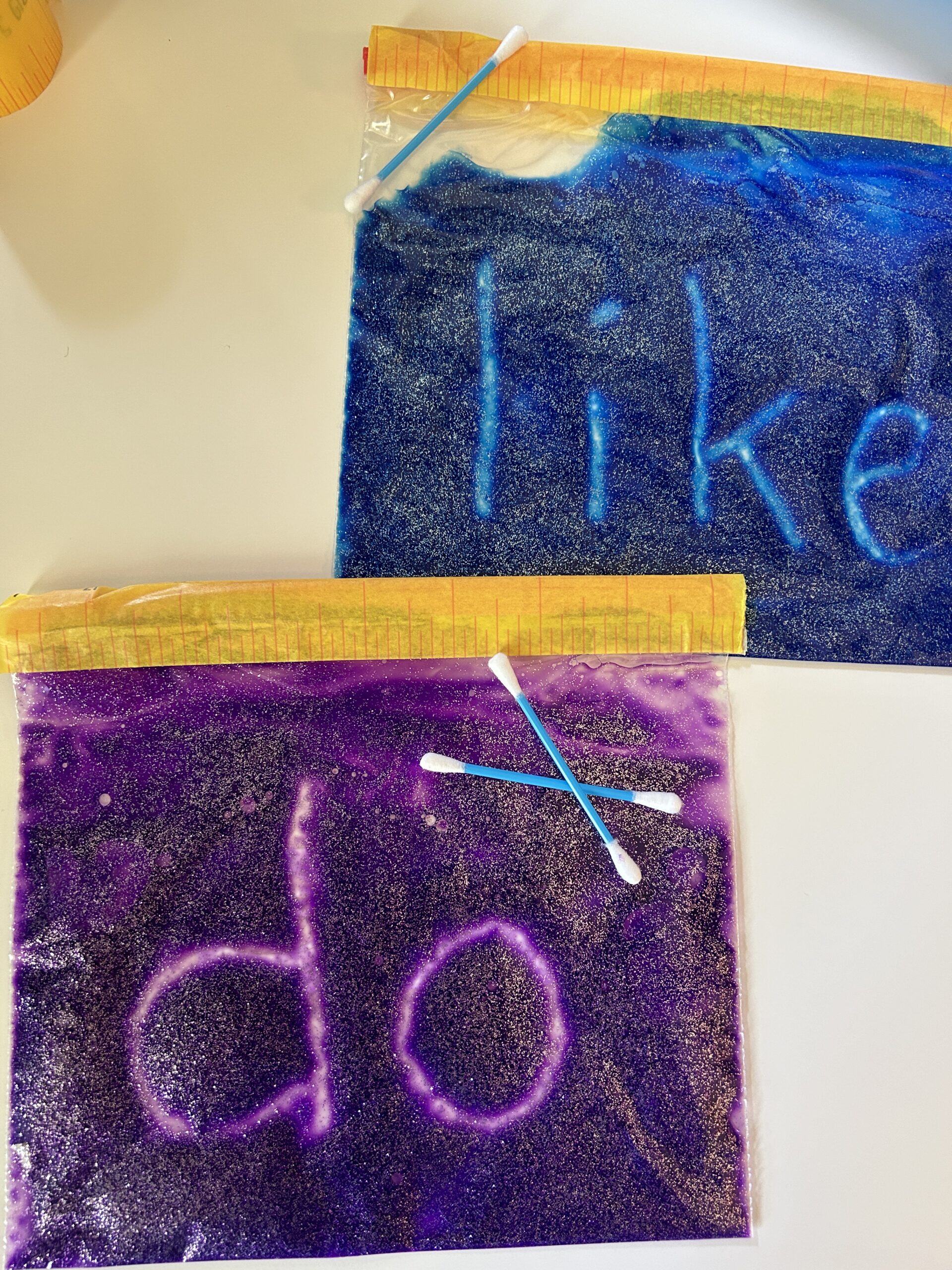
Best for: Small groups or literacy centers
Prep: Medium (5–10 minutes)
Materials: Zip-top bags, kid-safe paint, cotton swaps, sight word cards
Directions: Fill each zip-top bag with a small amount of kid-safe paint and seal well. Say or display sight words to have kids practice writing them with their finger or a cotton swab. When they’ve written the first word, they can “erase” it and write the next one.
7. Write words in sand
Best for: Guided small groups, literacy centers, early finishers
Prep: Medium (5–10 minutes) the first time you use this
Materials: Pencil boxes, sand, sight word list or cards
Directions: Put a layer of sand in a pencil box. Have students open the box and write the sight words in the sand with their finger. Using the pencil boxes keeps this activity clean and allows students to use it when they have extra time to fill.
Buy it: Set of pencil boxes at Amazon
8. “Plant” words in play dough
Best for: Guided small groups, literacy centers
Prep: Low (<5 minutes)
Materials: Clay or dough, magnetic letters, sight word cards
Directions: Roll out a strip of modeling clay or dough for each student. Have them “plant” magnetic letters in the clay to spell sight words while saying the sounds.
Buy it: Play Doh and magnetic letters at Amazon
Sight Word Games
9. Play Susan’s Find the Fish game
Best for: Guided small groups, partner play
Prep: Low (<5 minutes)
Materials: 10–12 index cards with sight words to review, small paper fish
Directions: To play this game, Susan says to set out the cards and hide the fish under one while students aren’t looking. She explains, “They try to find the fish by reading the sight word aloud correctly and flipping the card over to see if the fish is underneath. They keep playing until the fish is found. Then, shuffle the cards and hide it again. It is fun and effective!” If students are playing with partners, they can take turns hiding the fish and seeing how many cards it takes for their partner to find it.
10. Play a magnetic-tile board game
Best for: Guided small groups, literacy centers
Prep: Low (<5 minutes)
Materials: Dry-erase marker, magnetic tiles, die, game pieces
Directions: Write sight words on magnetic tiles. Set up a board game by linking the tiles together to create a path. Then, have students roll a die and move a piece around the path. They read the word they land on.
Buy it: Set of Magnetic Tiles at Amazon
11. Roll and write words
Best for: Literacy centers, partner play
Prep: Low (<5 minutes)
Materials: A recording sheet with blank writing boxes under each number 1–6, die, sight word cards or list
Directions: Roll, write, repeat. Students roll a die and write the sight word you’ve associated with the number on the die. For example, a 1 on the die is “to,” a 2 is “the,” etc. They can see which word “wins” by filling up its column first.
12. Play sight word Kaboom!
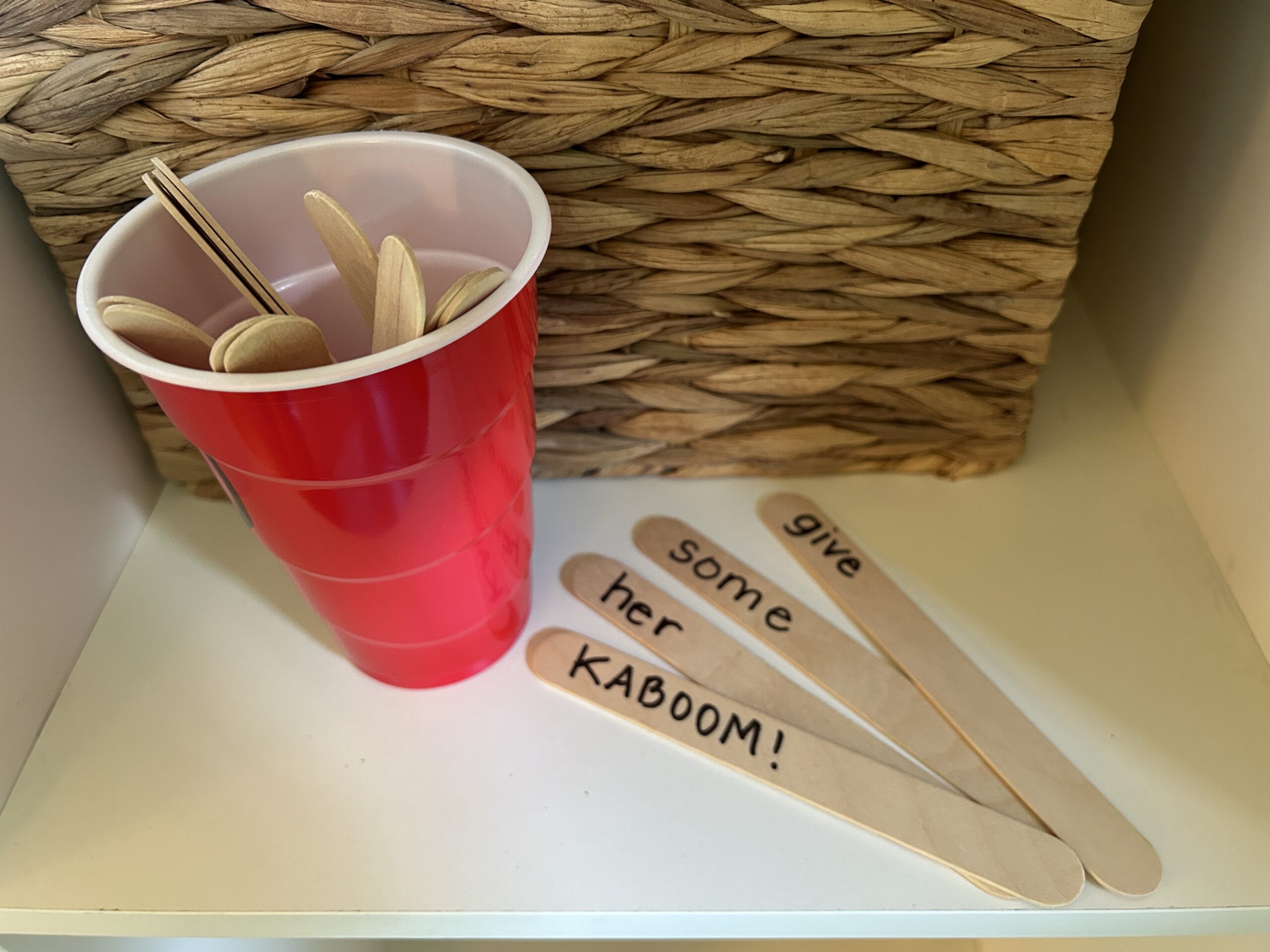
Best for: Whole group, guided small group, partner play
Prep: Low (<5 minutes)
Materials: Cup or can, sight words written on craft sticks + a few sticks with “Kaboom!”
Directions: Put all the sticks in a cup or can, word-end down. Have students take turns drawing a stick and reading the word. If they can’t read the word, the stick goes back in the bucket. If they pull a stick that reads “Kaboom!,” all the sticks go back in the bucket. This is fun for morning meeting.
13. Practice sight words by memory
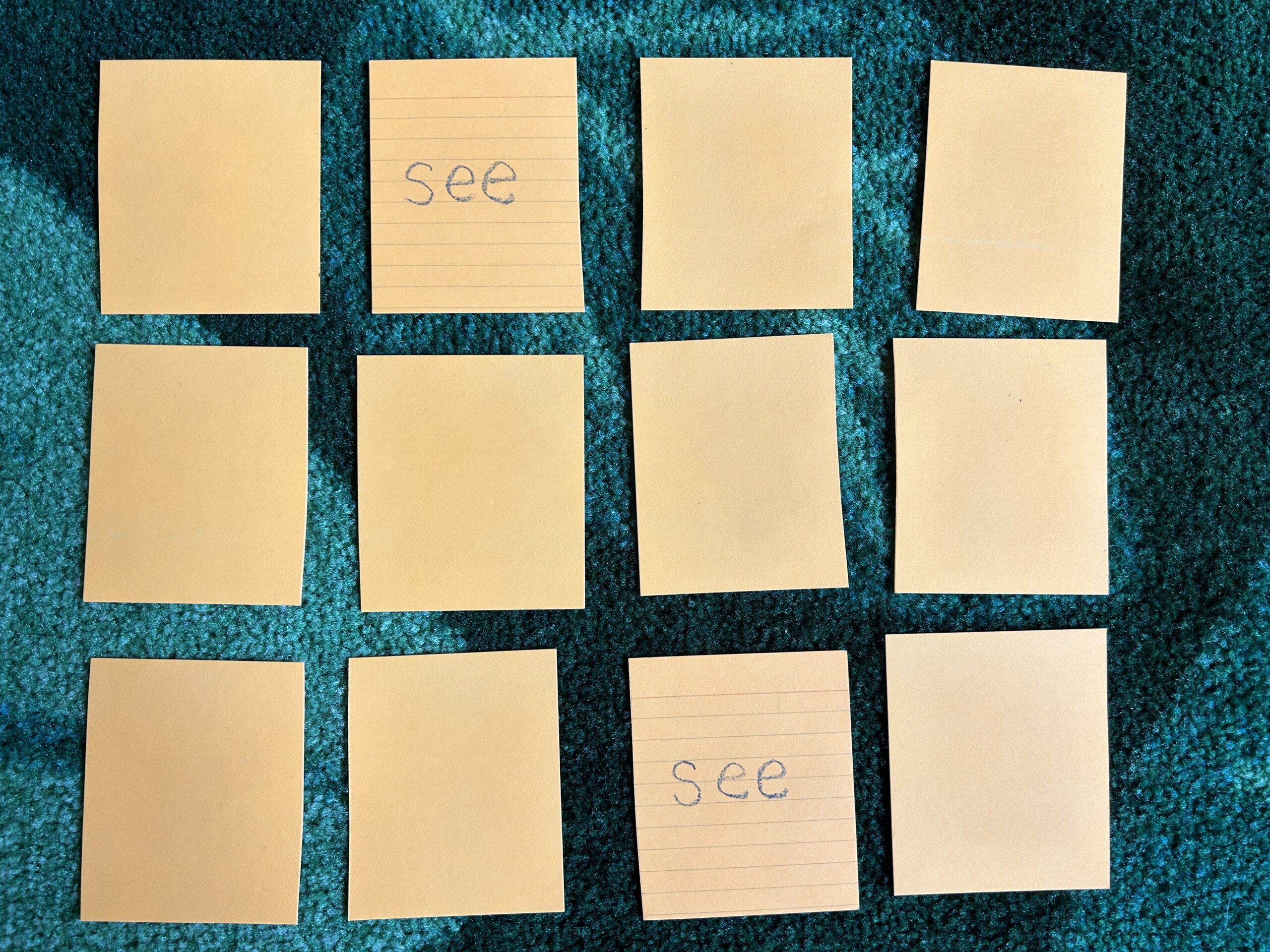
Best for: Literacy centers, partner play
Prep: Low (<5 minutes)
Materials: Sight word cards printed in pairs
Directions: Shuffle the cards and set them out face down. A student turns two over at a time. If the words are the same, the student keeps the pair. If not, they read both words and the cards are turned back down.
14. Take a sight word cakewalk
Best for: Outdoor play, whole group
Prep: Low (<5 minutes)
Materials: Chalk or sight word cards, music
Directions: Write words in a circle on the playground with chalk, or set cards out on the floor in your room. Students walk around the circle when the music is going, then when it stops, they each choose a word. You say one word and the student standing on that word wins.
15. Play sight word hopscotch
Best for: Outdoor play, guided small group
Prep: Low (<5 minutes)
Materials: Chalk or tape and sight word cards
Directions: Draw a hopscotch board and put sight words inside each box. If you can’t get outdoors, tape on the floor works just as well. Have students hop and read the words.
16. Play tic-tac-toe
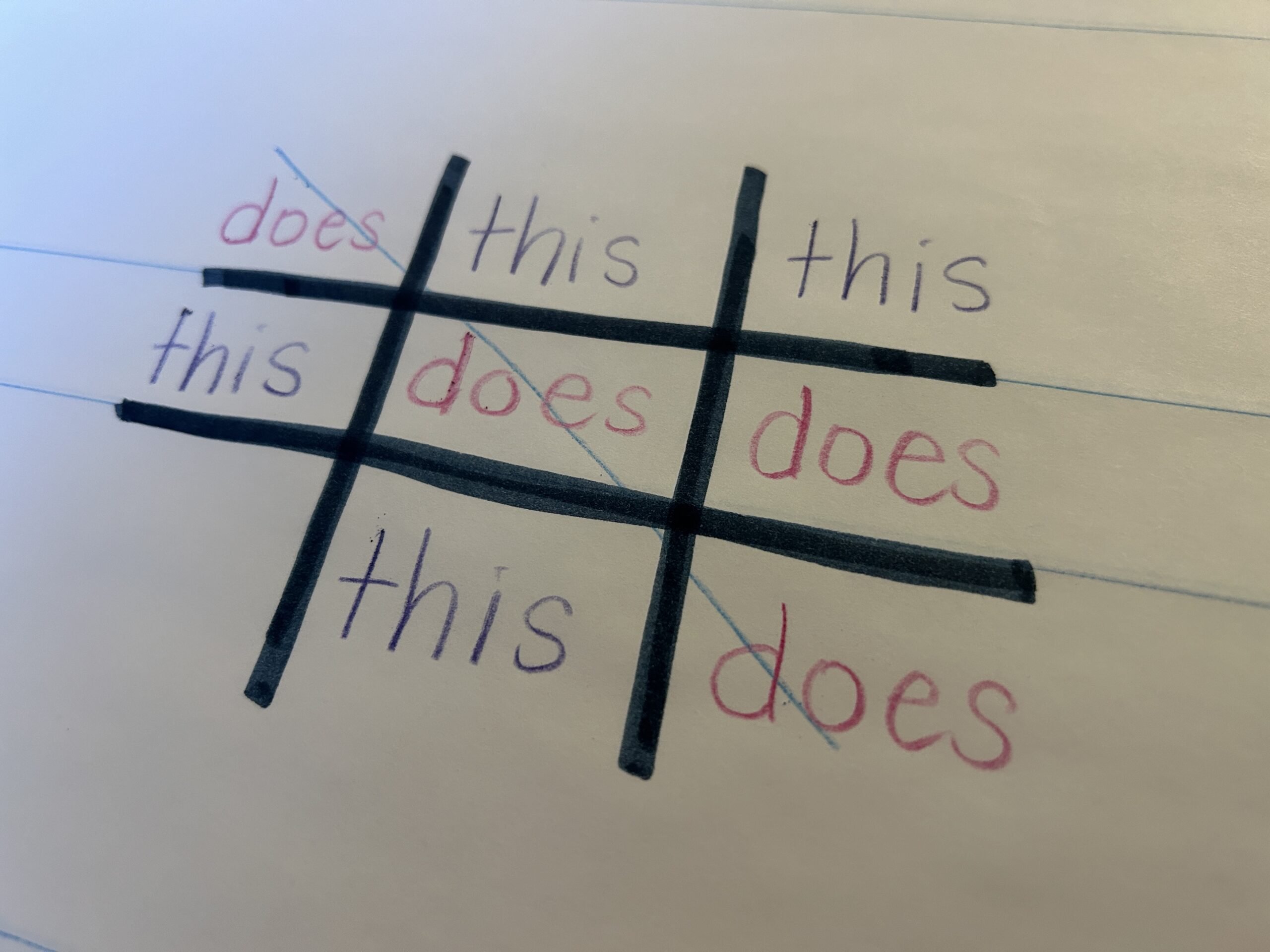
Best for: Partner play, early finishers
Prep: None
Materials: Paper and writing utensils or mini whiteboards and markers, tic-tac-toe template (optional)
Directions: This is one of those easy sight word activities to fill a few minutes or use when you haven’t had time to prep anything. Assign each student a sight word and have them play tic-tac-toe with their word. The first one to write three words in a row wins.
17. Go sight word bowling
Best for: Guided small group, literacy centers
Prep: Low (<5 minutes)
Materials: Bowling pins or half-filled plastic water bottles, sight word cards, ball
Directions: Add sight words to bowling pins or water bottles and go bowling. Students read the words they knock over.
Buy it: Plastic bowling pins at Amazon
18. Search for the pom-pom
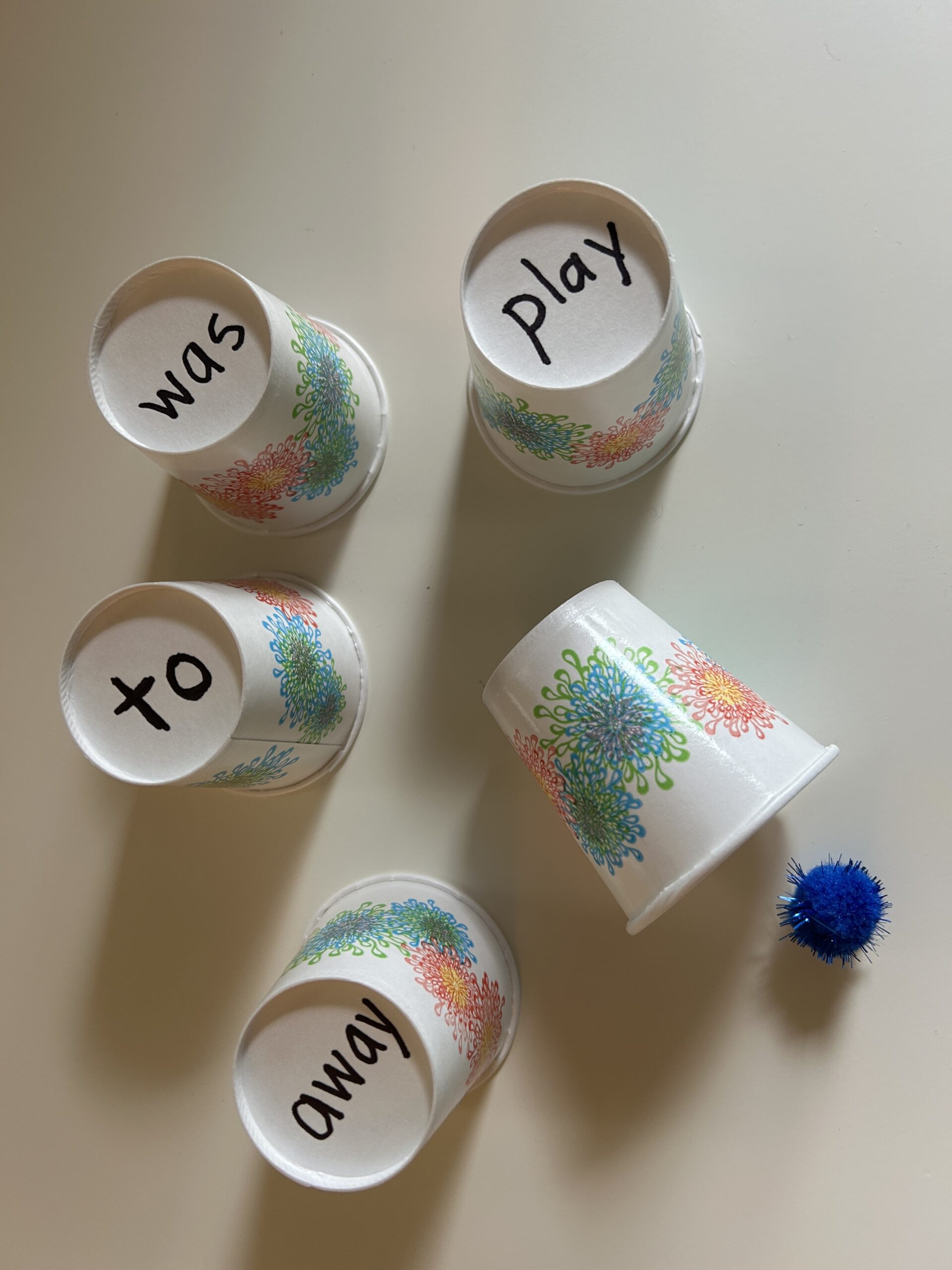
Best for: Guided small group, literacy centers
Prep: Low (<5 minutes)
Materials: Cups with sight words written on the bottom, 1 pom-pom
Directions: Put a set of cups so the words are on top. Hide a pom-pom under one cup. Students read each word as they try to find the pom-pom. They have to read the word before picking up the cup. If students are playing with partners or a small group, they can take turns hiding the pom-pom and seeing how many tries it takes for their partner to find it.
19. Play sight word checkers
Best for: Partner play, early finishers
Prep: Low (<5 minutes)
Materials: Checkerboard with sight words on spaces, checkers
Directions: Students play checkers and read the words they land on. If kids don’t have a partner available, they can “play” with a stuffed animal and get double practice.
20. Play sight word Guess Who?
Best for: Partner play, early finishers
Prep: Medium (10 minutes) the first time you play
Materials: Custom Guess Who? template and game
Directions: Set up this game once and use it forever. Create sight word cards that fit into a Guess Who? game. Then, have students guess which word their partner has. You might want to create question cards to help students, like “Does your word have an ‘e’ in it?” and “Does your word have a ‘b’ at the beginning?”
Learn more: Guess Who? Template
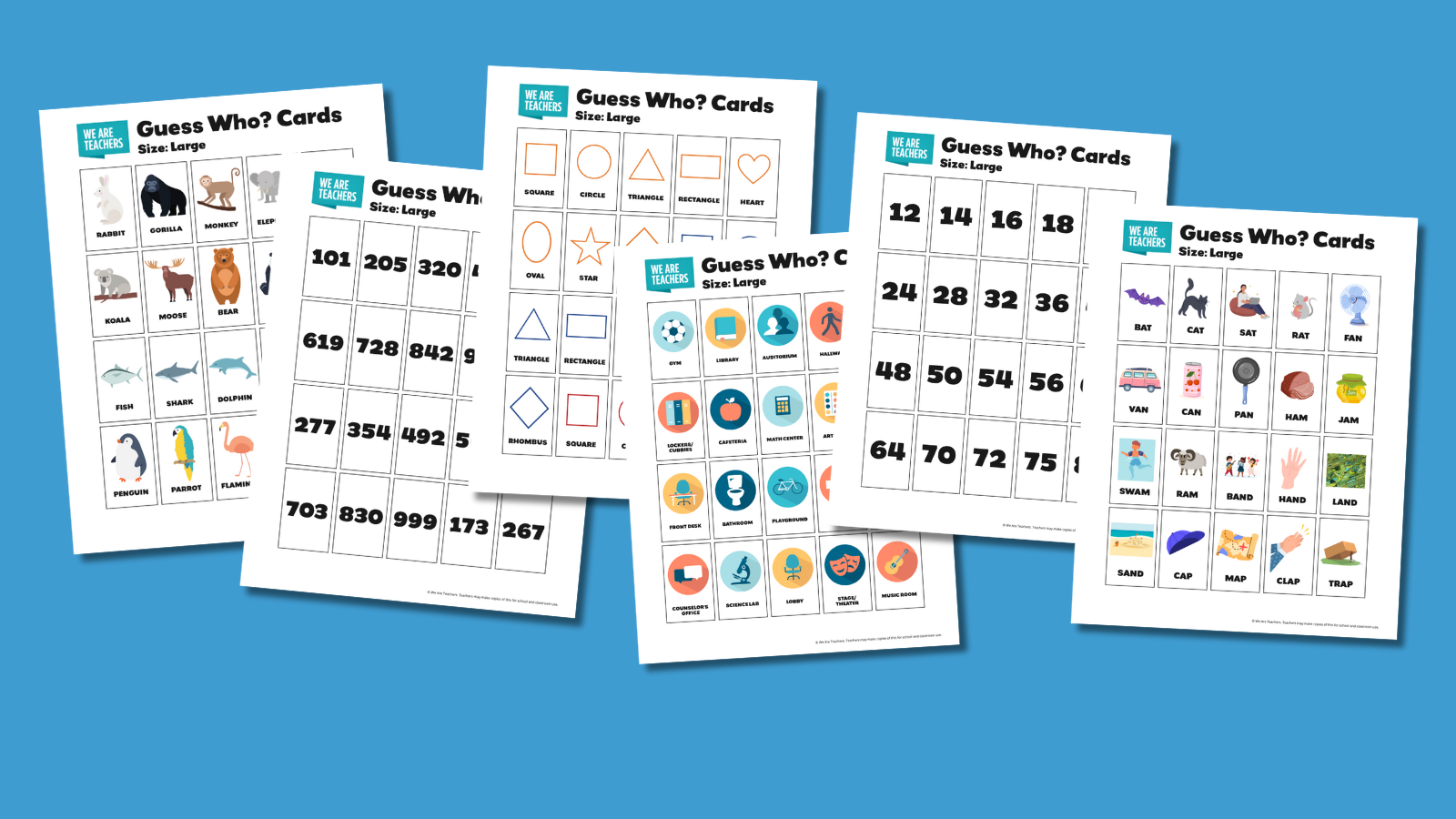
Guess Who? Template Bundle
This free bundle includes multiple sizes of pre-made cards plus a blank template to fit in a Guess Who? game board.
21. Play sight word bingo
Best for: Guided small groups, literacy centers, early finishers
Prep: Medium (10 minutes) the first time you play
Materials: Bingo cards and markers, sight word list or cards
Directions: Write sight words on bingo cards, or get a bingo game, and get ready to aim for a cover-all. Students listen to words read aloud and cover the sight words they have on their card. Add a level of challenge to this game by having students write a list of the words they hear but don’t have.
Buy it: Sight Word Bingo at Amazon
22. Order sight words from the menu
Best for: Literacy centers, free play
Prep: Medium (10 minutes) the first time you play
Materials: Magnetic letters, sight word cards, pretend play plates and other supplies
Directions: Put sight word cards on a “menu” in the pretend-play center. Students can request, and then be served, sight words made from magnetic letters.
Buy it: Set of Magnetic Letters at Amazon
23. Play sight word dominoes
Best for: Guided small groups, literacy centers, partner play, early finishers
Prep: Medium (10 minutes) the first time you play
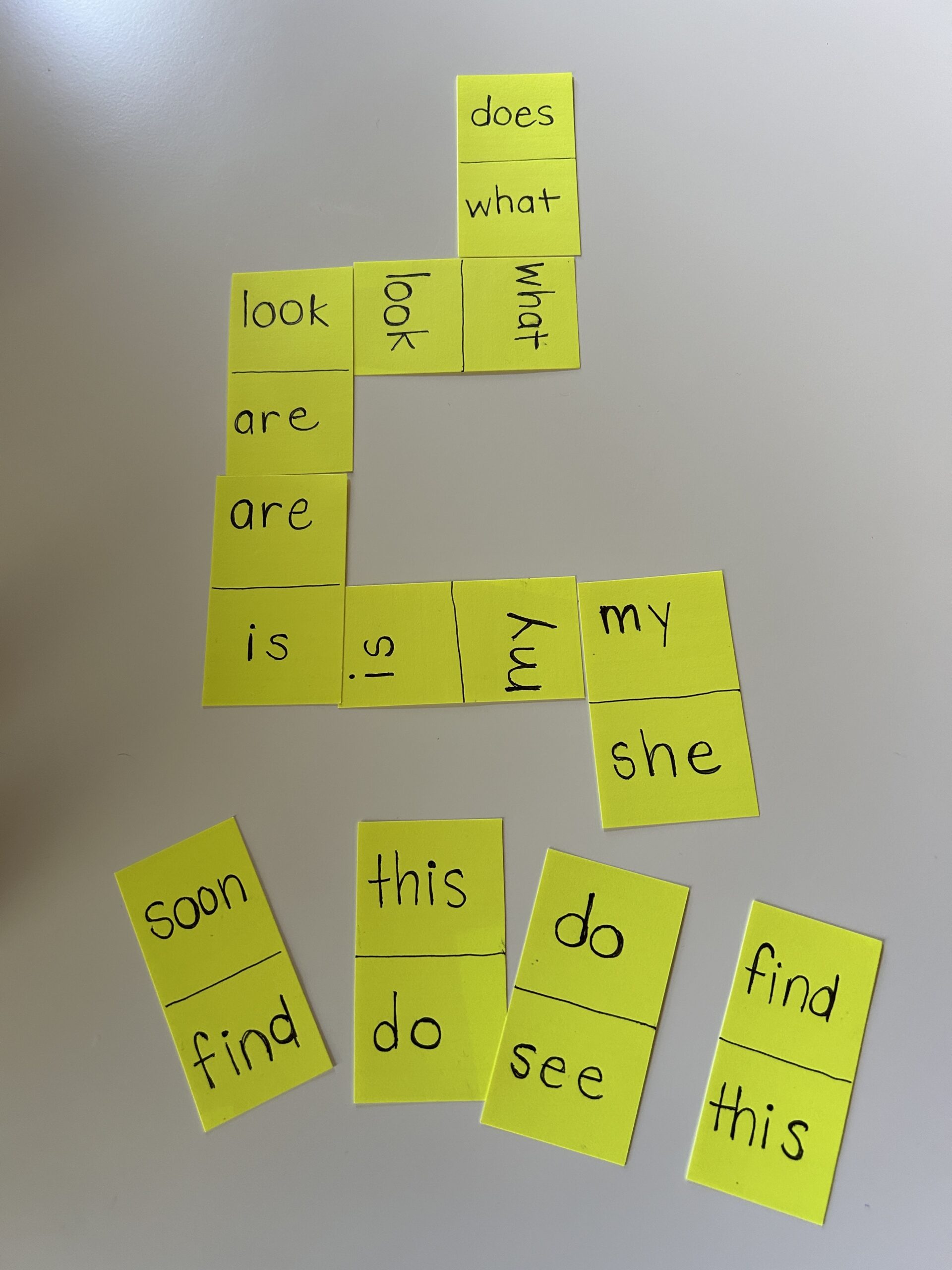
Materials: Domino cards
Directions: Create sight word dominoes out of note cards by dividing the cards in half and writing two sight words on each card. Create a set so that each word has a match. Then, have students play dominoes, matching sight word with sight word.
24. Pop sight word popcorn
Best for: Guided small groups, literacy centers, partner play, early finishers
Prep: Medium (10 minutes) the first time you play
Materials: Small sight word cards shaped like popcorn, 5 cards with “Pop,” bag
Directions: This will quickly become one of your students’ favorite sight word activities! Put all the slips of paper into one bag. Then, students take one word out at a time. If they read the sight word, they can keep the word and build a pile of popcorn. If they draw a “Pop” card, all the words they’ve collected go back into the bag.
Sight Word Activities With Movement
25. Find and swat words
Best for: Guided small group, partner play
Prep: Low (<5 minutes)
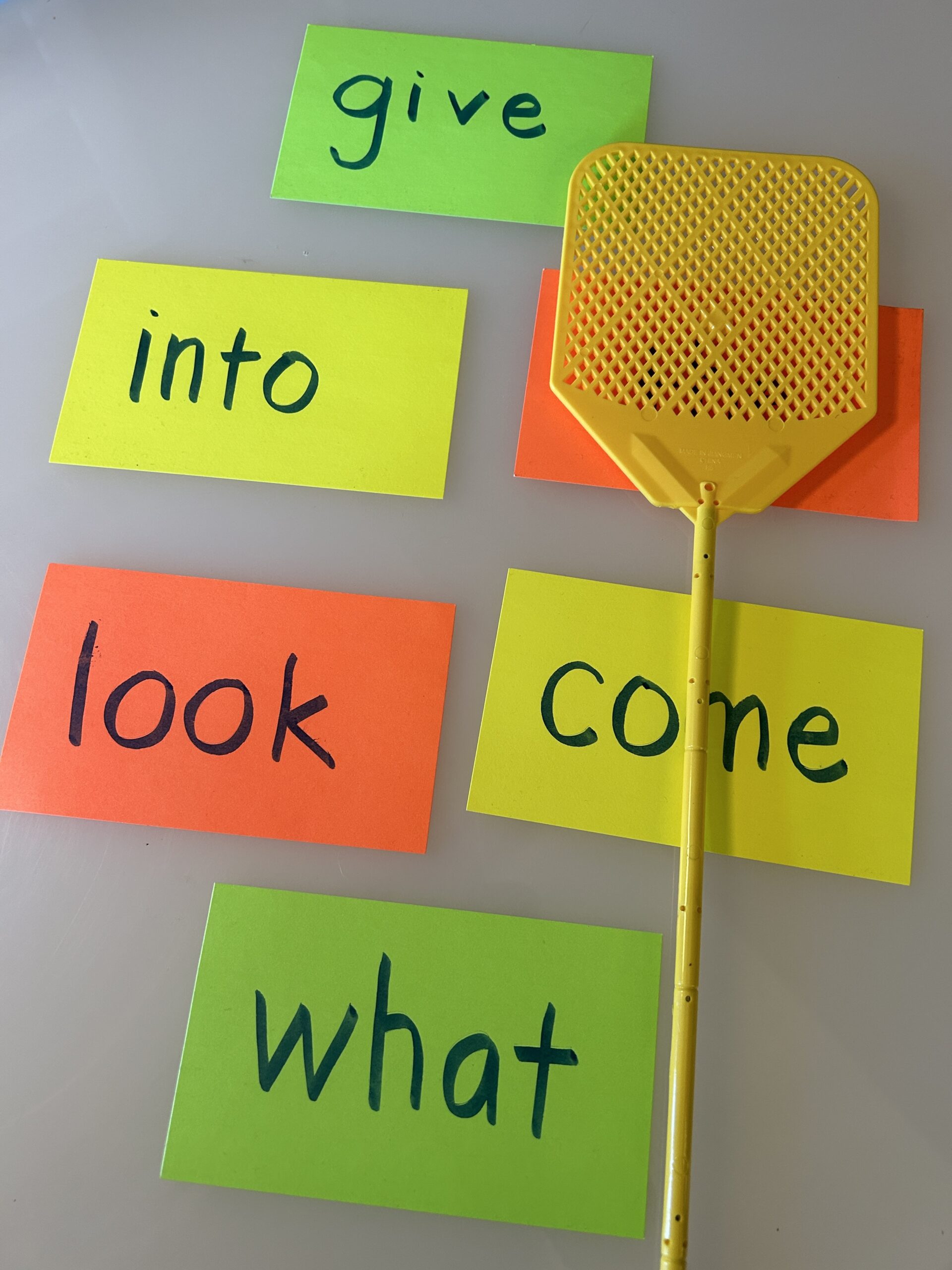
Materials: Sight word cards, flyswatters
Directions: Use a flyswatter to have students swat the card with the word you say. For partner play, make two sets of cards and have one student read while the other swats, then switch.
26. Wear heart word bracelets
Best for: Transitions, whole group
Prep: Low (<5 minutes)
Materials: Paper bracelets
Directions: Make kids feel like sight word VIPs and keep sight word review on hand. Write sight words on paper bracelets and have each student wear a sight word all day. You can use this when lining up—have students line up based on the sight word they have on their wrist. Or have each student try to find a partner with the same sight word bracelet.
Buy it: Set of Paper Wristbands at Amazon
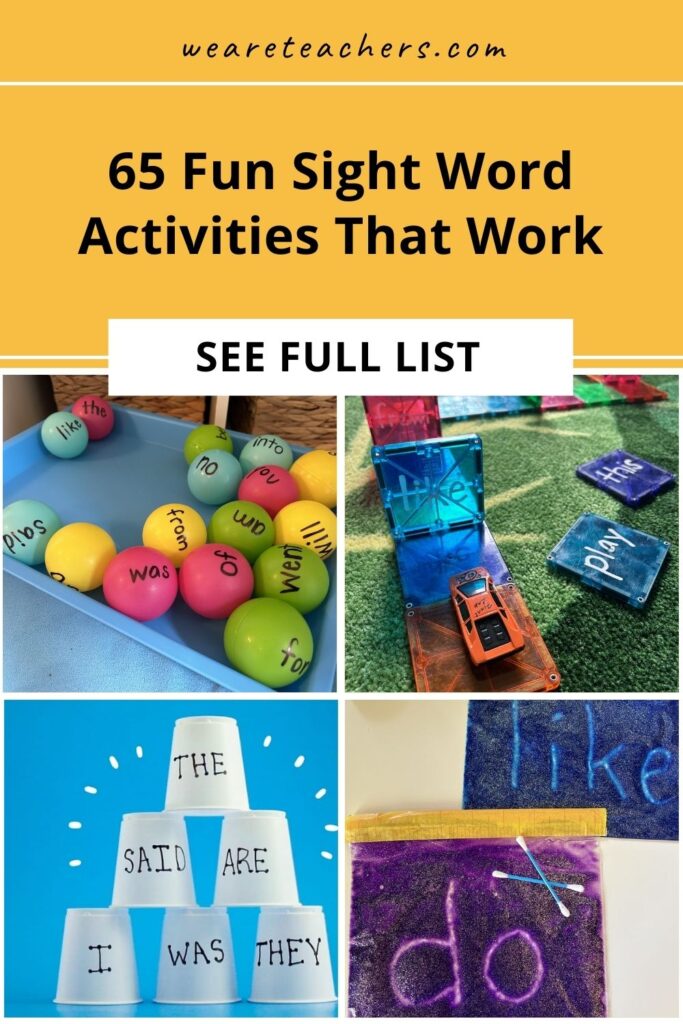
27. Search for sight word balls
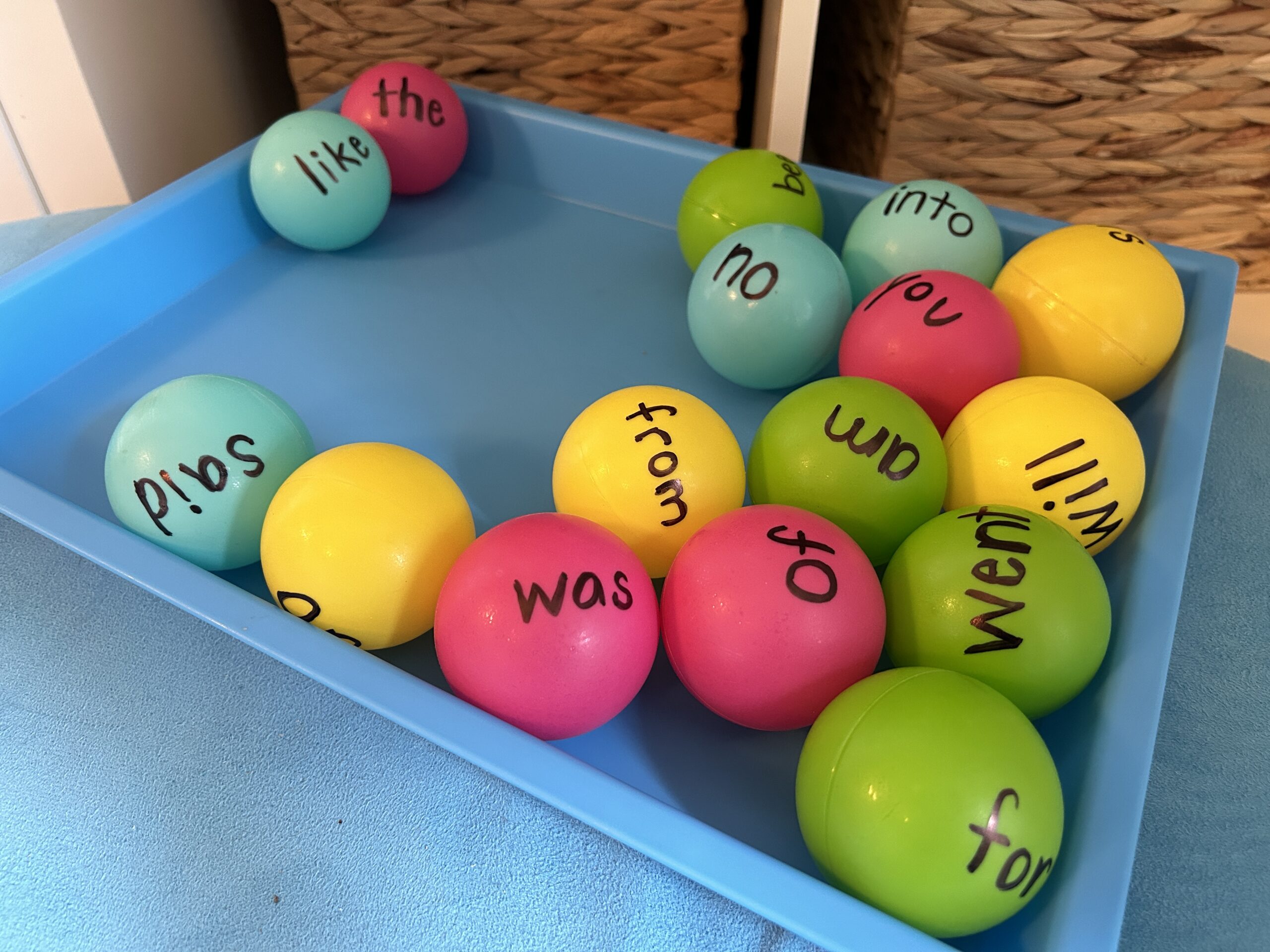
Best for: Guided small group, whole group, literacy center
Prep: Low (<5 minutes)
Materials: Ball-pit balls, tub or basket, dry-erase or chalk markers, sight word list
Directions: Write sight words on ball-pit balls. Hide the balls around the room to have kids race around hunting for words to read and toss in a basket. Or at a center, give them a list and have them hunt through a big tub of balls to check off each word.
Buy it: Set of Ball Pit Balls at Amazon
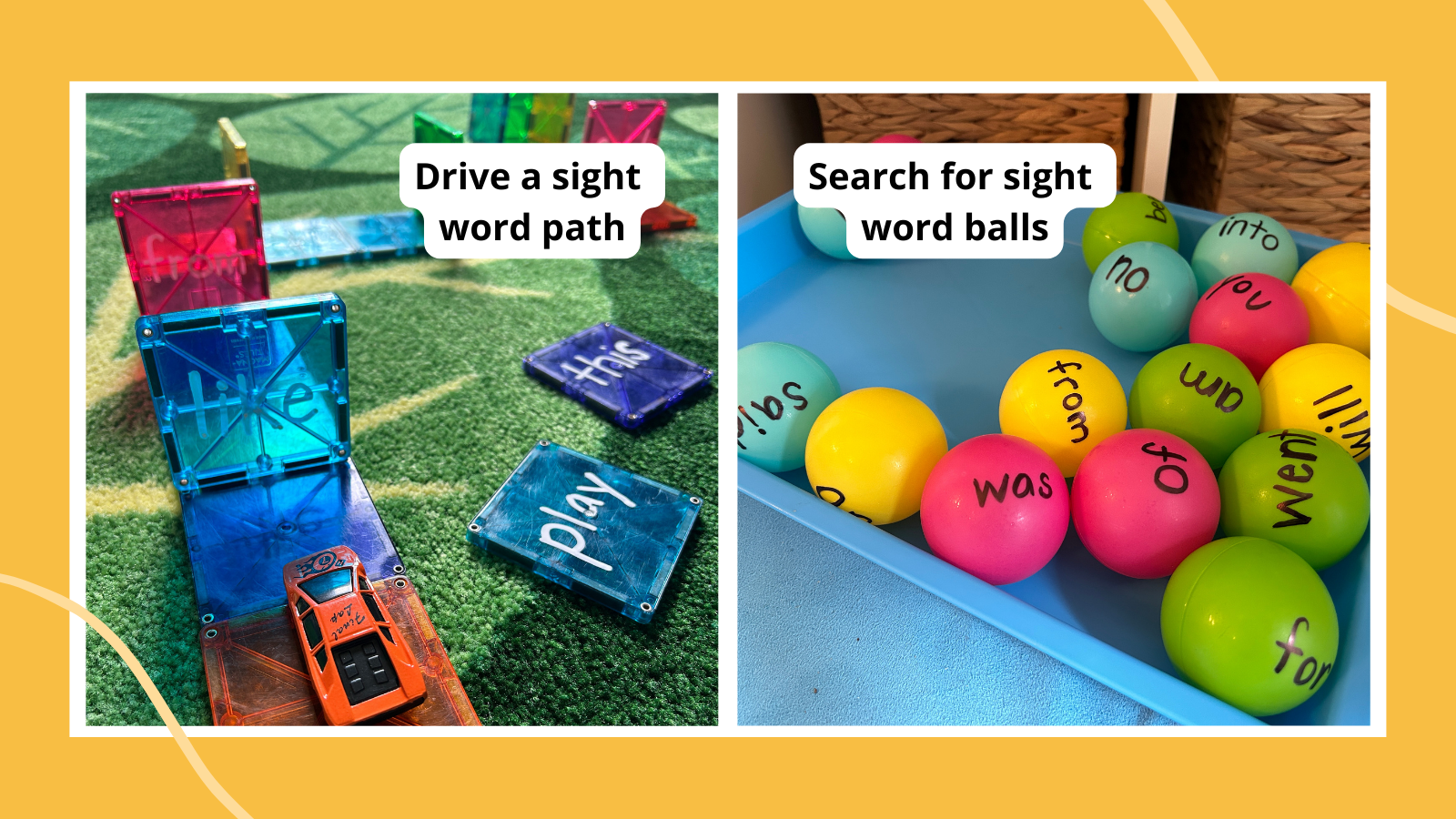
28. Drive a sight word path
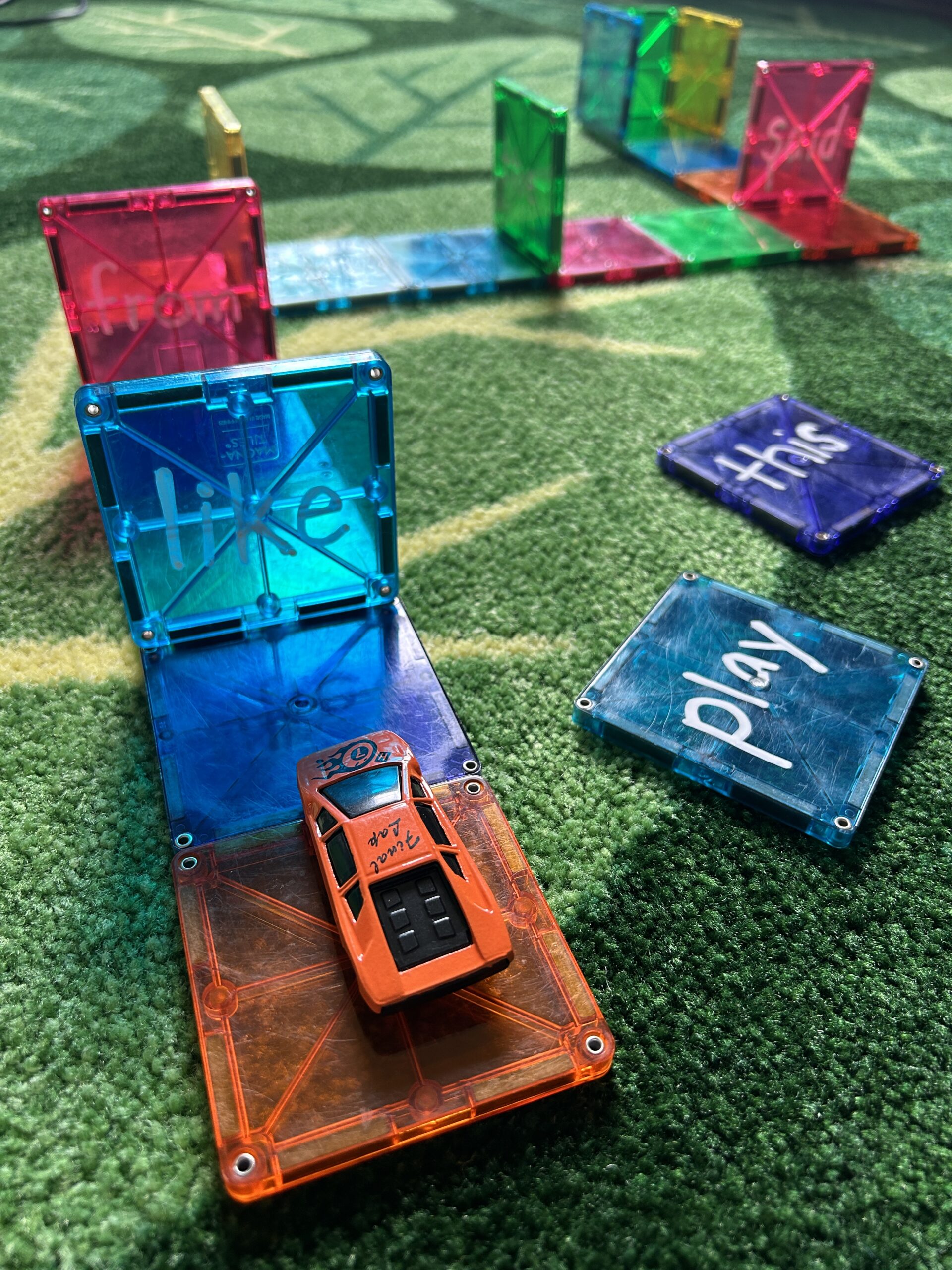
Best for: Literacy centers
Prep: Low (<5 minutes)
Materials: Magnetic tiles, toy cars
Directions: Write sight words on magnetic tiles and have students use a toy car to drive over and read each word, or stand up the tiles and knock down each word they read.
Buy it: Set of Magnetic Tiles at Amazon
29. Feed a word monster
Best for: Guided small group, whole group, literacy centers
Prep: Medium (10 minutes) the first time you play
Materials: A “monster” with a mouth hole created from a tissue box, sight word cards
Directions: Nom, nom, nom. When a student reads a word card, they can feed the word to the monster.
30. Find words in plastic eggs
Best for: Literacy centers
Prep: Medium (10 minutes) the first time you play
Materials: Print sight words on strips of paper; plastic eggs, bin, sight word list
Directions: Put one word in each plastic egg and put all the eggs in a bin. Give kids a checklist of words to find as they open each egg.
31. Spy words around the classroom
Best for: Guided small group, whole group, literacy centers, early finishers
Prep: Medium (10 minutes)
Materials: Magnifying glasses (optional), clipboards, sight word cards and lists, pencils
Directions: Make kids feel like supersleuths! Give each student a list of sight words. Put the sight word cards around the classroom. Each time they spy a sight word, they check it off their list.
32. Ready, aim, read
Best for: Guided small group, literacy centers
Prep: Low (<5 minutes)
Materials: Target on the board or butcher paper with sight words in the sections and bullseye, beanbag
Directions: Students throw a beanbag at a target and read the word closest to the beanbag.
33. Play musical sight words
Best for: Guided small group, whole group
Prep: Low (<5 minutes)
Materials: Sight word cards, music
Directions: Place the sight words around a carpet or the floor. When the music plays, students walk around the sight words, and when the music stops, they find a sight word and stand over it. Then, they read their sight word. The rule: You can’t end up at the same sight word twice.
34. Play muffin tin ball toss
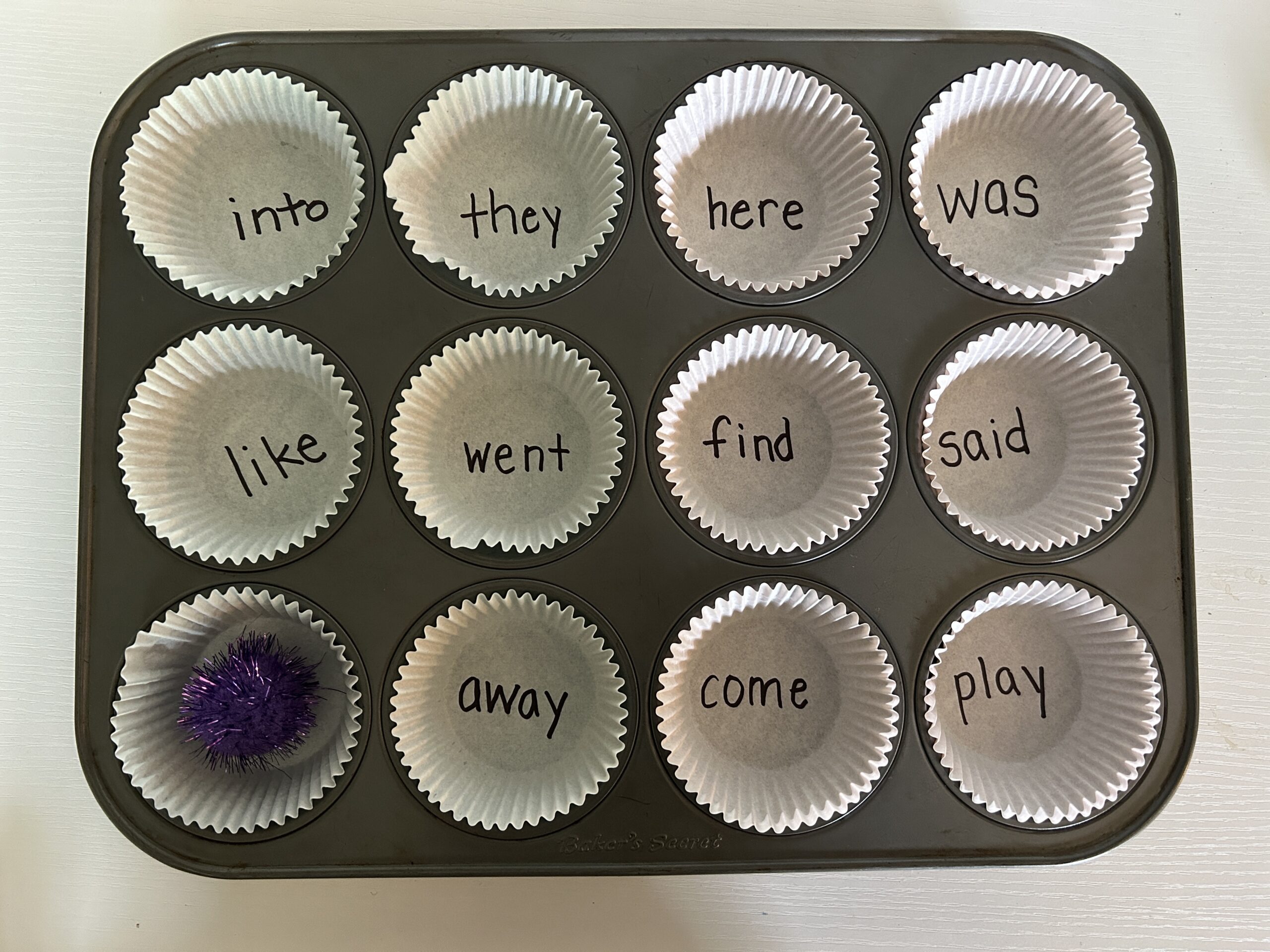
Best for: Guided small group, literacy centers
Prep: Low (<5 minutes)
Materials: Muffin tin, paper muffin cups, ball or pom-pom
Directions: Add this to your sight word activities when you want kids to get to move but need them to stay in one location. Write sight words in the bottom of muffin liners. Put the muffin wrappers into a muffin tin. Toss a ball or pom-pom into the muffin tin and read the word. It’s easy to use colored muffin cups to prep different sets of words.
Buy it: Muffin Tin and Muffin Liners at Amazon
Reading and Writing Sight Word Activities
35. Wind-up sight words
Best for: Guided small group, whole group
Prep: Low (<5 minutes)
Materials: Butcher paper with sight words written on it, wind-up toy
Directions: Lay out the paper where everyone can see it. Have students take turns releasing a wind-up toy. Students read the word closest to where the toy stops. Add this to your seasonal sight word activities by simply swapping out toys for different seasons.
36. Trace words with flashlights
Best for: Guided small group
Prep: Low (<5 minutes)
Materials: written sight words, flashlights
Directions: Write sight words on paper, a mini whiteboard, or your table. Students trace the words as they read them using mini flashlights. Stock up on batteries because kids never get tired of this!
Buy it: Mini Flashlight Key Chains at Amazon
37. Flip word pancakes
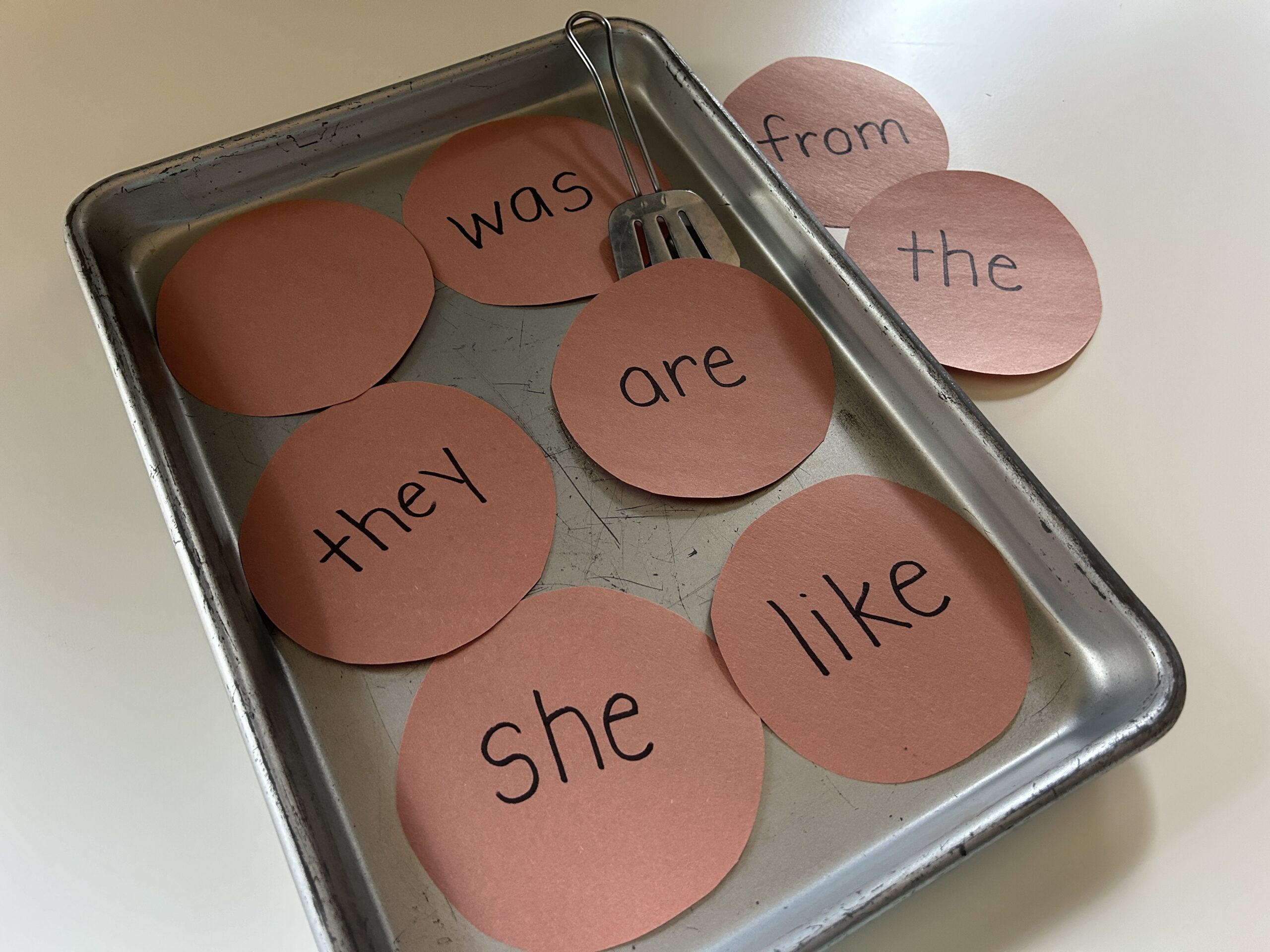
Best for: Guided small groups, literacy centers
Prep: Low (<5 minutes)
Materials: Paper “pancakes” with sight words, pan, spatula
Directions: Place the pancakes with words face up. Students slip a spatula under each word, read the word, and flip it. You can also put the words face down and have students flip the word, then read it.
38. Make a mini book
Best for: Independent practice, take-home task
Prep: Medium (15–20 min to set up the books)
Materials: Paper, stapler
Directions: Fold paper into fourths, write sight words your students are working on, and create a mini-book they can take home with them to read on their own. As they learn more words, you can incorporate decodable sentences so they’ll really see themselves growing as readers.
39. Find words in the morning message
Best for: Whole group
Prep: Low (<5 minutes)
Materials: Chart paper or whiteboard
Directions: Don’t forget about old standby sight word activities! When you’re writing your morning message, underline or put a box around the sight words students are learning. Or make it part of morning meeting to find the sight words in the day’s message. This is one of our favorite ways to get kids to recognize sight words in connected text.
Learn more: 24 Morning Messages
40. Write words on a magnetic drawing board
Best for: Guided small group, literacy centers
Prep: Low (<5 minutes)
Materials: Magnetic drawing board, sight word cards
Directions: A magnetic drawing board is a great way to practice sight words. Students can put a sight word card in the eraser space.
Buy it: Magnetic Drawing Board at Amazon
41. Write words on the window
Best for: Literacy centers
Prep: None
Materials: Accessible windows, window markers
Directions: Everyone wants a turn to write on the window! Read words or have a partner read from a list and have students write them on the windows with window markers.
Buy it: Window Chalk Markers at Amazon
42. Discover words written in invisible ink
Best for: Guided small group
Prep: Low (<5 minutes)
Materials: Paper, white crayon, watercolor paints and brushes
Directions: Write sight words in white crayon on white paper. Students paint over the word in watercolor and read the words that come up.
43. Read words before heading through the door
Best for: Transitions
Prep: Low (<5 minutes)
Materials: Sight word cards
Directions: Post sight words on your classroom door and use them for line-up routines. The line leader can double as the word pointer during transitions.
44. Read the word the teacher’s wearing
Best for: Whole group
Prep: Low (<5 minutes)
Materials: Sight word cards
Directions: Clip a sight word to your pocket or lanyard and refer to it throughout the day. “If you can read this word, clap twice.”
45. Stack sight word cups
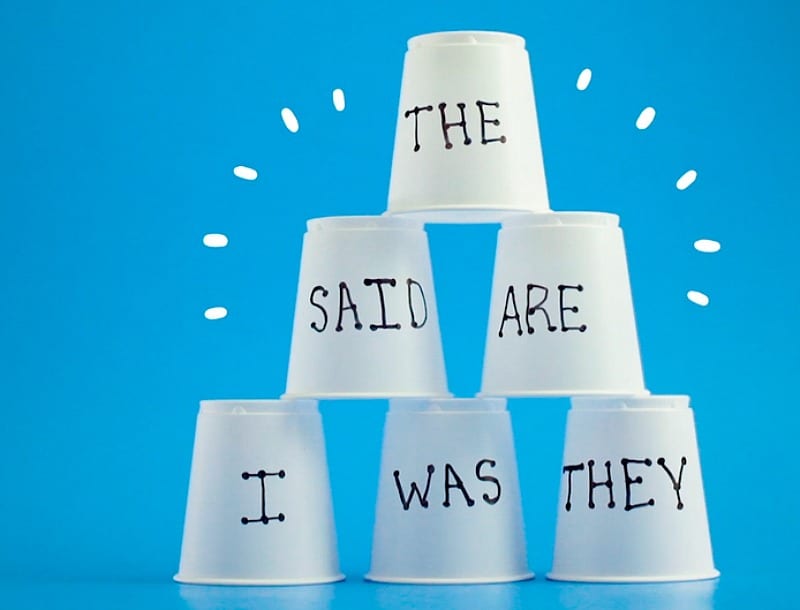
Best for: Guided small groups, literacy centers
Prep: Low (<5 minutes)
Materials: Cups, marker
Directions: Write sight words on a stack of plastic cups. Students read each word. If they read it correctly, they add the cup to the stack. If they don’t, the cup stays in their stack.
Get your free printable High-Frequency Words bundle!

Plus, check out all of our Elementary ELA Resources here!
For more articles like this, be sure to sign up for our newsletters to find out when they’re posted!