

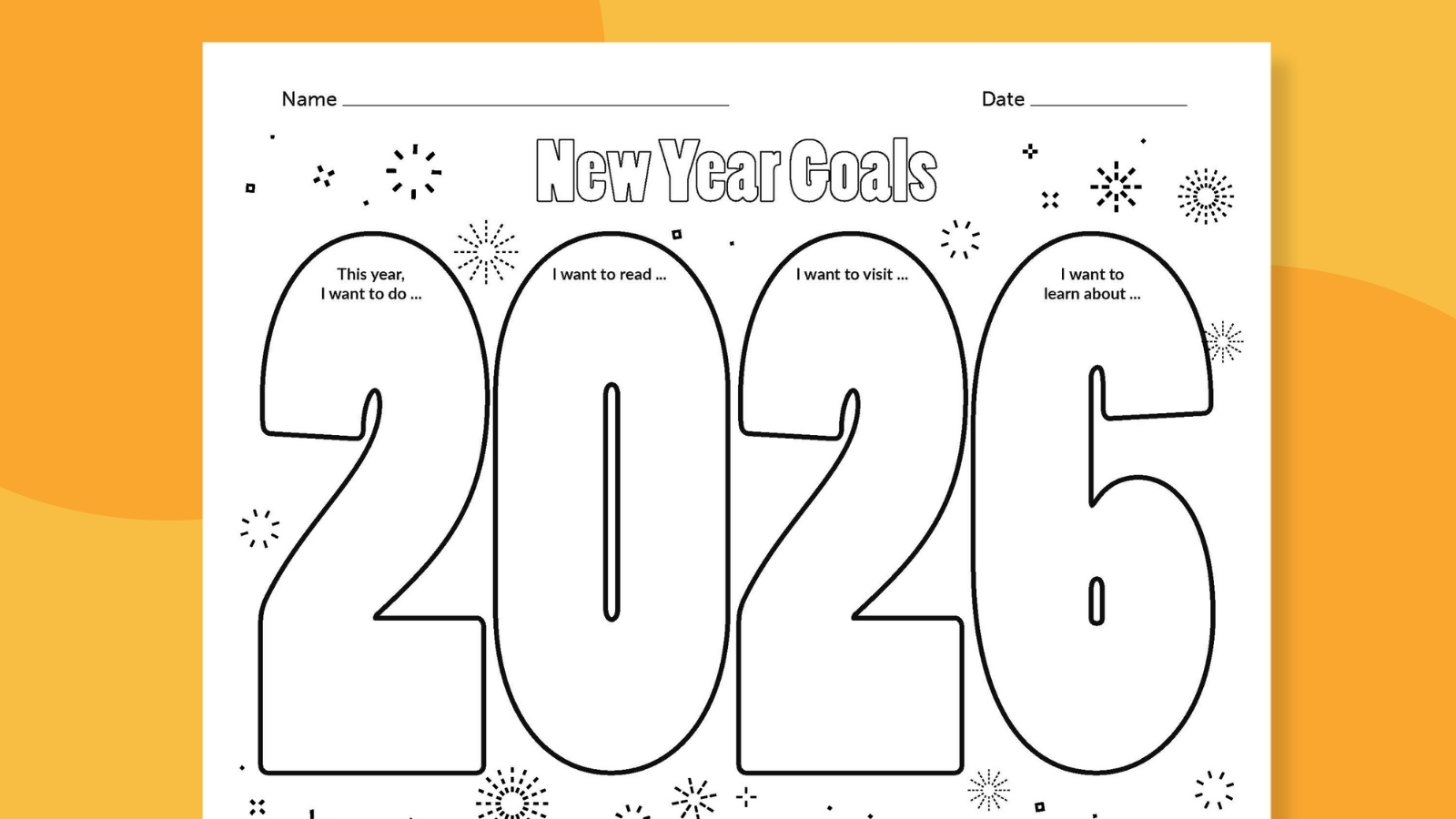
Goal setting isn’t just for academics. It’s also a great way to support social-emotional learning by helping students understand themselves better, make thoughtful choices, and take responsibility for their growth. That’s why we think you’ll love our free New Year Goals template featuring four simple prompts to help your students reset and start the new year with fresh energy.

Goal setting encourages students to reflect on what matters to them, what they enjoy, and where their strengths lie. As they choose goals and work toward them, they begin to recognize their interests, values, abilities, and areas for growth. This builds a clearer sense of who they are and who they want to become. By tracking progress, overcoming setbacks, and adjusting their plans, students learn that personal growth is an ongoing process—and that they have the power to shape their own future.
According to veteran teacher Katy Purviance, “Students come back from winter break a little different than the kids who left. The second half of the year goes better when students remember that it belongs to them.” Here, she shares her experience using goal setting the first week back from winter break as well as how she revisits goals throughout the year.
One Teacher’s Approach to Goal Setting
When teacher Katy Purviance and her students come back together after break, one of the first things they do is gather together and have a conversation that helps them all connect with the new versions of themselves. “We rediscover what’s important to us,” she says. “We ease into goal setting by talking about what we’re proud of and what we’d like to be different from the previous semester. We share our ideas about what the perfect classroom community experience might look like.” Katy asks each student to name just one goal for themselves, and she models what she means by describing a goal of her own. “My goal for myself,” she shares, “is always to be in tune with what my students need so that I can give them the best experience possible.”
Revisiting Goals Throughout the Year
Throughout the year, Katy and her students share where they’re at with their goals. “It’s important for students to know that I’m not the only one who cares about their goals,” she advises. “I build in time for the students to discuss their goals with each other: How is it going? What’s easy? What’s hard? What’s next? How can we help each other?”
For more from Katy Purviance, visit her Substack.
5 Ways To Use This Goal Tracker
- Ask students to write a short reflection on their worksheet in the morning. For more on reflections, check out 45 Reflection Questions To Encourage Reflection and Growth.
- Pair students up to share their goals. For creative ways to pair students up, check out Fun Alternatives to Think, Pair, Share.
- Choose one of the topics on the tracker and dig deeper with a whole-class discussion.
- Use the tracker at student conferences to check in and see how they’re progressing. To encourage progress, check out our awesome Growth Mindset Activities and Posters Bundle.
- Display students’ completed goals trackers on the classroom bulletin board to service as inspiration and encouragement.
Download your New Year Goals template!
Want even more great resources like this one? Check out our entire library of free printables!

